
Photos from current listings. Actual item, color, and included accessories may vary.
Resin Shed Buying Guide
Resin sheds are modular plastic outbuildings using blow-molded or injection-molded panels, typically HDPE or polypropylene, that snap or screw together without foundations or painting. The trade-off is panel wall thickness and UV stabilization: thin hollow panels crack at fastener points and fade, while thick double-wall panels and reinforced floors handle snow load and heavy tools. The rule is simple: choose a resin shed only for light-to-medium storage on a level surface, and step up to metal or wood if you need walk-in headroom, heavy equipment, or permanent structure.
Median $384.99 · New listings
Key takeaways
- Panel construction splits into single-wall blow-molded (entry tier) and double-wall resin with steel or wood reinforcement (premium); double-wall resists dents, snow load, and UV fade.
- Floor kits matter: horizontal cabinets often ship floorless, while vertical sheds include a resin or slatted floor that keeps tools off soil and blocks ground moisture.
- Resin is UV-stabilized HDPE/PP; non-stabilized panels chalk and crack within a few seasons, so spec sheets should list UV treatment, not just 'resin'.
At a glance
- Category
- Outdoor Structures, Shade & Awnings
- Last updated
- Nov 27, 2026
Current offers
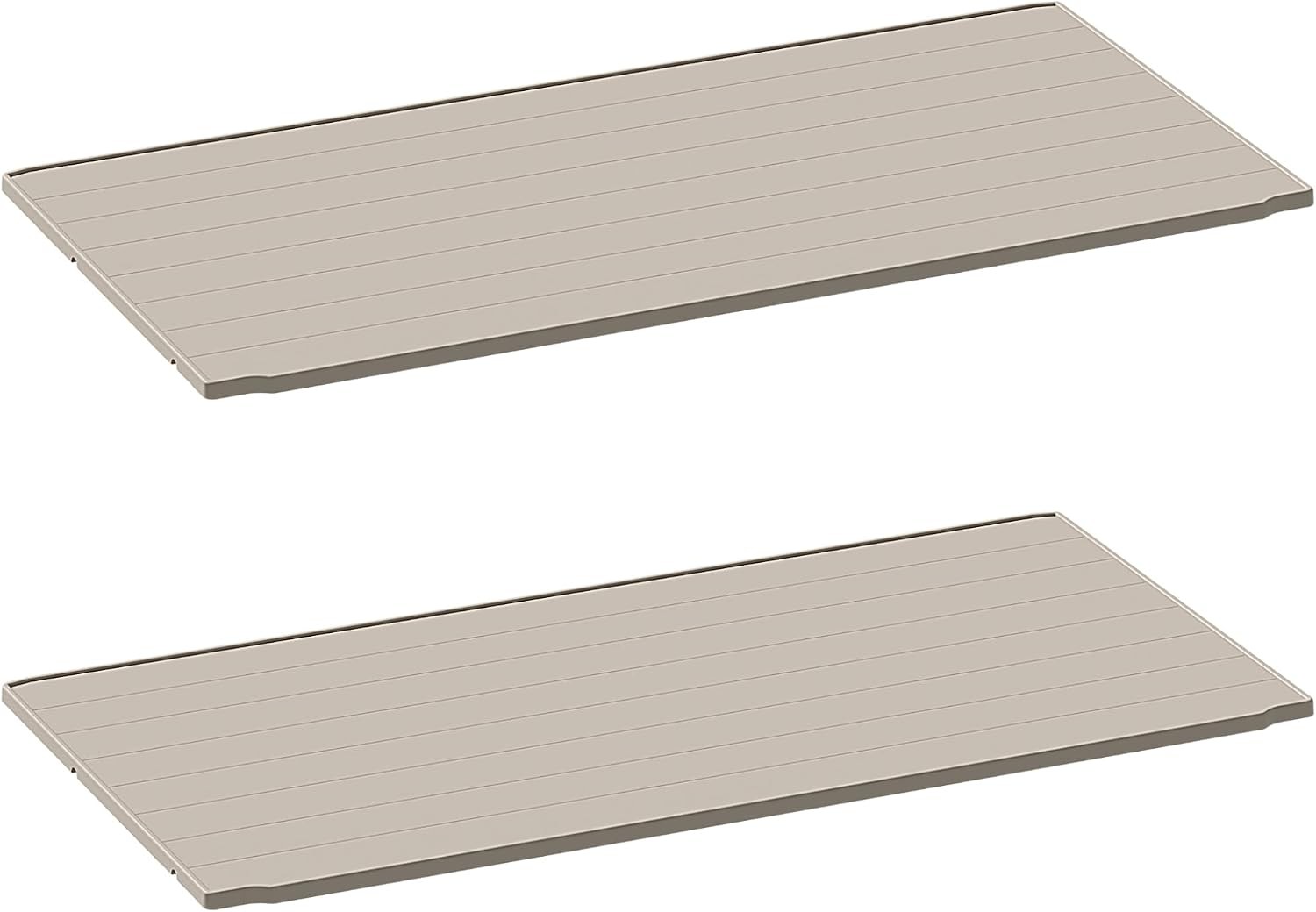 Shelf of Resin Outdoor Storage Cabinet 26 Cu Ft Horizontal Outdoor Storage Shed$118.98Last checked Nov 24, 2026View on eBay
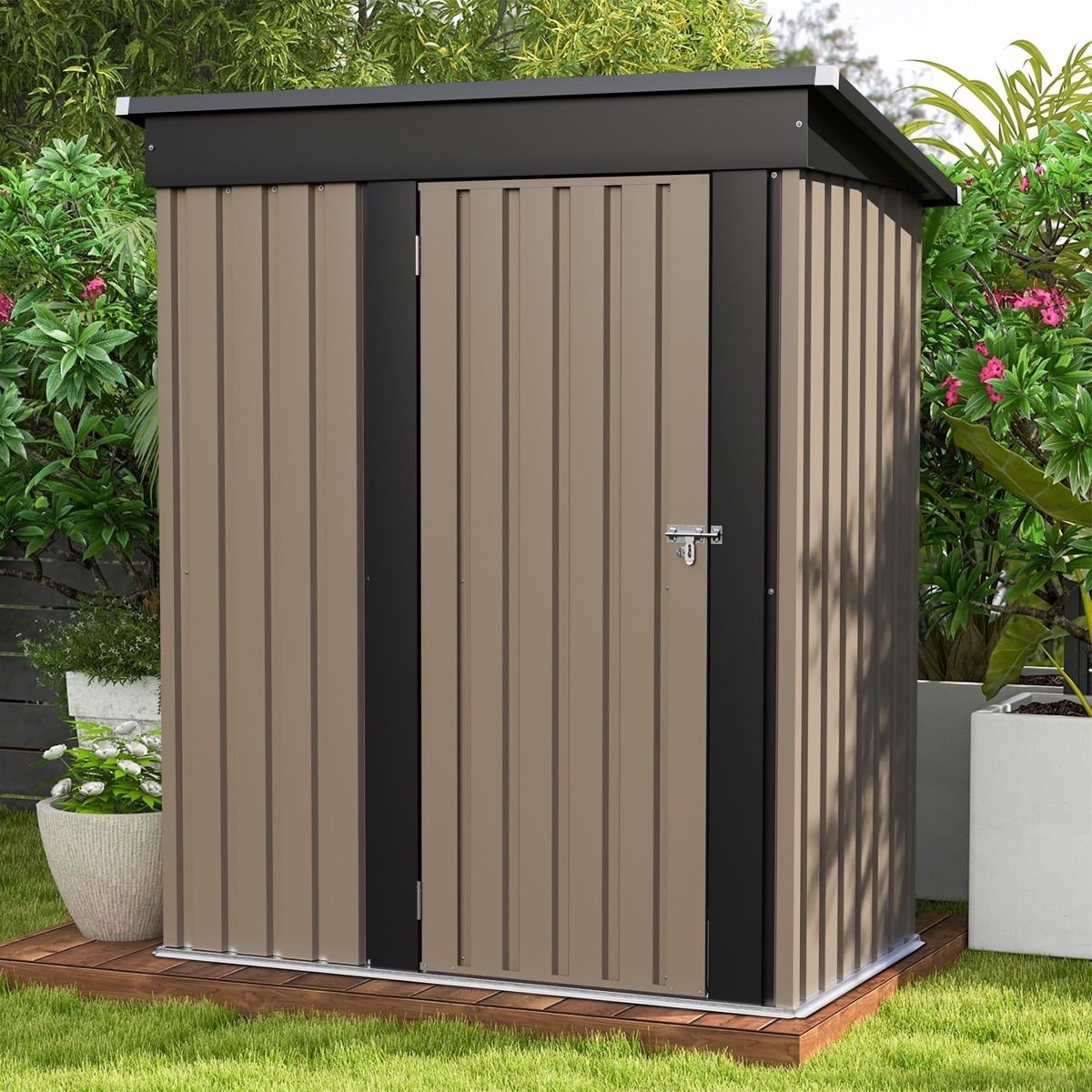 Patiowell 5x3 FT Outdoor Resin Storage Shed Sloping Roof Lockable Door$152.29Last checked Nov 25, 2026View on eBay
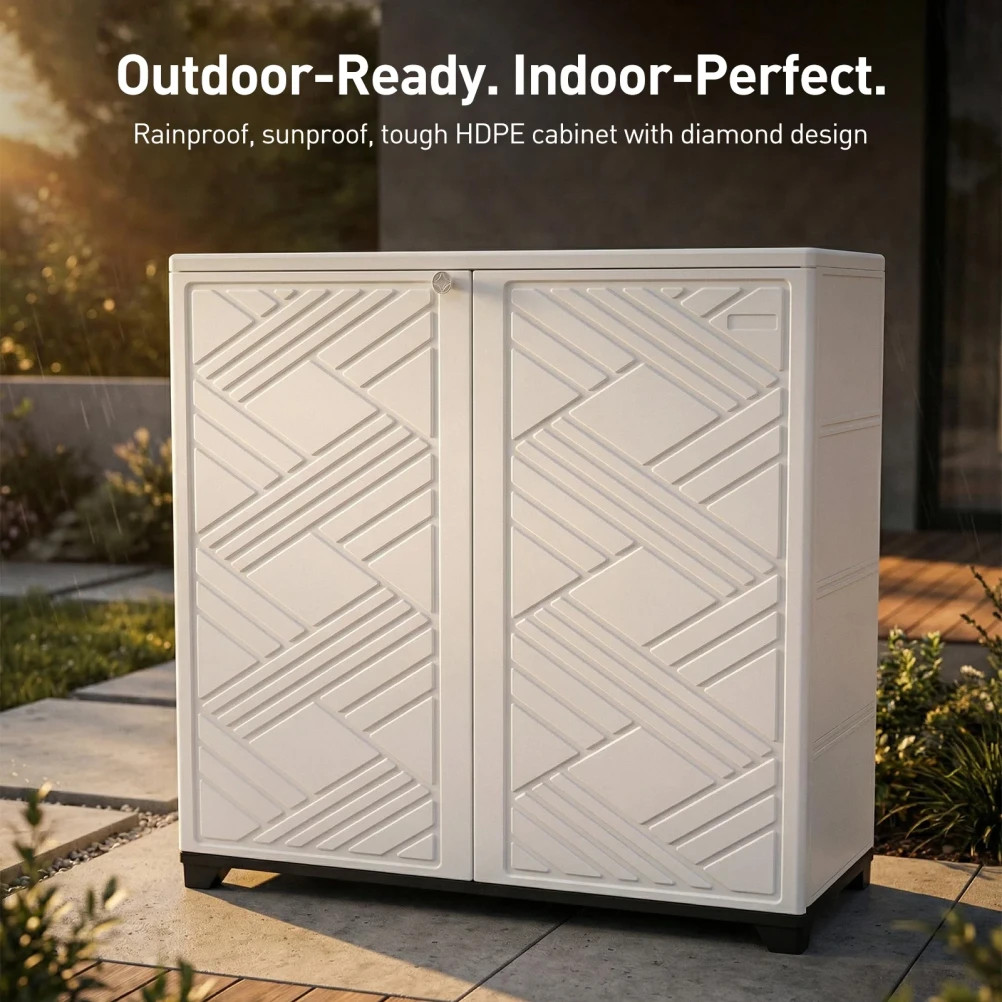 Outdoor Storage Cabinet Space-Saving Resin Shed for Patio Indoor&Outdoor$155.99Last checked Nov 23, 2026View on eBay
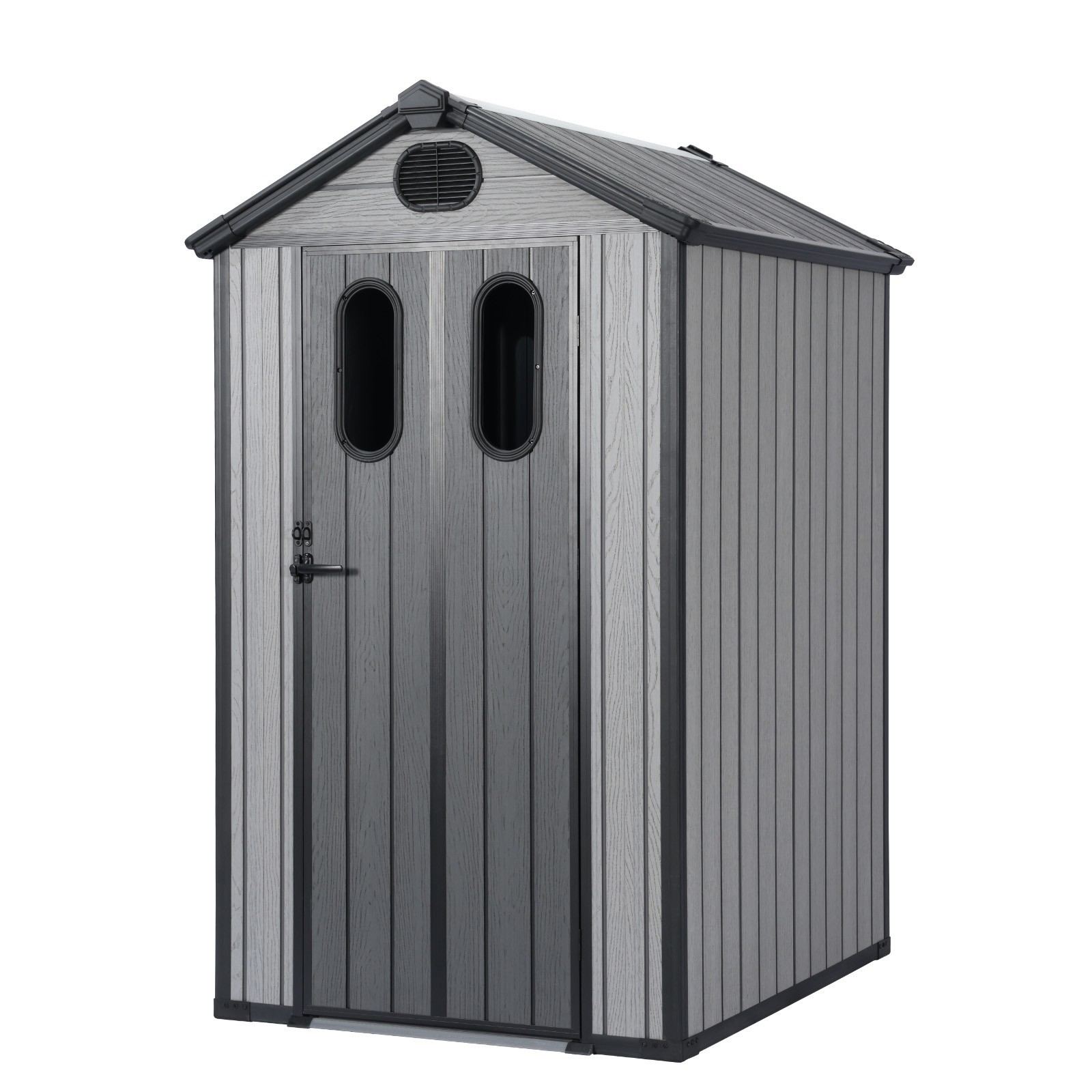 Aoodor 4/5/6 FT Outdoor Storage Shed Resin Tool House Lockable Door 4 Windows$269.99Last checked Nov 16, 2026View on eBay
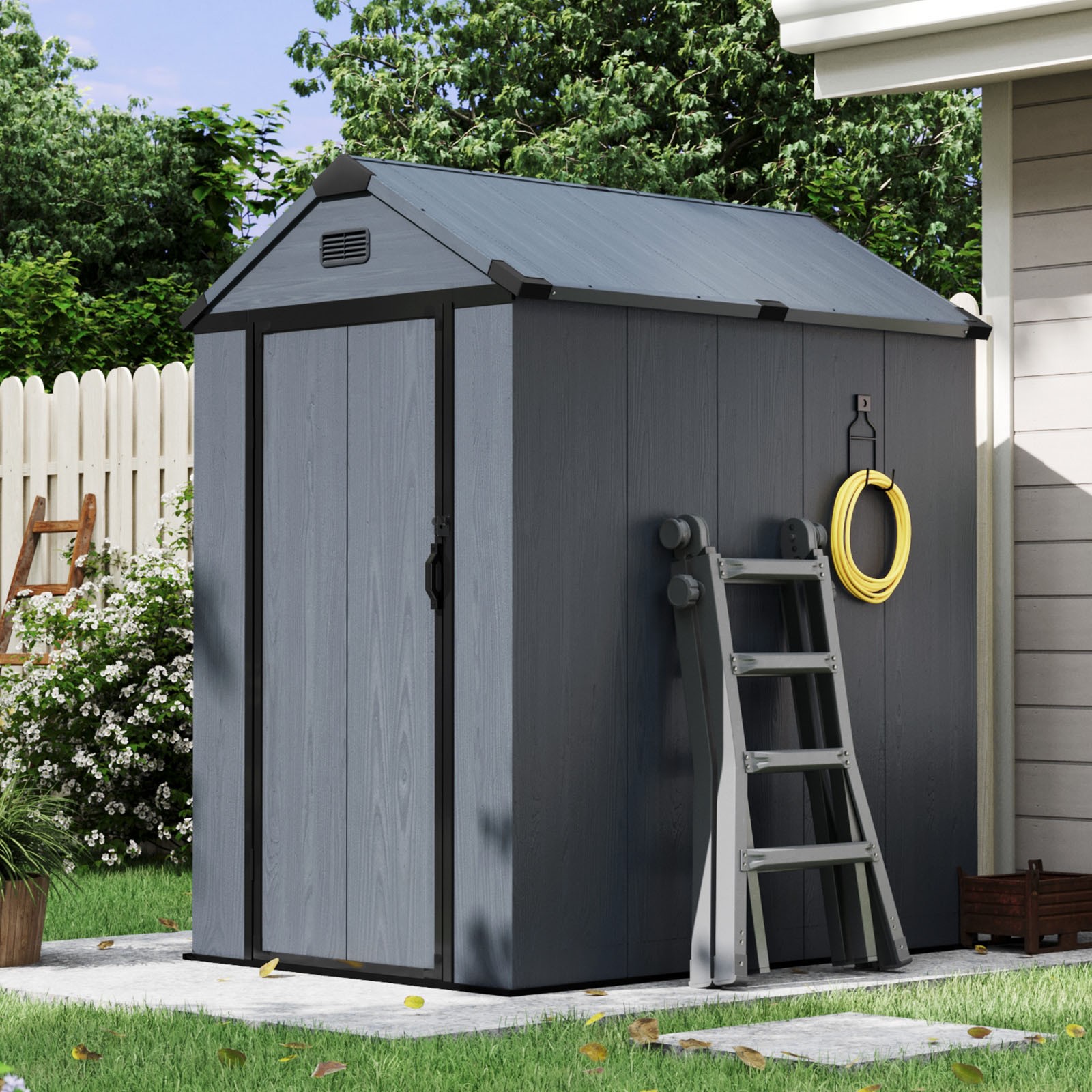 4×6FT All-Weather Resin Storage Shed Weatherproof Tool Shed with Floor Dark Gray$295.61New · Last checked Nov 23, 2026View on eBay
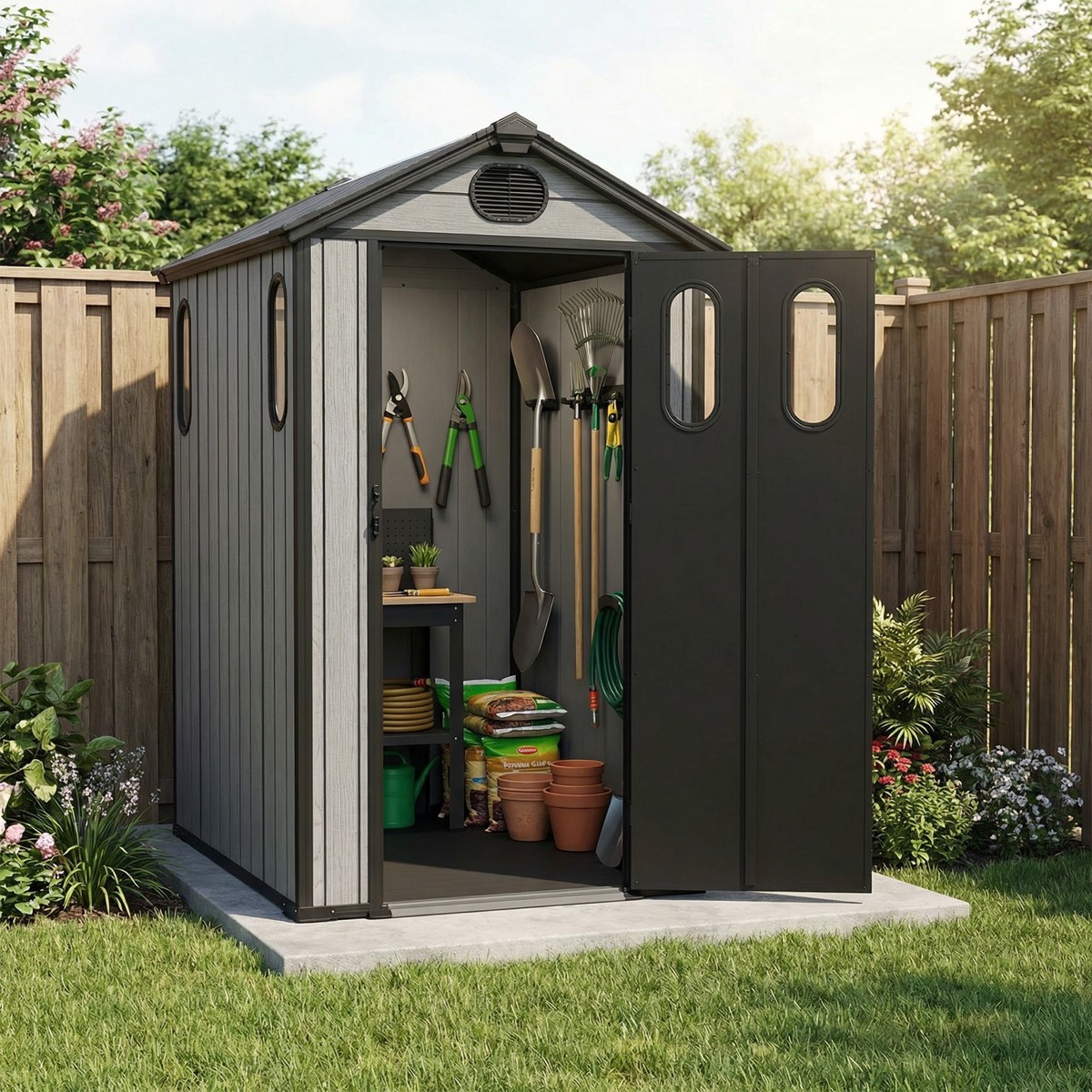 Aoodor 4.2x5.2 FT Outdoor Storage Shed Resin Tool House Lockable Door 4 Windows$299.99Last checked Nov 14, 2026View on eBay
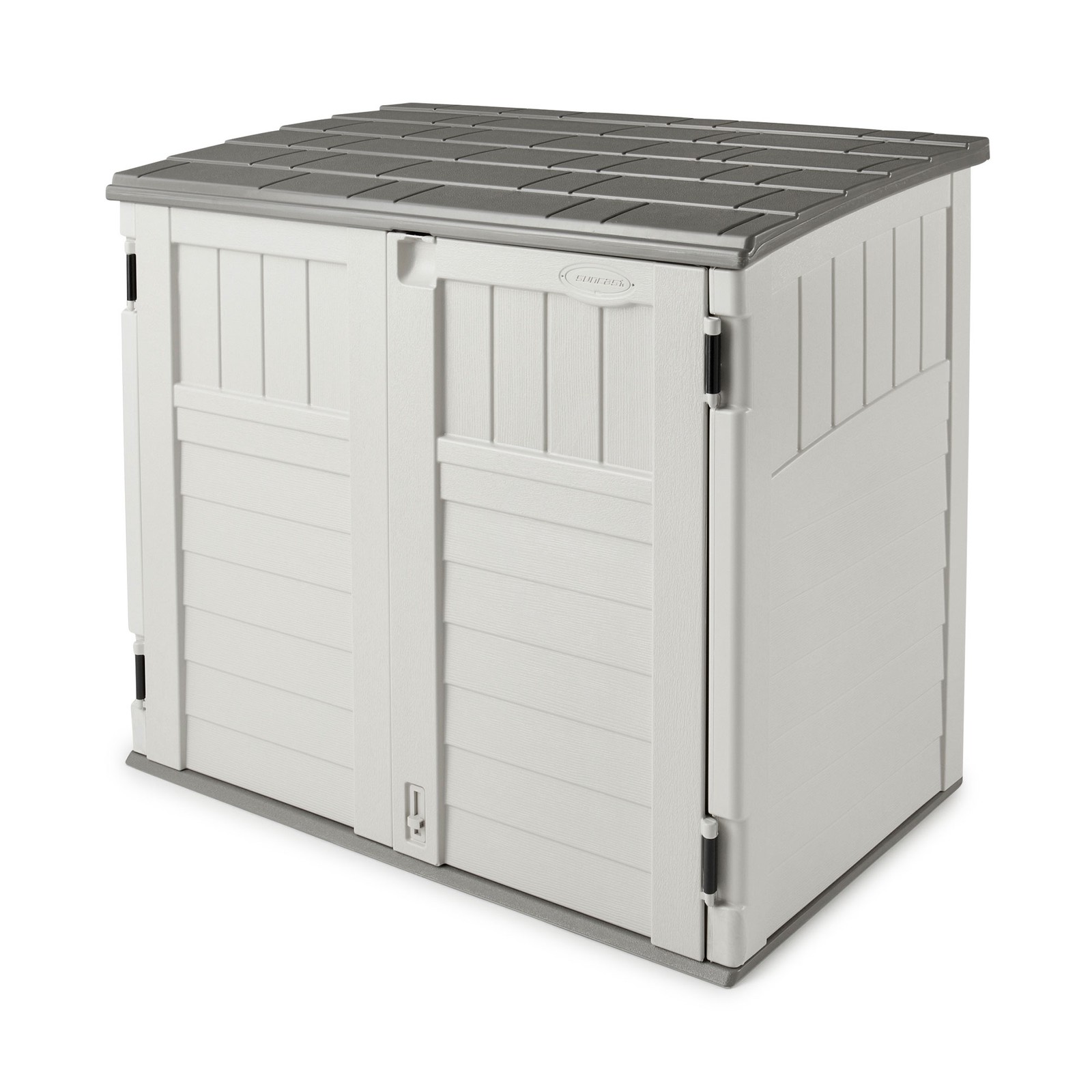 Suncast BMS2500 53 x 31.5 x 45.5" Horizontal Resin Outdoor Storage Shed w/ Floor$334.99Last checked Nov 14, 2026View on eBay
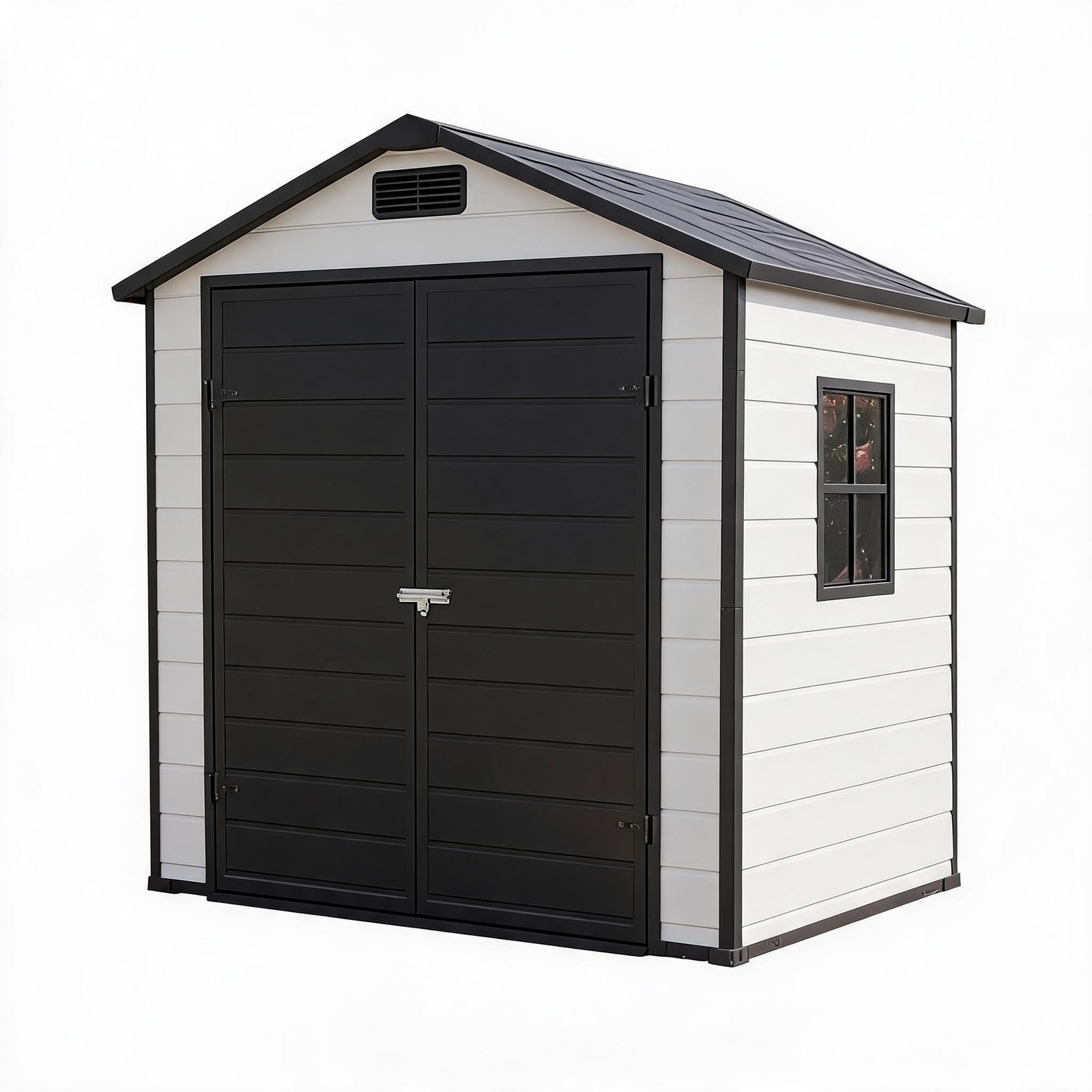 Storage Shed 6x4ft Resin Outdoor Plastic Garden Tool w/ Floor & Window$353.77New · Last checked Nov 23, 2026View on eBay
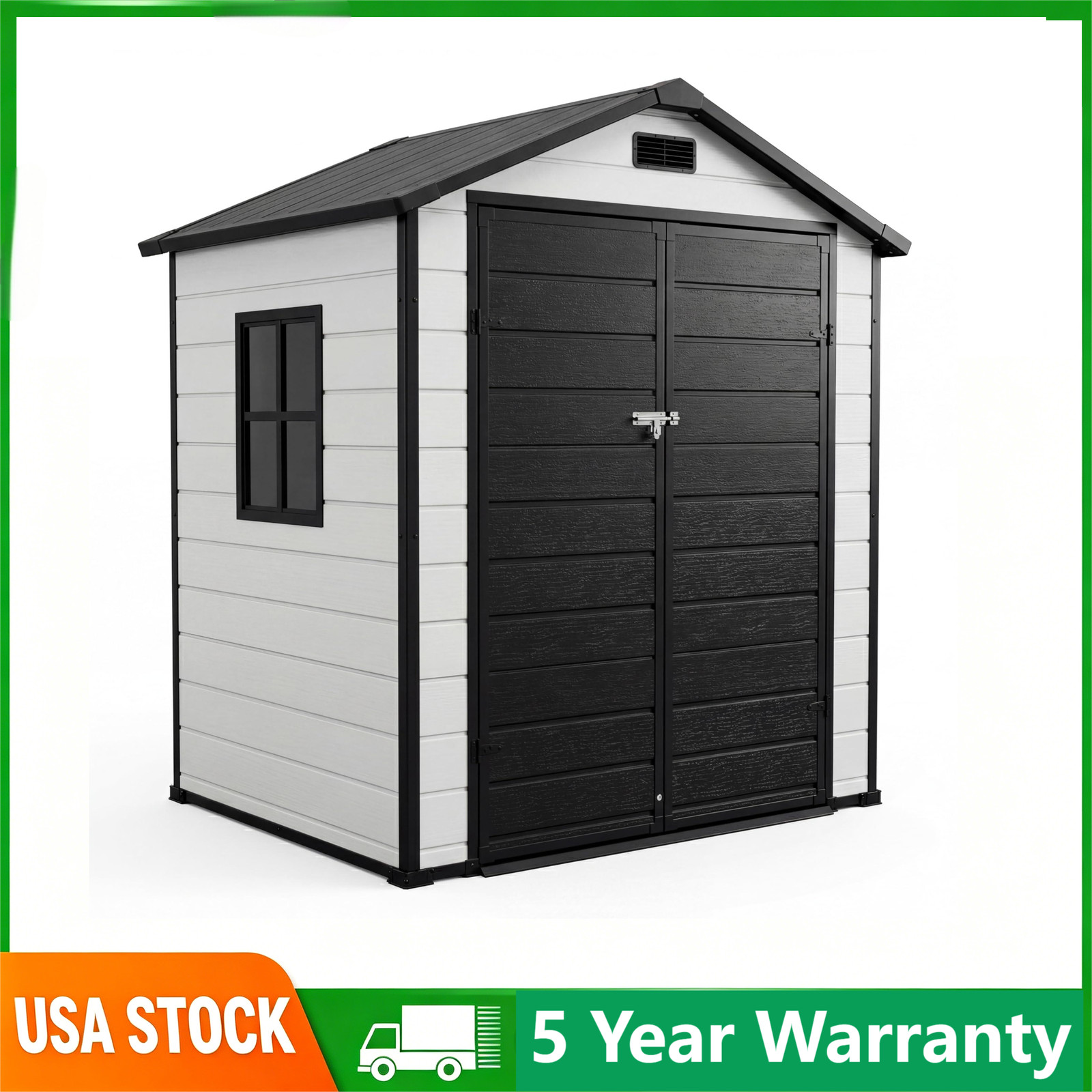 6' x 4' Outdoor Storage Shed with Floor Plastic Resin Garden Shed W/ Window Door$358.20Last checked Nov 14, 2026View on eBay
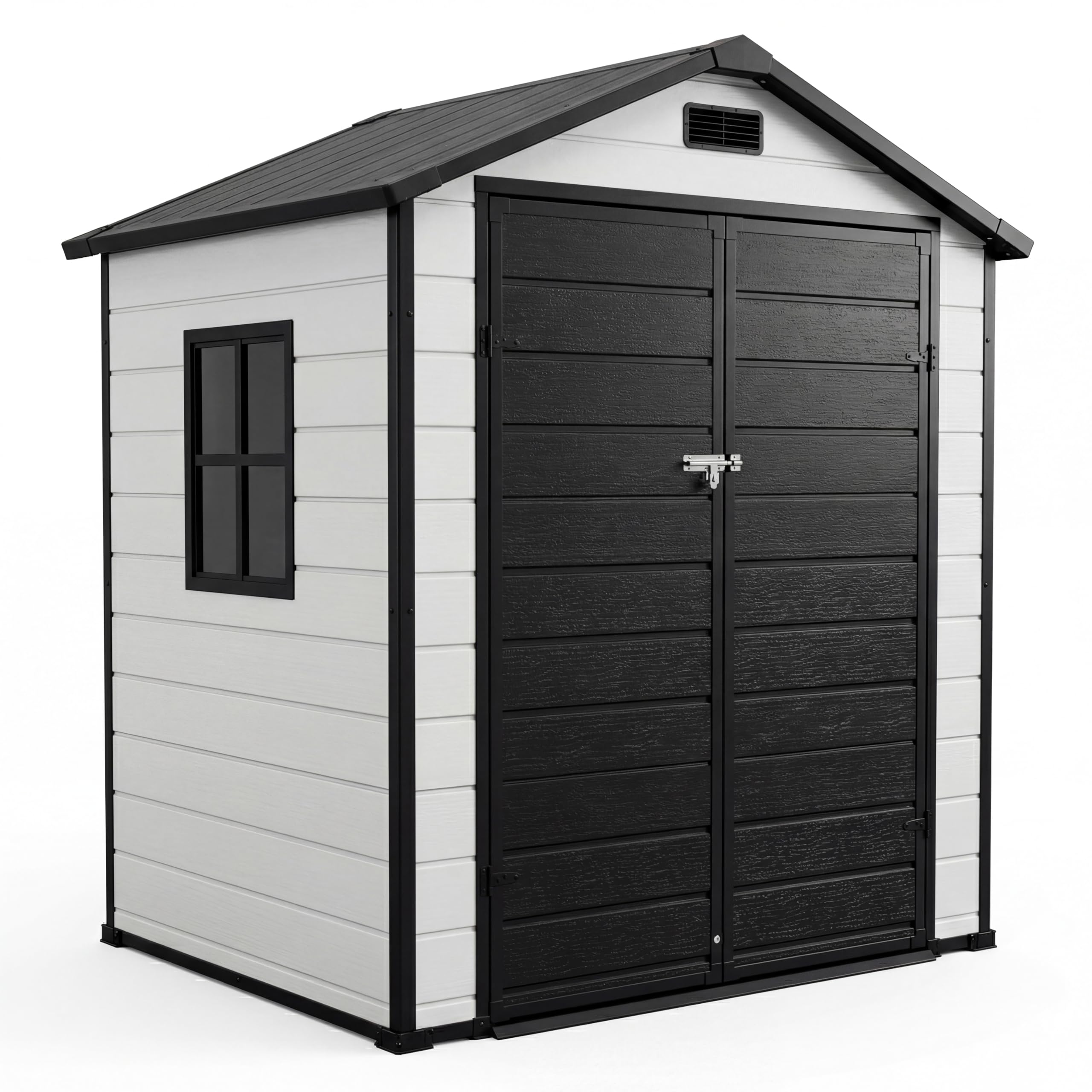 6x4 FT Resin Outdoor Storage Shed with Floor Double Doors Lockable Window Garden$374.99Last checked Nov 16, 2026View on eBay
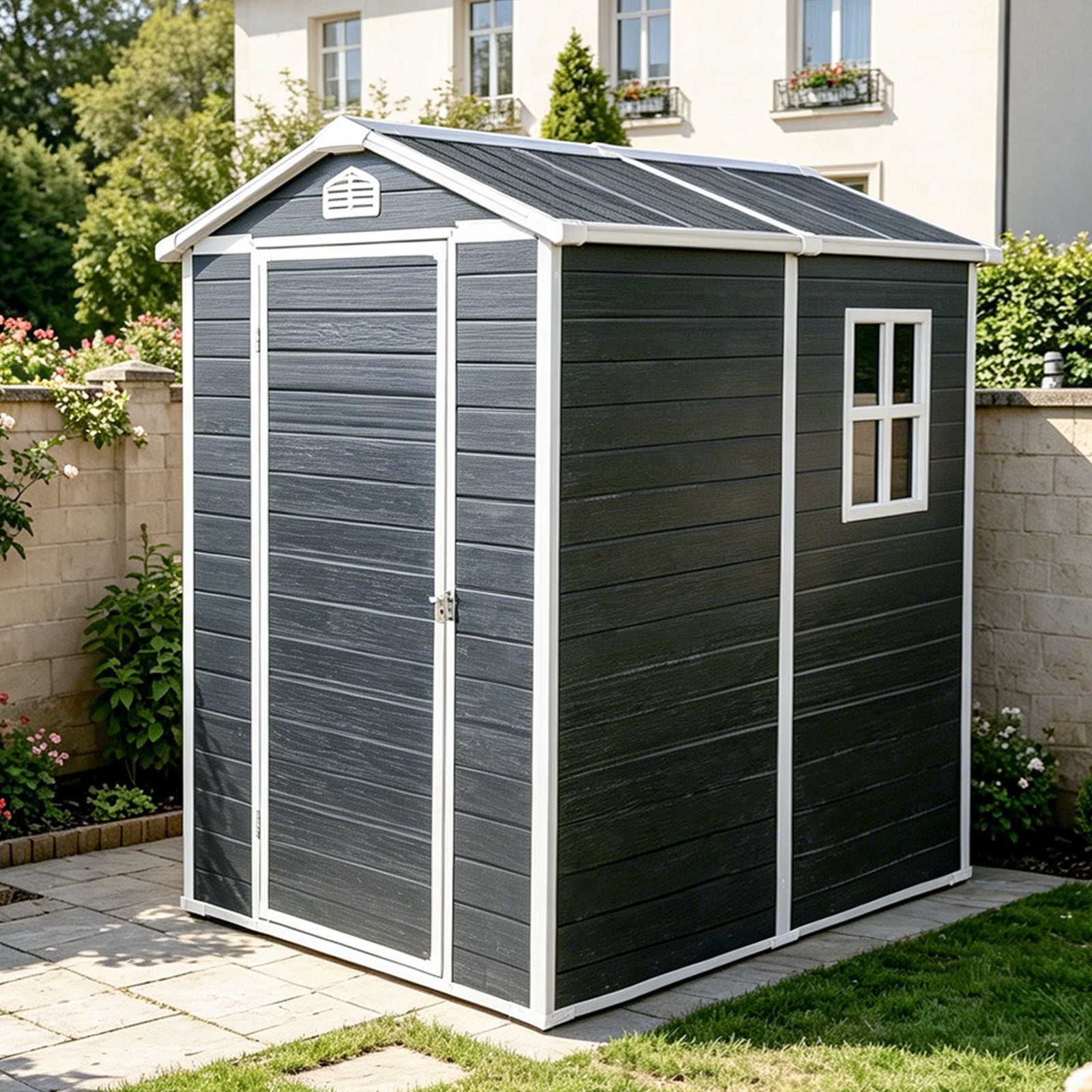 4x6 FT Outdoor Resin Storage Shed Garden Shed w/Floor & Lockable Door for Yard$384.99Last checked Nov 14, 2026View on eBay
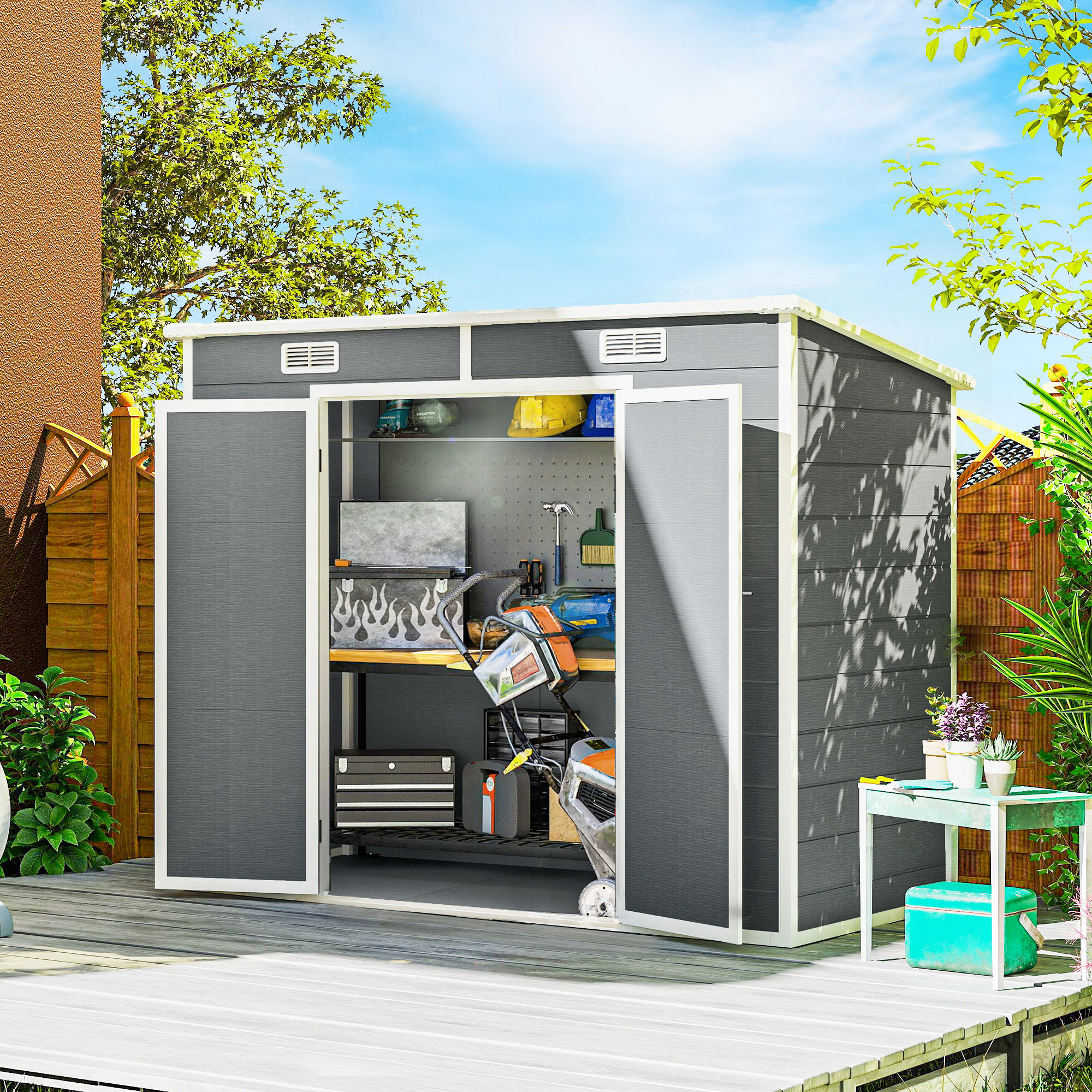 Outsunny Outdoor Storage Shed, Resin Shed with Floor$389.99Last checked Nov 17, 2026View on eBay
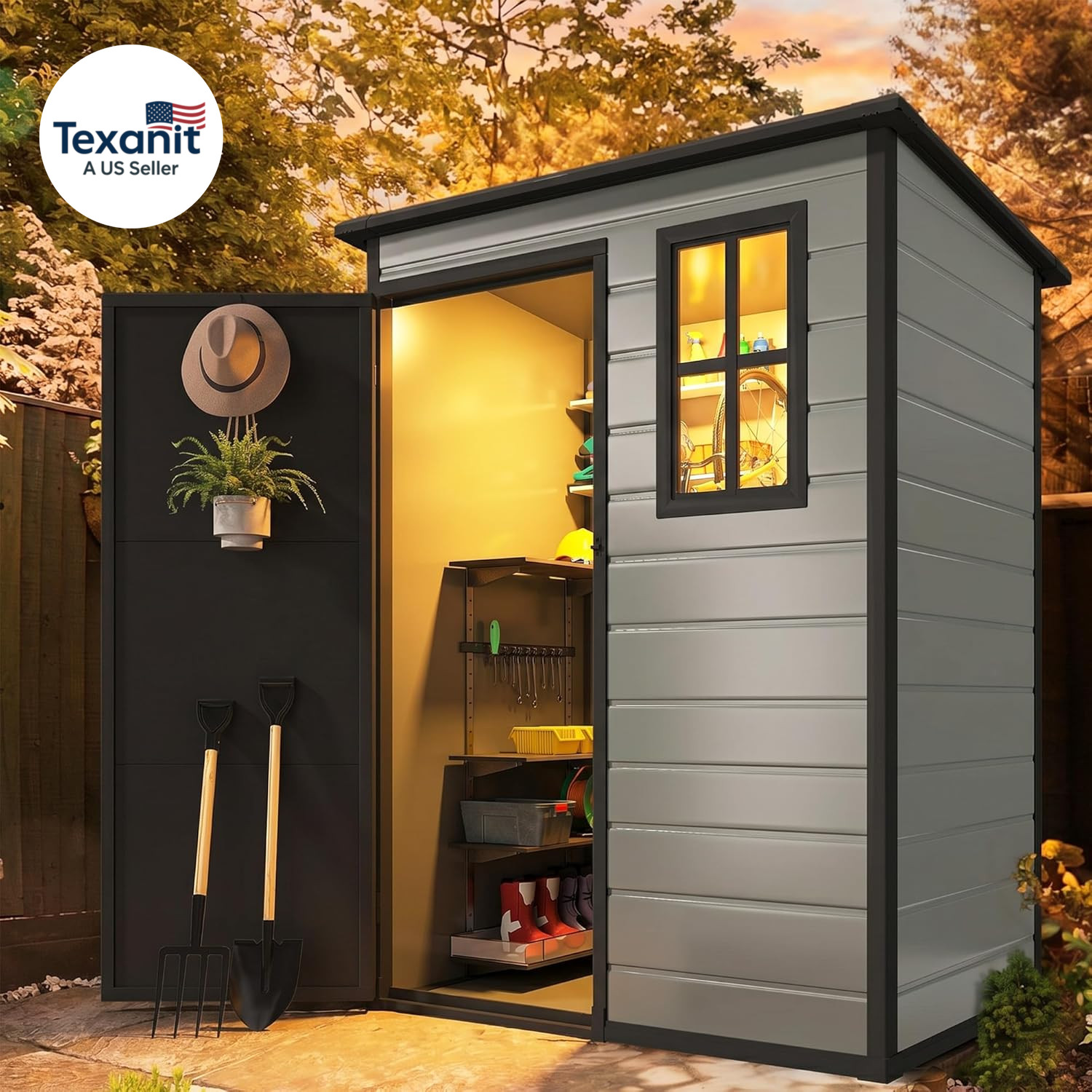 5x3FT Resin Outdoor Storage Shed Waterproof Lockable Garden Tool Shed$487.71Last checked Nov 14, 2026View on eBay
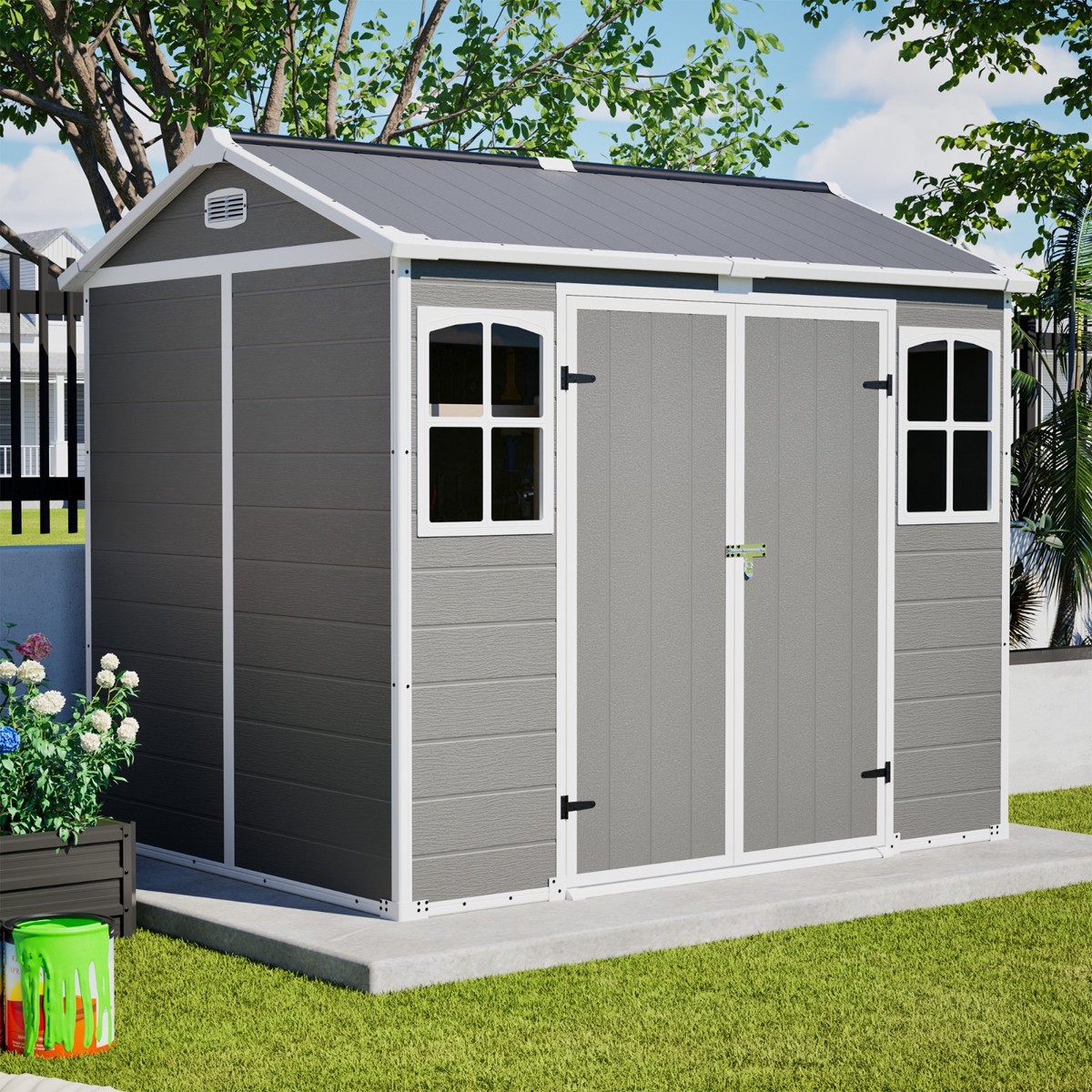 8x6FT Outdoor Resin Storage Shed w/Lockable Doors Plastic Shed w/Floor &Window$669.99Last checked Nov 14, 2026View on eBay
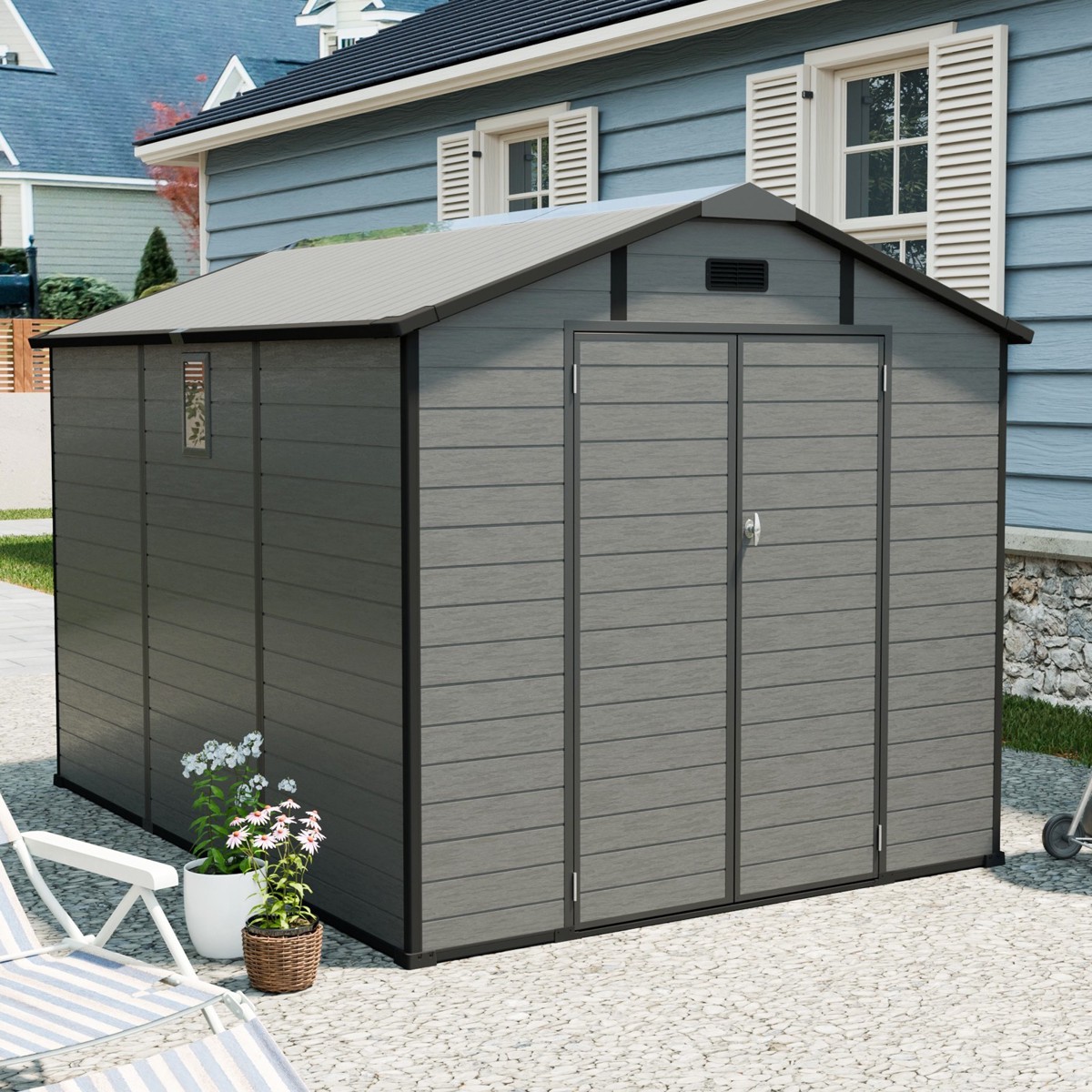 8'x10' Plastic Outdoor Storage Shed Resin Shed with Window & Lockable Doors$909.99Last checked Nov 14, 2026View on eBay
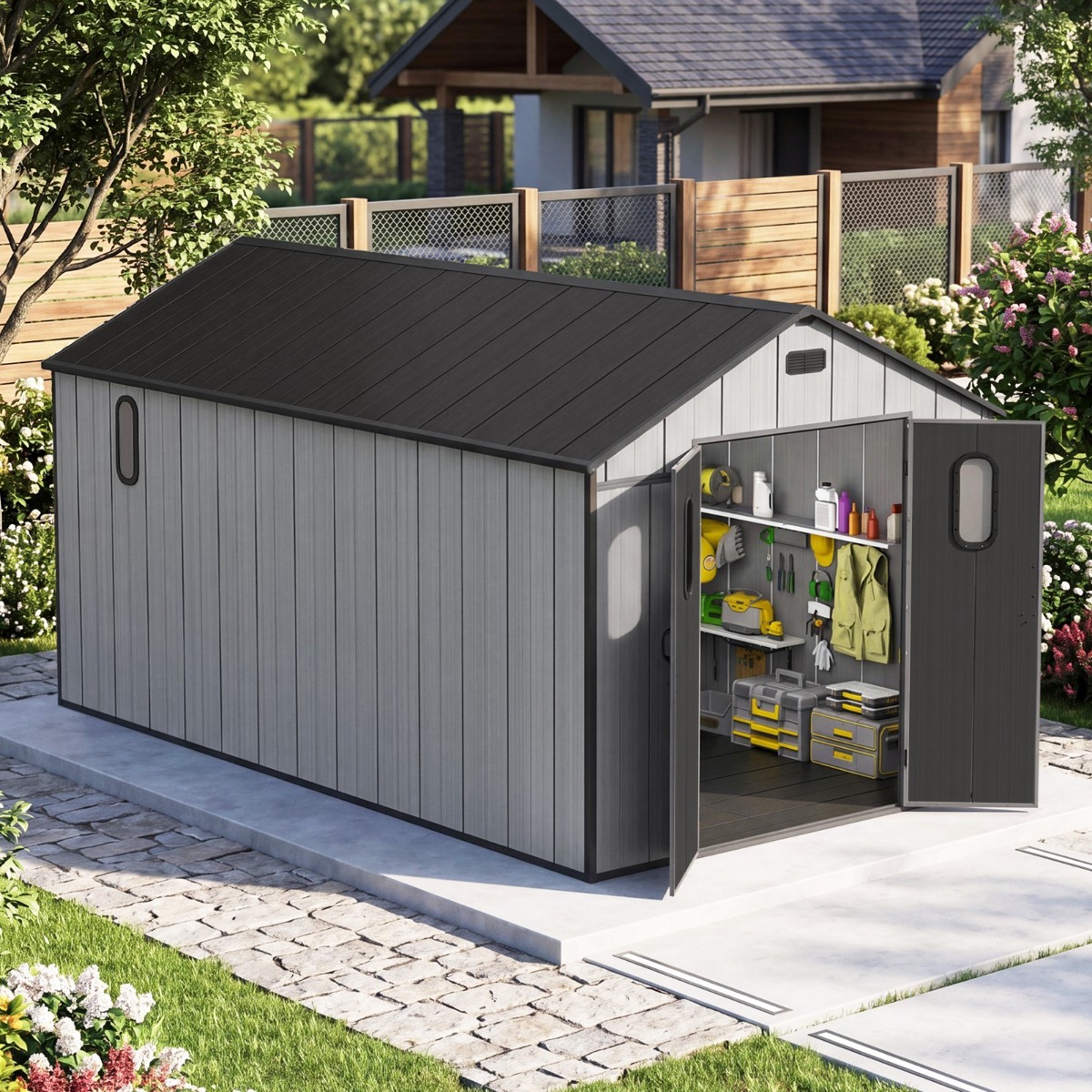 Domi 8'X14' Outdoor Resin Storage Shed,Plastic Garden Shed w/floor&Lockable Door$1,169.99New · Last checked Nov 23, 2026View on eBay
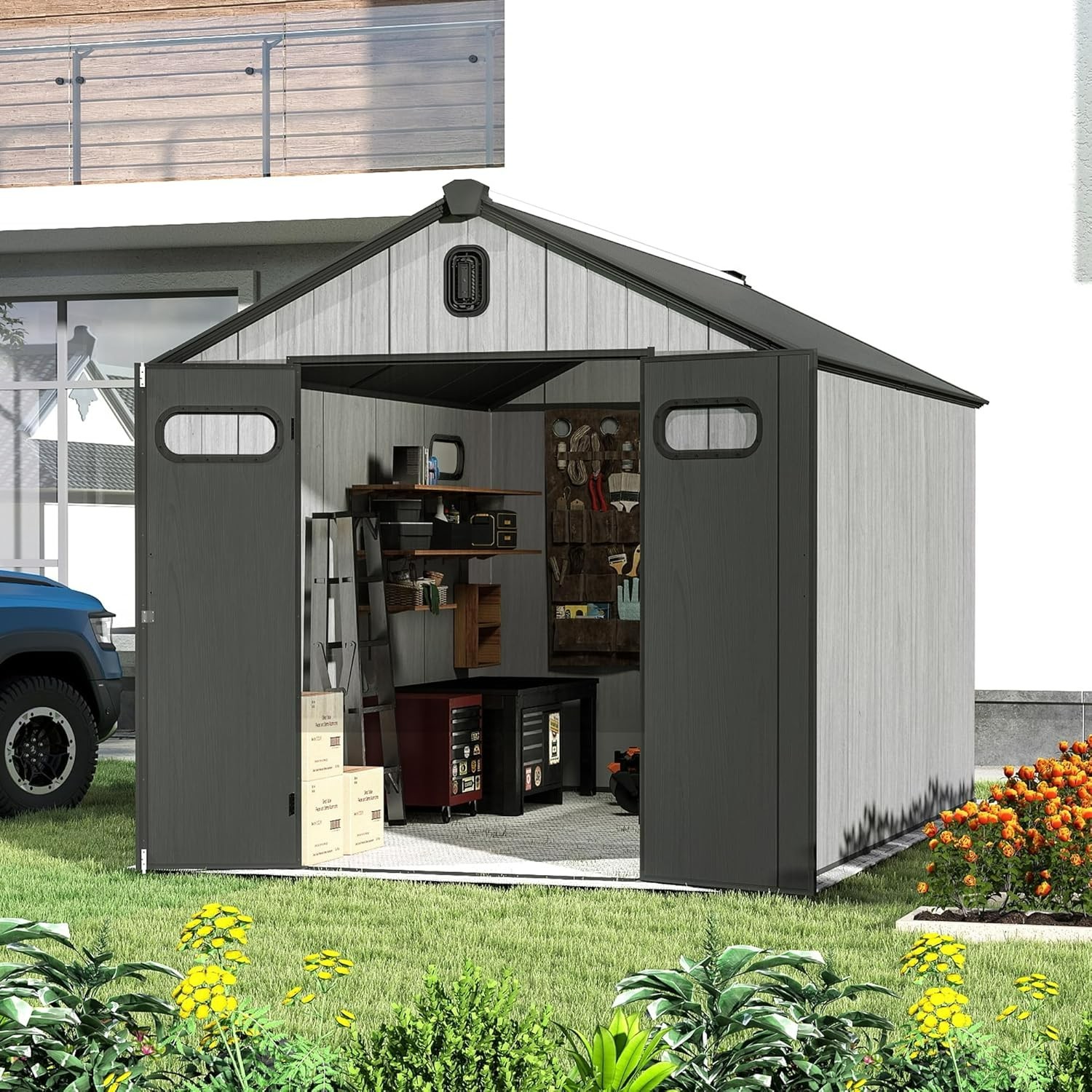 Domi 8'X12' Outdoor Resin Storage Shed,Plastic Garden Shed w/Lockable Door$1,199.98Last checked Nov 14, 2026View on eBay
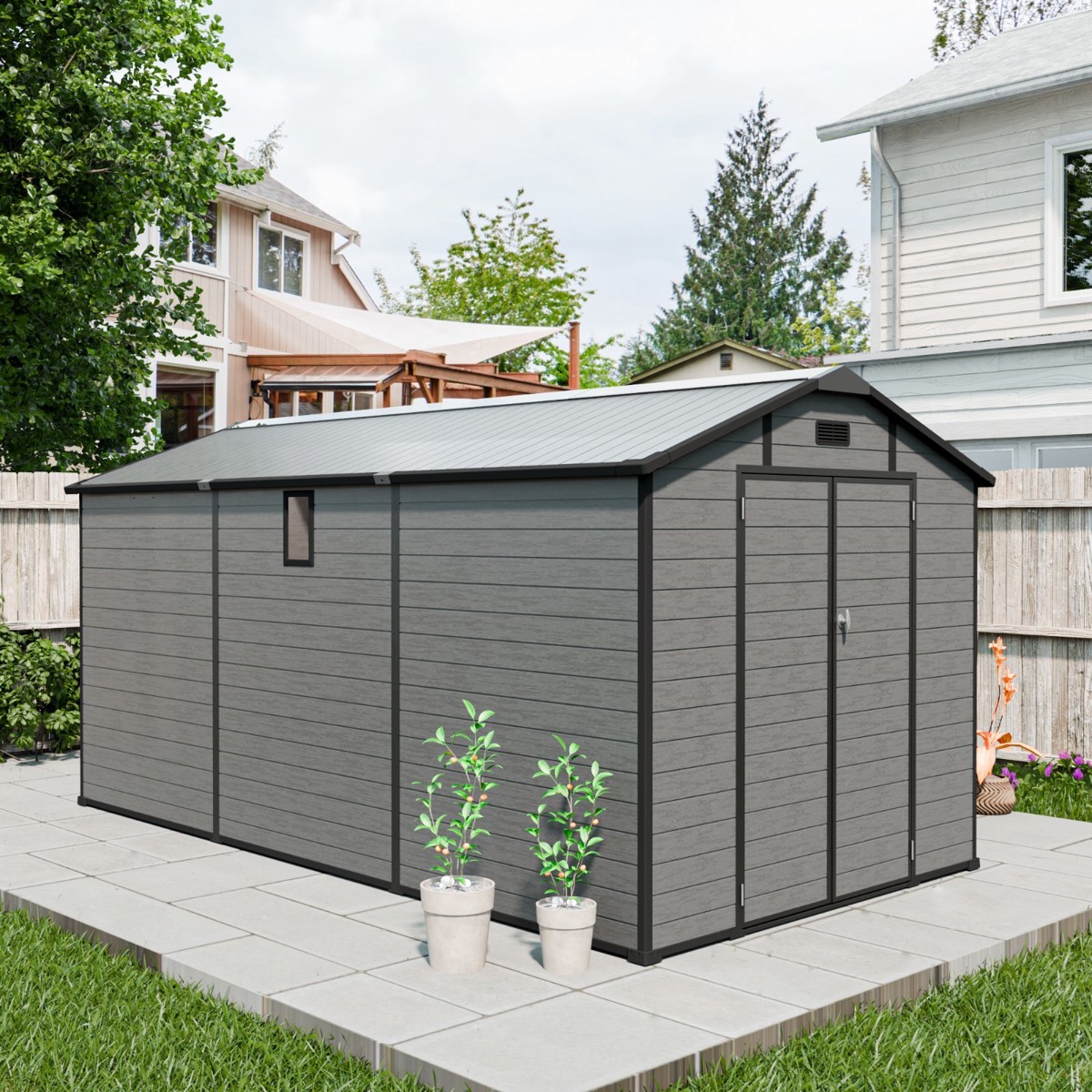 8x14 FT Outdoor Resin Storage Shed Tool House with Floor & Air Vents for Yard$1,279.99Last checked Nov 14, 2026View on eBay
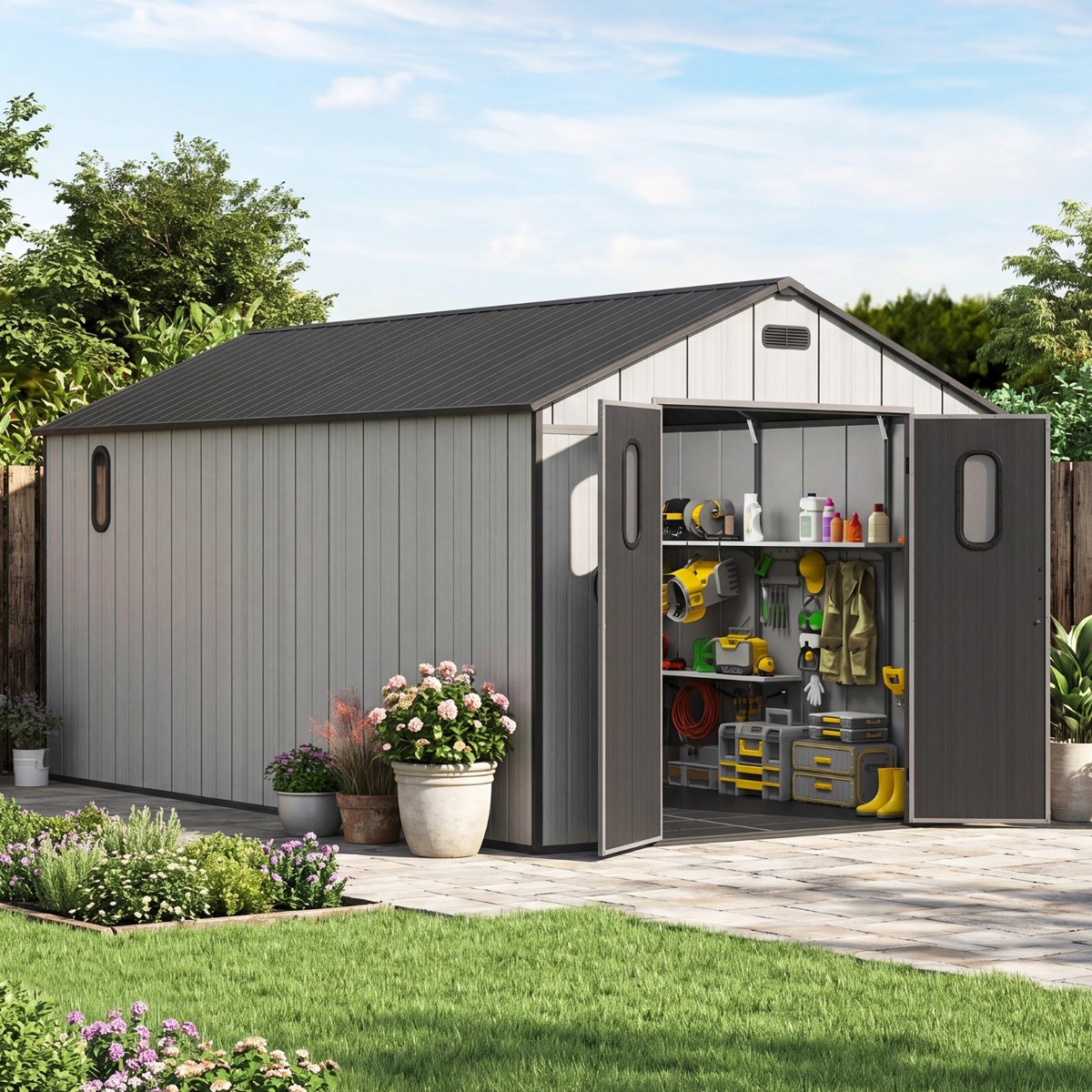 Domi 8'X16' Outdoor Resin Storage Shed,Plastic Garden Shed w/floor&Lockable Door$1,349.99New · Last checked Nov 23, 2026View on eBay
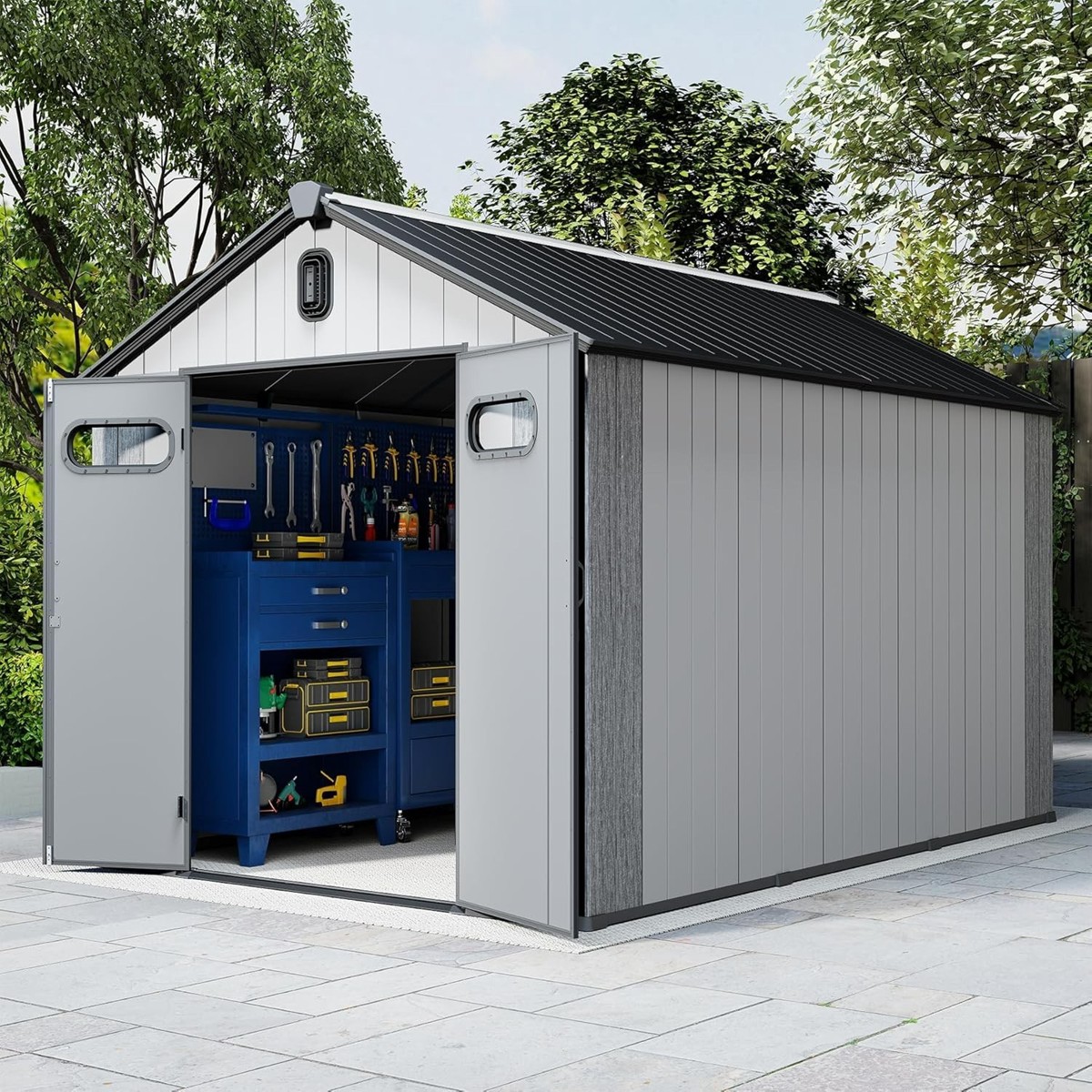 Domi 8'X14' Outdoor Resin Storage Shed,Plastic Garden Shed w/Lockable Door$1,394.99Last checked Nov 14, 2026View on eBay
Highlights
- Panel construction splits into single-wall blow-molded (entry tier) and double-wall resin with steel or wood reinforcement (premium); double-wall resists dents, snow load, and UV fade.
- Floor kits matter: horizontal cabinets often ship floorless, while vertical sheds include a resin or slatted floor that keeps tools off soil and blocks ground moisture.
- Resin is UV-stabilized HDPE/PP; non-stabilized panels chalk and crack within a few seasons, so spec sheets should list UV treatment, not just 'resin'.
- Anchoring is structural, not optional: resin sheds are light and must be bolted to a slab or tied down with ground anchors in wind zones; doors and hinges are the first failure point.
Best use cases
- Best fit: a 4x6 to 8x10 vertical resin shed for lawn mowers, bikes, and garden tools in a backyard with a level patio or gravel pad; pick double-wall and an included floor.
- Best fit: a horizontal resin cabinet (26-34 cu ft) against a house wall for pool chemicals, cushions, and trash bins where height is limited and quick access matters; skip shelves if you store tall items.
- Wrong fit: walk-in workshop or heavy bench equipment; resin sheds lack structural studs and floor load ratings for that, so choose a metal or wood shed.
- Skip: unanchored resin sheds in high-wind or heavy-snow regions and any listing without panel thickness or UV stabilization stated.
Buying tips
- Size to the footprint, not the label: an 8x10 shed needs a level pad at least 8x10 ft plus clearance for door swing; measure the gate width for the largest panel before ordering.
- Demand double-wall panels at least 0.8 in (20 mm) thick for anything storing mowers or snow-load exposure; single-wall panels are for light hand-tool cabinets only.
- Match door height to use: vertical sheds usually clear 60-70 in; horizontal cabinets top out near 45 in, so confirm your tallest item fits before choosing a low cabinet.
- Check floor and anchor hardware in the box: a shed without a floor kit or ground-anchor kit requires buying those separately, and missing anchors void wind resistance.
Specs
| Panel Construction | Single-wall vs double-wall resin |
|---|---|
| Footprint Range | 3x5 ft cabinet to 8x10 ft shed |
| Floor Kit | Included resin/slat vs floorless |
| Anchoring | Ground anchors or slab bolts required |
Related searches
What to check before buying
- Measure your level pad or patio: resin sheds require a flat, drained surface (concrete, pavers, or compacted gravel); sloped ground causes door misalignment and panel stress.
- Confirm local snow and wind loads against the shed's stated rating; if unstated, assume light-duty and anchor accordingly or choose a reinforced model.
- Verify HOA or permit rules for outbuilding footprint and height before buying; resin sheds still count as structures in most jurisdictions.
- Check door swing clearance and path width from street to site, since panels ship flat and large 8x10 boxes are heavy and awkward to move.
FAQ
Data sources: eBay / Amazon listings and product attribute feeds. Updated Nov 27, 2026.
Some links on this page are affiliate links. If you buy after clicking one, we may earn a commission at no extra cost to you. This does not change which products appear here or their order. Affiliate disclosure.