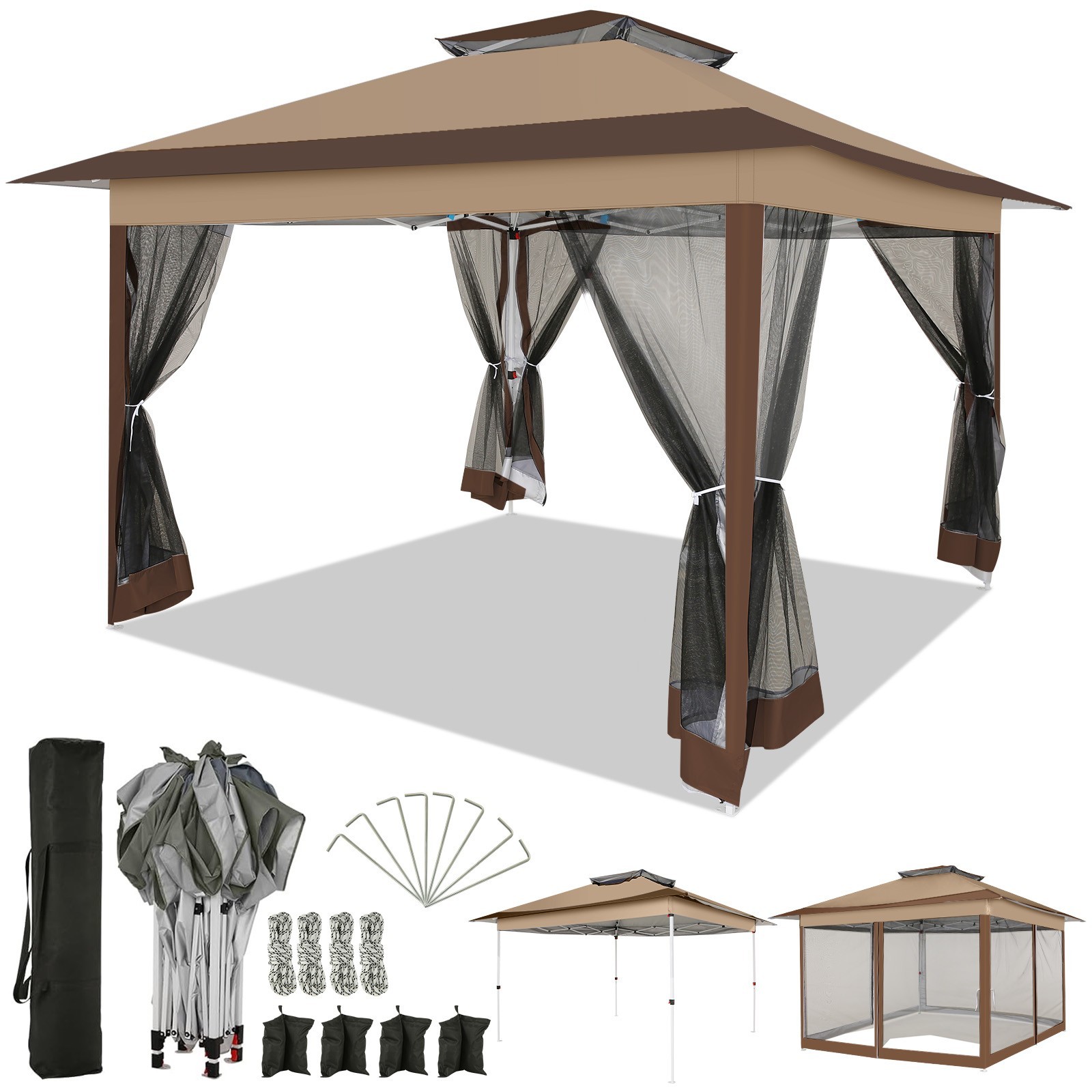

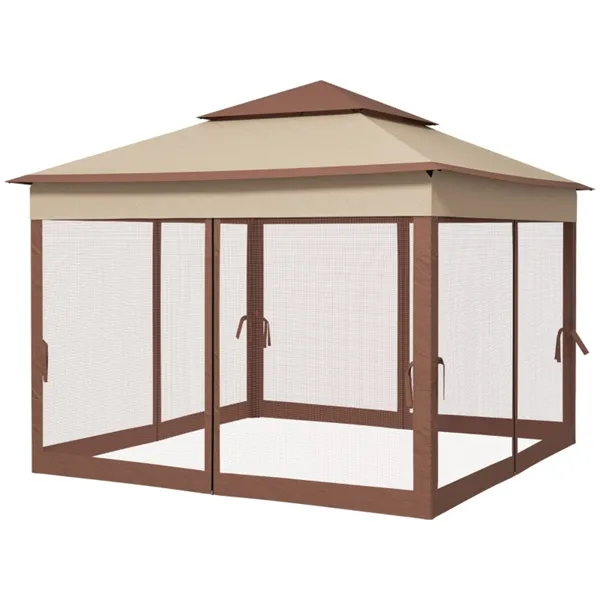
Photos from current listings. Actual item, color, and included accessories may vary.
Pop Up Gazebo Buying Guide
Pop-up gazebos are bought for fast, tool-free shade at markets, campsites, and backyard gatherings, but frame gauge and canopy fabric weight decide whether they survive a second season. Most first-time buyers underestimate wind bracing and anchor requirements, then discover the frame twists or the top pools water in the first storm. Match the footprint to your deck or stall size and check the frame material grade before anything else.
Median $358.99
Key takeaways
- Steel frames with 25-31mm square legs and cross-bracing hold shape under wind; thinner 20mm legs flex and kink at the joint collars.
- Canopy fabric weight separates tiers: 160-210D polyester is light-duty, 300D+ oxford with PU coating resists rain and UV fading longer.
- Pop-up hubs use either nylon or steel pivot joints; steel hubs last through repeated setups, nylon hubs crack after a few seasons of sun exposure.
At a glance
- Category
- Outdoor Structures, Shade & Awnings
- Last updated
- Nov 27, 2026
Current offers
Highlights
- Steel frames with 25-31mm square legs and cross-bracing hold shape under wind; thinner 20mm legs flex and kink at the joint collars.
- Canopy fabric weight separates tiers: 160-210D polyester is light-duty, 300D+ oxford with PU coating resists rain and UV fading longer.
- Pop-up hubs use either nylon or steel pivot joints; steel hubs last through repeated setups, nylon hubs crack after a few seasons of sun exposure.
- Mosquito netting models trade half the side panels for mesh walls, cutting wind resistance but blocking insects for dining and camping use.
Best use cases
- Buy a 10x10ft steel-frame pop-up with 300D canopy for backyard parties and market stalls—this size fits two folding tables and clears standard deck railings.
- Skip the 12x12ft mesh model for open beach or ridge-top sites; the mesh walls catch wind like a sail and need four sandbags or ground stakes at every leg.
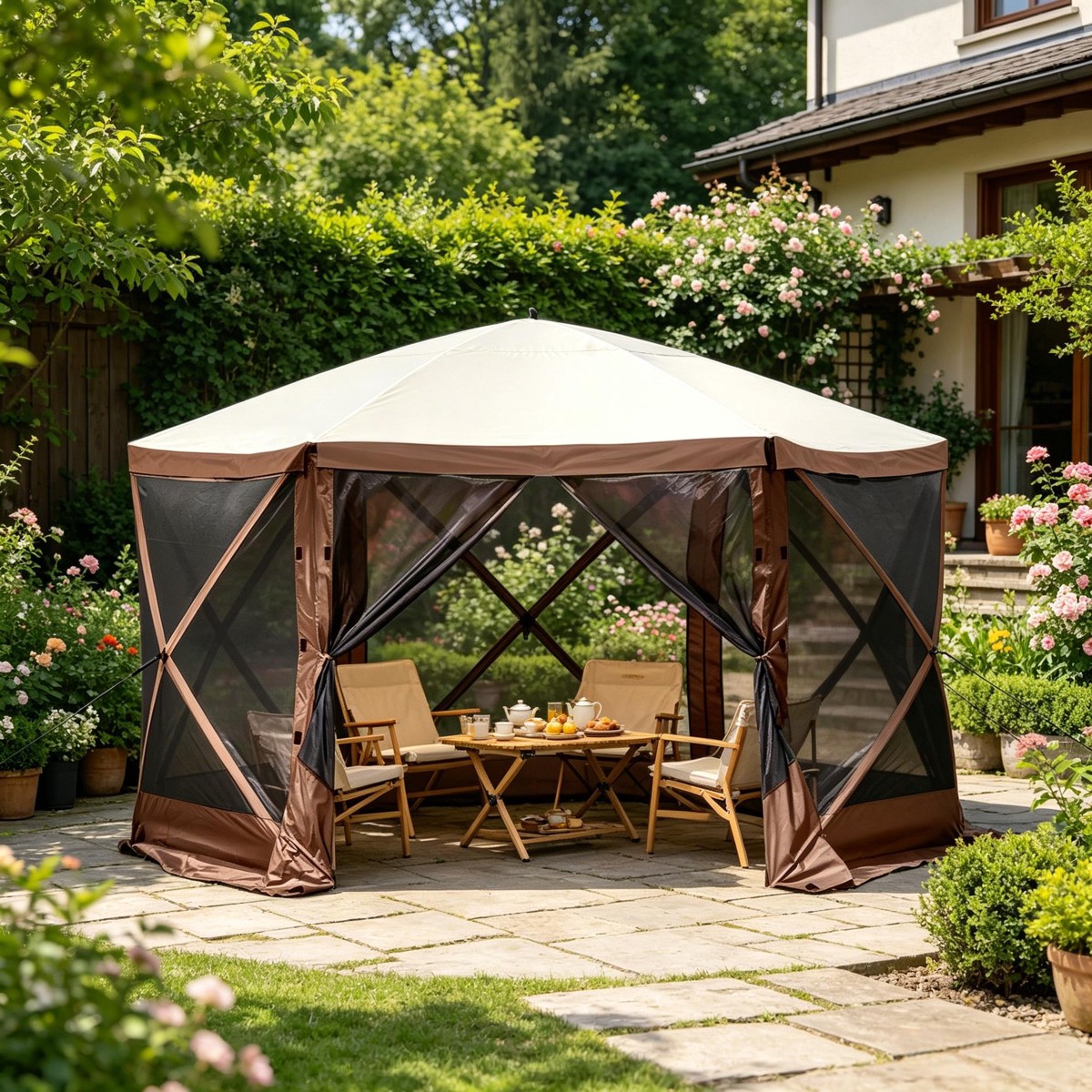
- Choose a mesh-net canopy for camping or patio dining where bugs are the problem, accepting reduced rain shedding compared to solid-wall models.
- Avoid setting up any pop-up on a windy day without anchoring: a 10x10 canopy acts as a parachute and lifts even weighted frames above 20 mph gusts.
Buying tips
- Check leg diameter and wall thickness first: 25-31mm square steel legs with 0.6-0.8mm walls resist bending, while round or thin legs buckle at the slider joints.
- Prioritize canopy fabric denier: 300D oxford polyester with PU and UV coating outlasts 160-210D budget fabric that fades and tears within one summer.
- Choose steel pivot hubs over nylon for frequent setup and takedown; nylon hubs crack after repeated sun exposure and stress at the folding joints.
- Size the footprint to your actual space: 10x10ft fits a small patio or market booth, while 12x12ft needs a clear 12ft span and blocks more wind.
Specs
| Frame Material | Steel square tube vs aluminum |
|---|---|
| Canopy Fabric | 160-210D vs 300D+ oxford |
| Footprint Size | 10x10 ft vs 12x12 ft |
| Wall Config | Open vs mesh netting vs solid |
What to check before buying
- Measure your patio, deck, or stall footprint and confirm at least 1ft clearance on each side for leg placement and anchoring stakes.
- Verify ground surface: grass and dirt accept stake anchors, but concrete and decking require weighted sandbags or base plates at each leg.
- Check frame collapsed length against your vehicle cargo space; most 10x10 pop-ups fold to roughly 4-5ft long and fit in a trunk or hatchback.
- Confirm the canopy includes a wheeled carry bag and that the frame weight is manageable for one person to lift onto a vehicle roof.
FAQ
Data sources: eBay / Amazon listings and product attribute feeds. Updated Nov 27, 2026.
Some links on this page are affiliate links. If you buy after clicking one, we may earn a commission at no extra cost to you. This does not change which products appear here or their order. Affiliate disclosure.