
Photos from current listings. Actual item, color, and included accessories may vary.
Plastic Shed Buying Guide
Plastic sheds are resin or high-density polyethylene structures used for garden tool and equipment storage, defined by panel wall thickness, UV stabilization, and steel-core reinforcement. The core trade-off is resin thickness versus price: thin hollow panels crack and fade, while double-wall steel-reinforced panels survive wind, snow, and sun for decades. The decision rule is simple—buy double-wall resin with a steel frame and anchored floor kit, skip single-wall hollow panels unless the shed sits in full shade with zero snow load.
Median $846.99 · New listings
Key takeaways
- Wall construction separates tiers: single-wall hollow resin panels (roughly 1 inch) versus double-wall blow-molded panels with steel or aluminum inserts for structural rigidity.
- UV-stabilized HDPE or polypropylene resin resists yellowing and embrittlement; non-stabilized resin chalks, fades, and cracks within a few seasons of direct sun.
- Floor kits are either integrated resin floors or separate wood/metal bases; sheds sold without a floor require a level, pressure-treated platform rated for the full loaded weight.
At a glance
- Category
- Outdoor Structures, Shade & Awnings
- Last updated
- Nov 27, 2026
Current offers
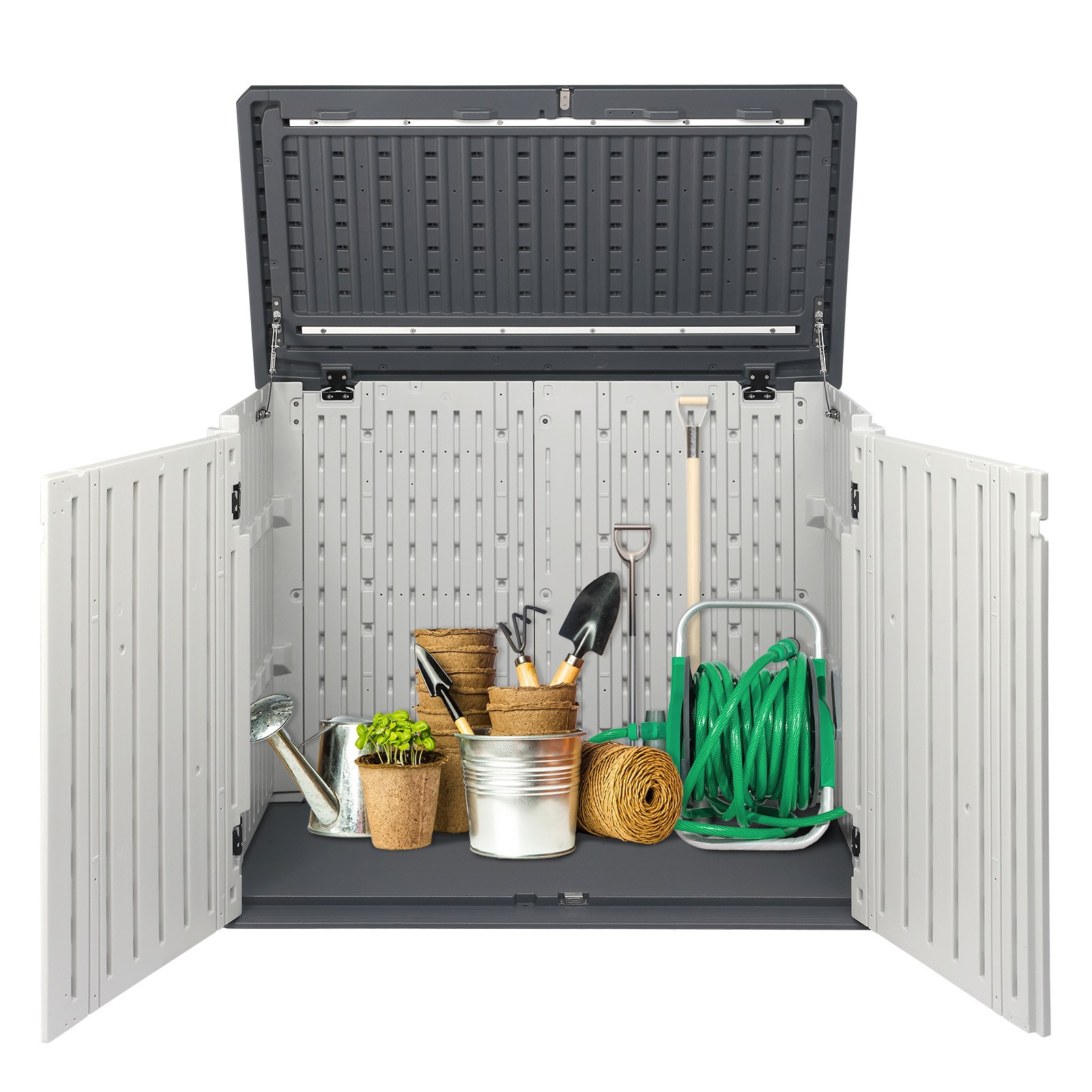 Outdoor Plastic Storage Shed Weather Resistant for Home, Backyard, Garden Tools$189.99Last checked Nov 24, 2026View on eBay
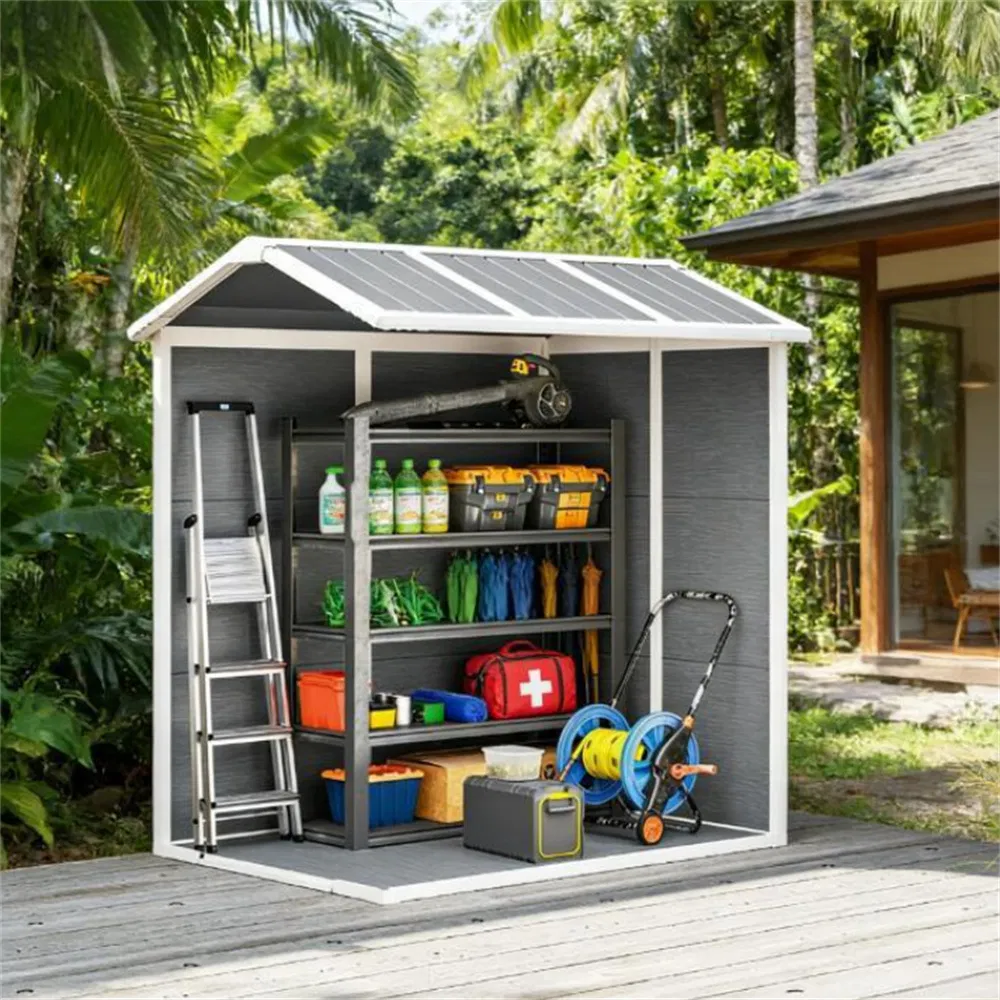 Outdoor storage shed, plastic tool room, garden gray$779.99View on Mallflare
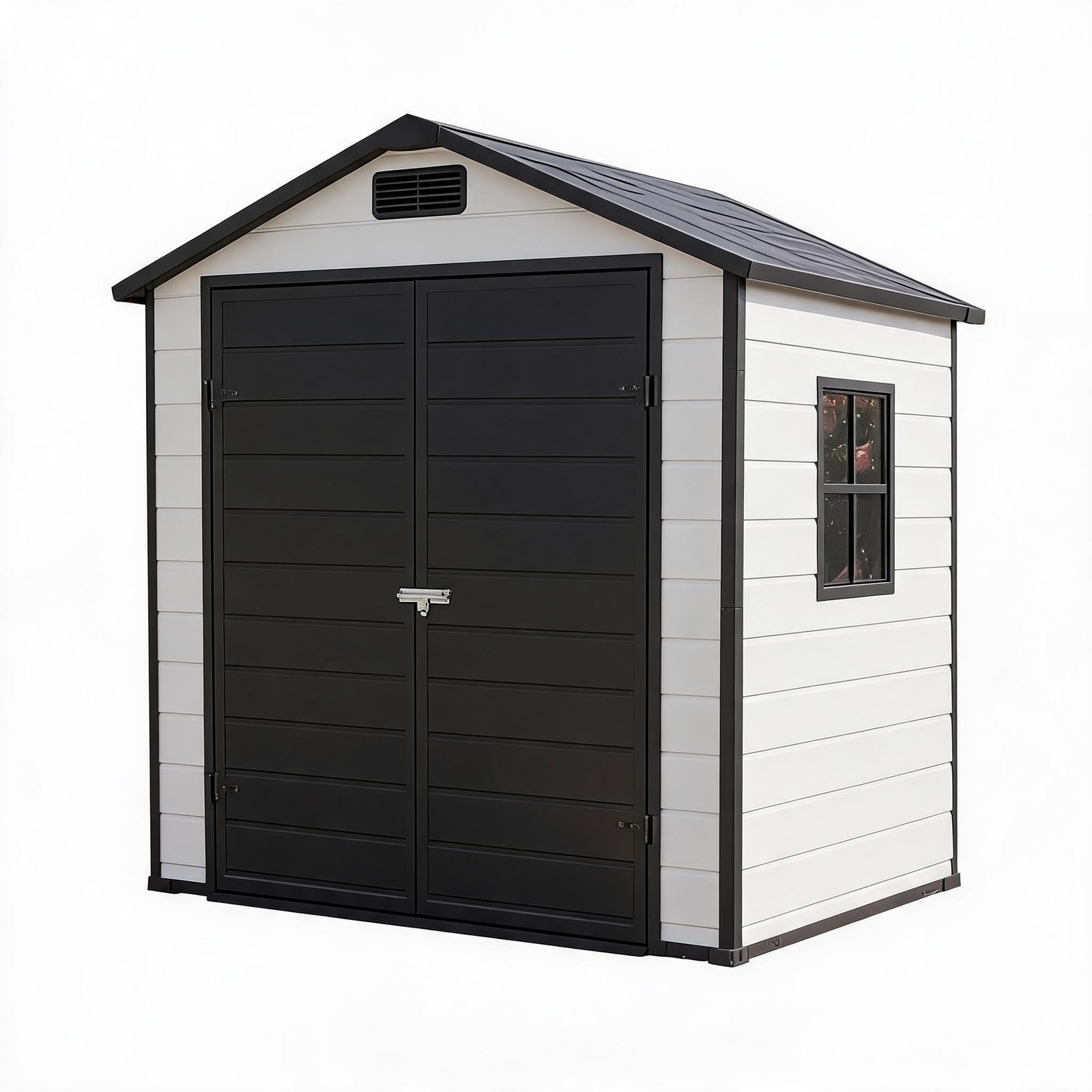 Storage Shed 6x4ft Resin Outdoor Plastic Garden Tool w/ Floor & Window$353.77New · Last checked Nov 23, 2026View on eBay
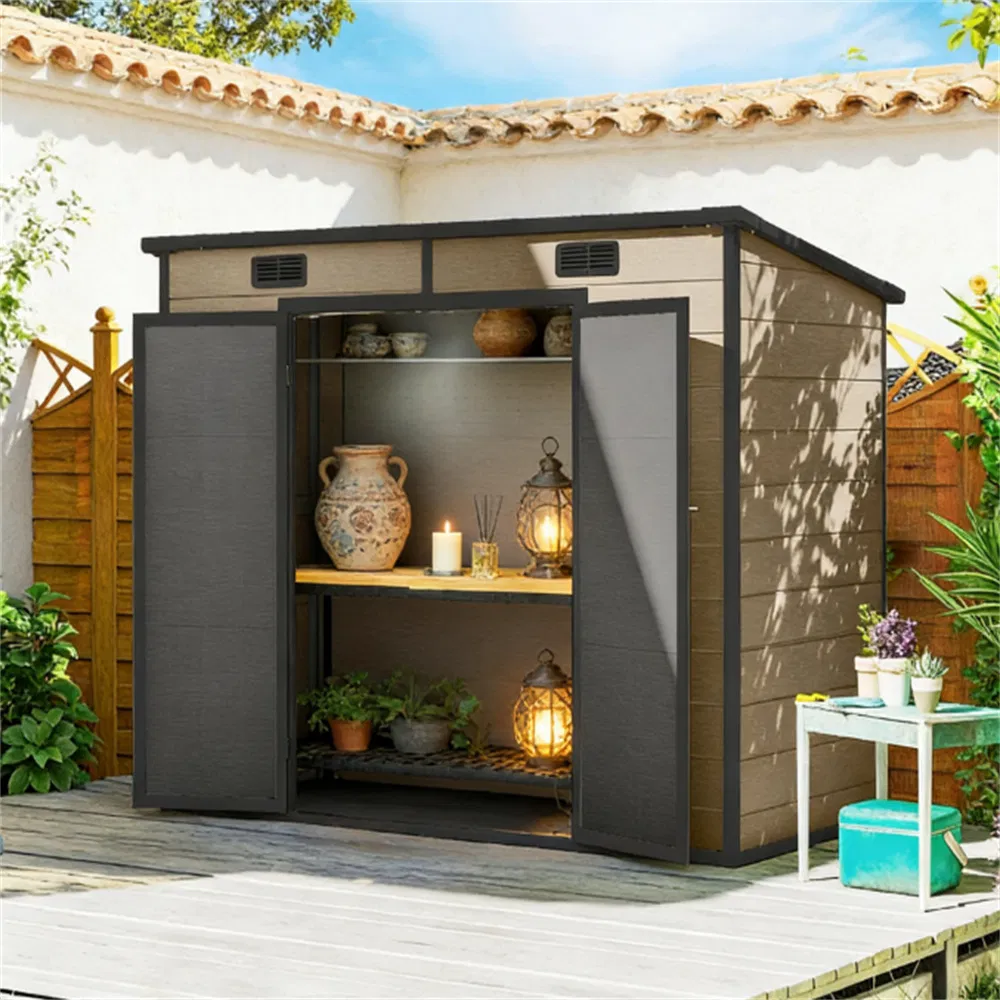 Plastic storage shed, tool room, garden light brown$783.99View on Mallflare
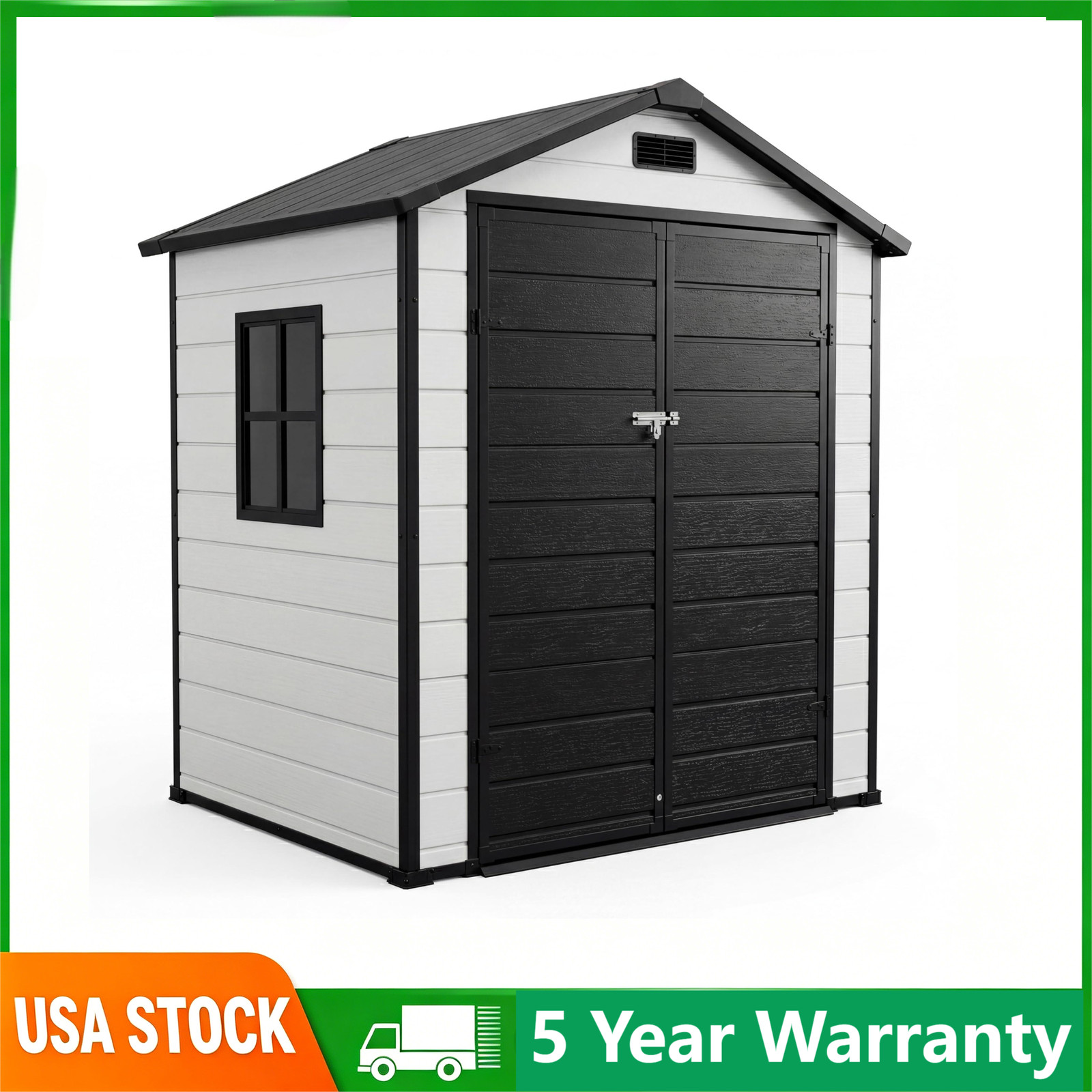 6' x 4' Outdoor Storage Shed with Floor Plastic Resin Garden Shed W/ Window Door$358.20Last checked Nov 14, 2026View on eBay
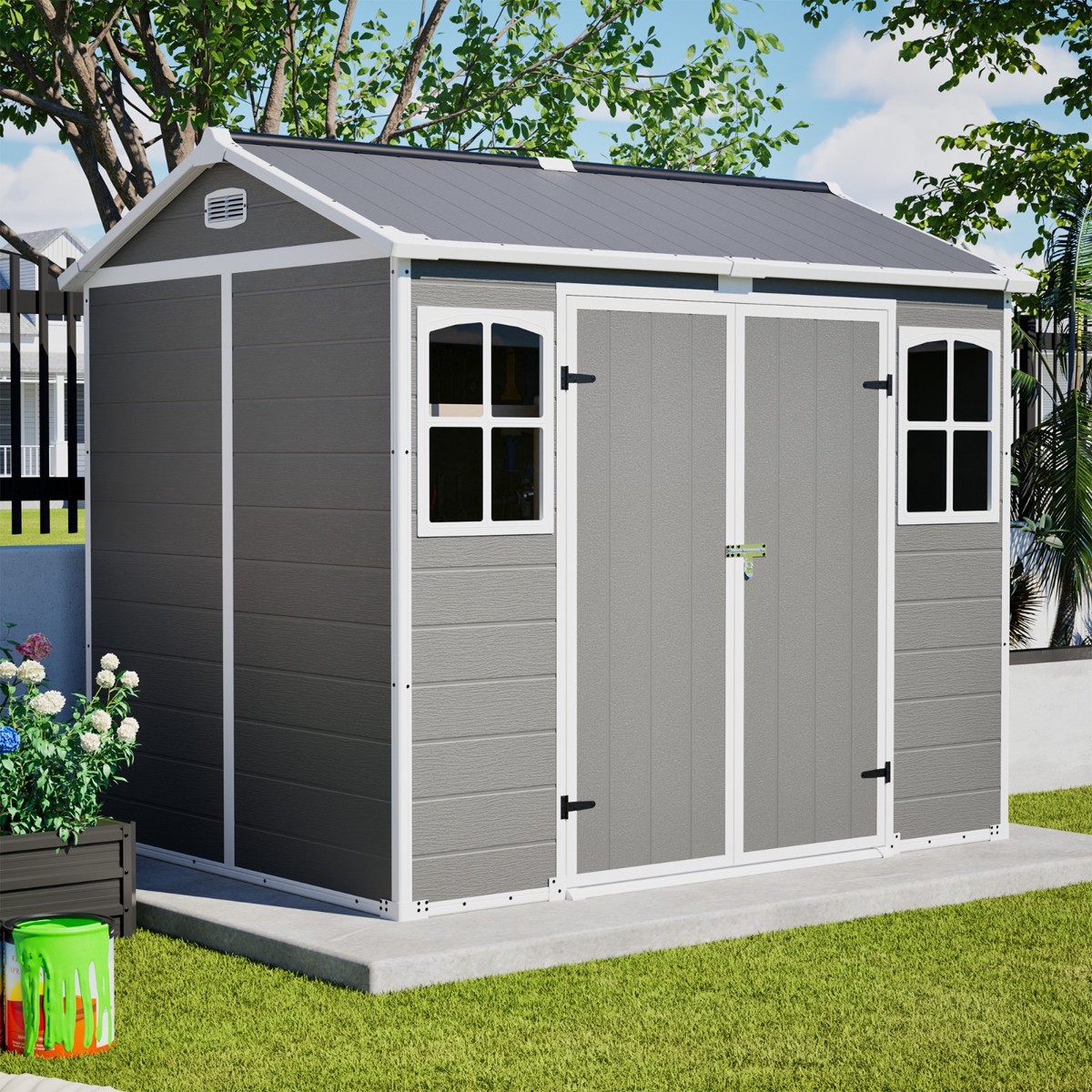 8x6FT Outdoor Resin Storage Shed w/Lockable Doors Plastic Shed w/Floor &Window$669.99Last checked Nov 14, 2026View on eBay
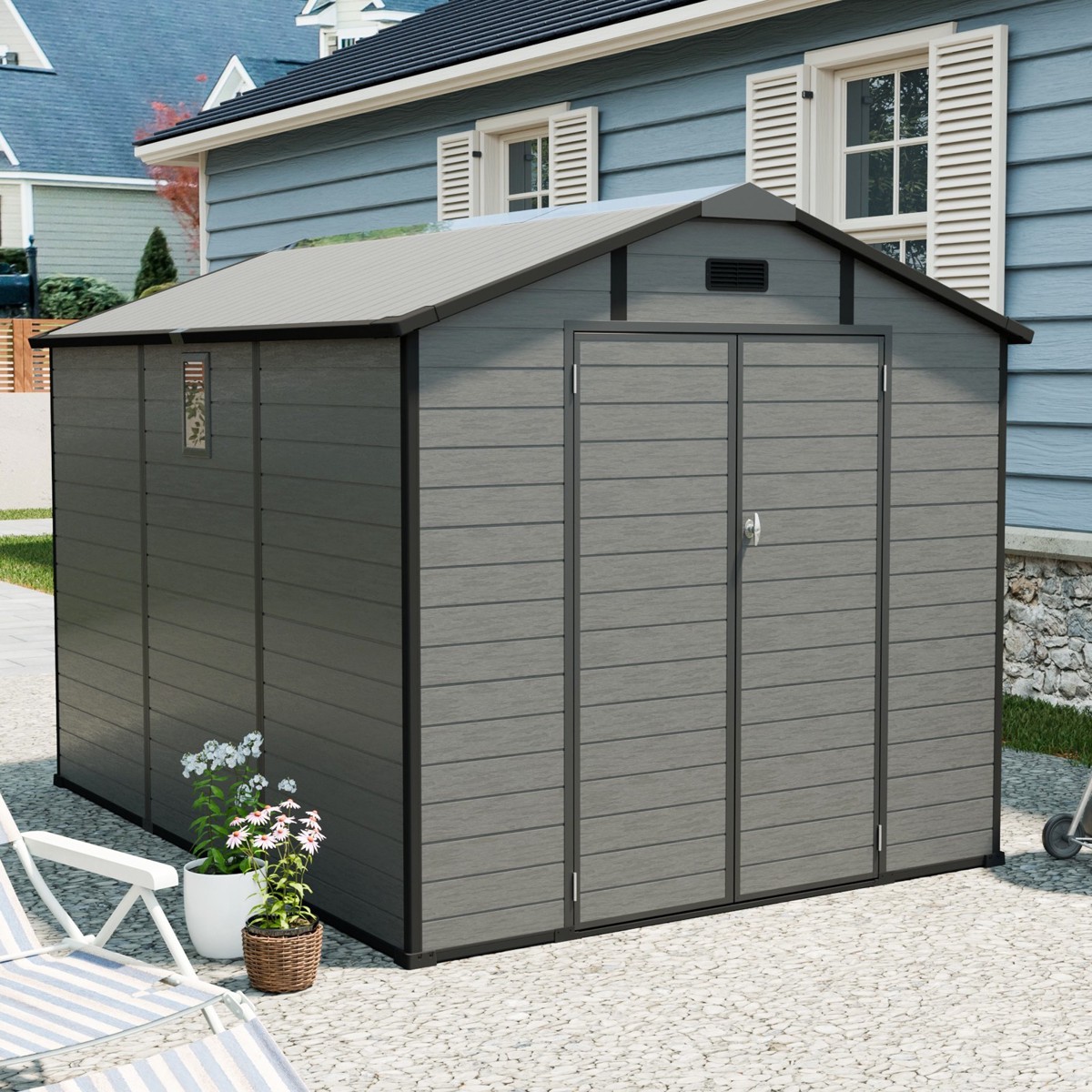 8'x10' Plastic Outdoor Storage Shed Resin Shed with Window & Lockable Doors$909.99Last checked Nov 14, 2026View on eBay
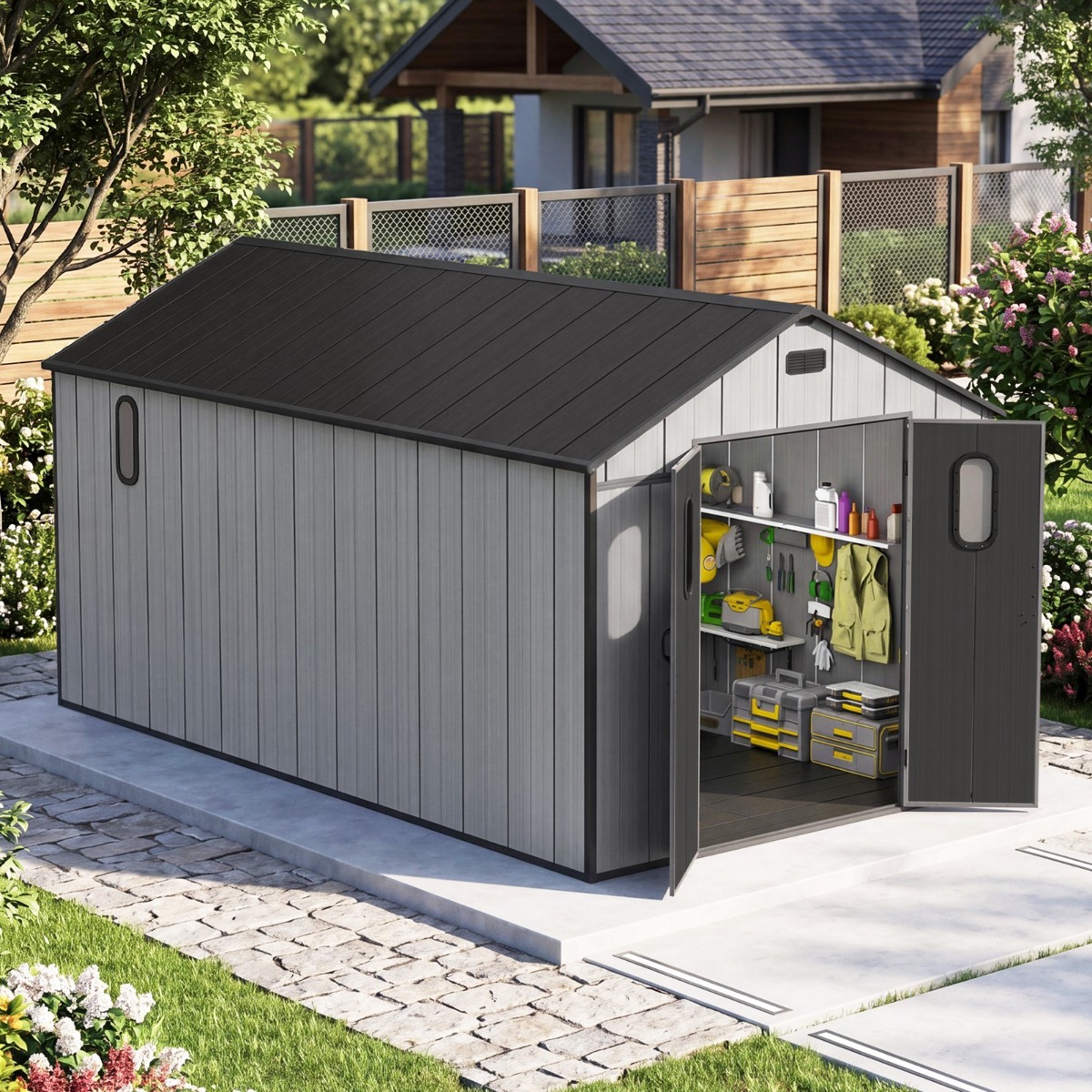 Domi 8'X14' Outdoor Resin Storage Shed,Plastic Garden Shed w/floor&Lockable Door$1,169.99New · Last checked Nov 23, 2026View on eBay
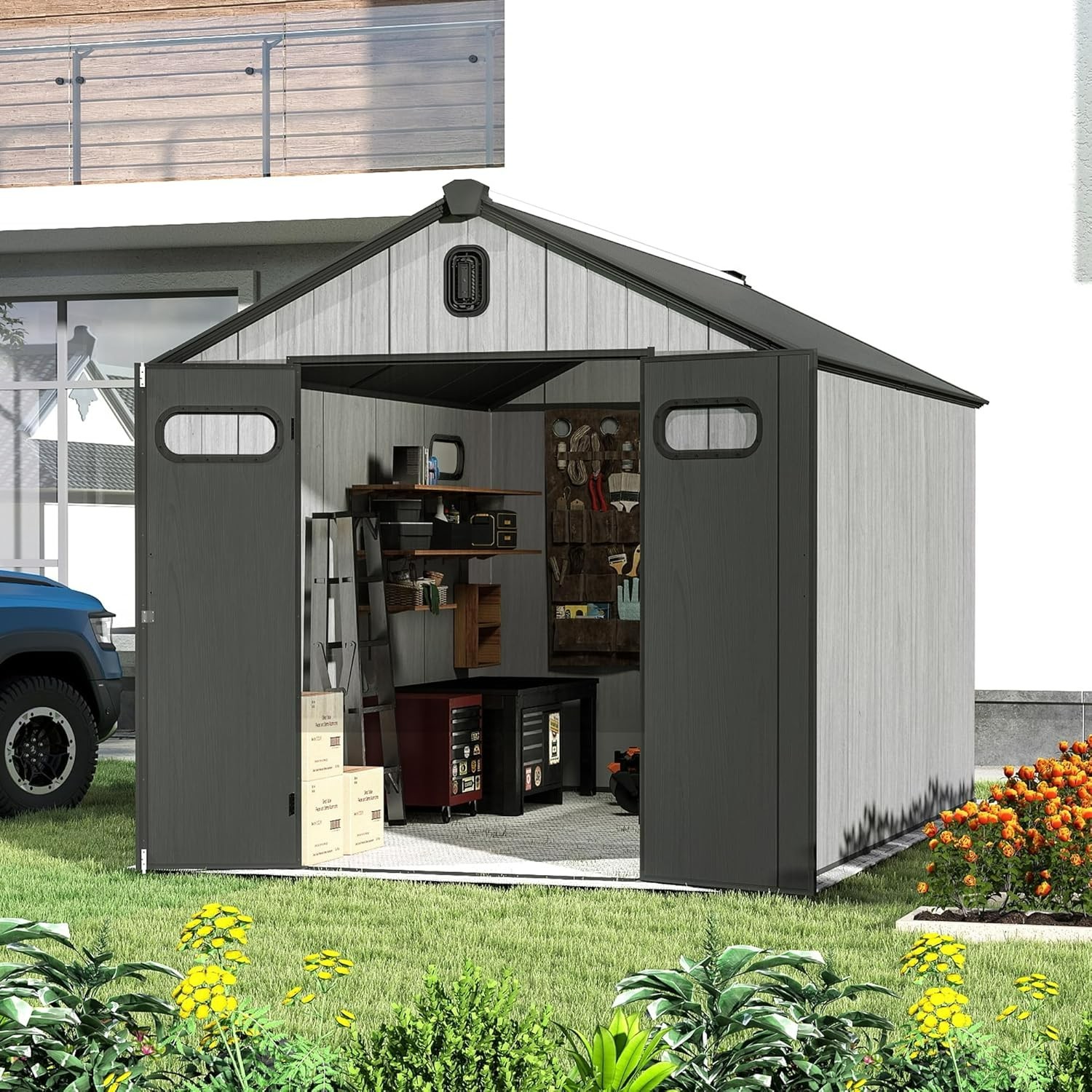 Domi 8'X12' Outdoor Resin Storage Shed,Plastic Garden Shed w/Lockable Door$1,199.98Last checked Nov 14, 2026View on eBay
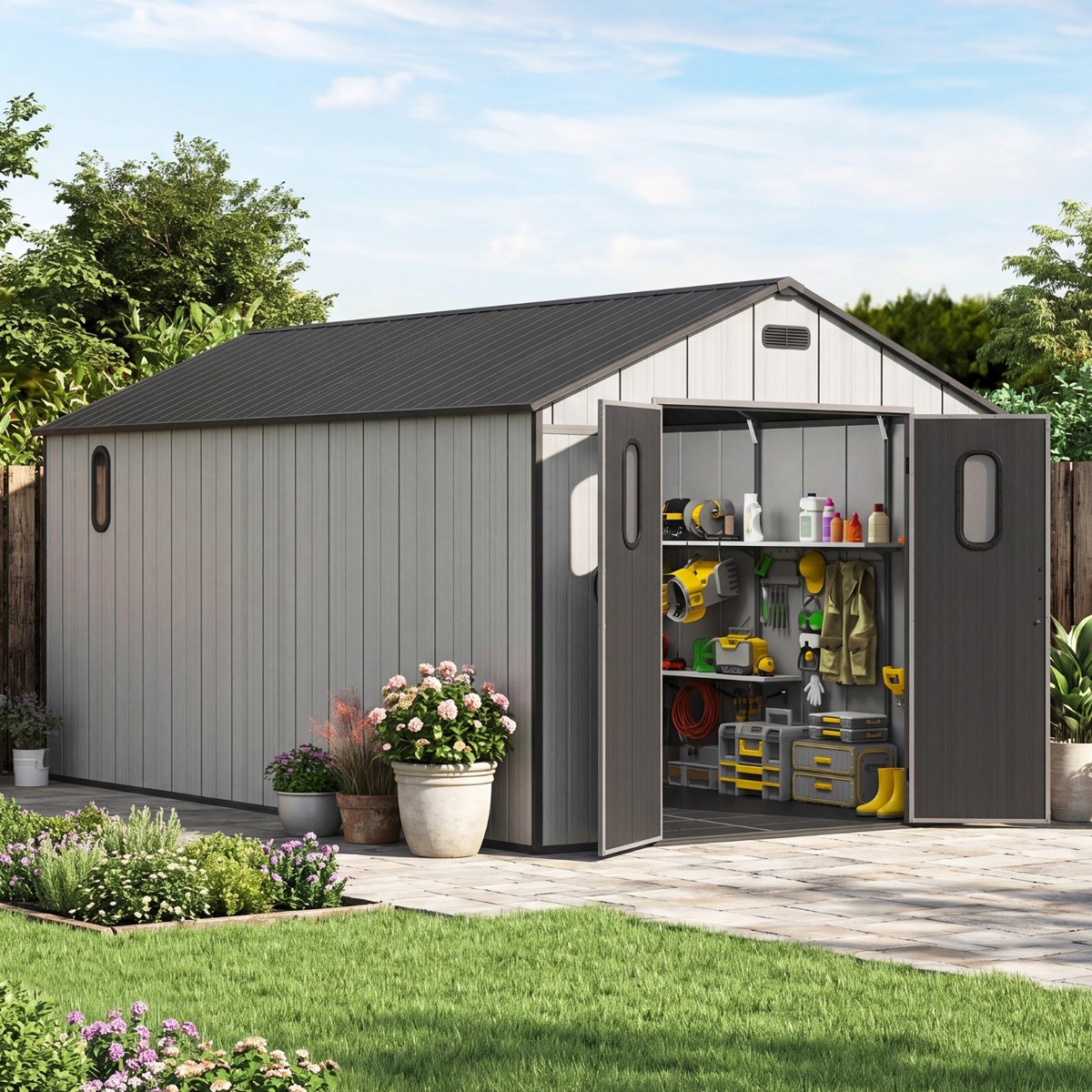 Domi 8'X16' Outdoor Resin Storage Shed,Plastic Garden Shed w/floor&Lockable Door$1,349.99New · Last checked Nov 23, 2026View on eBay
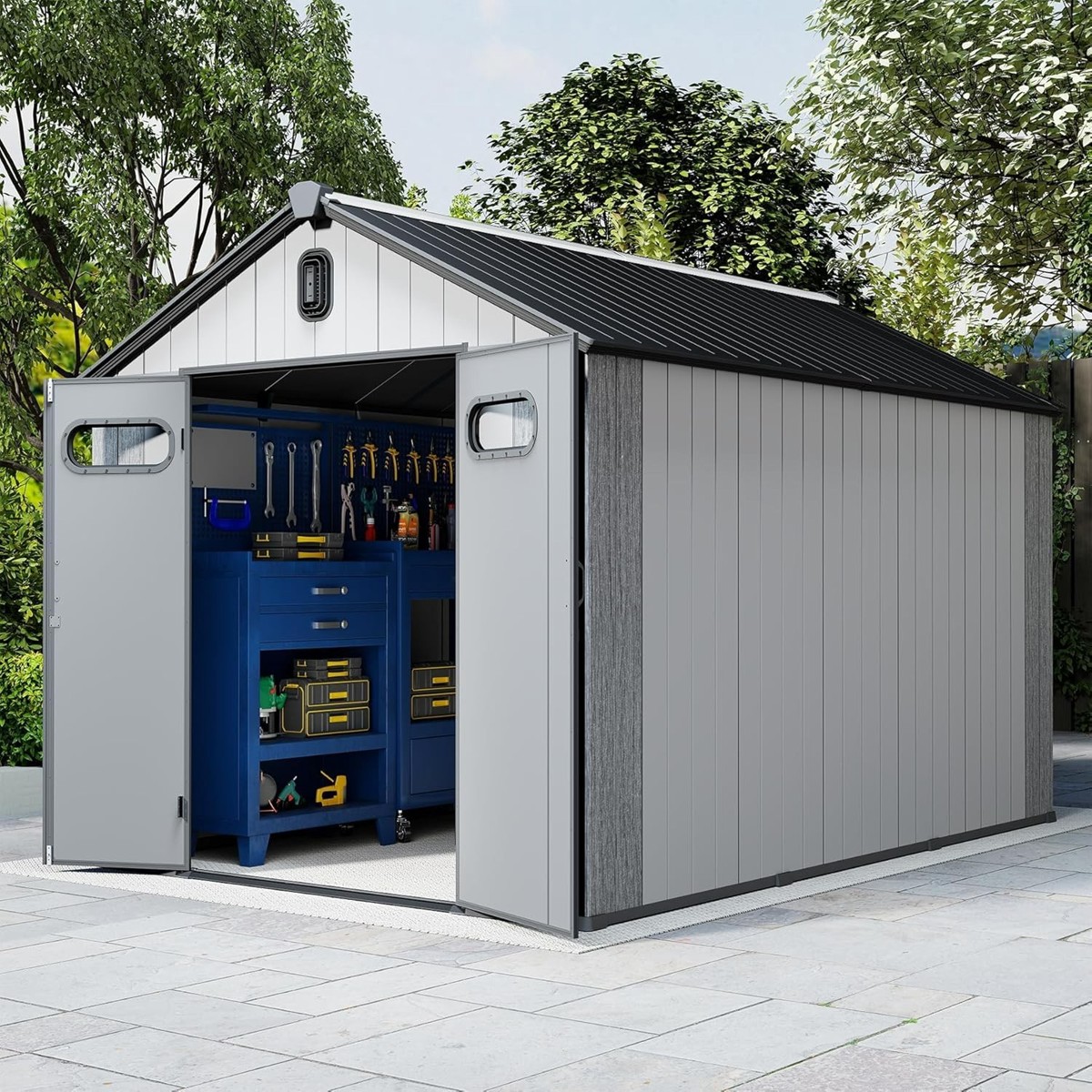 Domi 8'X14' Outdoor Resin Storage Shed,Plastic Garden Shed w/Lockable Door$1,394.99Last checked Nov 14, 2026View on eBay
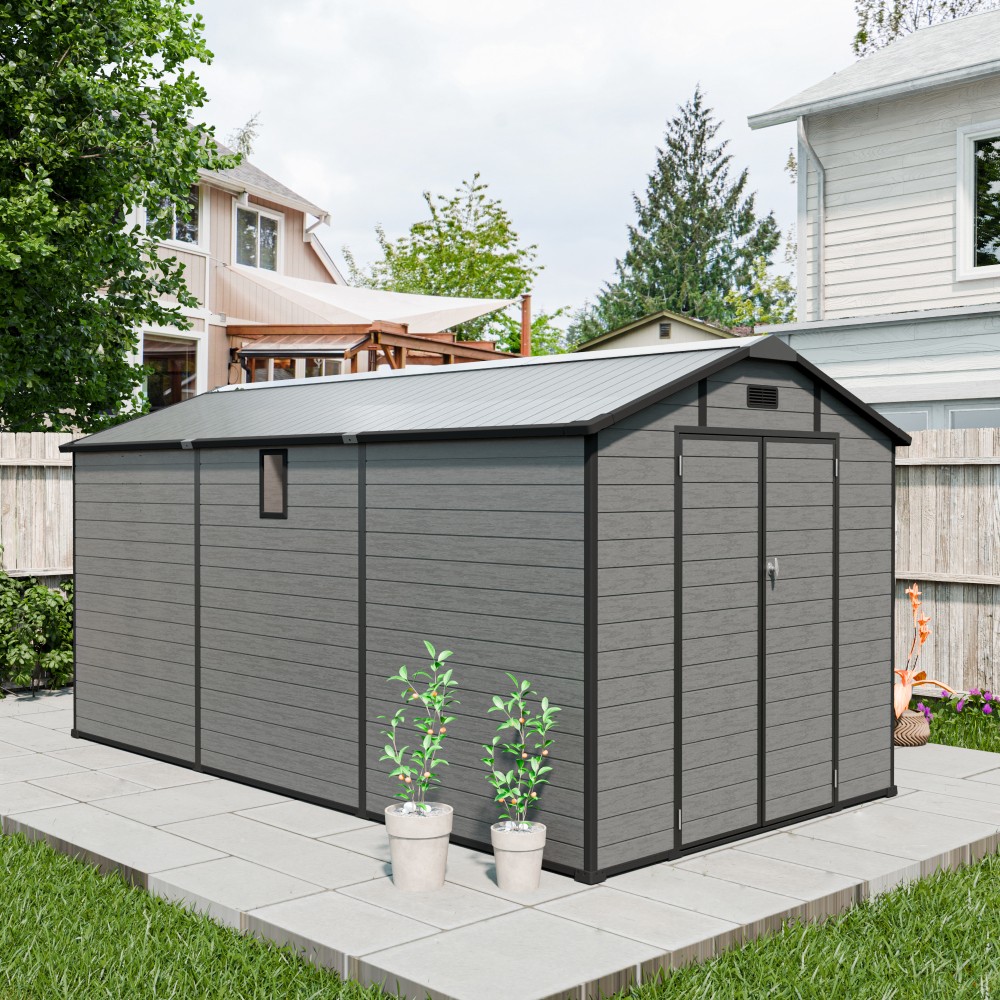 8x10 FT Plastic Outdoor Storage Shed Resin Tool Shed With Window Floor Champagne$1,448.38Last checked Nov 17, 2026View on eBay
Highlights
- Wall construction separates tiers: single-wall hollow resin panels (roughly 1 inch) versus double-wall blow-molded panels with steel or aluminum inserts for structural rigidity.
- UV-stabilized HDPE or polypropylene resin resists yellowing and embrittlement; non-stabilized resin chalks, fades, and cracks within a few seasons of direct sun.
- Floor kits are either integrated resin floors or separate wood/metal bases; sheds sold without a floor require a level, pressure-treated platform rated for the full loaded weight.
- Roof load ratings vary by design: gable and high-pitch roofs shed snow, while flat or low-slope resin roofs need manual snow clearing beyond roughly 10-15 lb per square foot.
Best use cases
- Best fit: a 6x4 or 8x6 double-wall resin shed with lockable doors and a window for suburban backyards storing mowers, bikes, and long-handled tools—skip single-wall kits in windy or snowy regions.
- Best fit: an 8x10 to 8x14 gable-roof resin shed with steel reinforcement as a workshop or overflow storage in climates with moderate snow—skip flat-roof resin models where snow accumulates.
- Best fit: light-brown or champagne resin sheds for HOA-governed yards requiring neutral colors—skip bright gray modern panels only if the HOA mandates a specific palette; resin accepts paint poorly.
- Wrong fit: storing high-value power equipment or chemicals in an unvented plastic shed in extreme heat—resin interiors can exceed 120°F; add ridge vents or choose a model with factory vents.
Buying tips
- Size by footprint math: a 6x4 shed fits a walk-behind mower and shelving; 8x6 fits a riding mower or two bikes plus tools; 8x10 and larger suit workshop benches and patio furniture.
- Demand double-wall panels with steel or aluminum wall columns—single-wall hollow panels flex, crack at screw points, and cannot carry shelf loads or snow.
- Confirm door clearance and swing: typical resin shed doors are 4.5-5.5 ft wide and 5.5-6 ft tall; measure your tallest equipment and gate path before ordering.
- Check wind and snow ratings in the manual—most resin sheds require anchoring to a concrete pad or ground augers, and roof load limits are often 10-20 lb per square foot.
Specs
| Wall Construction | Double-wall steel-core vs single-wall |
|---|---|
| Resin Material | UV-stabilized HDPE / polypropylene |
| Roof Type | Gable high-pitch vs flat low-slope |
| Floor & Anchoring | Resin floor kit vs ground augers |
What to check before buying
- Measure the pad: the shed footprint plus 12-18 inches clearance on all sides for assembly, roof overhang, and door swing; the base must be level within 1/4 inch.
- Confirm foundation type: resin floor kits need a compacted gravel or concrete pad; floorless models need a pressure-treated plywood platform rated for the loaded weight.
- Verify anchoring hardware: ground augers for soil, expansion bolts for concrete, and check local wind exposure—most resin sheds are rated to roughly 90 mph when anchored.
- Check HOA and permit rules for shed size, height, color, and setback before purchase; many jurisdictions require permits above 100-120 square feet.
FAQ
Data sources: eBay / Amazon listings and product attribute feeds. Updated Nov 27, 2026.
Some links on this page are affiliate links. If you buy after clicking one, we may earn a commission at no extra cost to you. This does not change which products appear here or their order. Affiliate disclosure.