
Photos from current listings. Actual item, color, and included accessories may vary.
Plastic Garden Shed Buying Guide
Plastic garden sheds are modular resin or polyethylene structures used for weather-resistant tool and equipment storage without the rot, rust, or painting of wood and metal. The core trade-off is resin density and wall thickness versus UV stabilization and panel interlock quality: thin hollow panels fade and crack, while high-density double-wall resin with steel or aluminum reinforcement holds shape for decades. Buy a double-wall resin shed with a reinforced frame and floor if you need permanent outdoor storage; skip single-wall blow-molded panels for anything beyond light, sheltered use.
Median $976.99 · New listings
Key takeaways
- Resin density and wall construction: double-wall blow-molded panels at 1.5-2 in thickness resist impact and insulate far better than single-wall 0.5-1 in panels that flex and craze under UV.
- UV stabilization package: fully UV-stabilized HDPE or PP resin with molded-in color keeps panels from chalking and yellowing; unpigmented or painted surfaces degrade within a few seasons.
- Frame and floor: galvanized steel or aluminum framing plus an integrated resin or aluminum floor prevents sagging and keeps tools dry; floorless sheds require a poured pad or deck.
At a glance
- Category
- Outdoor Structures, Shade & Awnings
- Last updated
- Nov 27, 2026
Current offers
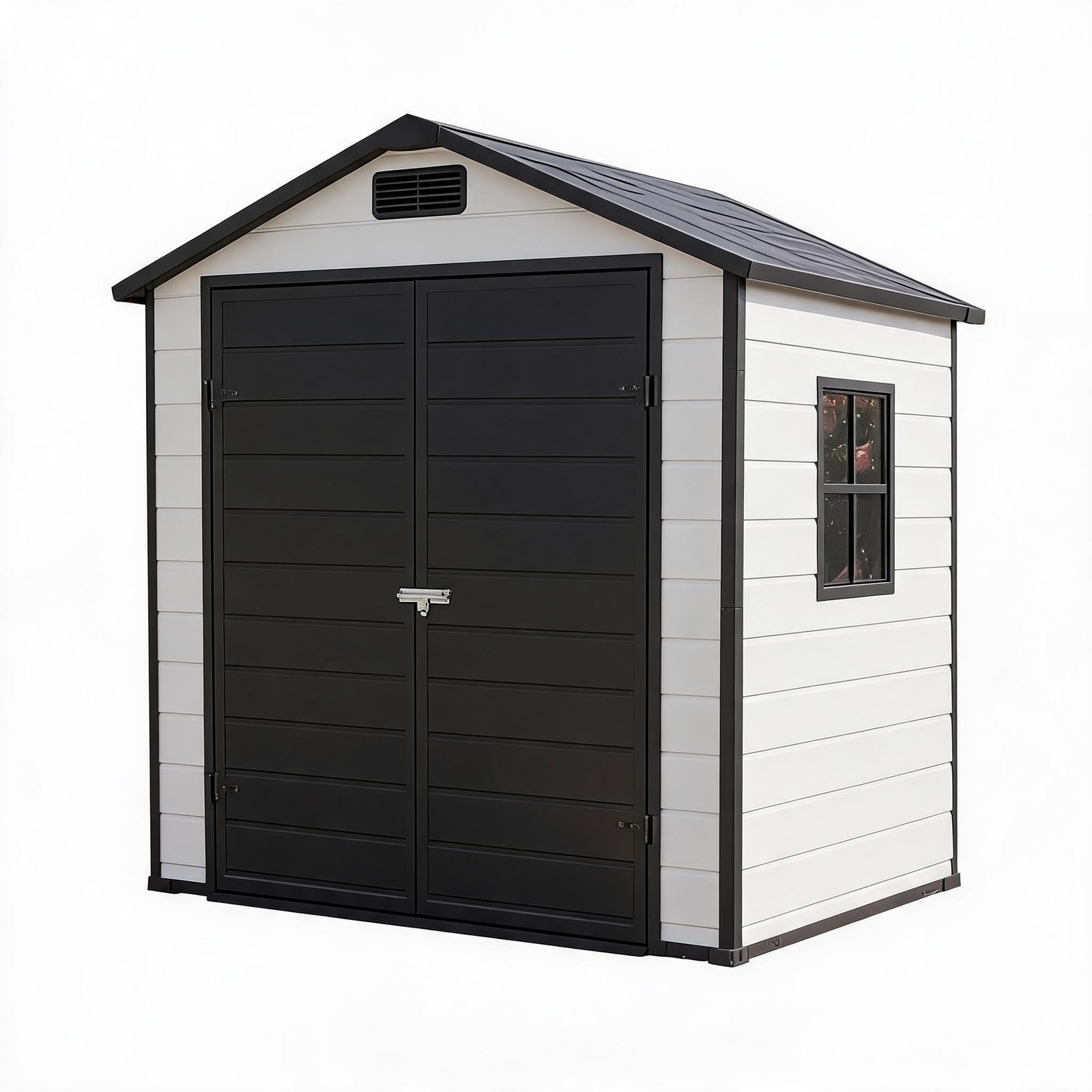 Storage Shed 6x4ft Resin Outdoor Plastic Garden Tool w/ Floor & Window$353.77New · Last checked Nov 23, 2026View on eBay
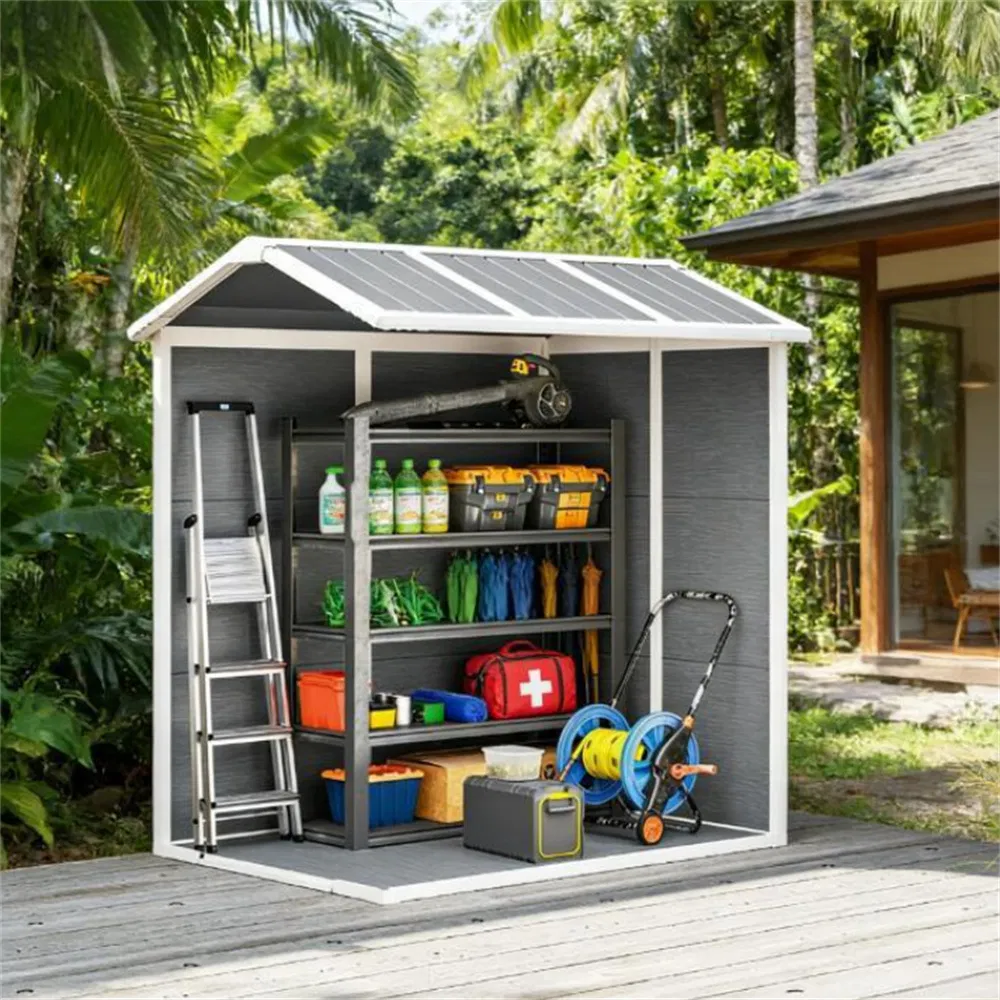 Outdoor storage shed, plastic tool room, garden gray$779.99View on Mallflare
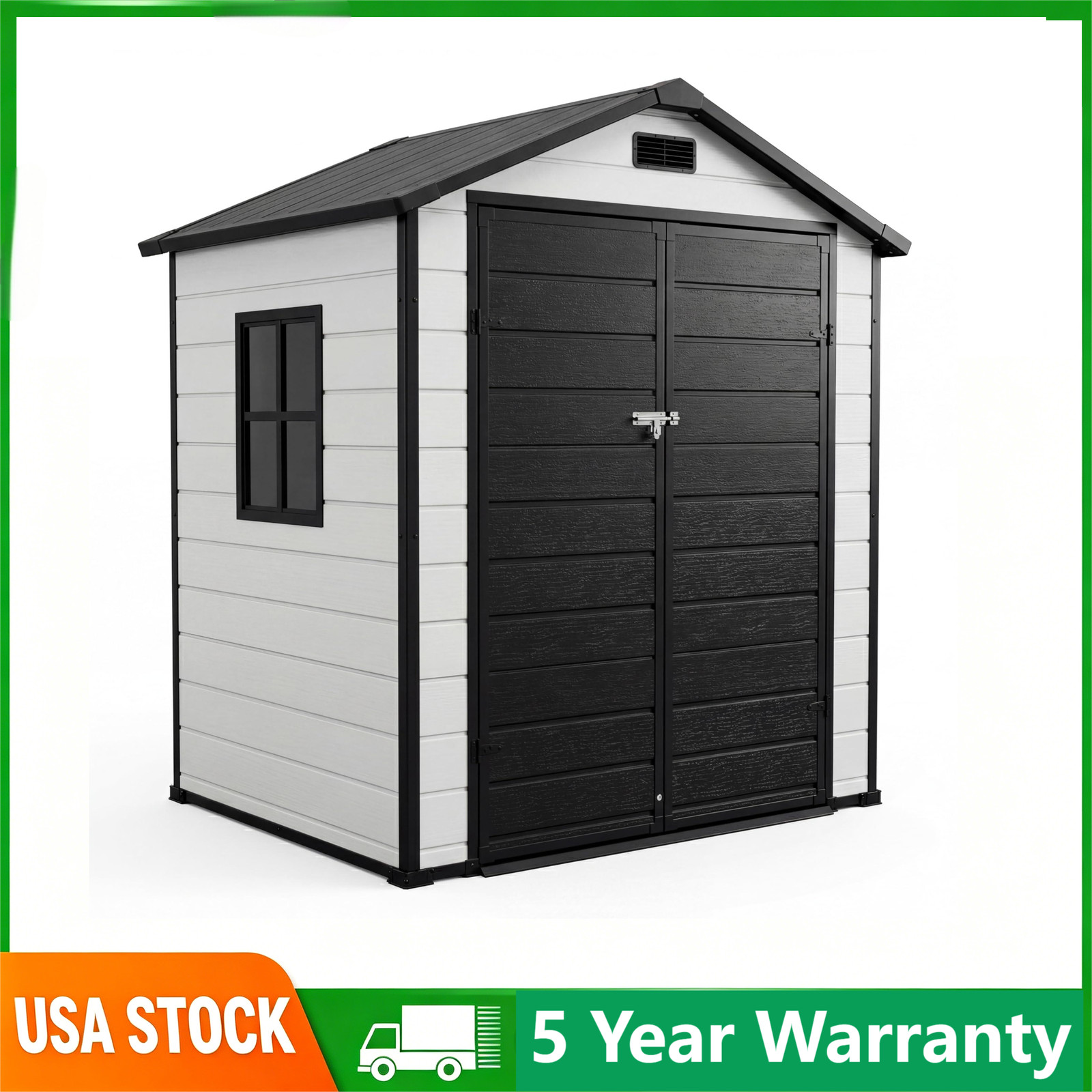 6' x 4' Outdoor Storage Shed with Floor Plastic Resin Garden Shed W/ Window Door$358.20Last checked Nov 14, 2026View on eBay
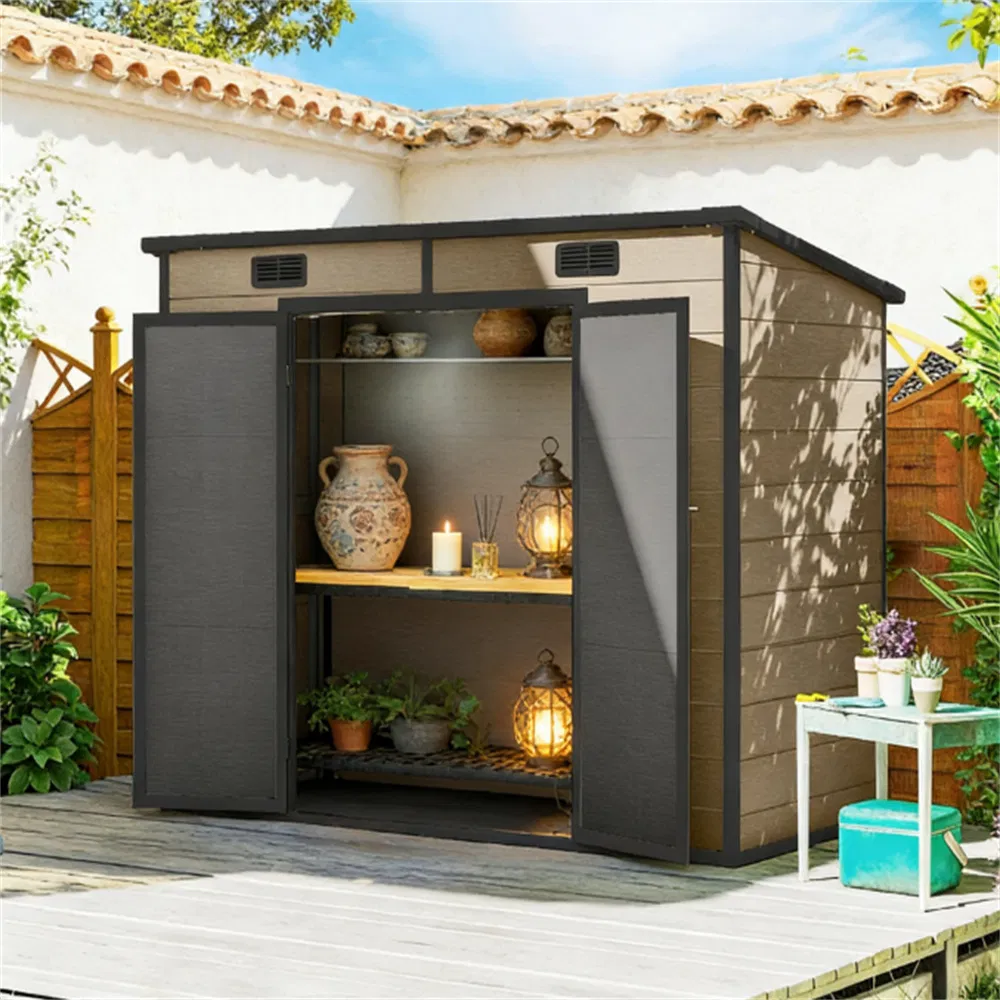 Plastic storage shed, tool room, garden light brown$783.99View on Mallflare
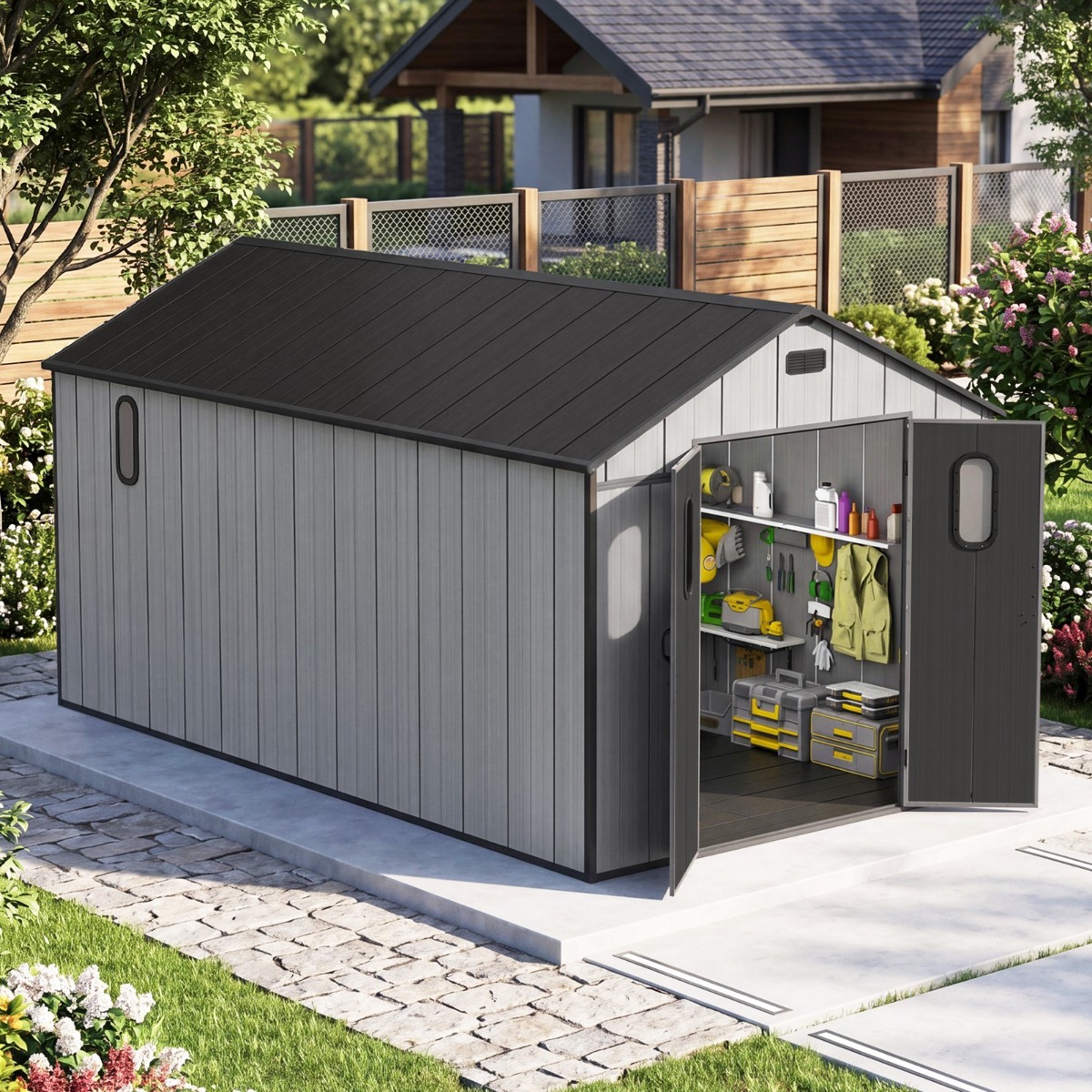 Domi 8'X14' Outdoor Resin Storage Shed,Plastic Garden Shed w/floor&Lockable Door$1,169.99New · Last checked Nov 23, 2026View on eBay
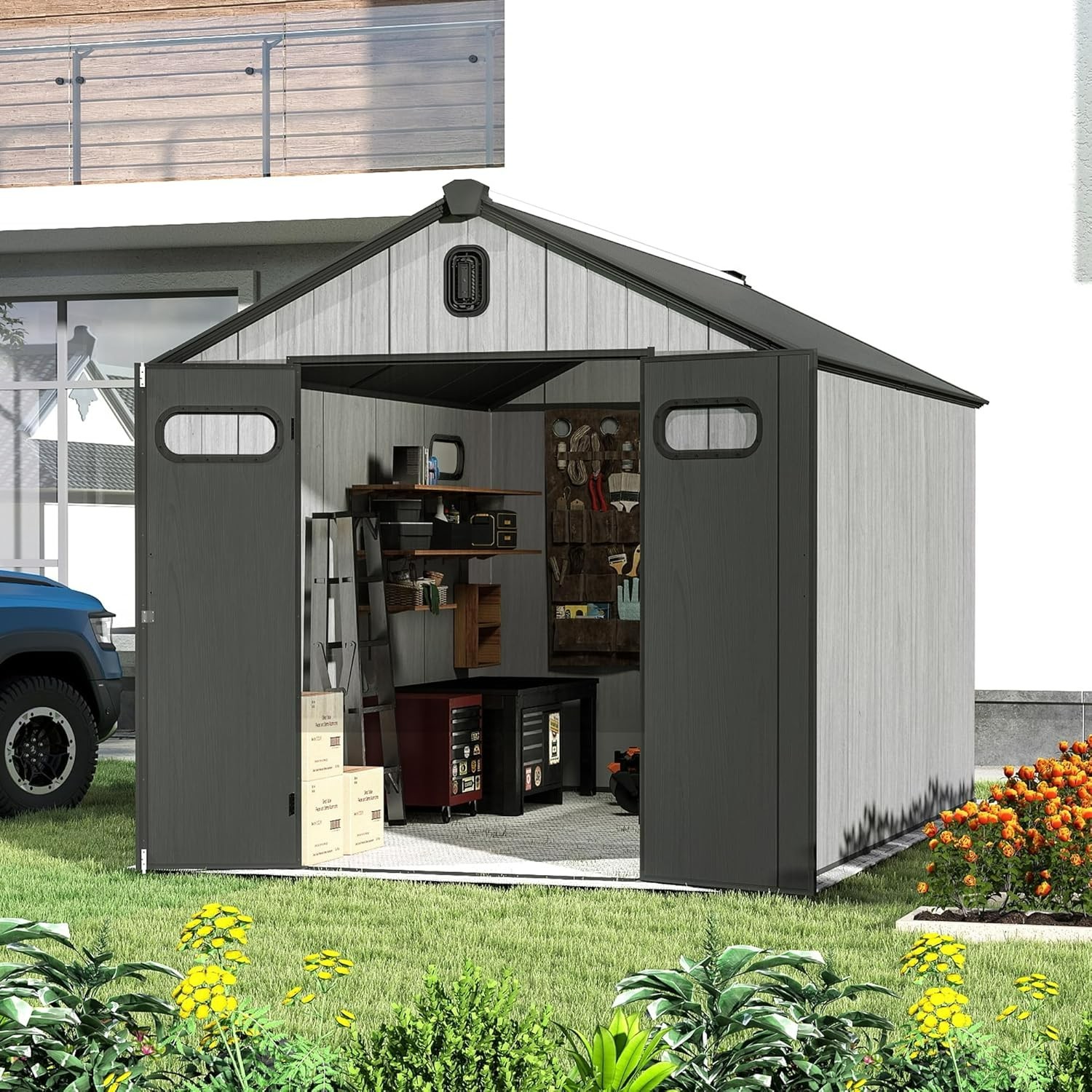 Domi 8'X12' Outdoor Resin Storage Shed,Plastic Garden Shed w/Lockable Door$1,199.98Last checked Nov 14, 2026View on eBay
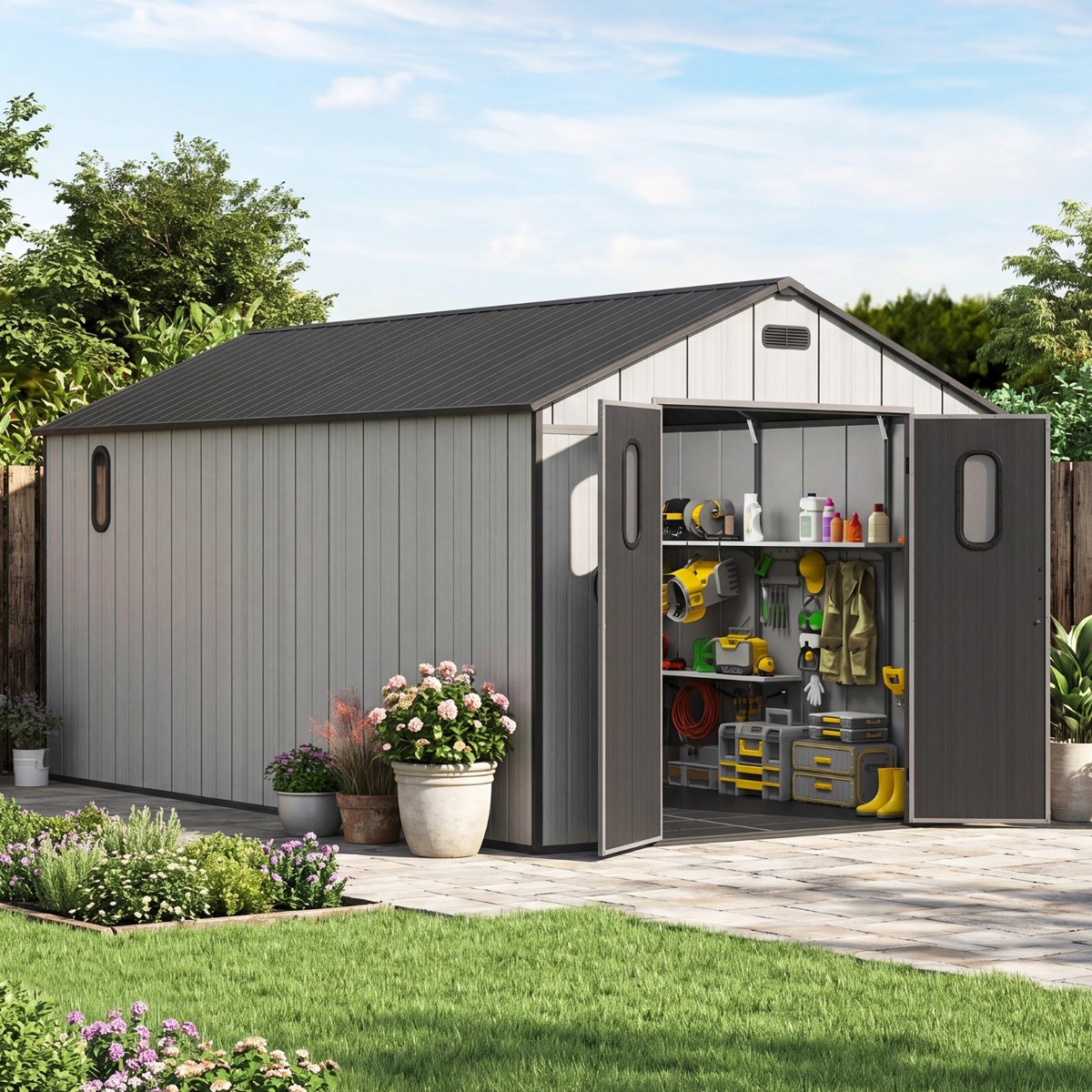 Domi 8'X16' Outdoor Resin Storage Shed,Plastic Garden Shed w/floor&Lockable Door$1,349.99New · Last checked Nov 23, 2026View on eBay
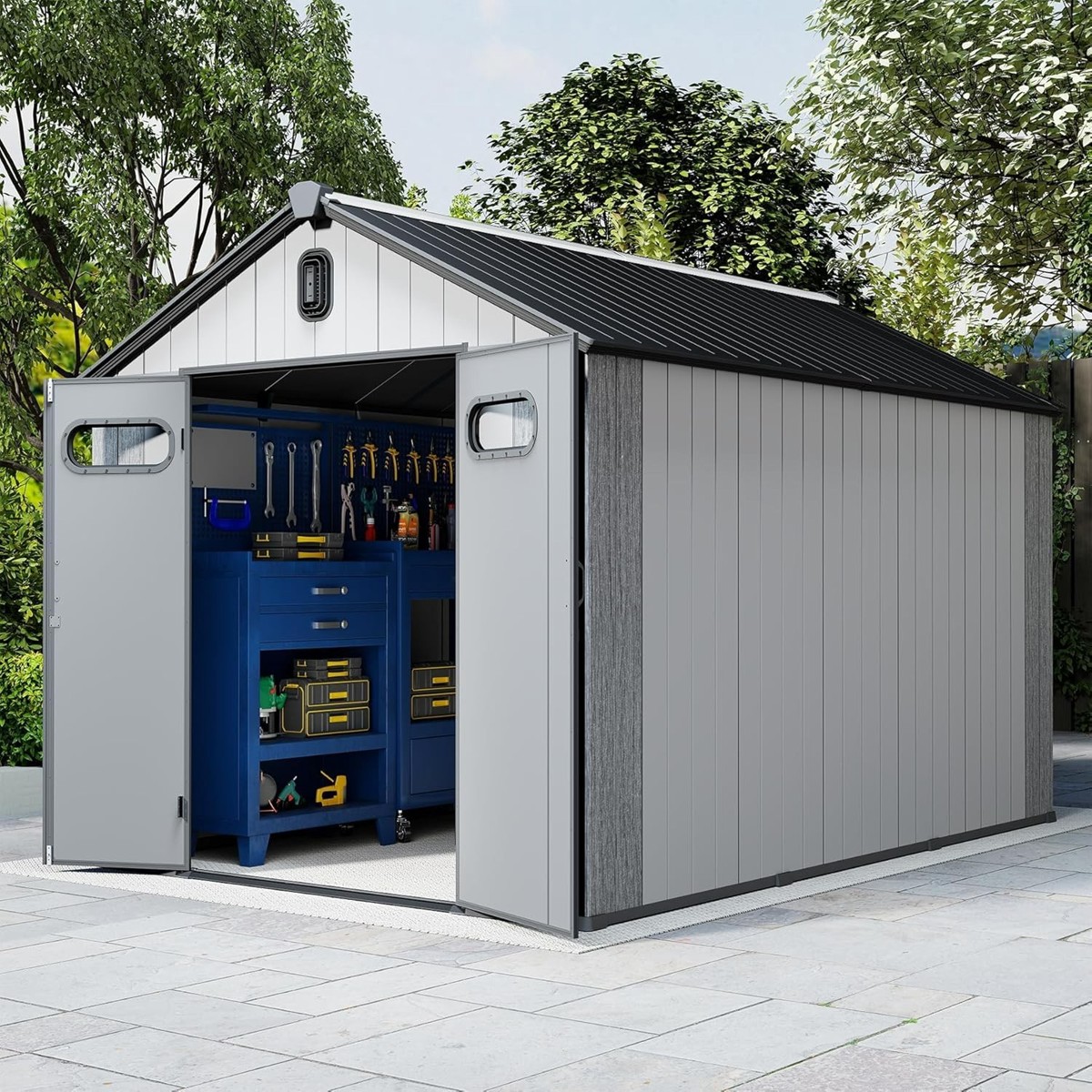 Domi 8'X14' Outdoor Resin Storage Shed,Plastic Garden Shed w/Lockable Door$1,394.99Last checked Nov 14, 2026View on eBay
Highlights
- Resin density and wall construction: double-wall blow-molded panels at 1.5-2 in thickness resist impact and insulate far better than single-wall 0.5-1 in panels that flex and craze under UV.
- UV stabilization package: fully UV-stabilized HDPE or PP resin with molded-in color keeps panels from chalking and yellowing; unpigmented or painted surfaces degrade within a few seasons.
- Frame and floor: galvanized steel or aluminum framing plus an integrated resin or aluminum floor prevents sagging and keeps tools dry; floorless sheds require a poured pad or deck.
- Door and lock hardware: reinforced double doors with full-length hinges, a metal-reinforced hasp, and a padlock-ready latch determine real security; thin snap-in doors warp and jam.
Best use cases
- Best fit: backyard tool, mower, and bike storage in windy, rainy climates—pick a double-wall resin shed with steel reinforcement and an included floor in the 6x4 to 8x10 range.
- Best fit: seasonal cushion, grill, and garden-chemical storage on a patio or deck—choose a compact 4x6 or 6x4 resin shed with a lockable door and a level base.
- Wrong fit: heavy equipment, tractors, or long-term occupancy—skip plastic entirely and buy a steel or wood structure rated for those loads.
- Wrong fit: high-snow-load regions without reinforcement—avoid unsupported resin roofs and choose a model with a peaked, braced roof or add a snow-load kit.
Buying tips
- Size from the footprint plus clearance: an 8x10 shed's nominal dimensions are exterior, so interior storage is roughly 1-2 ft smaller per side; measure your largest item's diagonal before choosing.
- Demand double-wall resin at 1.5 in or more for anything left outdoors year-round; single-wall panels under 1 in are acceptable only under a covered patio.
- Confirm the floor: integrated resin or aluminum floors suit most buyers; floorless models require a 4-6 in poured concrete or compacted gravel pad for drainage and leveling.
- Check wind and snow ratings: reputable resin sheds list mph wind resistance and psf snow load; choose a model rated above your local code minimum and anchor it to the pad.
Specs
| Wall Construction | Double-wall 1.5-2 in vs single-wall |
|---|---|
| Resin Type | UV-stabilized HDPE/PP, molded color |
| Frame & Floor | Steel/aluminum frame; resin or AL floor |
| Footprint Range | 4x6 to 8x14 ft nominal exterior |
What to check before buying
- Measure your base area and largest stored item, then subtract 1-2 ft per side from the shed's nominal exterior size to estimate usable interior space.
- Verify a level, drained base: compacted gravel, concrete pad, or a shed-specific resin floor kit is required—resin panels crack if the base flexes.
- Check local wind and snow load requirements and confirm the model's rated mph and psf exceed them, or plan anchoring and roof bracing.
- Confirm door width and height clear your mower, wheelbarrow, or bike, and that the hasp takes a standard padlock.
FAQ
Data sources: eBay / Amazon listings and product attribute feeds. Updated Nov 27, 2026.
Some links on this page are affiliate links. If you buy after clicking one, we may earn a commission at no extra cost to you. This does not change which products appear here or their order. Affiliate disclosure.