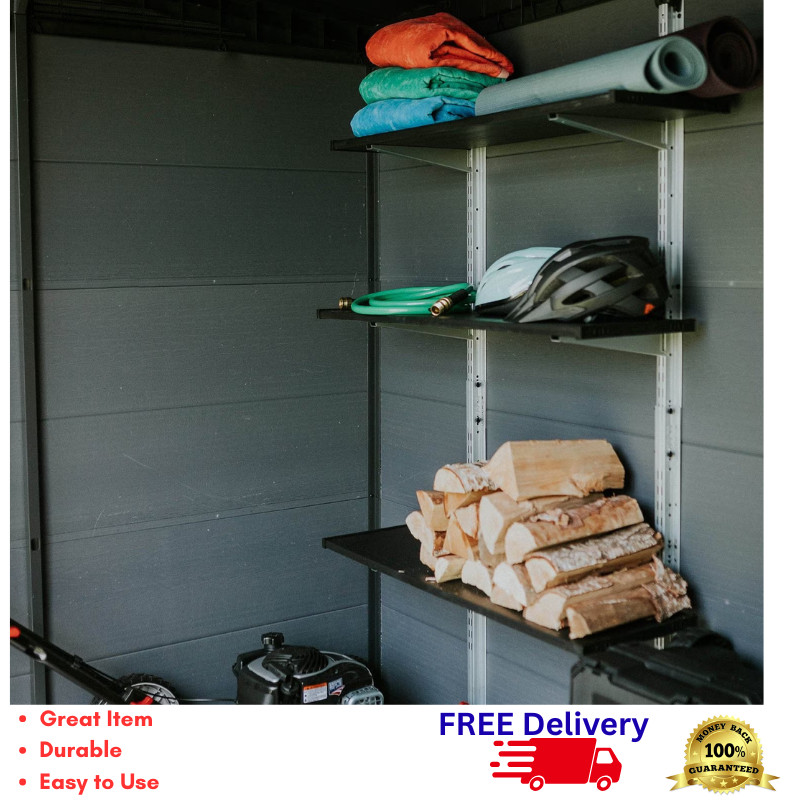

Photos from current listings. Actual item, color, and included accessories may vary.
Keter Shed Buying Guide
Keter sheds are rotationally molded resin storage buildings sold across a wide span of footprints, wall heights, and door formats—from compact vertical tool lockers to full walk-in gable units. Buyers mostly get burned not by brand tier but by picking a footprint that ignores local permitting, a door swing that fouls a fence line, or a base that settles. Anchor the decision on floor area, wall height, and wind/snow rating before comparing appearance.
Key takeaways
- Resin construction resists rot and rust but expands under heat, so panels ship with expansion gaps, thick double-wall sections, and UV-stabilized HDPE rather than thin single-skin PVC.
- Door format splits into single hinged, double door, and roll-up shutter; shutter doors need full overhead clearance and a level threshold to seal.
- Anchoring hardware and a pressure-treated or concrete base matter more than wall thickness for wind stability on exposed sites.
At a glance
- Category
- Outdoor Structures, Shade & Awnings
- Last updated
- Nov 28, 2026
Current offers
Highlights
- Resin construction resists rot and rust but expands under heat, so panels ship with expansion gaps, thick double-wall sections, and UV-stabilized HDPE rather than thin single-skin PVC.
- Door format splits into single hinged, double door, and roll-up shutter; shutter doors need full overhead clearance and a level threshold to seal.
- Anchoring hardware and a pressure-treated or concrete base matter more than wall thickness for wind stability on exposed sites.
- Interior fittings use slotted twin-wall panels; Keter's own shelf and hook kits clip into those channels, but third-party pegboard needs adapters.
Best use cases
- Choose a walk-in gable or lean-to resin shed if you store mowers, bikes, or patio cushions and need standing headroom plus a wide double door.
- Skip a tall shed and pick a low horizontal storage box or vertical tool locker if the site is a balcony, narrow side return, or rental where a permanent structure is barred.
- Pick a shed with pre-drilled floor panels and included anchor kit for windy coastal or open-field plots; skip light single-skin kits that rely on stakes only.
Buying tips
- Prioritize interior wall height and door opening width over exterior footprint—manufacturers quote exterior dimensions, and eaves lose 6–12 in of usable vertical space.
- Check local permit thresholds: many municipalities require a permit above roughly 100–120 sq ft or 8–10 ft ridge height, so a 6x8 or 8x8 often stays exempt.
- Inspect the base: resin floors flex and crack on bare soil, so set sheds on a level concrete pad or pressure-treated timber frame with a weed membrane.
- Compare door swing and hardware—hinged doors need clear side arc, while roll-up shutters need overhead clearance and a flush sill to keep rain out.
Specs
| Construction | Double-wall resin / HDPE panels |
|---|---|
| Footprint Range | 4x6 to 8x10 ft typical |
| Door Type | Hinged single/double or roll-up |
| Anchoring | Floor anchors + base required |
What to check before buying
- Measure the exact pad footprint and door approach; add clearance for the door swing, roof overhang, and any side shelving you plan to install.
- Confirm ground conditions—slope, drainage, and frost line—and plan a level concrete or timber base rather than setting directly on grass or gravel.
- Verify local wind and snow load expectations; choose a model with anchor points and, where snow is heavy, a reinforced or steep-pitch roof.
- Check the interior fitting system (slotted twin-wall channels) and buy compatible shelves/hooks at the same time so you are not retrofitting.
FAQ
Data sources: eBay / Amazon listings and product attribute feeds. Updated Nov 28, 2026.
Some links on this page are affiliate links. If you buy after clicking one, we may earn a commission at no extra cost to you. This does not change which products appear here or their order. Affiliate disclosure.