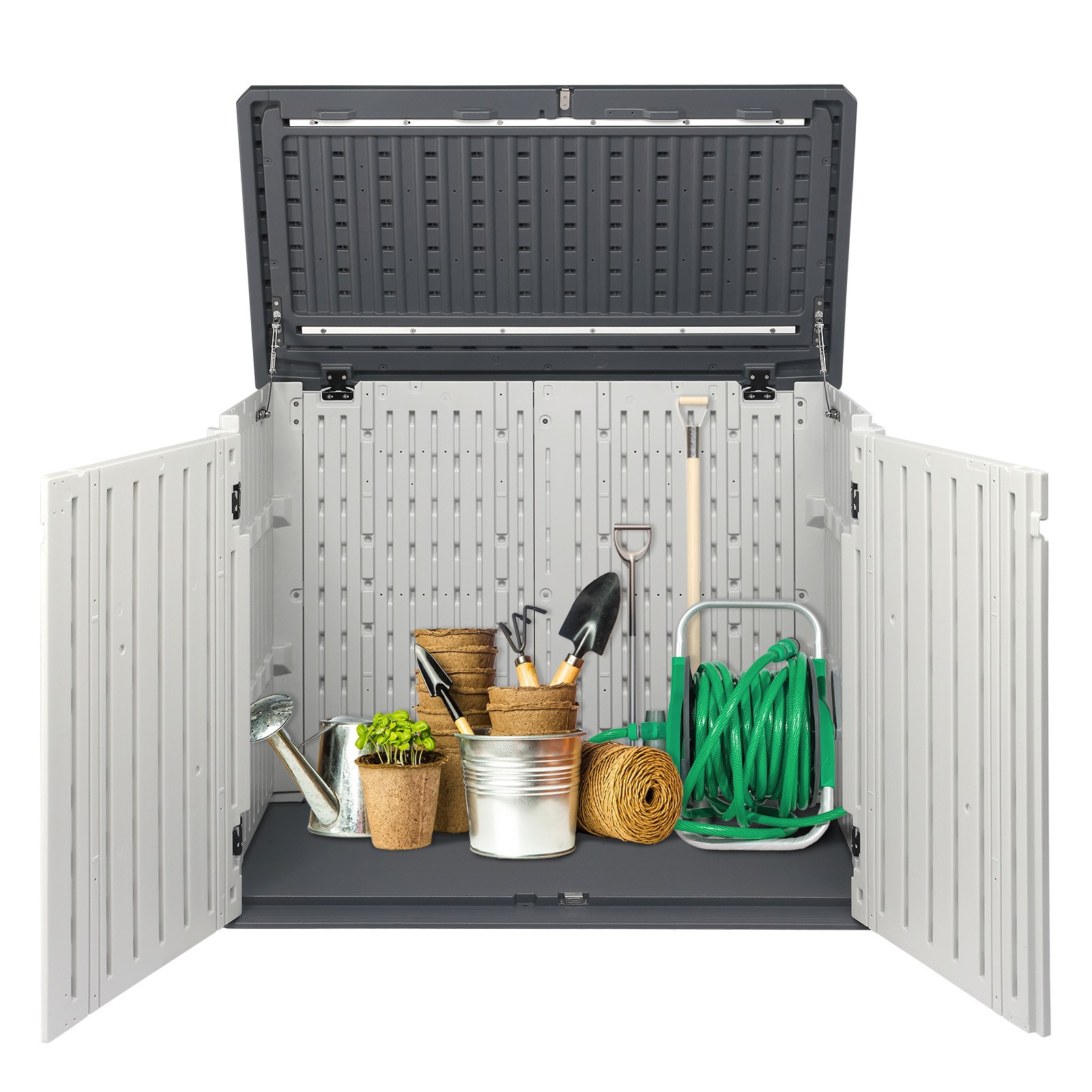

Photos from current listings. Actual item, color, and included accessories may vary.
Home Shed Buying Guide
A home shed solves storage overflow, but the wrong shell material or base prep turns it into a mildew trap or a wind-damaged eyesore. Focus on resin thickness, wall height, and anchor strategy rather than nominal footprint, since those three factors decide whether tools and bikes stay dry for a decade or a season. Most buyers misjudge floor framing and door swing clearance before ordering, then discover the pad or gate access won't accept the assembled unit.
Key takeaways
- Resin (high-density polyethylene) sheds resist rot and insects but need a perfectly level, continuous pad; steel sheds demand anchor bolts and rust-inhibiting paint at cut edges.
- Wall height and eave clearance matter more than peak height: 6 ft sidewalls allow upright storage of ladders and long-handled tools without angling.
- Double-wall resin panels with steel reinforcement at corners hold shape in wind; single-wall panels flex and can crack at fastener points below freezing.
At a glance
- Category
- Outdoor Structures, Shade & Awnings
- Last updated
- Nov 28, 2026
Current offers
Highlights
- Resin (high-density polyethylene) sheds resist rot and insects but need a perfectly level, continuous pad; steel sheds demand anchor bolts and rust-inhibiting paint at cut edges.
- Wall height and eave clearance matter more than peak height: 6 ft sidewalls allow upright storage of ladders and long-handled tools without angling.
- Double-wall resin panels with steel reinforcement at corners hold shape in wind; single-wall panels flex and can crack at fastener points below freezing.
- Roof pitch and ridge venting determine condensation control: low-slope roofs without vents trap moisture that rusts steel and warps wood composites.
Best use cases
- Choose a resin shed with double-wall panels and a 6 ft sidewall for lawn mowers, bikes, and garden tools in a backyard with freeze-thaw cycles—skip thin single-wall kits that crack.
- Pick a galvanized steel shed with a gabled roof and anchor kit for long-term storage of fuel-powered equipment where fire resistance and security matter more than aesthetics.
- Avoid wood or composite sheds in high-humidity coastal climates unless you budget for annual sealing and a raised floor; resin and steel handle salt air with less upkeep.
Buying tips
- Check the pad: resin and steel sheds require a level, continuous surface—poured concrete, pavers, or a pressure-treated deck—since most bases are not load-bearing across voids.
- Prioritize door opening width and swing direction over nominal square footage; a 4 ft door clears wheelbarrows, while double doors accommodate riding mowers.
- Verify panel thickness and wall construction: double-wall resin or 24-gauge steel panels outperform single-wall kits for wind and impact resistance.
- Confirm the anchor method matches your surface—concrete anchors for slabs, helical or spike anchors for ground—before assembly day.
Specs
| Frame Material | Resin / Galvanized Steel / Wood |
|---|---|
| Panel Type | Single-wall vs Double-wall |
| Sidewall Height | 6-7 ft (walk-in) / under 6 ft |
| Foundation | Slab / Pavers / Pressure-treated deck |
What to check before buying
- Measure the assembled footprint plus 12 in clearance on all sides for roof overhang, door swing, and maintenance access.
- Confirm gate and path width can pass the largest panel or pre-assembled section; many kits ship in long cartons.
- Check local zoning for setback rules and permit thresholds—many jurisdictions cap shed size without a permit.
- Verify floor kit or base is included or budgeted separately; most sheds ship without a floor, and a bare ground base settles unevenly.
FAQ
Data sources: eBay / Amazon listings and product attribute feeds. Updated Nov 28, 2026.
Some links on this page are affiliate links. If you buy after clicking one, we may earn a commission at no extra cost to you. This does not change which products appear here or their order. Affiliate disclosure.