
Photos from current listings. Actual item, color, and included accessories may vary.
Heavy Duty Umbrella Base Buying Guide
A heavy-duty umbrella base is the ballast system that keeps a patio umbrella upright against wind uplift, and the core trade-off is dead weight versus portability: cast-iron and steel plates are dense and stable but immovable, while fillable HDPE and fabric-wrap sand bags are light to ship and reposition but depend on correct fill volume. The decision rule is simple: match the base type to the umbrella architecture—cantilever/offset umbrellas need plate or cross-plate ballast at the arm's required weight, while center-pole market umbrellas use a single sleeve plate or a rolling fillable stand.
Median $115.49
Key takeaways
- Ballast architecture splits into solid cast-stone or cast-iron plates (fixed mass, no fill), steel cross-plate bases that bolt to 4 pavers, and HDPE or fabric fillable cells loaded with sand or water.
- Sand is roughly 1.4–1.6x denser than water by volume, so a cell rated for sand reaches its rated weight with less fill than the same cell filled with water.
- Cross-plate cantilever bases distribute load over 4 weighted feet; single-sleeve plates rely on plate diameter and pole collar fit, so they are not interchangeable across umbrella types.
At a glance
- Category
- Outdoor Structures, Shade & Awnings
- Last updated
- Nov 27, 2026
Current offers
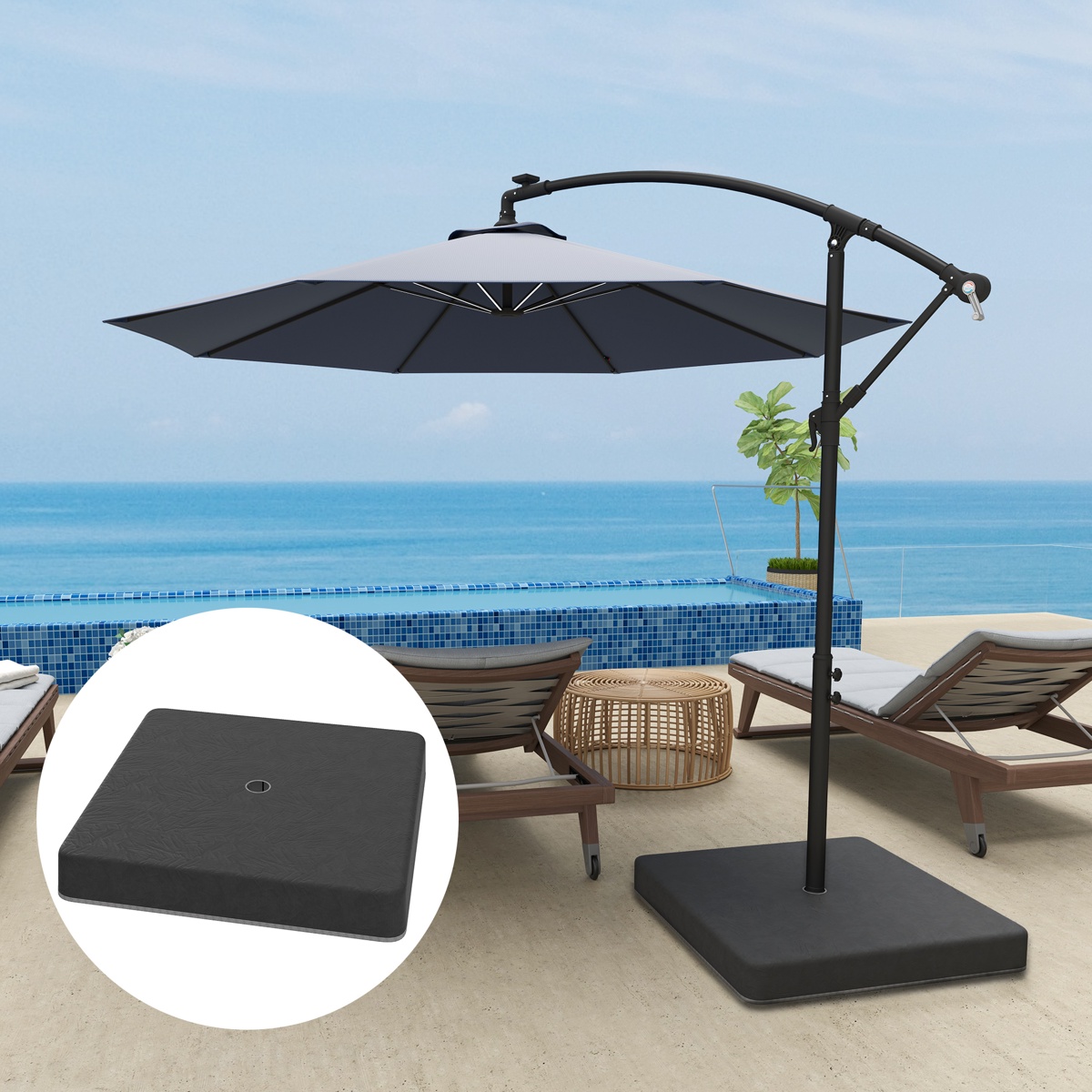 4 Piece Offset Umbrella Base Weight for 176 lbs Sand Heavy Duty Outdoor Weights for Stand, Black$45.99View on Mallflare
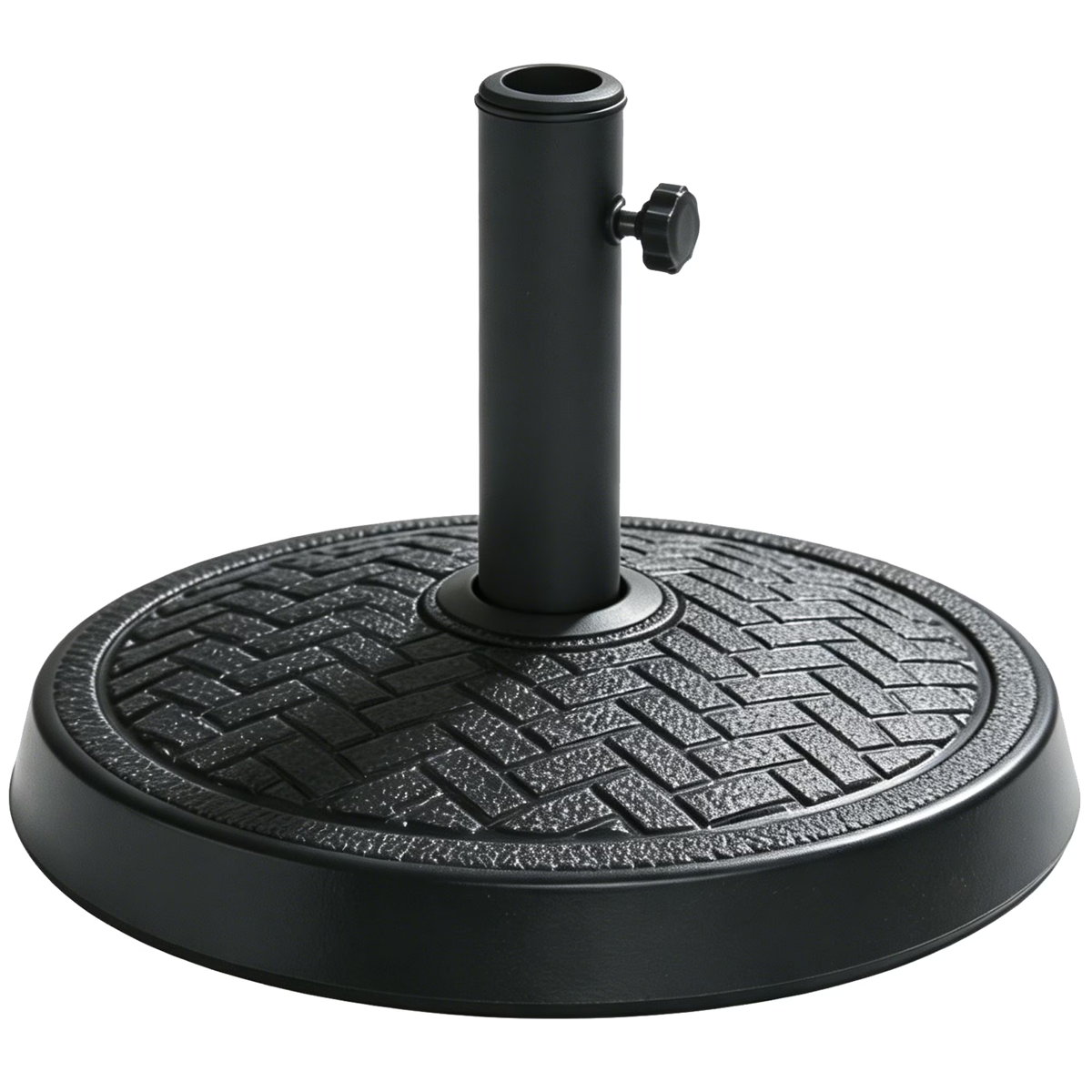 16 In Round Resin Umbrella Base in Black For Use With Patio Table$65.99View on Mallflare
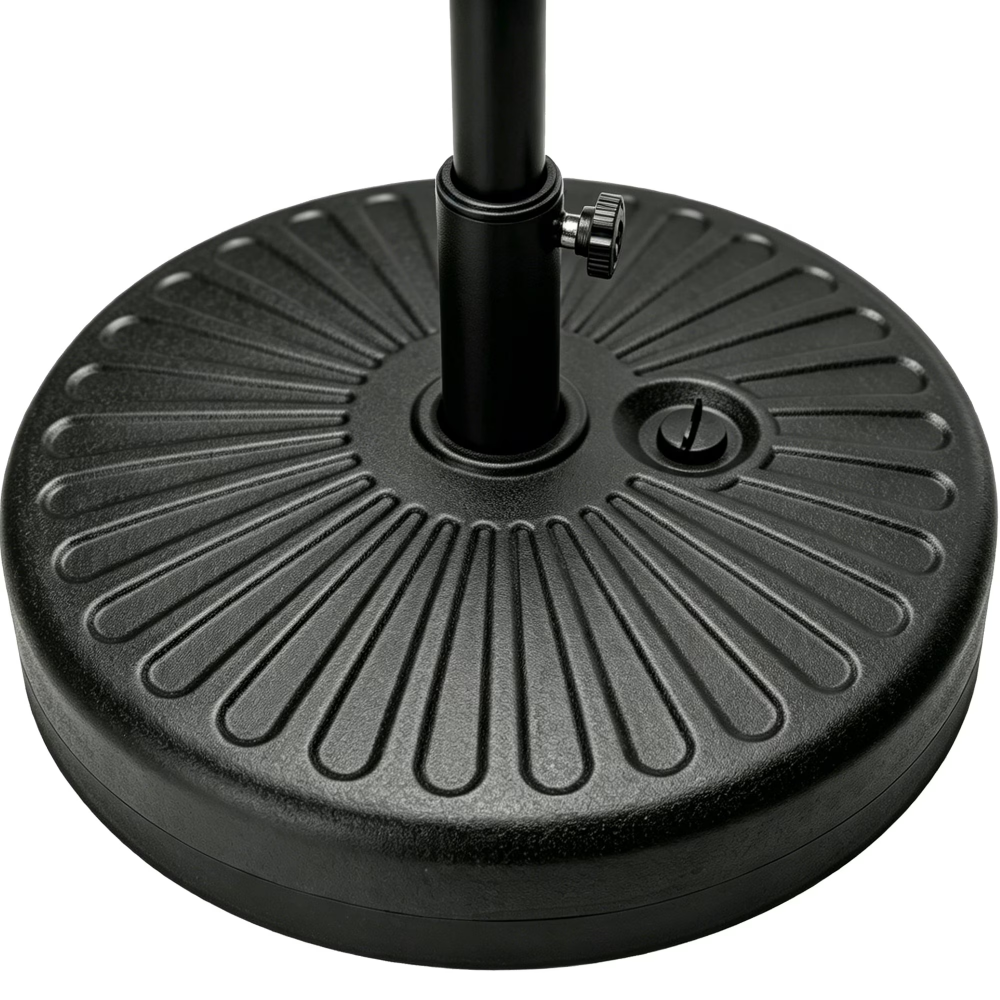 81 lb Heavy Duty Fillable Patio Umbrella Base – Water & Sand Weighted Stand for Market Umbrellas, Fits 1.0"–2" Pole Diameter, Black$67.99View on Mallflare
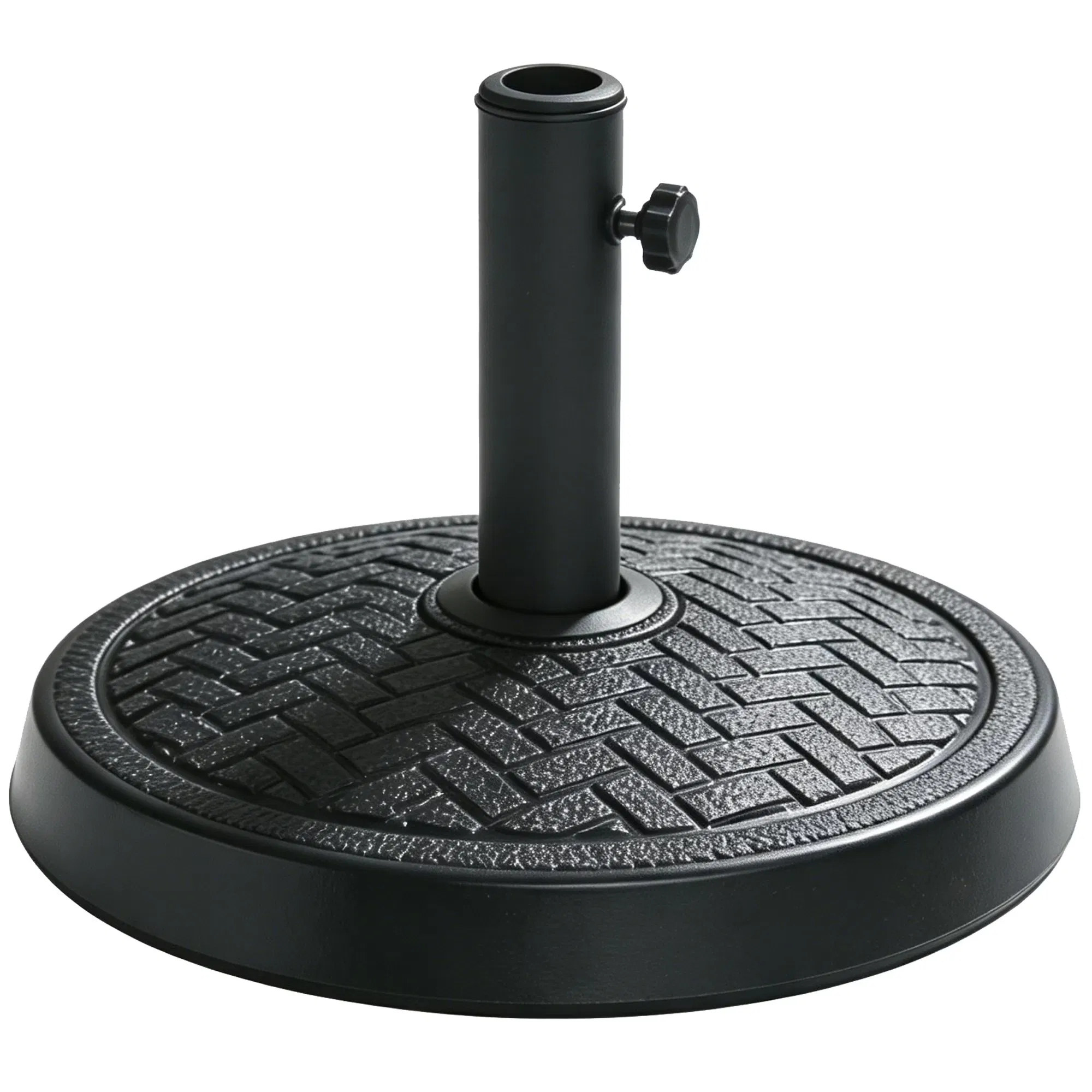 16 In Round Resin Umbrella Base in BlackForUse With PatioTable$69.99View on Mallflare
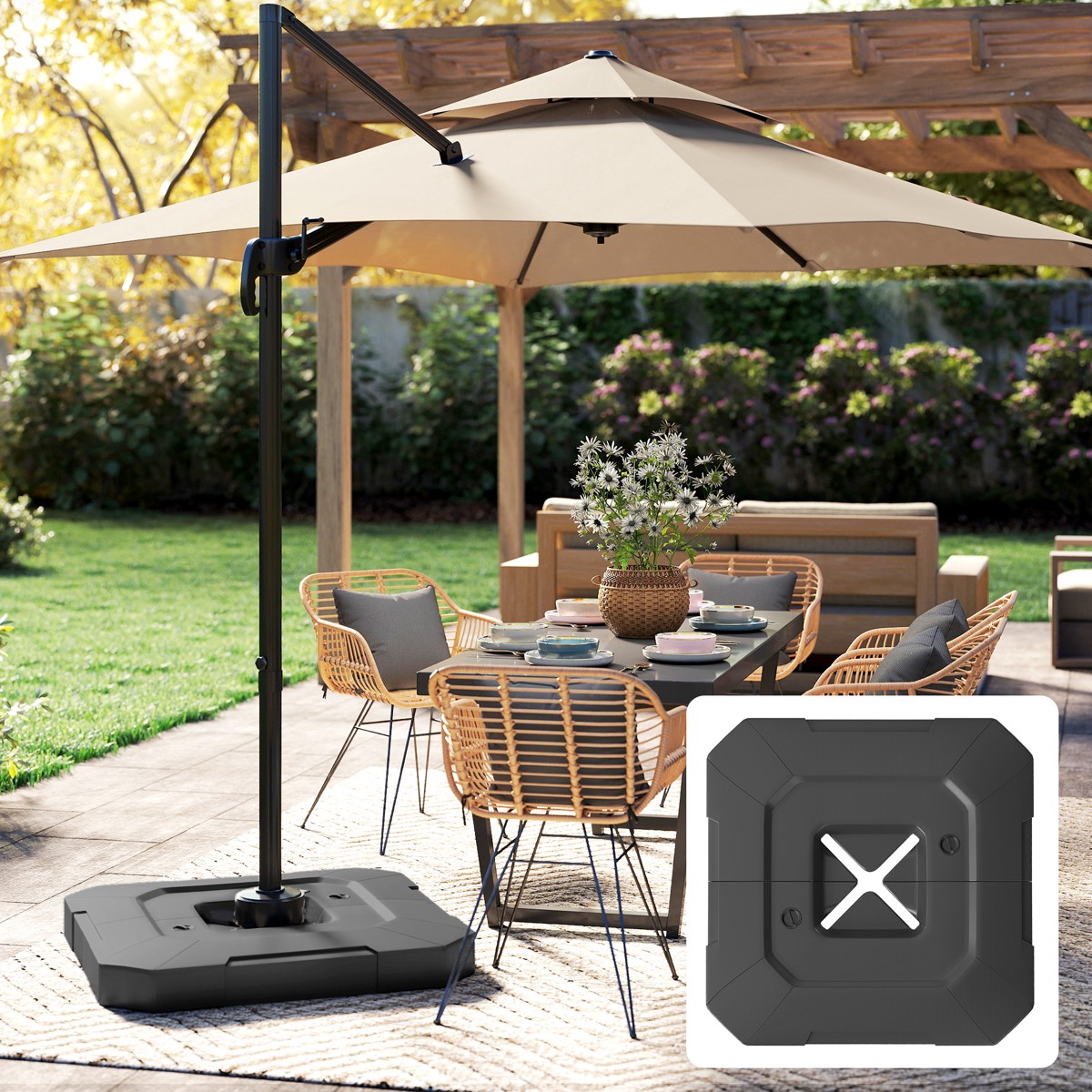 2-Piece Cantilever Umbrella Base Weight Set, 231 lb Water or Sand Fillable Outdoor Offset Weights, Black$87.99View on Mallflare
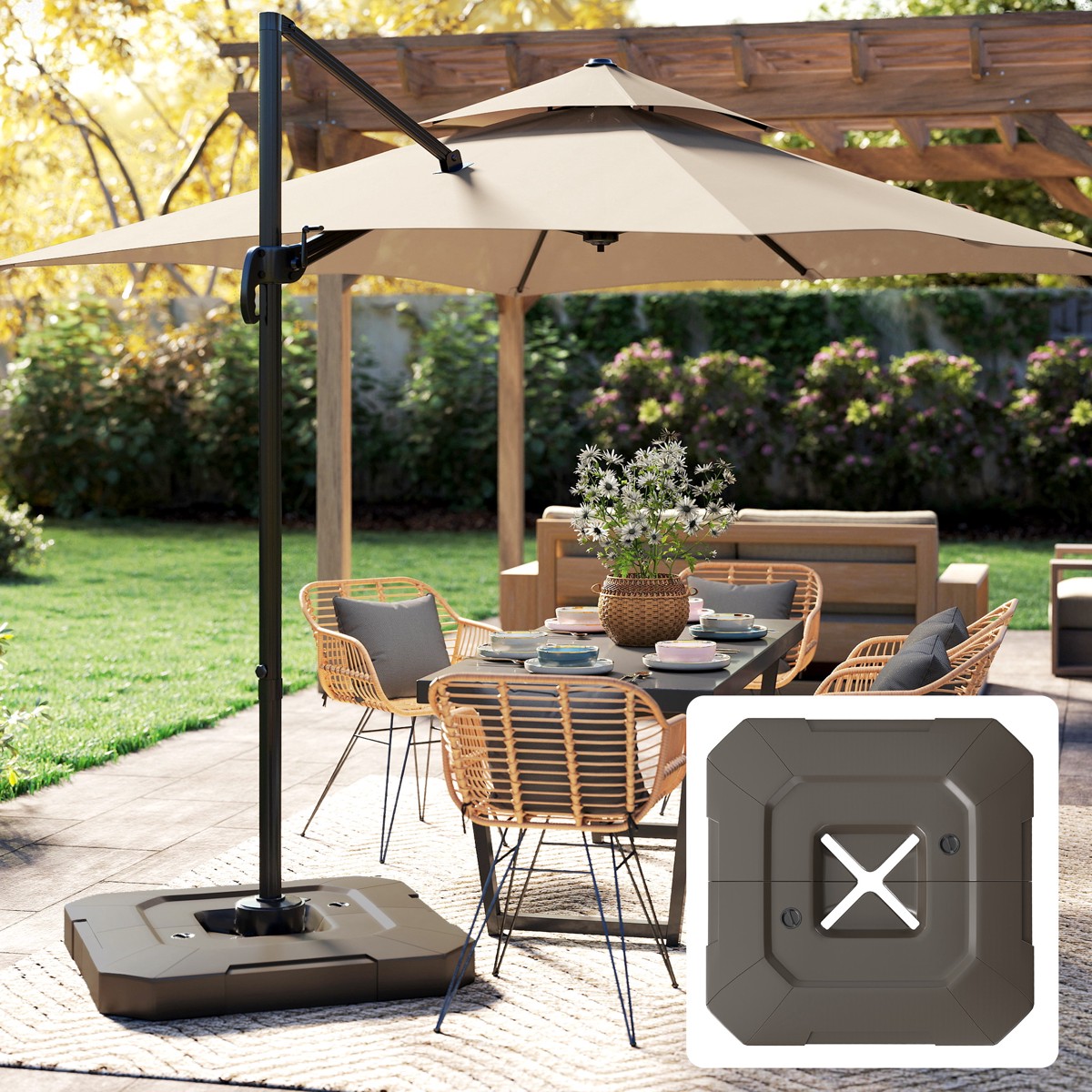 2-Piece Cantilever Umbrella Base Weight Set, 231 lb Water or Sand Fillable Outdoor Offset Weights, Brown$88.99View on Mallflare
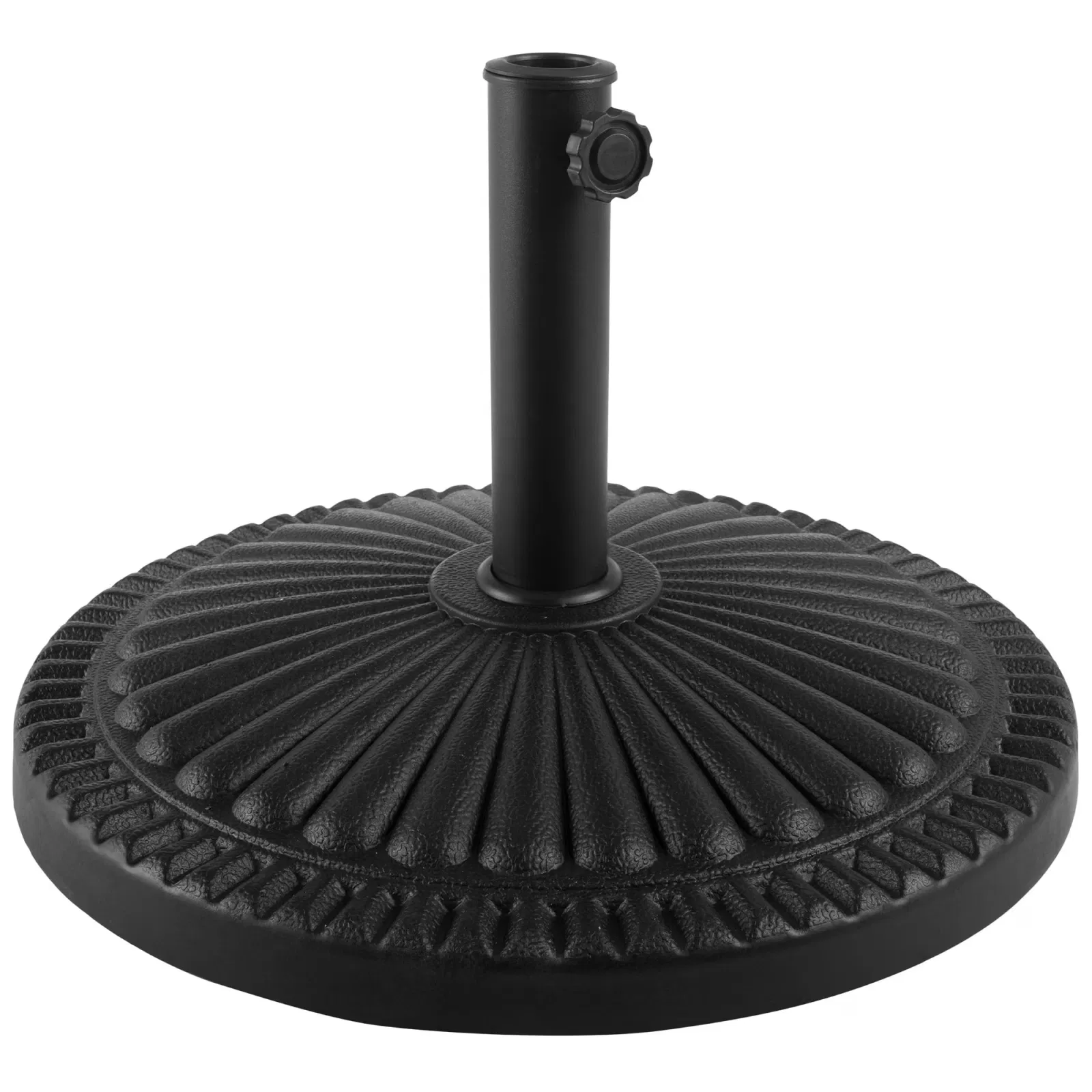 39lb Resin and Cement Outdoor Patio Umbrella Base, Black$108.99View on Mallflare
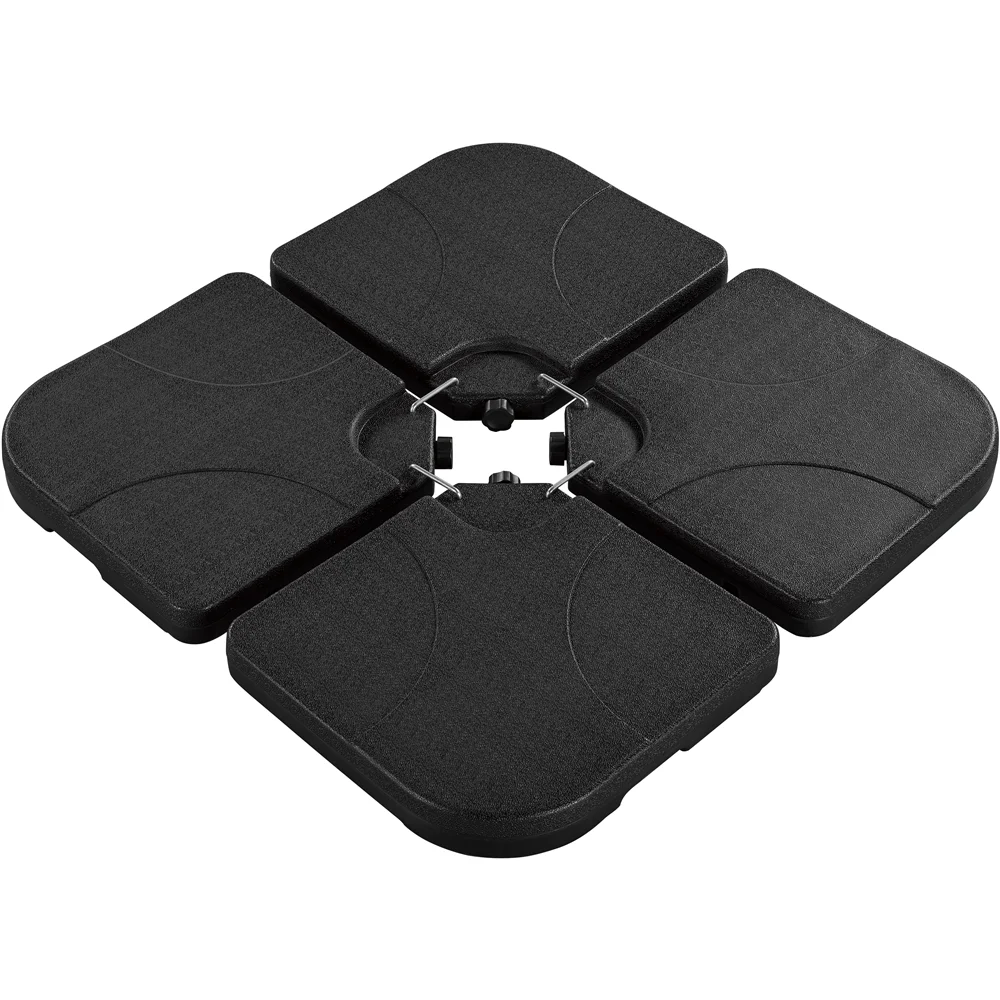 53L 4-Piece Fillable Cantilever Umbrella Base, Heavy-Duty HDPE, Black$112.99View on Mallflare
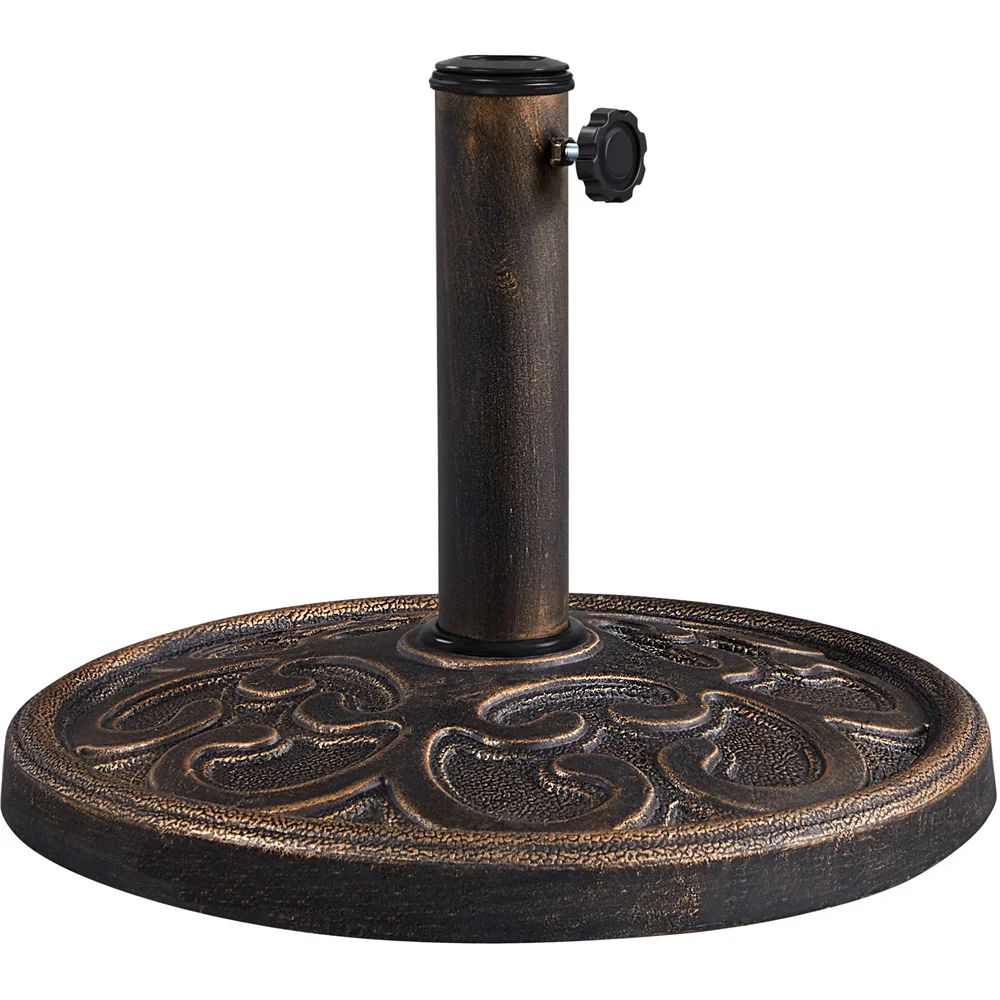 22lbs 17.5'' Iron Outdoor Patio Market Umbrella Base, Bronze$117.99View on Mallflare
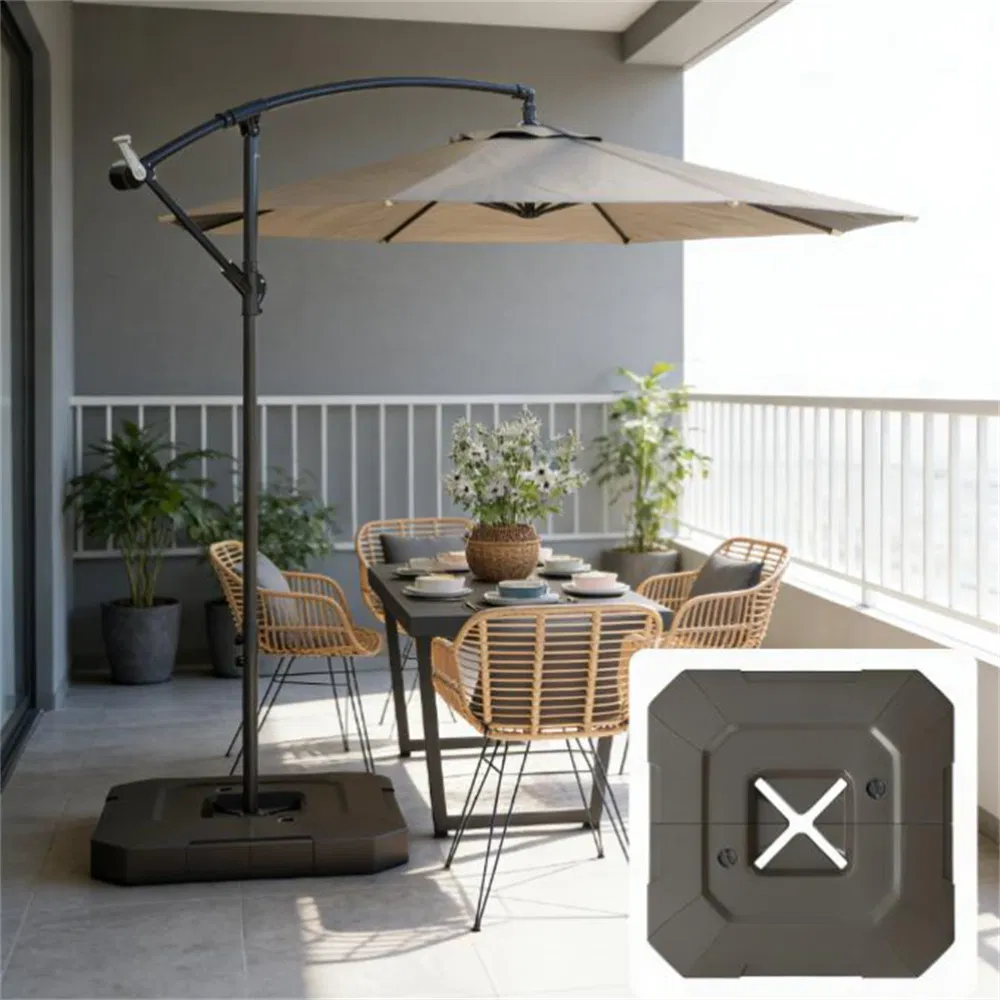 Cantilever Umbrella Base Weight Set$123.99View on Mallflare
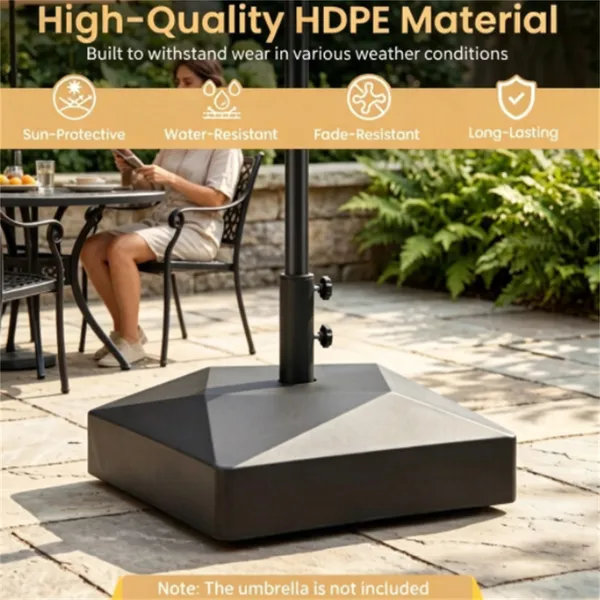 Fillable Patio Umbrella Base With 4 Rolling Wheels & Locks, Heavy Duty Water Sand Weighted HDPE Stand Universal For 6-10ft Outdoor$125.99View on Mallflare
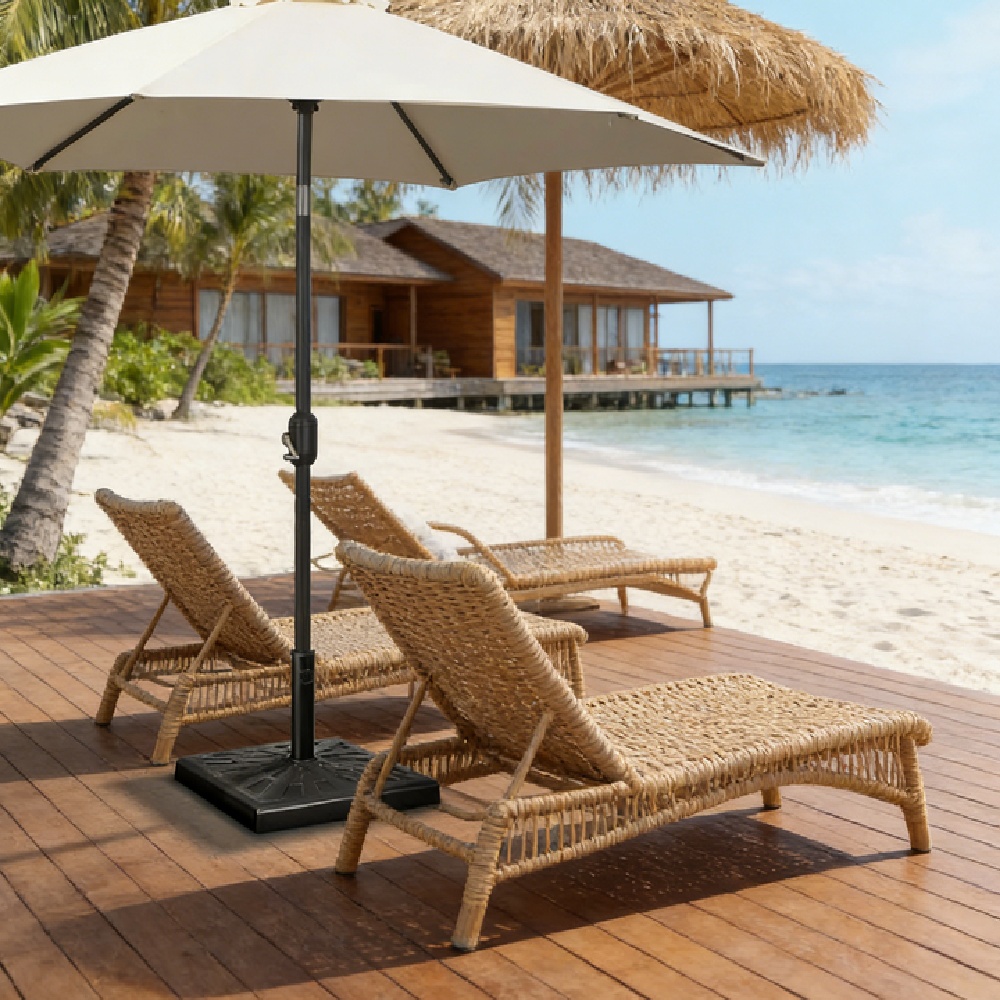 Outdoor Umbrella Base(Only the base)$131.99View on Mallflare
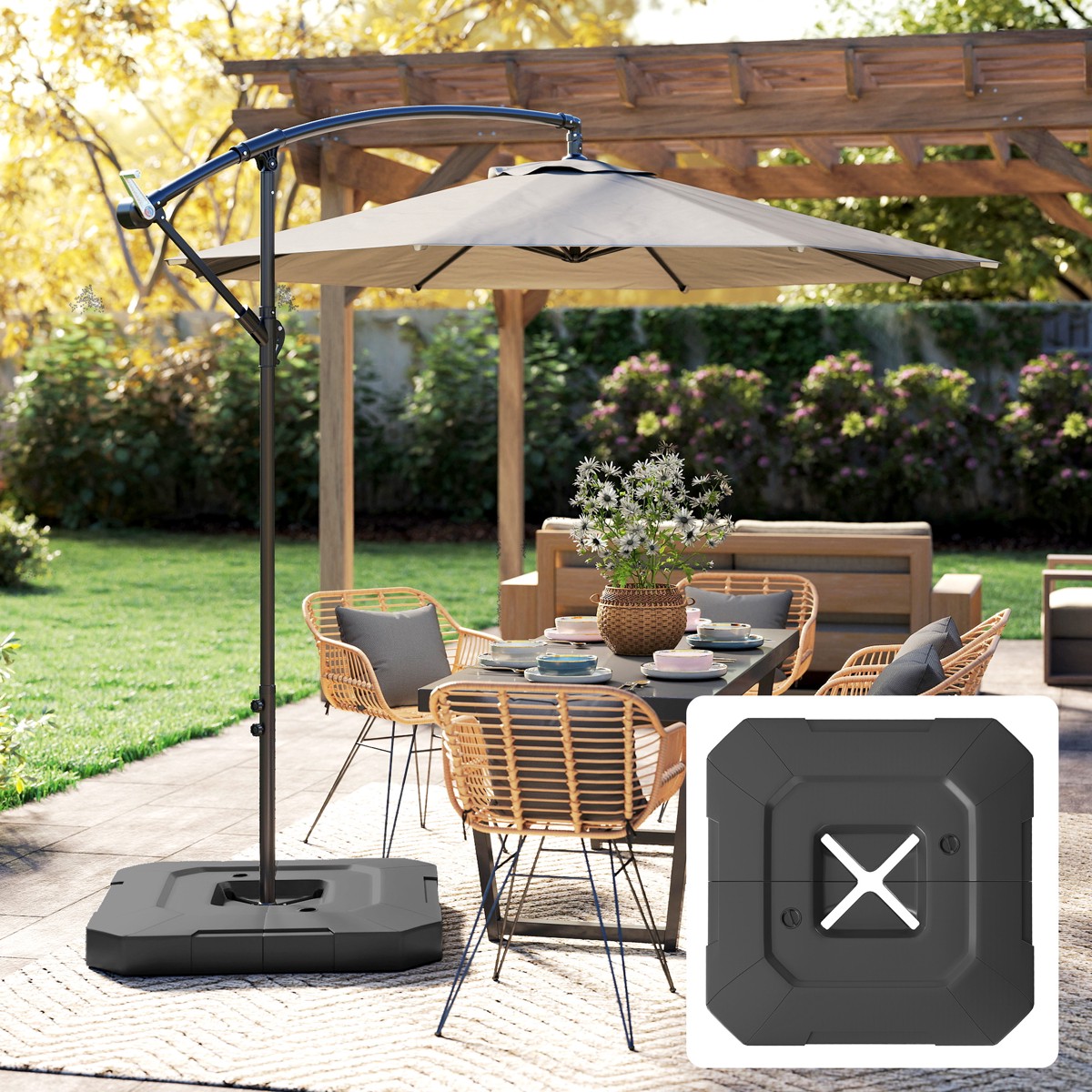 2-Piece Cantilever Umbrella Base Weight Set$174.99View on Mallflare
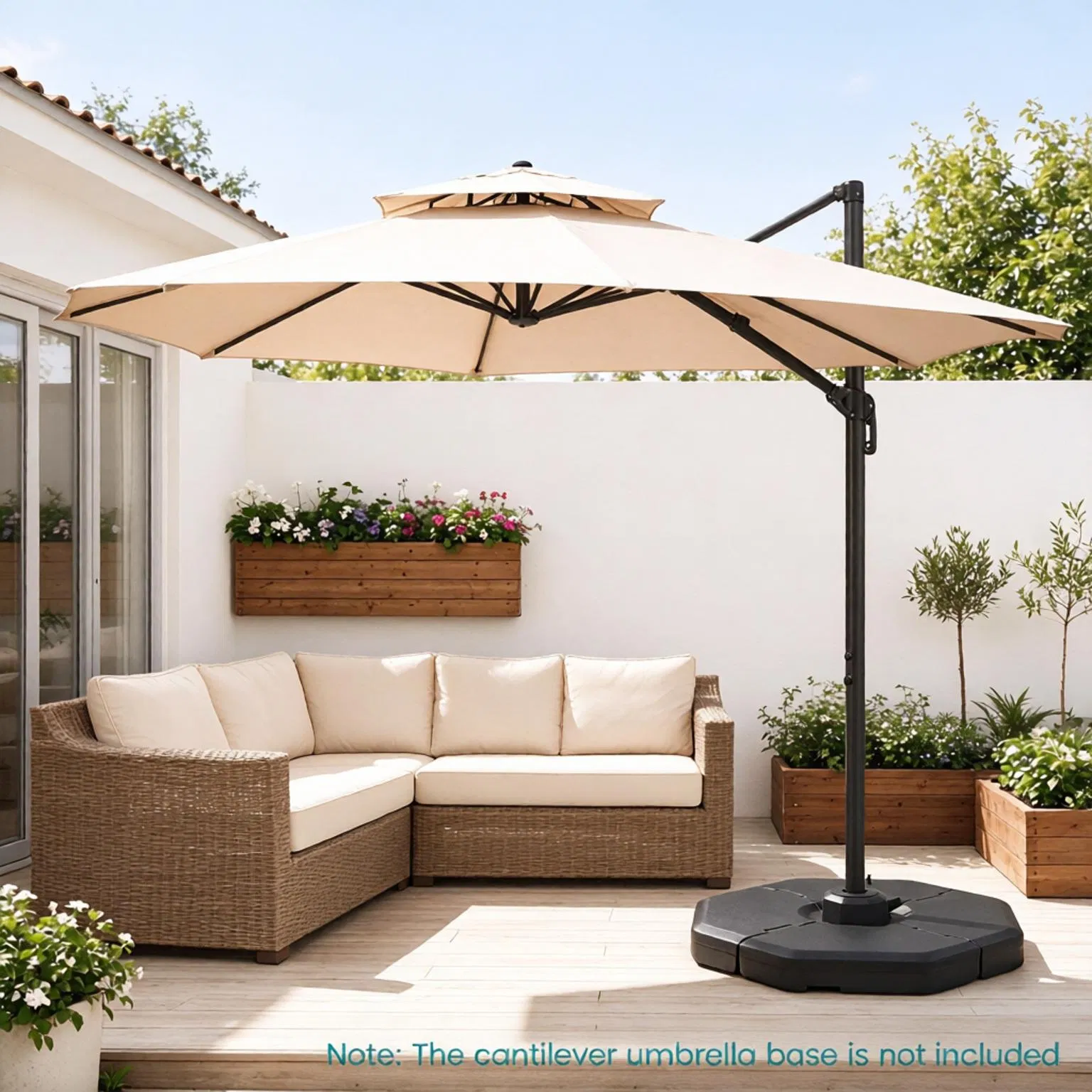 4 Pieces Patio Umbrella Base Plate Set ,Cantilever Offset Weights Heavy Duty ,Outdoor, Set-only$197.99View on Mallflare
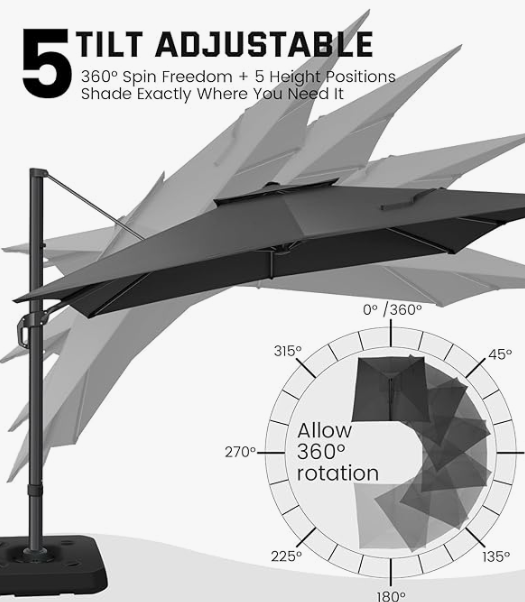 10x10ft Cantilever Patio Umbrella W Base Included 360 Rotation Large Offset Hanging Outdoor Shade For Deck Pool W Stand$204.99View on Mallflare
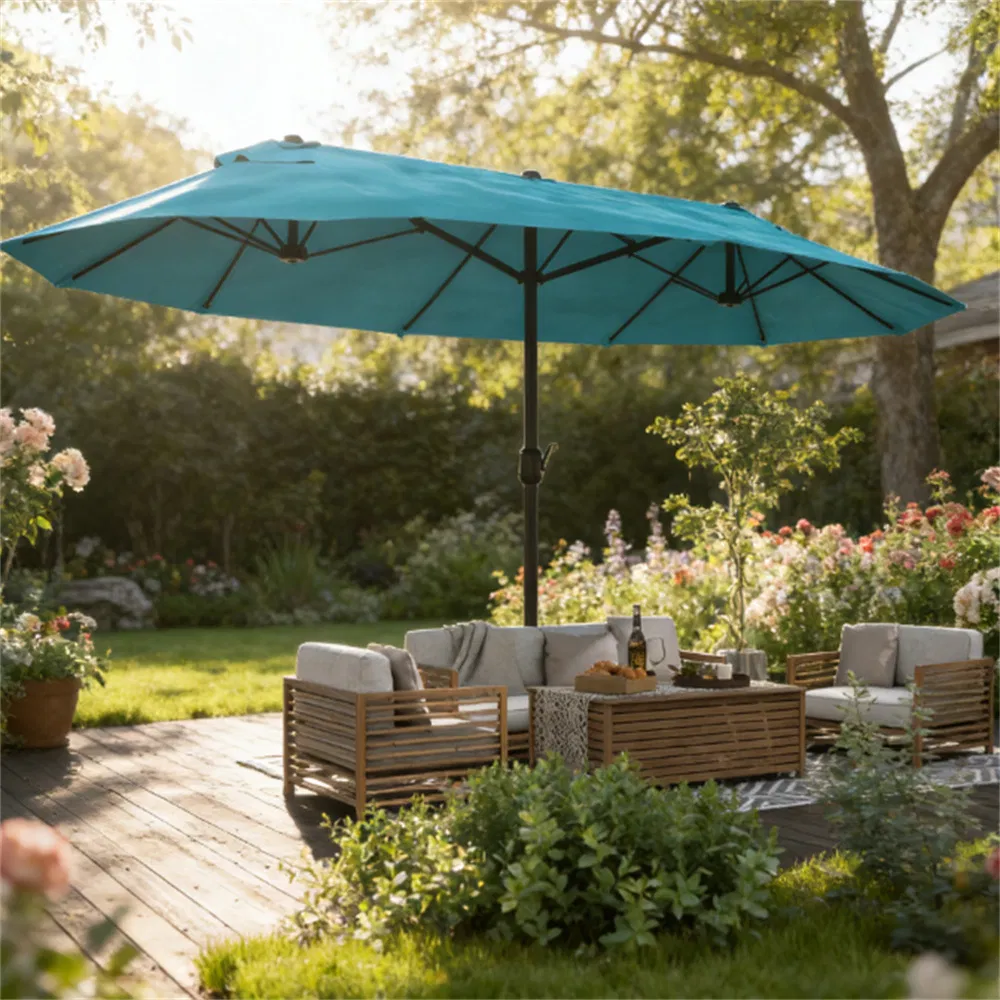 Garden Umbrella, Market Sunshade (with Base) Blue$229.99View on Mallflare
Highlights
- Ballast architecture splits into solid cast-stone or cast-iron plates (fixed mass, no fill), steel cross-plate bases that bolt to 4 pavers, and HDPE or fabric fillable cells loaded with sand or water.
- Sand is roughly 1.4–1.6x denser than water by volume, so a cell rated for sand reaches its rated weight with less fill than the same cell filled with water.
- Cross-plate cantilever bases distribute load over 4 weighted feet; single-sleeve plates rely on plate diameter and pole collar fit, so they are not interchangeable across umbrella types.
- Rolling fillable bases add casters and lock levers—useful only for center-pole umbrellas, and the wheels must be locked before wind loading to prevent creep.
Best use cases
- Choose a 4-plate steel or sand-fill cross base for 10–12 ft cantilever umbrellas with infinite tilt—the arm's offset leverage demands distributed ballast, not a single center sleeve.
- Choose a fillable HDPE rolling base for 6–10 ft center-pole market umbrellas on decks where you reposition shade daily; skip it for cantilever arms, which need plate ballast.
- Choose a solid cast-stone plate for a fixed bistro or cafe table umbrella where permanence and zero maintenance matter; skip fillable cells if you never move the umbrella.
- Skip sand-bag fabric wraps for high-wind coastal or rooftop exposures; they abrade and sag—use rigid plates or HDPE cells with locked casters instead.
Buying tips
- Size ballast to the umbrella, not the base: a 10–12 ft cantilever typically needs 100–180 lb of total ballast distributed across the cross plate or four feet.
- Use sand over water where fill weight matters—sand fills reach rated mass faster and do not slosh, keeping the center of gravity lower during gusts.
- Check pole collar and plate bore diameter: center-pole bases accept standard 1.5–2 in poles, while cantilever bases must match the specific arm's mounting bolt pattern.
- For fillable cells, confirm HDPE grade and wall thickness—thicker high-density polyethylene resists UV cracking and seam splitting better than thin blow-molded shells.
Specs
| Ballast Type | Cast plate / steel cross-plate / fillable HDPE |
|---|---|
| Fill Material | Sand (denser) or water; sand preferred |
| Umbrella Fit | Center-pole 1.5–2 in / cantilever arm bolt pattern |
| Base Mobility | Fixed plate vs locking caster wheels |
Related searches
What to check before buying
- Measure your umbrella's pole diameter (typically 1.5–2 in) and, for cantilever, the arm's mounting plate bolt spacing before ordering any base.
- Confirm deck or patio surface can carry the loaded base weight—sand-filled cells and cast plates are heavy point loads that can mark composite decking.
- Verify base footprint clears furniture and walkways: 4-plate cantilever bases span wider than single plates and need clearance for the weighted feet.
- Check that the base includes the required companion hardware—mounting bolts, pole sleeves, or locking casters—since these are often sold separately.
FAQ
Data sources: eBay / Amazon listings and product attribute feeds. Updated Nov 27, 2026.
Some links on this page are affiliate links. If you buy after clicking one, we may earn a commission at no extra cost to you. This does not change which products appear here or their order. Affiliate disclosure.