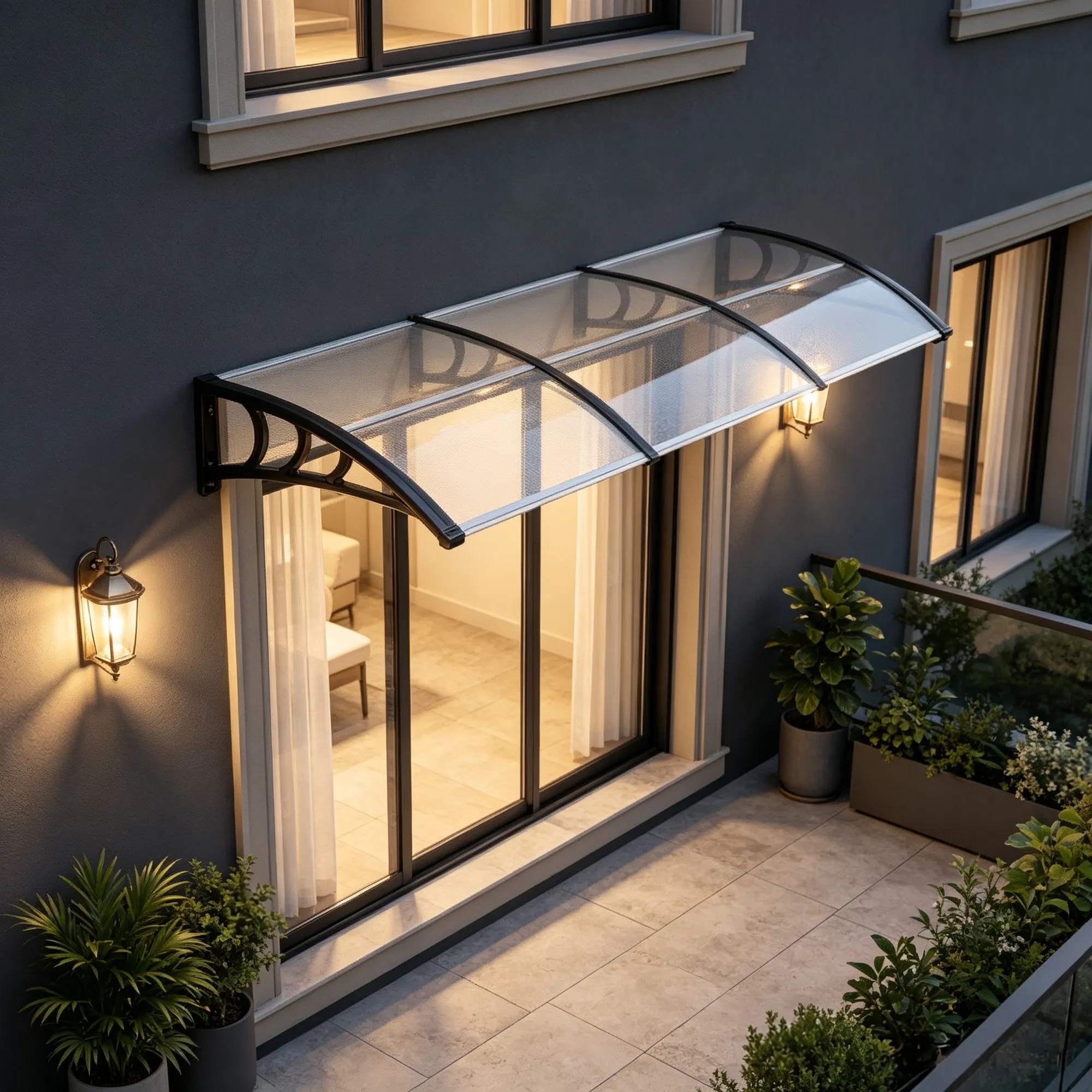

Photos from current listings. Actual item, color, and included accessories may vary.
Exterior Awning Buying Guide
Exterior awnings are structural shade and weather-protection additions, so the wrong material or mounting choice leads to sagging, leaks, or wind damage within a season. Buyers should first fix the coverage area and mounting surface, then choose a frame-and-fabric or rigid-panel system that matches local snow, rain, and UV exposure rather than picking on appearance alone.
Key takeaways
- Retractable units use powder-coated steel or aluminum arms with solution-dyed acrylic fabric rated for 5-10 years of UV exposure; rigid door canopies use polycarbonate or aluminum panels.
- Manual crank retractables suit occasional shade, while motorized models with wind sensors automatically retract before gust damage and require a nearby GFCI outlet.
- Load capacity is set by anchor type: masonry anchors into brick or concrete hold far more pull-out force than drywall or siding anchors, which need blocking behind them.
At a glance
- Category
- Outdoor Structures, Shade & Awnings
- Last updated
- Nov 28, 2026
Current offers
Highlights
- Retractable units use powder-coated steel or aluminum arms with solution-dyed acrylic fabric rated for 5-10 years of UV exposure; rigid door canopies use polycarbonate or aluminum panels.
- Manual crank retractables suit occasional shade, while motorized models with wind sensors automatically retract before gust damage and require a nearby GFCI outlet.
- Load capacity is set by anchor type: masonry anchors into brick or concrete hold far more pull-out force than drywall or siding anchors, which need blocking behind them.
- Drainage design separates good door canopies from leak-prone ones; integrated sinks or gutters channel water away from the threshold instead of dripping onto the entry.
Best use cases
- Choose a rigid polycarbonate or aluminum door canopy when you need permanent rain and snow protection over a single entry with no wall clearance for arms; skip retractable arms in tight doorways.
- Pick a wall-mounted retractable awning for patio or deck shade where you want seasonal adjustability and have at least 8 ft of clear wall above the mounting line; avoid it on vinyl siding without added blocking.
- Use a freestanding or pergola-style awning for rental properties or decks where drilling the facade is prohibited; skip wall-mounted units if you cannot anchor into structural framing.
- Install a window awning with a 12-18 inch projection for sun glare and rain control on single windows; choose larger 3-4 ft projections only for patios and doorways where head clearance allows.
Buying tips
- Confirm the mounting substrate before ordering: brick, concrete, and structural wood framing accept lag or sleeve anchors, while stucco, vinyl, and fiber cement need through-bolts into studs or added blocking.
- Size the awning width 4-8 inches wider than the door or window on each side so runoff clears the opening and does not streak the facade.
- Prioritize solution-dyed acrylic or PVC fabric over printed polyester for fade resistance; acrylic breathes and resists mildew, while PVC is waterproof but traps heat.
- Check the frame finish: powder-coated aluminum resists rust in coastal and humid climates, while painted steel is stronger but requires touch-up at scratches.
Specs
| Mount Type | Wall-mounted / Freestanding / Door canopy |
|---|---|
| Frame Material | Powder-coated aluminum / Steel |
| Fabric Type | Solution-dyed acrylic / PVC / Polycarbonate |
| Operation | Manual crank / Motorized retractable / Fixed |
Related searches
What to check before buying
- Measure the door or window width and the available wall height above the opening; retractable arms need roughly 8-10 inches of clearance above the mounting bracket.
- Inspect the wall for structural framing or masonry that can accept anchors; hollow siding or drywall requires added blocking or a freestanding alternative.
- Verify local snow-load and wind requirements; retractable awnings should be retracted in high winds unless fitted with an anemometer sensor.
- Confirm the mounting height keeps the front bar at least 6 ft 8 in above the floor or deck to avoid head strikes.
FAQ
Data sources: eBay / Amazon listings and product attribute feeds. Updated Nov 28, 2026.
Some links on this page are affiliate links. If you buy after clicking one, we may earn a commission at no extra cost to you. This does not change which products appear here or their order. Affiliate disclosure.