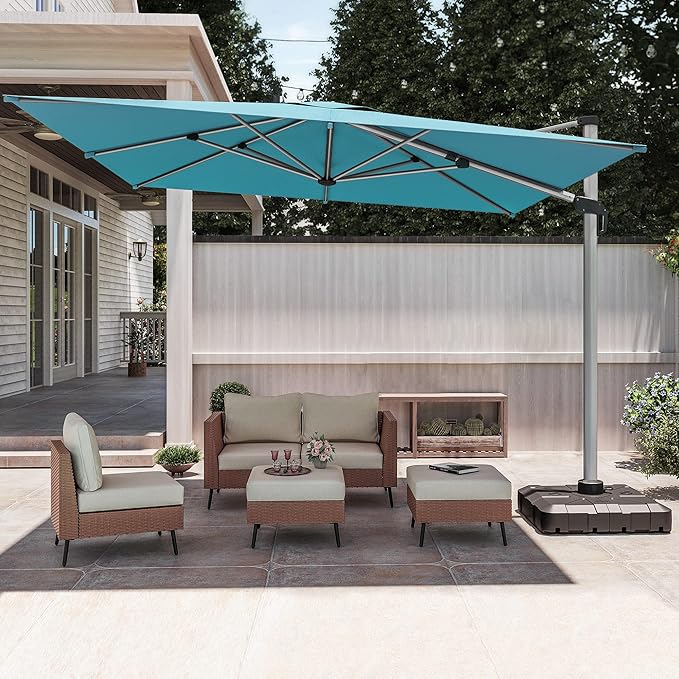

Photos from current listings. Actual item, color, and included accessories may vary.
Deck Umbrella Buying Guide
A deck umbrella is only as good as its frame, canopy fabric, and base-to-wind exposure match. Buyers commonly oversize the canopy for the table and undersize the base, or choose a tilt mechanism that cannot reach the afternoon sun angle. Decide first between a center-pole market umbrella and an offset cantilever, then lock in rib material, venting, and base weight for your deck.
Key takeaways
- Center-pole market umbrellas use 6-8 ribs in steel, iron, or fiberglass; fiberglass flexes without permanent bending, while iron resists sway but can rust at joints.
- Cantilever and offset models carry the canopy on a side arm with a cross base or weighted plate; the base must be heavy enough to counter the canopy's wind load, not just the pole weight.
- Double-sided canopies span 9.5-15 ft with twin vented sections and a central crank; they shade long tables but need a wider footprint and a heavier anchoring plan.
At a glance
- Category
- Outdoor Structures, Shade & Awnings
- Last updated
- Nov 28, 2026
Current offers
Highlights
- Center-pole market umbrellas use 6-8 ribs in steel, iron, or fiberglass; fiberglass flexes without permanent bending, while iron resists sway but can rust at joints.
- Cantilever and offset models carry the canopy on a side arm with a cross base or weighted plate; the base must be heavy enough to counter the canopy's wind load, not just the pole weight.
- Double-sided canopies span 9.5-15 ft with twin vented sections and a central crank; they shade long tables but need a wider footprint and a heavier anchoring plan.
- Canopy fabric rated UPF 50+ blocks over 98% of UV; solution-dyed polyester holds color longer than surface-coated fabric, and vented tops reduce wind lift.
Best use cases
- Choose a 9-10 ft center-pole market umbrella with push-button tilt and crank for a standard 6-8 seat deck table; skip oversized double-sided canopies that overhang railings and walkways.
- Pick a cantilever with included weighted base and 360-degree rotation when the table has a solid center or you need shade without a pole through the tabletop; skip it on open, gusty decks without ballast.
- Select a 15 ft double-sided umbrella only for long rectangular tables or poolside lounger rows with clear side clearance; skip it for small balconies and narrow decks.
Buying tips
- Size the canopy 2 ft wider than the table on each side for seated shade; a 9 ft canopy suits most 6-seat tables, while 10-11 ft fits 8-seat setups.
- Prioritize fiberglass or aluminum ribs in coastal or humid climates; powder-coated steel is acceptable inland if joints are sealed and drained.
- Choose crank-lift with push-button tilt for center-pole models, and infinite-tilt or 360-rotation mechanisms on cantilevers to chase low sun.
- Avoid cantilever bases under 100 lb without adding pavers or anchoring; a weighted cross base or bolted plate is mandatory in exposed, windy sites.
Specs
| Canopy Size | 9-11 ft round / 9.5-15 ft double-sided |
|---|---|
| Rib Material | Fiberglass / aluminum / powder-coated steel |
| Lift & Tilt | Crank lift + push-button or infinite tilt |
| Base Type | Cross base / weighted plate / bolted |
What to check before buying
- Measure table diameter plus 2 ft per side and confirm the canopy clears railings, stairs, and door swings.
- Check deck or patio surface for a flat, stable spot that fits the cross base or cantilever plate footprint.
- Confirm the umbrella's pole diameter matches your table's umbrella hole or stand collar before assembly.
- Verify wind exposure and anchor method: weighted base, pavers, or bolted plate for open, gusty decks.
FAQ
Data sources: eBay / Amazon listings and product attribute feeds. Updated Nov 28, 2026.
Some links on this page are affiliate links. If you buy after clicking one, we may earn a commission at no extra cost to you. This does not change which products appear here or their order. Affiliate disclosure.