
Photos from current listings. Actual item, color, and included accessories may vary.
Deck Canopy Retractable Buying Guide
Retractable deck canopies split into two distinct build types: wall-mounted fabric awnings that crank out from the house, and freestanding metal pergolas with sliding fabric tops. Measure your mounting surface and projection depth first, because a 13x8 ft awning needs roughly 13 ft of clear wall and 8 ft of unobstructed projection, while a freestanding pergola must fit inside the deck footprint with footings. Most buyer mistakes are undersizing projection for afternoon sun angles and buying a manual crank unit for a span better served by a motorized or freestanding frame.
Median $215.99 · New listings
Key takeaways
- Wall-mounted manual awnings use a hand crank and torsion bar; motorized versions add a remote but require a nearby GFCI outlet or solar pack.
- Fabric grade determines lifespan: 280-300 g/m2 solution-dyed polyester lasts 3-5 years, while 500D+ acrylic canvas resists fading and mildew far longer.
- Freestanding metal pergolas use a sliding fabric canopy on rails, typically aluminum or steel frame with powder coating for rust resistance.
At a glance
- Category
- Outdoor Structures, Shade & Awnings
- Last updated
- Nov 27, 2026
Current offers
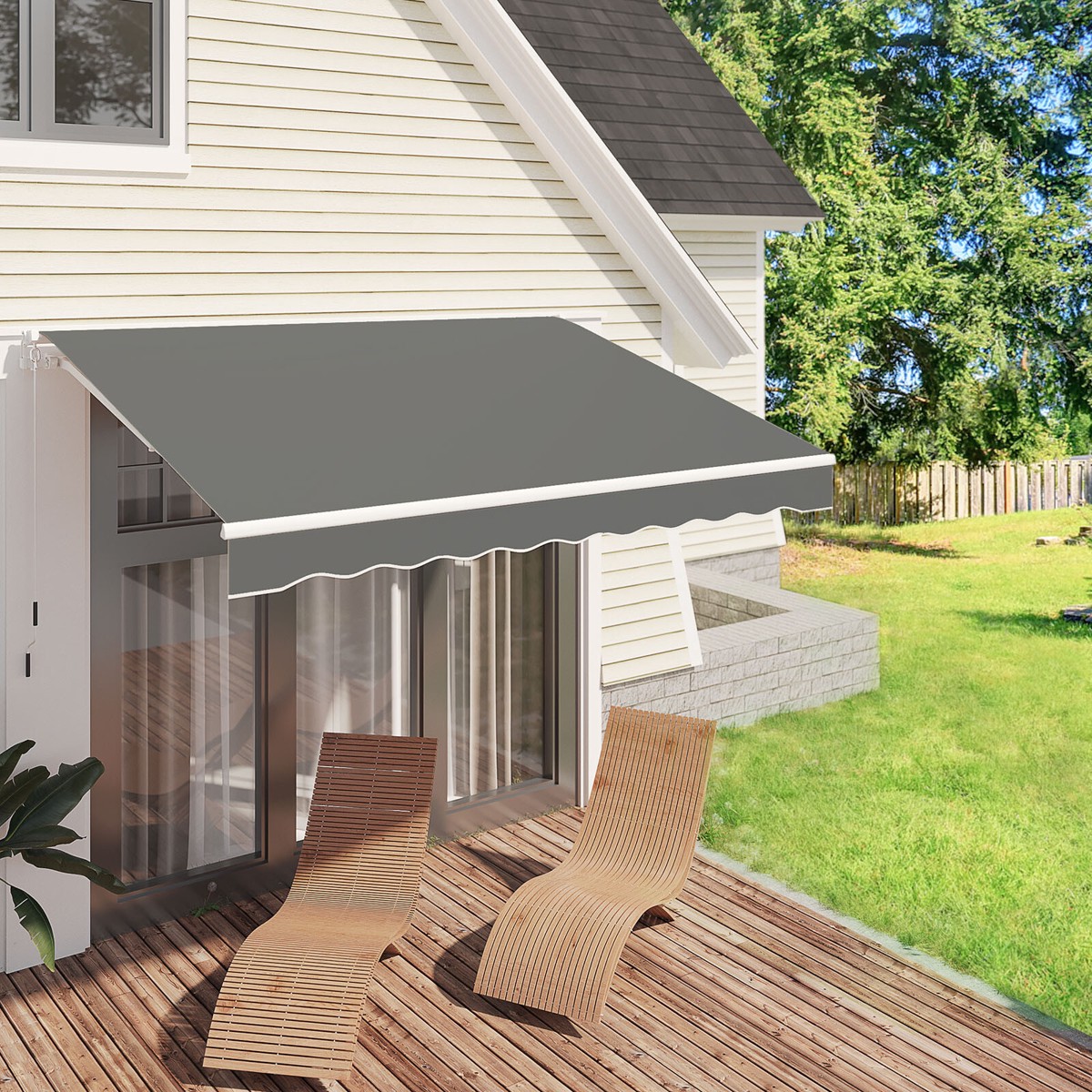 Patio Awning Manual Retractable Sun Shade Canopy Outdoor Deck Shelter 4 Size$149.99View on eBay
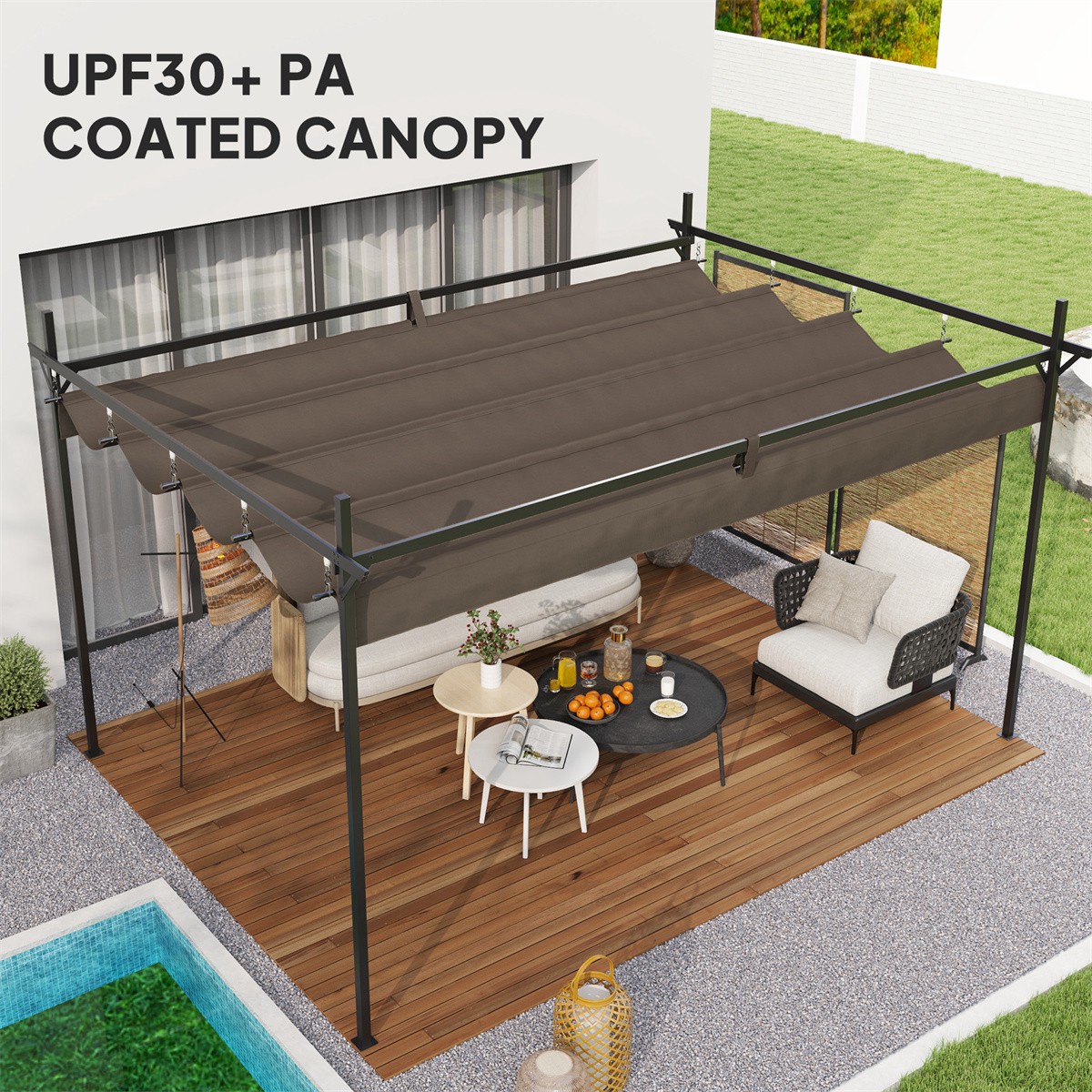 10' x 13' Retractable Metal Pergola, Outdoor Canopy for Patio, Garden, Backyard & Deck, Brown$507.99View on Mallflare
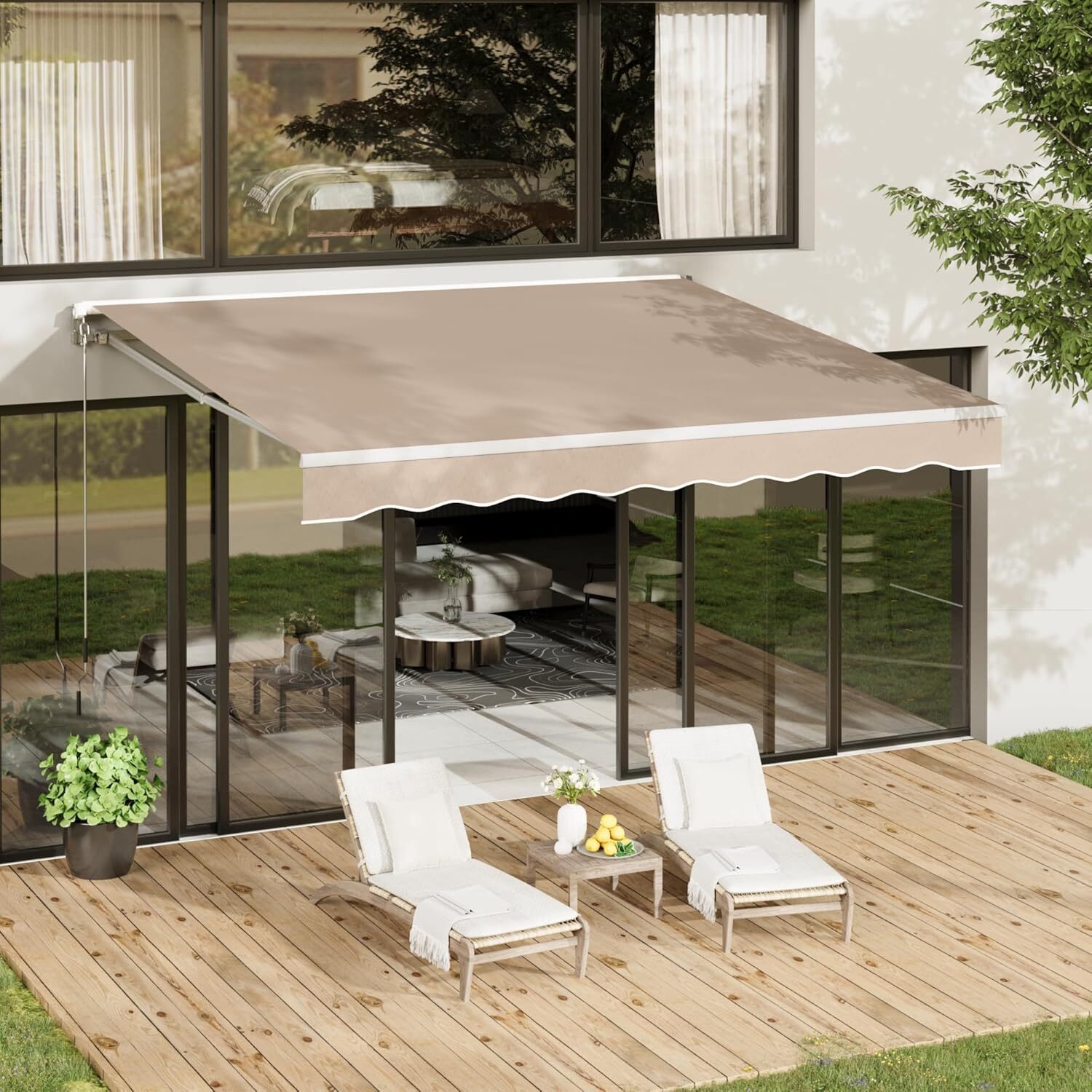 13 X 8 FT Patio Awning Manual Retractable Sun Shade Canopy Outdoor Deck Shelter$189.99View on eBay
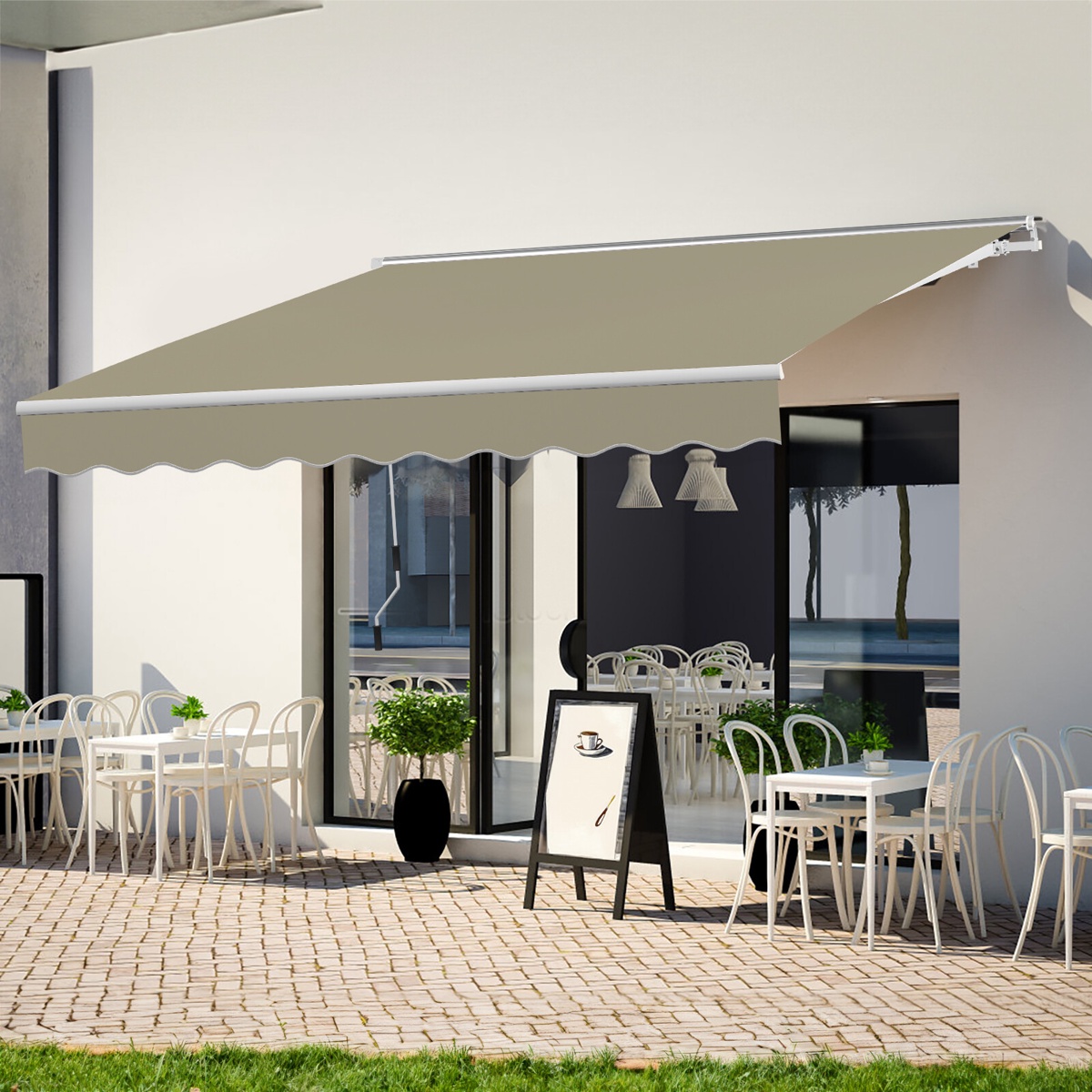 Patio Awning Manual Retractable Sun Shade Canopy Outdoor Deck Shelter 3 Size$214.99New · Last checked Nov 24, 2026View on eBay
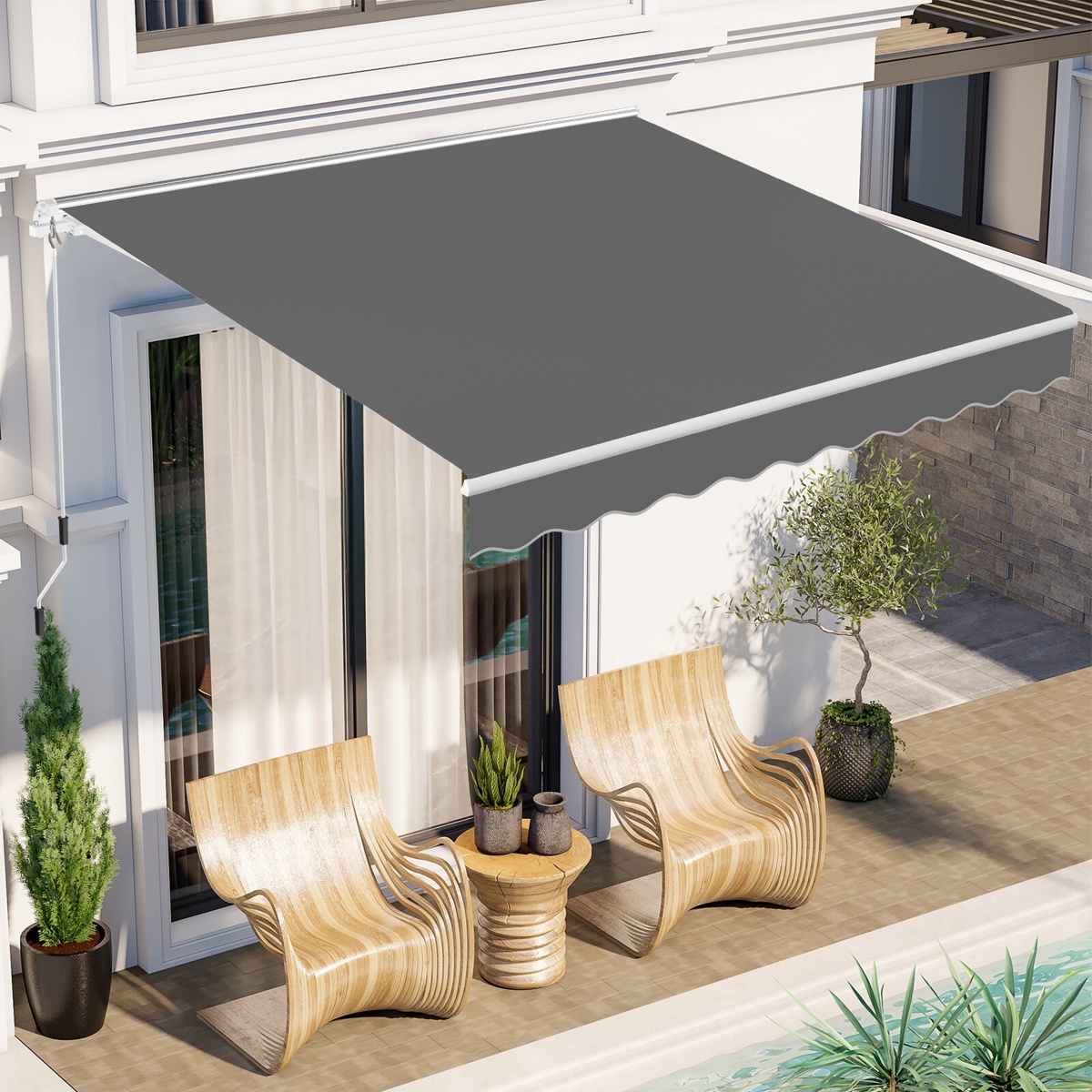 Retractable Patio Awning Outdoor Canopy Deck Door Sun Shade Shelter 3 Size,Crank$215.99New · Last checked Nov 24, 2026View on eBay
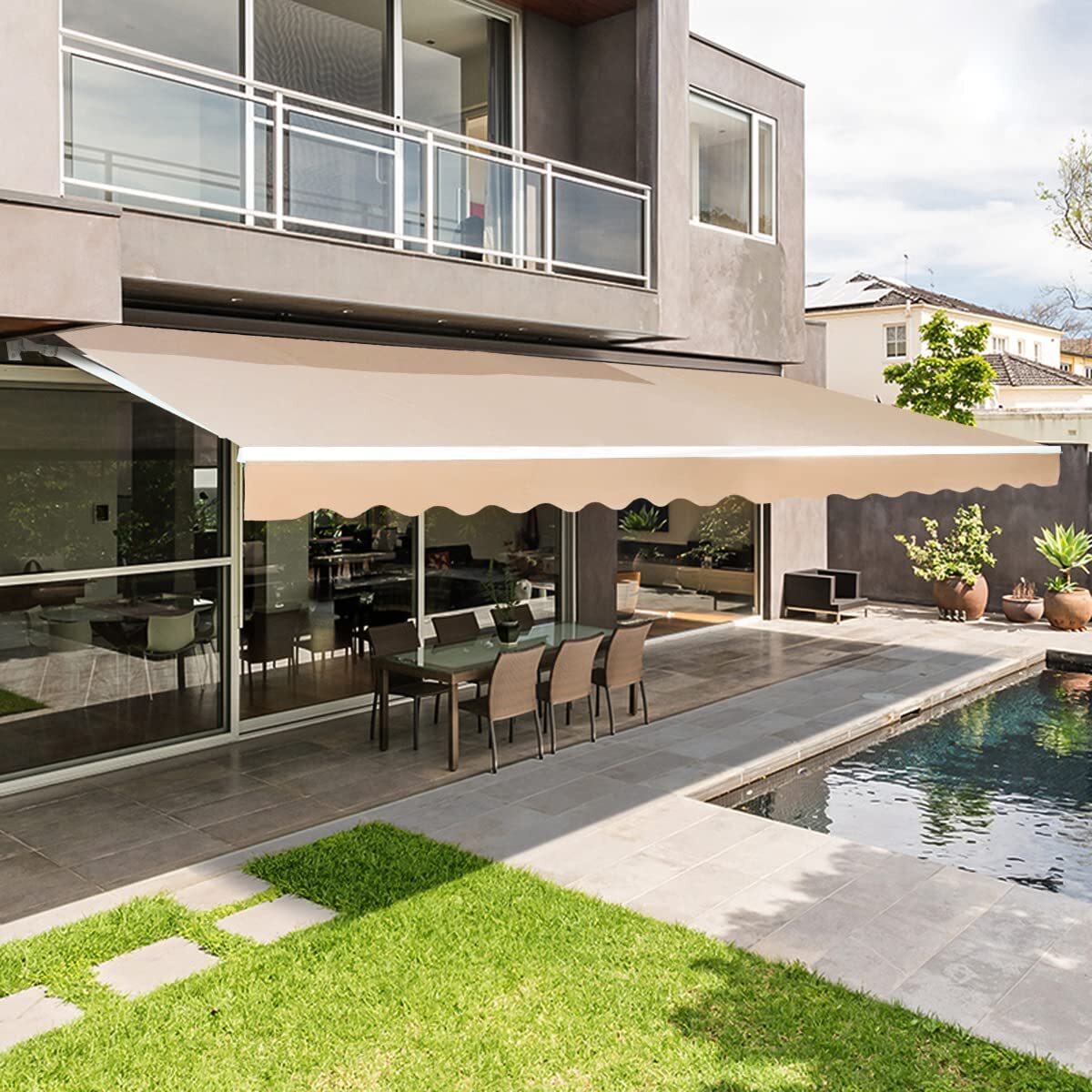 Patio Awning Manual Retractable Sun Shade Outdoor Canopy Deck Shelter 4 Size$219.99New · Last checked Nov 24, 2026View on eBay
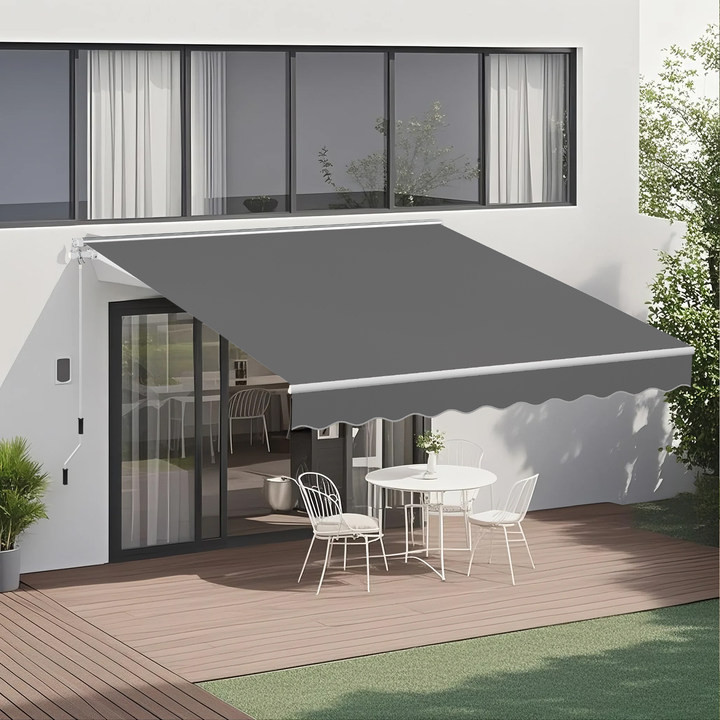 Patio Awning Manual Retractable Outdoor Sun shade Canopy Deck Shelter 3 SIZE$224.99New · Last checked Nov 24, 2026View on eBay
Highlights
- Wall-mounted manual awnings use a hand crank and torsion bar; motorized versions add a remote but require a nearby GFCI outlet or solar pack.
- Fabric grade determines lifespan: 280-300 g/m2 solution-dyed polyester lasts 3-5 years, while 500D+ acrylic canvas resists fading and mildew far longer.
- Freestanding metal pergolas use a sliding fabric canopy on rails, typically aluminum or steel frame with powder coating for rust resistance.
- Projection and width are fixed at manufacture; a 13x8 ft awning delivers 8 ft of outward shade coverage from the wall, not 13 ft.
Best use cases
- Best fit: wall-mounted retractable awning for a house-attached deck with 10-14 ft of clear siding and strong rim joist for lag bolts; skip if you rent or have stucco-over-foam walls.
- Best fit: freestanding metal pergola with retractable canopy for a detached deck or rental patio where wall mounting is impossible; choose when you need shade directly overhead, not angled from a wall.
- Wrong fit: buying a 13x8 ft awning for a 10 ft wide deck; the frame extends past the deck edge and the crank housing needs 6-8 in of side clearance. Size down to a 10x8 ft unit instead.
Buying tips
- Check mounting substrate: lag bolts need solid wood rim joist or masonry; brick veneer and vinyl siding require blocking or a freestanding pergola instead.
- Prioritize fabric weight: 280-300 g/m2 polyester is entry-level and prone to fading in 2-3 seasons; 500D acrylic or solution-dyed fabric costs more but holds color 5+ years.
- Choose manual crank for occasional use and lower cost; step up to motorized only if you have an outdoor GFCI outlet within cord reach and use the canopy daily.
- Inspect frame gauge: aluminum frames under 1.5 mm wall thickness flex in wind; powder-coated steel resists rust but adds weight and needs footing anchors.
Specs
| Mount Type | Wall-mounted awning vs freestanding pergola |
|---|---|
| Operation | Manual crank vs motorized remote |
| Fabric Grade | 280-300 g/m2 polyester vs 500D acrylic |
| Frame Material | Powder-coated aluminum vs steel |
Related searches
What to check before buying
- Measure wall width and desired projection: awning width must not exceed clear wall span, and projection should cover the seating zone without hitting railing or grill.
- Confirm mounting height: the awning cassette needs 8-10 ft clearance above the deck floor so the front bar does not obstruct headroom when retracted.
- Check wind and climate exposure: retractable fabric awnings must be rolled in during gusts above 20-25 mph; coastal or windy sites favor freestanding pergolas with anchored footings.
- Verify footings and deck structure for freestanding pergolas: each post needs a concrete footing or heavy base plate, and the deck must support the frame plus wind load.
FAQ
Data sources: eBay / Amazon listings and product attribute feeds. Updated Nov 27, 2026.
Some links on this page are affiliate links. If you buy after clicking one, we may earn a commission at no extra cost to you. This does not change which products appear here or their order. Affiliate disclosure.