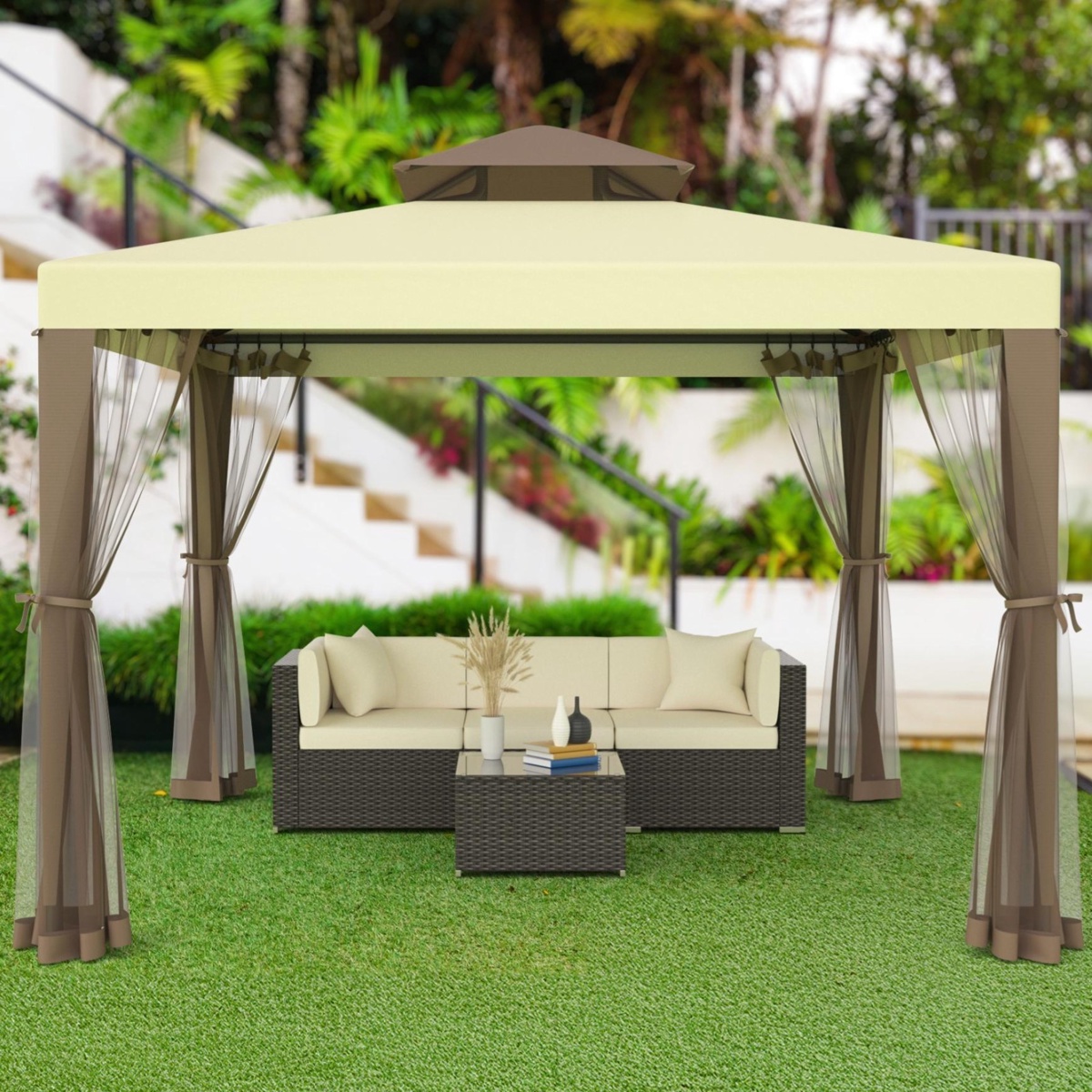

Photos from current listings. Actual item, color, and included accessories may vary.
Backyard Gazebo Buying Guide
Backyard gazebos split into two real buying paths: soft-top canopy shelters for seasonal shade and hardtop/steel pergola units for year-round structure. Getting the footprint right matters more than the listing photos, since most 10x10 class frames need roughly a 10x10 foot level pad and add roof overhang beyond the post spacing. Skipping wind anchoring and fabric grade is the most common reason buyers replace a gazebo within two seasons.
Key takeaways
- Soft-top gazebos use Oxford polyester fabric rated by denier and usually coated for water resistance; hardtop units use steel or aluminum panels for snow and UV durability.
- Double-tier vented roofs improve airflow and wind shedding versus single flat canopies, reducing heat buildup and lift during gusts.
- Frame steel gauge and powder coating decide longevity; thicker steel legs with cross-bracing resist racking far better than thin tube frames.
At a glance
- Category
- Outdoor Structures, Shade & Awnings
- Last updated
- Nov 28, 2026
Current offers
Highlights
- Soft-top gazebos use Oxford polyester fabric rated by denier and usually coated for water resistance; hardtop units use steel or aluminum panels for snow and UV durability.
- Double-tier vented roofs improve airflow and wind shedding versus single flat canopies, reducing heat buildup and lift during gusts.
- Frame steel gauge and powder coating decide longevity; thicker steel legs with cross-bracing resist racking far better than thin tube frames.
- Mesh sidewalls are detachable on most canopy models, while privacy curtains and mosquito netting are separate add-on tiers rather than standard.
Best use cases
- Choose a soft-top 10x10 or 13x10 canopy with netting for summer patio dining, parties, and bug-heavy yards; skip it for permanent snow-load use.
- Pick a hardtop steel or aluminum pergola/gazebo for year-round grill or bike storage on a deck; skip fabric tops if you expect heavy snow or high winds.
- Size down to an 8x8 or 6x6 footprint for small decks, balconies, or tight side yards; skip 13x10 units unless you have a clear level pad with overhang room.
- Buy a vented double-roof model in hot, sunny climates for airflow; single-roof flat canopies trap heat and collect debris.
Buying tips
- Measure the level footprint plus roof overhang before ordering; a 10x10 frame typically needs about a 10x10 pad and clearance beyond the posts.
- Prioritize powder-coated steel or aluminum frames with visible cross-bracing over thin tube frames, which rack and bend in wind.
- Look for water-resistant Oxford polyester with a stated denier for soft tops, and UV-treated fabric if the gazebo faces full-day sun.
- Avoid leaving soft-top canopies up through winter storms or snow; remove fabric and netting or choose a hardtop for permanent exposure.
Specs
| Roof Type | Soft-top fabric vs hardtop steel/aluminum |
|---|---|
| Frame Material | Powder-coated steel or aluminum |
| Footprint Size | 6x6 to 13x10 ft level pad |
| Sidewalls | Netting, mesh, or privacy curtains |
What to check before buying
- Confirm a level, hard surface or compacted pad matching the frame footprint, plus roof overhang clearance to fences and walls.
- Check wind exposure and ground type; anchor stakes work in soil, but concrete or deck mounting needs base plates and bolts.
- Verify sidewall needs: integrated netting, detachable mesh, or separate privacy curtains change what ships in the box.
- Confirm assembly clearance and anchor hardware are included or available for your surface before committing to a size tier.
FAQ
Data sources: eBay / Amazon listings and product attribute feeds. Updated Nov 28, 2026.
Some links on this page are affiliate links. If you buy after clicking one, we may earn a commission at no extra cost to you. This does not change which products appear here or their order. Affiliate disclosure.