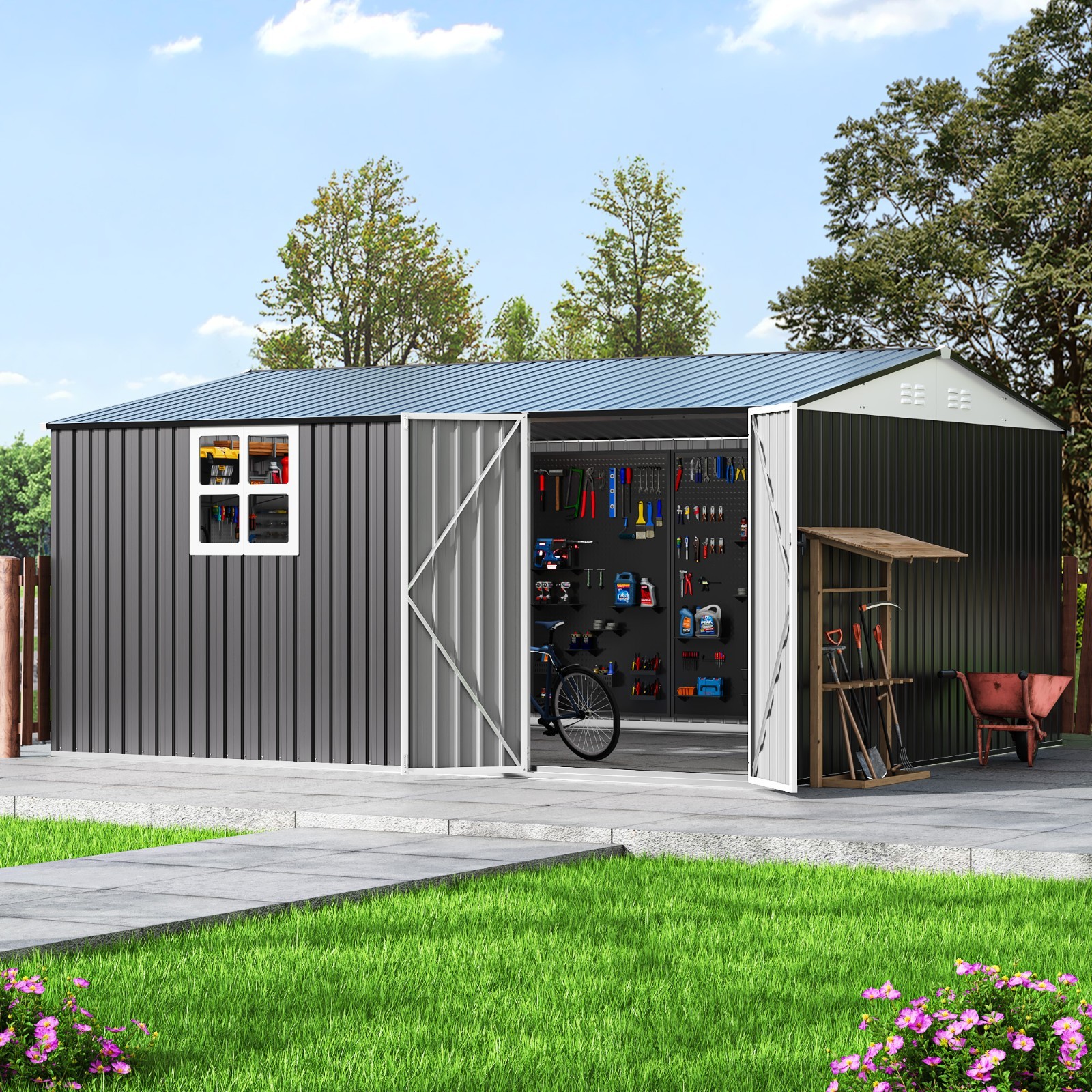

Photos from current listings. Actual item, color, and included accessories may vary.
12x14 Metal Shed Buying Guide
A 12x14 metal shed gives you roughly 168 square feet of floor space, enough for a riding mower, garden tools, and a workbench—but only if your local wind, snow, and permit rules are factored in before delivery. Most buyers underestimate base preparation and panel gauge, which are the real determinants of whether the structure lasts a decade or deforms in the first storm. Start with your jurisdiction's rules and your soil conditions, then choose gauge, anchoring, and door style accordingly.
Median $601.24
Key takeaways
- Panel steel thickness separates tiers: 0.4–0.5 mm (about 30–33 gauge) dents under hail and racking loads; 0.6 mm+ (about 24–26 gauge) holds form for long-term outdoor use.
- Galvanized steel with a zinc coating (often 80–120 g/m²) resists rust; thinner coatings or pre-painted-only panels rust at cut edges and fasteners within a few seasons.
- Most 12x14 sheds on the market rely on a bolt-together galvanized frame with corrugated panels; stouter versions add rigid gussets and cross-bracing to resist wind racking.
At a glance
- Category
- Outdoor Structures, Shade & Awnings
- Last updated
- Nov 28, 2026
Current offers
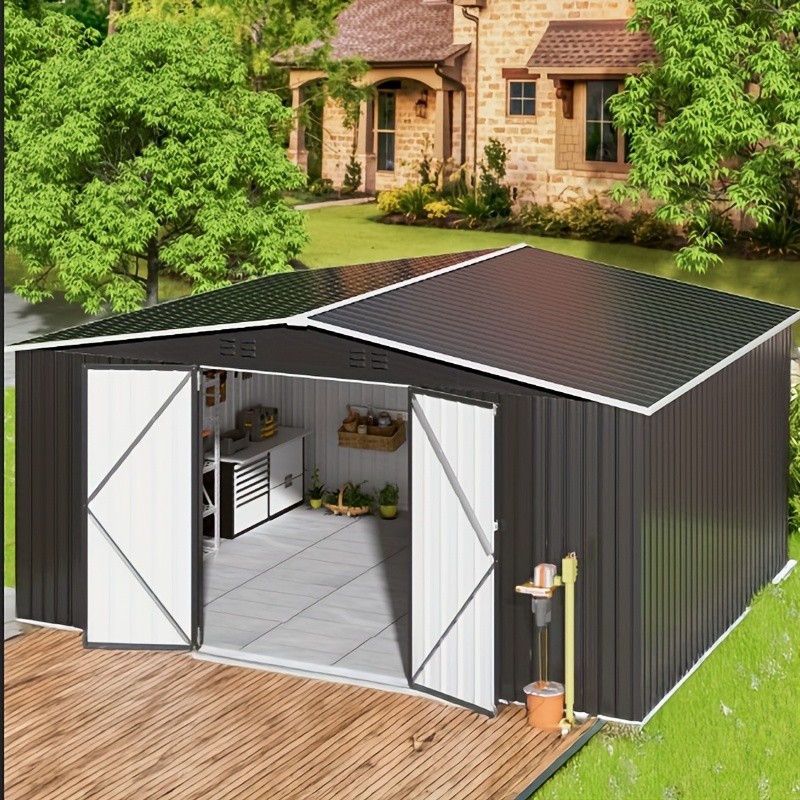
Highlights
- Panel steel thickness separates tiers: 0.4–0.5 mm (about 30–33 gauge) dents under hail and racking loads; 0.6 mm+ (about 24–26 gauge) holds form for long-term outdoor use.
- Galvanized steel with a zinc coating (often 80–120 g/m²) resists rust; thinner coatings or pre-painted-only panels rust at cut edges and fasteners within a few seasons.
- Most 12x14 sheds on the market rely on a bolt-together galvanized frame with corrugated panels; stouter versions add rigid gussets and cross-bracing to resist wind racking.
- Roof snow load and wind speed ratings vary widely—check the stamped rating on the instructions; many budget kit sheds top out around 20–25 psf snow and 70–90 mph wind.
Best use cases
- Best fit: a homeowner with a level, well-drained gravel or concrete pad in a moderate-wind, low-snow climate storing a zero-turn mower and hand tools—pick a 0.5 mm+ galvanized kit with a lockable swing door.
- Wrong fit: heavy snow or high-wind zones that need a continuous-load structure—skip thin kit sheds and choose an engineered steel building with stamped load ratings, or build a wood or masonry structure.
- Best fit: a suburban backyard as an auxiliary workshop or bike/sports storage area where aesthetics matter—choose a gable-roof model with matching trim and a pre-hung door to keep water out.
- Wrong fit: storing propane, gasoline, or chemicals in a non-ventilated metal box—without gable vents and a raised floor, condensation and fumes make it unsafe and rust-prone.
Buying tips
- Check your local zoning and HOA rules first: 12x14 ft often crosses a 'large accessory structure' threshold that triggers a permit, setback, or impervious-surface limit.
- Prioritize steel gauge and galvanizing coat over cosmetic extras; thicker panels and a heavier zinc coat resist denting and rust far longer than thin panels with a premium paint finish.
- Plan a real foundation—a 4-inch compacted gravel pad or a poured concrete slab—because thin kit sheds distort and doors stop latching when the base settles unevenly.
- Compare door and hardware specs: a lockable swing door with a full-length hinge and a hasp for a padlock beats a sliding door that jumps its track; check the door opening width against your mower deck.
Specs
| Steel Panel Gauge | 0.4–0.6 mm (30–24 ga) |
|---|---|
| Frame & Anchoring | Galvanized bolt-together / ground anchors |
| Roof Snow Load | 20–25 psf typical kit rating |
| Footprint | 168 sq ft (12 x 14 ft) |
Related searches
What to check before buying
- Measure your pad and confirm clearances: 12x14 ft footprint plus a minimum 2 ft perimeter for assembly and roof overhang, and check the height against fence lines and roof eaves.
- Confirm your ground can be leveled and drained—slope, clay soil, or a high water table means you need a raised gravel pad or slab, not direct ground contact.
- Check local wind, snow, and seismic load requirements against the shed's stamped ratings; if the kit has no rating, plan extra anchoring and bracing.
- Verify the kit's anchorage method (screw-in ground anchors vs. concrete wedge bolts) matches your foundation type, and add a padlock and ramp or threshold for wheeled equipment.
FAQ
Data sources: eBay / Amazon listings and product attribute feeds. Updated Nov 28, 2026.
Some links on this page are affiliate links. If you buy after clicking one, we may earn a commission at no extra cost to you. This does not change which products appear here or their order. Affiliate disclosure.