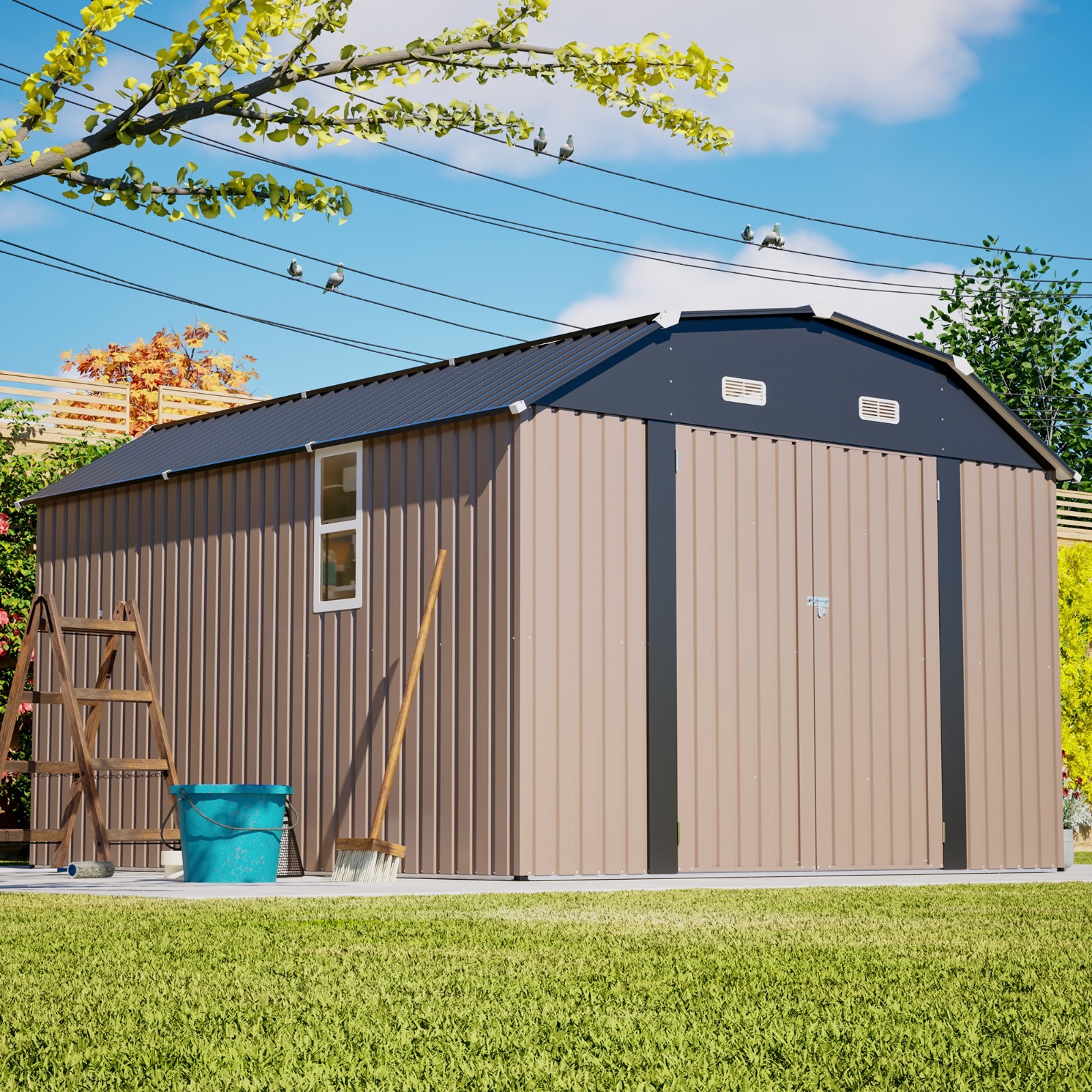

Photos from current listings. Actual item, color, and included accessories may vary.
10 X 12 Shed Buying Guide
A 10x12 shed is the largest common backyard storage footprint that still fits most residential permit-exempt envelopes, but the difference between a flimsy kit and a decades-long structure comes down to frame gauge, panel type, and floor construction. Shoppers typically choose among metal panel, resin, and wood/OSB kits — each with distinct assembly, anchoring, and snow/wind-load realities.
Key takeaways
- Metal panel kits use 29–22 gauge galvanized or Galvalume steel; thicker 22-gauge walls resist denting and wind uplift far better than 29-gauge.
- Resin and plastic kits rely on double-wall blow-molded panels rated for wind loads around 65–90 mph; they never rust but can crack in extreme cold.
- Wood and OSB kits require a level foundation (concrete slab or pressure-treated skids) and typically need shingles and paint as separate purchases.
At a glance
- Category
- Outdoor Structures, Shade & Awnings
- Last updated
- Nov 28, 2026
Current offers
Highlights
- Metal panel kits use 29–22 gauge galvanized or Galvalume steel; thicker 22-gauge walls resist denting and wind uplift far better than 29-gauge.
- Resin and plastic kits rely on double-wall blow-molded panels rated for wind loads around 65–90 mph; they never rust but can crack in extreme cold.
- Wood and OSB kits require a level foundation (concrete slab or pressure-treated skids) and typically need shingles and paint as separate purchases.
- Floor kits range from bare galvanized floor frames (no decking) to pre-cut OSB panels; confirm whether the 10x12 dimension is wall footprint or roof overhang.
Best use cases
- Best fit for lawn equipment, bikes, and patio furniture: metal panel kit with 22-gauge walls and a floor frame kit, anchored to a concrete slab or ground anchors.
- Best fit for HOA-restricted neighborhoods and low-maintenance yards: double-wall resin shed in a neutral color, which needs no painting and never rusts but needs a level base.
- Wrong fit for heavy workbench or tractor storage: thin 29-gauge metal kits and resin floors, which dent, sag, or crack under point loads above roughly 100 lb per square foot.
- Wrong fit for high-snow regions: any kit without a reinforced roof ridge and snow-load rating; skip resin in areas with heavy snow accumulation.
Buying tips
- Prioritize 22-gauge or thicker steel walls and a reinforced roof ridge for windy or snowy sites; 29-gauge kits are fine only in mild, sheltered yards.
- Choose a kit whose footprint matches your pad: 10x12 metal kits often list roof dimensions, so measure wall-to-wall and add overhang before pouring concrete.
- Avoid resin sheds on soft ground or in extreme cold; use them on a level slab or compacted gravel base and expect some panel flex in heat.
- Compare floor systems: a galvanized floor frame needs 3/4-inch exterior-grade plywood or OSB decking added, while some kits include pre-cut floor panels.
Specs
| Panel Material | Galvanized steel / resin / wood-OSB |
|---|---|
| Steel Gauge | 22–29 ga walls; 24 ga roof |
| Footprint | 120 sq ft (10x12 wall) |
| Floor System | Galvanized frame vs OSB panels |
What to check before buying
- Confirm local permit-exempt shed size; many jurisdictions cap accessory structures at 100–120 sq ft, and 10x12 is 120 sq ft.
- Verify your base is level within 1/4 inch across the full 10x12 footprint — metal and resin kits both distort if the slab or skids are off.
- Check wind and snow-load ratings for your zip code against the kit's engineering documentation before assembly.
- Measure gate and side-yard clearance for panel delivery and assembly; wall panels typically arrive in 6–8 ft bundles.
FAQ
Data sources: eBay / Amazon listings and product attribute feeds. Updated Nov 28, 2026.
Some links on this page are affiliate links. If you buy after clicking one, we may earn a commission at no extra cost to you. This does not change which products appear here or their order. Affiliate disclosure.