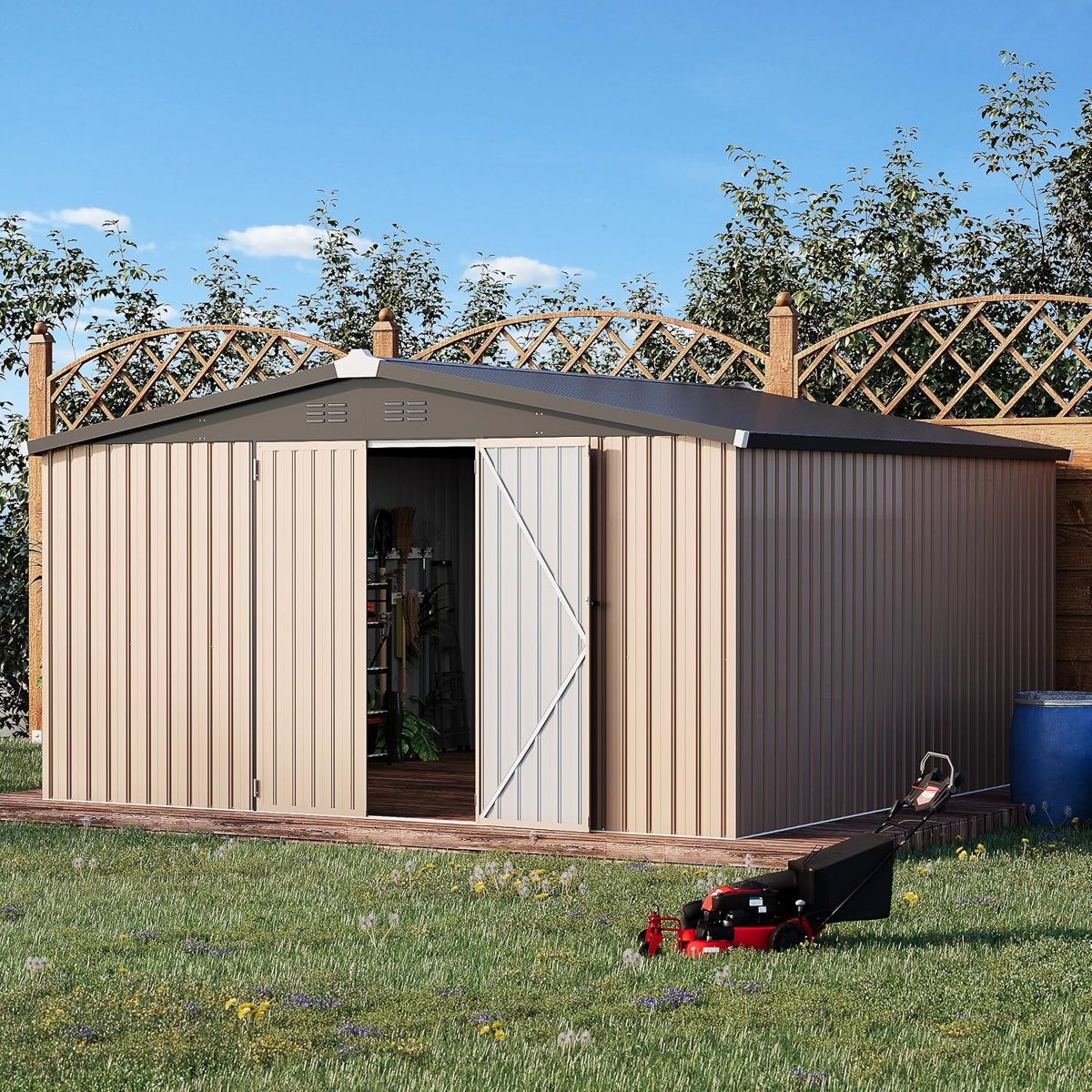

Photos from current listings. Actual item, color, and included accessories may vary.
10 X 10 Shed Buying Guide
A 10x10 shed is the sweet spot for storing lawn equipment, bikes, and patio furniture without surrendering half the yard, but most buyers underestimate the base prep and door clearance. Metal and resin dominate this size because wood kits in this footprint often cost more and demand ongoing maintenance. Get the foundation and local permit rules right before choosing between a gable or lean-to roof line.
Key takeaways
- Galvanized steel panels in 0.25–0.32 mm thickness resist rust and denting better than thinner 0.18 mm budget shells.
- Double sliding or lockable hinged doors typically clear 48–60 inches wide; verify the opening against your mower deck or wheelbarrow.
- Peak height usually runs 6.5–7.5 ft; wall height is often only 5.5–6 ft, so tall shelving must sit at the gable end.
At a glance
- Category
- Outdoor Structures, Shade & Awnings
- Last updated
- Nov 28, 2026
Current offers
Highlights
- Galvanized steel panels in 0.25–0.32 mm thickness resist rust and denting better than thinner 0.18 mm budget shells.
- Double sliding or lockable hinged doors typically clear 48–60 inches wide; verify the opening against your mower deck or wheelbarrow.
- Peak height usually runs 6.5–7.5 ft; wall height is often only 5.5–6 ft, so tall shelving must sit at the gable end.
- Resin and metal panels need a level base—concrete slab, pressure-treated lumber, or gravel pad—since settling racks door tracks.
Best use cases
- Best fit: storing a riding mower, two bikes, and garden tools—pick a gable-roof metal shed with a 60-inch-wide door and anchor kit included.
- Best fit: a narrow side-yard against a fence—choose a lean-to design that sheds water one direction and fits within 10x10 footprint.
- Wrong fit: storing chemicals, propane, or damp firewood in a sealed metal shed without vents—condensation rusts tools and traps fumes.
- Wrong fit: expecting a 10x10 to hold a full workshop plus vehicle—that footprint fits storage, not a two-bench woodshop.
Buying tips
- Check the door opening width and height before anything else—sliding doors often lose 4–6 inches versus the panel width.
- Prioritize hot-dipped galvanized or zinc-coated steel over painted-only panels if you live within a mile of saltwater.
- Avoid anchoring directly into bare soil; use a framed gravel pad or concrete footings so the floor frame stays level.
- Compare roof snow-load and wind ratings—cheap sheds list none, while rated models specify psf and mph limits on the carton.
Specs
| Panel Material | Galvanized steel vs resin vs wood |
|---|---|
| Roof Style | Gable / lean-to / gambrel |
| Door Opening | 48–60 in wide sliding or hinged |
| Anchor Kit | Included vs sold separately |
What to check before buying
- Measure your pad or slab to exactly 10x10 ft plus overhang; sheds need 6–12 inches clearance on all sides for assembly.
- Confirm local permit thresholds—many jurisdictions require a permit above 100–120 sq ft or when the shed exceeds 10 ft in height.
- Check the box for an anchor kit, floor frame, and ramp; many metal sheds sell these separately.
- Verify the delivery path: a 10x10 shed ships as heavy flat cartons that need a truck-accessible drop point.
FAQ
Data sources: eBay / Amazon listings and product attribute feeds. Updated Nov 28, 2026.
Some links on this page are affiliate links. If you buy after clicking one, we may earn a commission at no extra cost to you. This does not change which products appear here or their order. Affiliate disclosure.