
Photos from current listings. Actual item, color, and included accessories may vary.
Vegetable Plant Buying Guide
Vegetable plants for greenhouse and hydroponic growing are live seedlings or young starts bred for controlled-environment production, and the core trade-off is transplant vigor versus hybrid vigor: open-pollinated/heirloom starts give you seed-saving consistency but slower early growth and lower uniform yield, while F1 hybrid starts deliver faster rooting, disease resistance, and heavier fruit set at higher cost. The decision rule for durable success is to match the plant's growth habit and days-to-maturity to your structure's light, temperature, and root-zone volume, and to skip any start that lacks a defined root system and true-leaf stage.
Median $122.99
Key takeaways
- F1 hybrid vs open-pollinated: hybrids deliver uniform fruit size, concentrated ripening, and built-in disease resistance (e.g., TMV, V, F races); heirlooms offer seed-saving and flavor diversity but variable yield.
- Root system grade: buy starts showing 4-6 true leaves with white, non-rootbound roots visible at the plug edge — rootbound or yellowed roots stall 7-14 days after transplant.
- Greenhouse vs hydroponic suitability: soil-started plants need 6-8 in root balls for media beds; hydroponic-ready plants must be propagated in rockwool, coco, or clay pebble plugs with washed roots to avoid media contamination.
At a glance
- Category
- Greenhouse & Hydroponics
- Last updated
- Nov 28, 2026
Current offers
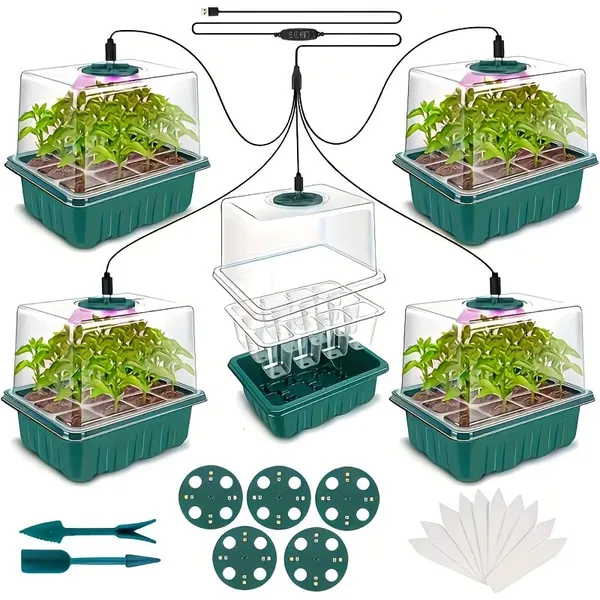 5-Pack Seed Starter Kit With LED Grow Lights – Indoor Propagation Trays Adjustable Humidity Dome & Clear Cell Seedling Mini Greenhouse Starting Set For Plants & Vegetables$62.99View on Mallflare
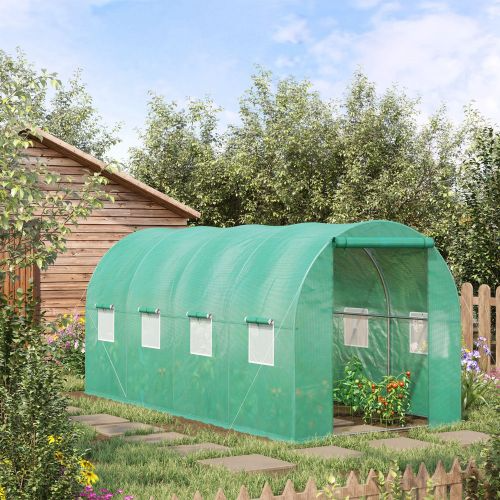 Outsunny 15x 7x 6.5 Walk-in Tunnel Hoop Greenhouse, Green House With Polyethylene PE Cover, Steel Frame, Roll-Up Zipper Door & Windows For Flowers, Vegetables, Tropical Plants$182.99View on Mallflare
Highlights
- F1 hybrid vs open-pollinated: hybrids deliver uniform fruit size, concentrated ripening, and built-in disease resistance (e.g., TMV, V, F races); heirlooms offer seed-saving and flavor diversity but variable yield.
- Root system grade: buy starts showing 4-6 true leaves with white, non-rootbound roots visible at the plug edge — rootbound or yellowed roots stall 7-14 days after transplant.
- Greenhouse vs hydroponic suitability: soil-started plants need 6-8 in root balls for media beds; hydroponic-ready plants must be propagated in rockwool, coco, or clay pebble plugs with washed roots to avoid media contamination.
- Determinate vs indeterminate growth habit: determinate varieties top out at a fixed height and ripen in a 2-3 week window (ideal for trellis shelves and short-season greenhouses); indeterminates require 6-8 ft vertical support and continuous pruning.
Best use cases
- Best fit for a walk-in greenhouse with 18-shelf trellis and mesh windows: choose compact determinate or dwarf vegetable starts (bush tomatoes, peppers, dwarf beans) in 3-4 in plugs — skip indeterminate vining tomatoes, which outgrow shelf spacing and shade lower tiers.
- Best fit for hydroponic NFT or DWC systems: pick plants propagated in inert media (rockwool/coco) with washed roots and EC-matched nutrient schedules; skip field-soil starts, which introduce pathogens and clog emitters.
- Best fit for cool-season spring/fall greenhouse growing: buy hardened-off brassicas and leafy greens (kale, lettuce, broccoli) set out at 4-6 weeks; skip warm-season fruiting starts (tomato, pepper, cucumber) until night temperatures hold above 50°F (10°C).
- Wrong fit for low-light or unheated winter structures: tropical fruiting vegetables (tomatoes, peppers, eggplant) stall below 55°F night temps and require supplemental lighting of at least 12-14 mol/m²/day DLI — choose cold-tolerant greens or overwintered herbs instead.
Buying tips
- Match days-to-maturity to your frost-free window: a tomato labeled 75-85 days from transplant needs a growing season of at least 90 days; in short-season zones pick 55-65 day varieties instead.
- Size your root-zone volume: each tomato or pepper plant needs 5-10 gallons of media in a container or 12-18 in in-row spacing in beds; lettuce and herbs need only 1-2 gallons or 6-8 in spacing — overplanting stunts fruiting crops.
- Verify the propagation media against your system: rockwool and coco plugs suit hydroponic drip/DWC; peat or field soil is for raised beds and in-ground greenhouse borders — never mix soil starts into recirculating nutrient reservoirs.
- Choose certified disease-resistant varieties: look for resistance codes on the label (V = Verticillium, F = Fusarium, TMV = tobacco mosaic, N = nematode); resistant F1 hybrids are the durable choice in greenhouses where soil pathogens persist.
Specs
| Genetics | F1 hybrid vs open-pollinated/heirloom |
|---|---|
| Growth Habit | Determinate/bush vs indeterminate/vining |
| Propagation Media | Rockwool/coco plug vs peat/soil |
| Transplant Stage | 4-6 true leaves, white root plug |
Related searches
What to check before buying
- Structure height and shelf spacing: confirm 6-8 ft interior height and at least 18-24 in between trellis tiers for indeterminate or vining varieties; low tunnels and 18-shelf greenhouses suit dwarf and determinate plants only.
- Climate control: verify night temperatures stay above 50-55°F for warm-season fruiting vegetables, or plan supplemental heat; ventilate via mesh doors and windows to keep humidity below 70% RH and prevent blossom-end rot and mold.
- Light budget: greenhouse glazing must deliver at least 6 hours of direct sun or 12-14 mol/m²/day DLI for fruiting crops; shade cloth (30-50%) is required above 85°F to prevent flower drop.
- System compatibility: for hydroponics, confirm your nutrient reservoir EC (1.5-2.5 mS/cm for fruiting crops), pH (5.5-6.5), and plug size (1.5-2 in rockwool or 4 in coco) match the starts you buy; for soil beds, confirm media pH 6.0-6.8.
FAQ
Data sources: eBay / Amazon listings and product attribute feeds. Updated Nov 28, 2026.
Some links on this page are affiliate links. If you buy after clicking one, we may earn a commission at no extra cost to you. This does not change which products appear here or their order. Affiliate disclosure.