
Photos from current listings. Actual item, color, and included accessories may vary.
Seed Starter Greenhouse Buying Guide
A seed starter greenhouse is a modular tray, dome, and cell insert system that creates a humid, warm microclimate for germination before transplanting. The core trade-off is cell size and dome height versus airflow and light penetration: shallow 12-cell trays suit quick herbs, while deep 72-cell trays with tall domes accommodate taprooted vegetables and prevent damping-off. Buy durable PP trays with snug domes and separate cell inserts if you plan to reuse; skip thin PET clamshells that crack after one season.
Median $19.90
Key takeaways
- Cell count and volume dictate transplant timing: 12-cell trays give 2–3 in cells for fast herbs, 72-cell trays give 1–1.5 in cells for high-volume vegetable starts that need earlier transplanting.
- Polypropylene (PP) trays resist UV and repeated flexing far better than polystyrene or PET; PP domes hold humidity without crazing, and thick-wall (≥1.2 mm) trays survive multi-season sterilization.
- Dome height governs airflow and light: tall domes (≥4 in) fit leggy seedlings and reduce leaf-to-plastic contact, while low domes trap heat and demand daily venting to prevent damping-off.
At a glance
- Category
- Greenhouse & Hydroponics
- Last updated
- Nov 27, 2026
Current offers
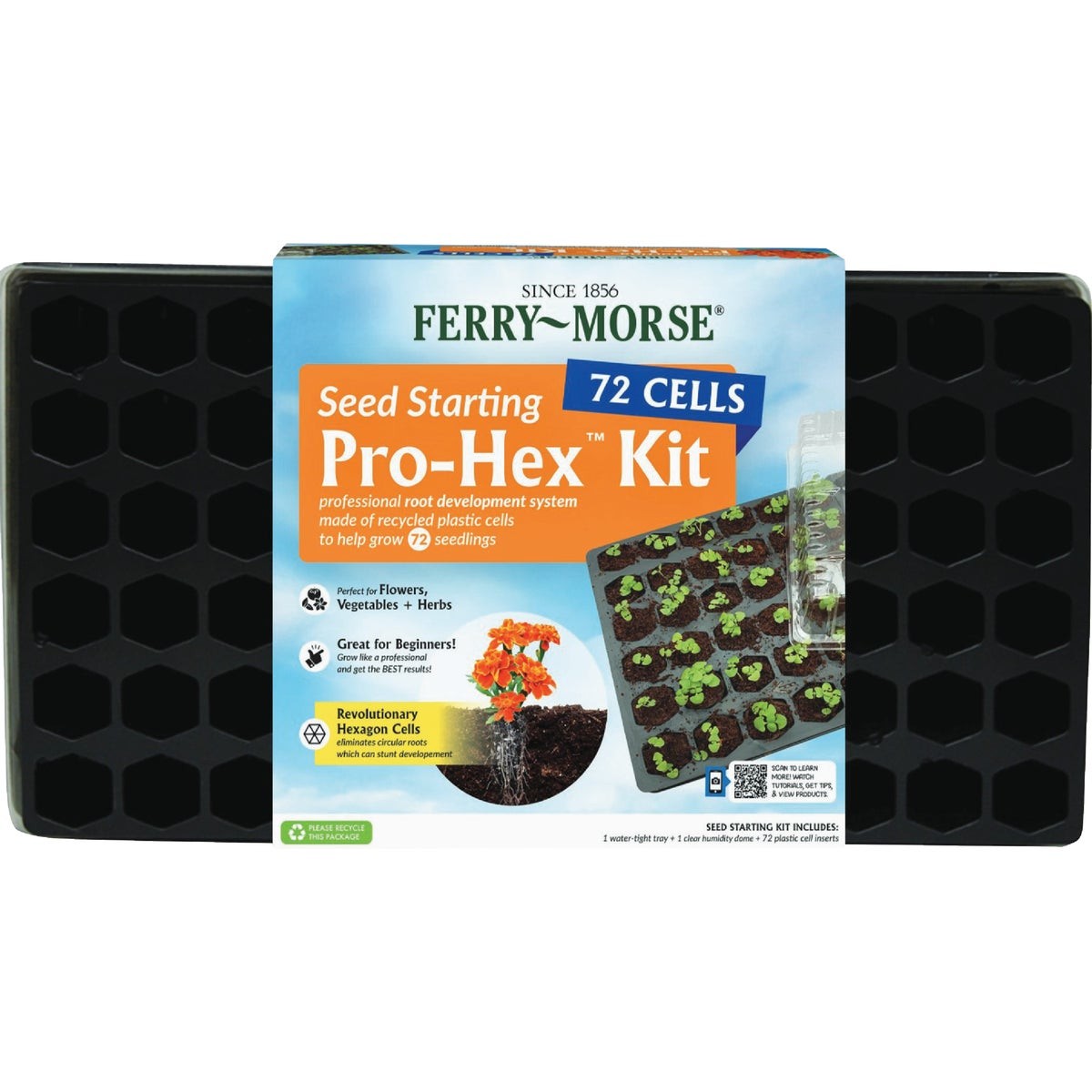 Ferry 72-Cell 11 In. W. x 22 In. L. Seed Starter Kit PHEX-7 Ferry PHEX-7$19.08View on eBay
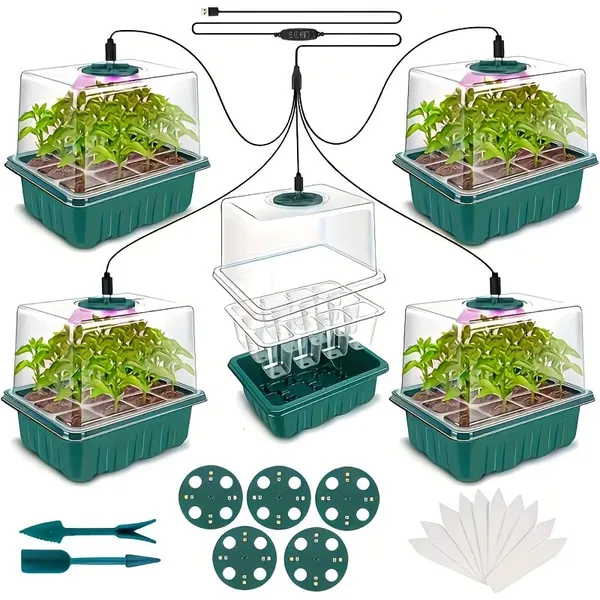 5-Pack Seed Starter Kit With LED Grow Lights – Indoor Propagation Trays Adjustable Humidity Dome & Clear Cell Seedling Mini Greenhouse Starting Set For Plants & Vegetables$62.99View on Mallflare
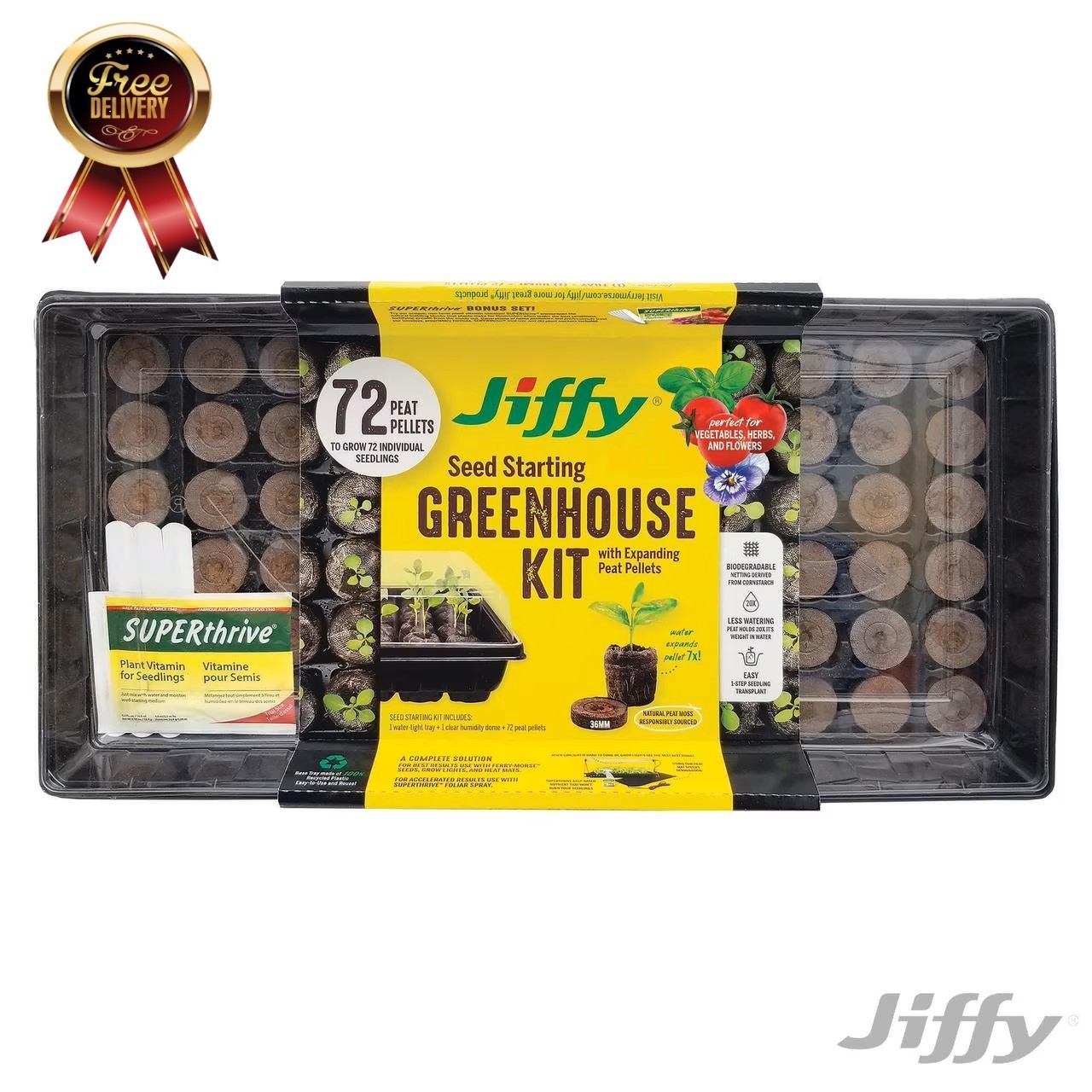 72 Cell Greenhouse Seed Starter Kit with 36Mm Peat Pellets$19.90View on eBay
Highlights
- Cell count and volume dictate transplant timing: 12-cell trays give 2–3 in cells for fast herbs, 72-cell trays give 1–1.5 in cells for high-volume vegetable starts that need earlier transplanting.
- Polypropylene (PP) trays resist UV and repeated flexing far better than polystyrene or PET; PP domes hold humidity without crazing, and thick-wall (≥1.2 mm) trays survive multi-season sterilization.
- Dome height governs airflow and light: tall domes (≥4 in) fit leggy seedlings and reduce leaf-to-plastic contact, while low domes trap heat and demand daily venting to prevent damping-off.
- Integrated LED grow lights add 5–10 W per tray with adjustable brightness and timers; they replace a sunny windowsill but require clearance (12–18 in) to avoid leaf scorch.
Best use cases
- Best fit: 72-cell PP tray with tall vented dome for tomatoes, peppers, and brassicas—high germination volume with room to grow before potting up.
- Best fit: 12- or 24-cell deep-cell tray with LED light for kitchen herbs and lettuce on a counter with no south-facing window.
- Wrong fit: thin clamshell 5-pack with no vent and no light if you start more than one season or need consistent germination—upgrade to PP trays with adjustable vents.
- Wrong fit: 72-cell shallow trays for root crops like carrots or large-seed squash—use deep-cell (≥2.5 in) trays or peat pots instead.
Buying tips
- Match cell volume to seed: small seeds (lettuce, basil) in 1–1.5 in cells; large seeds (squash, cucumber) in ≥2.5 in cells or individual 3 in pots to avoid root circling.
- Choose PP over PET or polystyrene: PP survives bleach sterilization and repeated flexing; PET clamshells crack at hinge points after one or two seasons.
- Confirm dome fit and venting: a dome with adjustable vents or a sliding panel lets you harden off seedlings without removing the lid entirely, reducing shock.
- If buying LED kits, check wattage and timer granularity: 5–10 W per tray with at least 4 brightness levels and 4/8/12-hour timer settings covers most home germination.
Specs
| Tray Material | Polypropylene (PP) vs PET/PS |
|---|---|
| Cell Count | 12 / 24 / 72 cells (standard) |
| Dome Height | Low (2-3 in) vs Tall (4-6 in) |
| Light Included | No light vs LED 5-10 W/tray |
Related searches
What to check before buying
- Measure your shelf or windowsill: standard 72-cell trays are about 11 × 22 in; 5-packs of 12-cell trays span about 15 × 20 in when placed side by side.
- Verify tray depth fits under your light or dome: deep-cell trays (≥3 in) need taller domes and more clearance under shelf lighting.
- Check your water tray or saucer width: bottom-watering trays must be at least as wide as the cell tray to avoid spillage and algae.
- Confirm plug standard and timer compatibility: LED kits with USB or barrel plugs need a nearby outlet or power strip with timer function.
FAQ
Data sources: eBay / Amazon listings and product attribute feeds. Updated Nov 27, 2026.
Some links on this page are affiliate links. If you buy after clicking one, we may earn a commission at no extra cost to you. This does not change which products appear here or their order. Affiliate disclosure.