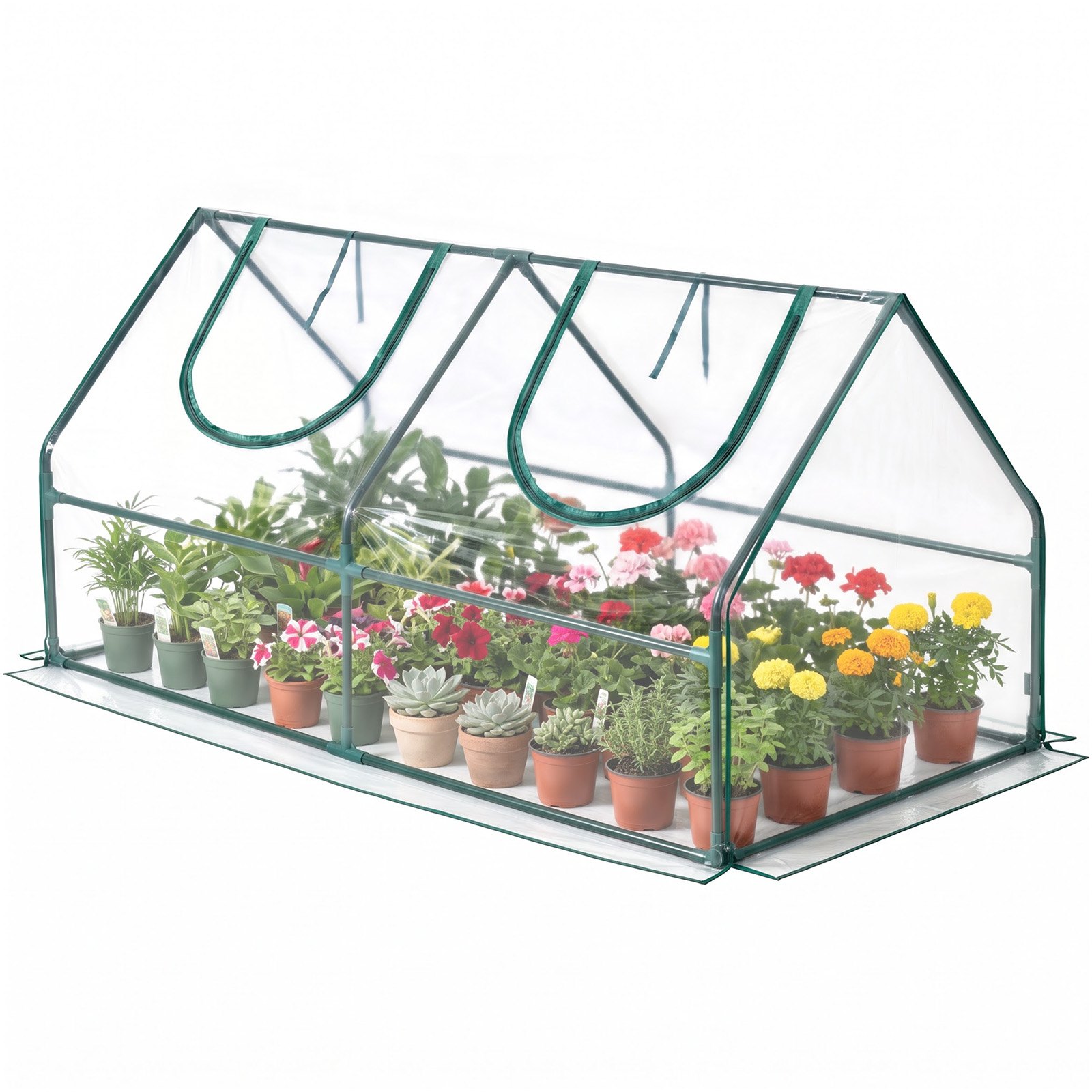

Photos from current listings. Actual item, color, and included accessories may vary.
Mini Grow Tent Buying Guide
A mini grow tent is a compact, enclosed cultivation space—typically 2–4 ft tall and under 4 ft wide—engineered to control light, humidity, and temperature for seedlings, cuttings, herbs, and small fruiting plants. The core trade-off is between thin, single-layer Oxford or PVC covers with basic zippered access and heavier, reflective, multi-layer shells with proper ventilation ports, sturdy poles, and light-proof seams. The decision rule: choose a tent with at least 210D Oxford or 4-layer reflective Mylar, a metal frame (not fiberglass or plastic), and dedicated duct ports—skip any tent that relies on passive vents alone or uses sub-150D fabric, which tears and leaks light within a season.
Key takeaways
- Shell material grade determines lifespan: 210D–600D Oxford with blackout coating blocks light and resists punctures, while 150D or non-woven fabric degrades under UV and humidity within months.
- Frame construction separates stable from sagging tents: powder-coated steel or aluminum poles with plastic corner connectors hold shape; fiberglass or PVC poles bow and crack under filter or fan weight.
- Reflective interior (diamond Mylar or silver PE) recovers up to 95% of lamp output; unlined PVC or white Oxford loses 15–30% and creates hot spots.
At a glance
- Category
- Greenhouse & Hydroponics
- Last updated
- Nov 28, 2026
Current offers
Highlights
- Shell material grade determines lifespan: 210D–600D Oxford with blackout coating blocks light and resists punctures, while 150D or non-woven fabric degrades under UV and humidity within months.
- Frame construction separates stable from sagging tents: powder-coated steel or aluminum poles with plastic corner connectors hold shape; fiberglass or PVC poles bow and crack under filter or fan weight.
- Reflective interior (diamond Mylar or silver PE) recovers up to 95% of lamp output; unlined PVC or white Oxford loses 15–30% and creates hot spots.
- Ventilation ports and cord grommets are non-negotiable for climate control: a 4–6 in duct port supports inline fans and carbon filters, while tents with only mesh windows cannot exhaust heat or odor.
Best use cases
- Best fit: seed starting and propagation on a shelf or countertop—pick a 2×2×3 ft tent with 200D+ Oxford, a metal frame, and at least one 4-inch duct port for a small clip fan.
- Best fit: indoor herb and leafy-green growing in a closet or spare corner—choose a 3×3×5 ft tent with reflective Mylar interior and dual vent windows to manage humidity without a full exhaust system.
- Wrong fit: fruiting photoperiod plants (tomatoes, peppers) in a tent under 4 ft tall—light burn and height restrictions cut yield; step up to a 4×4×6.5 ft tent with 6-inch ports or grow outdoors.
- Wrong fit: outdoor-only use with a PVC cover—PVC traps heat and condensate, and most mini greenhouse PVC covers lack UV stabilization; select a polycarbonate panel or woven PE greenhouse instead.
Buying tips
- Match tent height to plant + pot + light clearance: add pot height (10–12 in), light fixture thickness (2–4 in), and 12 in canopy gap—a 3 ft tent fits seedlings only, not mature herbs.
- Verify fabric denier and coating: 210D Oxford with blackout + Mylar lining outlasts 150D; for humid rooms choose 600D with reinforced stitching and taped seams.
- Check pole diameter and connector type: 16 mm steel poles with metal corners support small fans and filters; 12 mm fiberglass or push-fit plastic corners sag under 2–3 lb loads.
- Confirm port count and size against your gear: one 4-inch port handles a 100–200 CFM inline fan for tents under 12 cu ft; larger tents need two 6-inch ports for intake and exhaust.
Specs
| Shell Fabric | 150D–600D Oxford / PVC |
|---|---|
| Frame Material | Steel vs fiberglass poles |
| Interior Lining | Mylar reflective vs plain |
| Duct Port Size | 4–6 in exhaust ports |
Related searches
What to check before buying
- Measure your floor footprint and ceiling clearance: a 2×2 ft tent needs 24×24 in of floor plus 6 in around for access; 3×3 ft needs 36×36 in and at least 5 ft of vertical room.
- Check ambient room temperature and humidity: tents in garages or basements need insulated or thicker fabric and active exhaust; unheated spaces require a heat mat for germination.
- Confirm your light and fan plug standards match your power strip and timer—most mini tents use standard 120V NEMA 1-15 plugs in North America, 220–240V Type F/G in Europe.
- Plan companion parts before purchase: a small oscillating clip fan, a 4-inch inline fan and ducting for exhaust, fabric pots with saucers, and a timer—none ship with most mini tents.
FAQ
Data sources: eBay / Amazon listings and product attribute feeds. Updated Nov 28, 2026.
Some links on this page are affiliate links. If you buy after clicking one, we may earn a commission at no extra cost to you. This does not change which products appear here or their order. Affiliate disclosure.