
Photos from current listings. Actual item, color, and included accessories may vary.
Hydroponic Indoor Garden Kit Buying Guide
A hydroponic indoor garden kit is a self-contained soilless growing system that pairs a water reservoir and pump with a grow tray, net pots, and often a timed irrigation cycle. The core trade-off is between active recirculating systems (pumps, timers, higher yield, more maintenance) and passive wick or Kratky kits (silent, cheap, lower yield, minimal upkeep). The decision rule: buy active only if you will commit to weekly pH/EC checks and reservoir changes; choose passive if you want low-fuss herbs and greens under low light.
Median $83.99
Key takeaways
- Active recirculating kits use a submersible pump (typically 15-30W) plus a timer; passive wick/Kratky kits have no moving parts and rely on capillary action.
- Site count is determined by pipe diameter and spacing: 2-inch net pots fit 2-inch holes; NFT pipe systems commonly space sites 6-8 inches apart along 3-4 inch UPVC channels.
- Light-blocking or opaque UPVC pipe prevents algae growth in nutrient solution; clear or thin-walled pipe requires opaque sleeves or frequent cleaning.
At a glance
- Category
- Greenhouse & Hydroponics
- Last updated
- Nov 27, 2026
Current offers
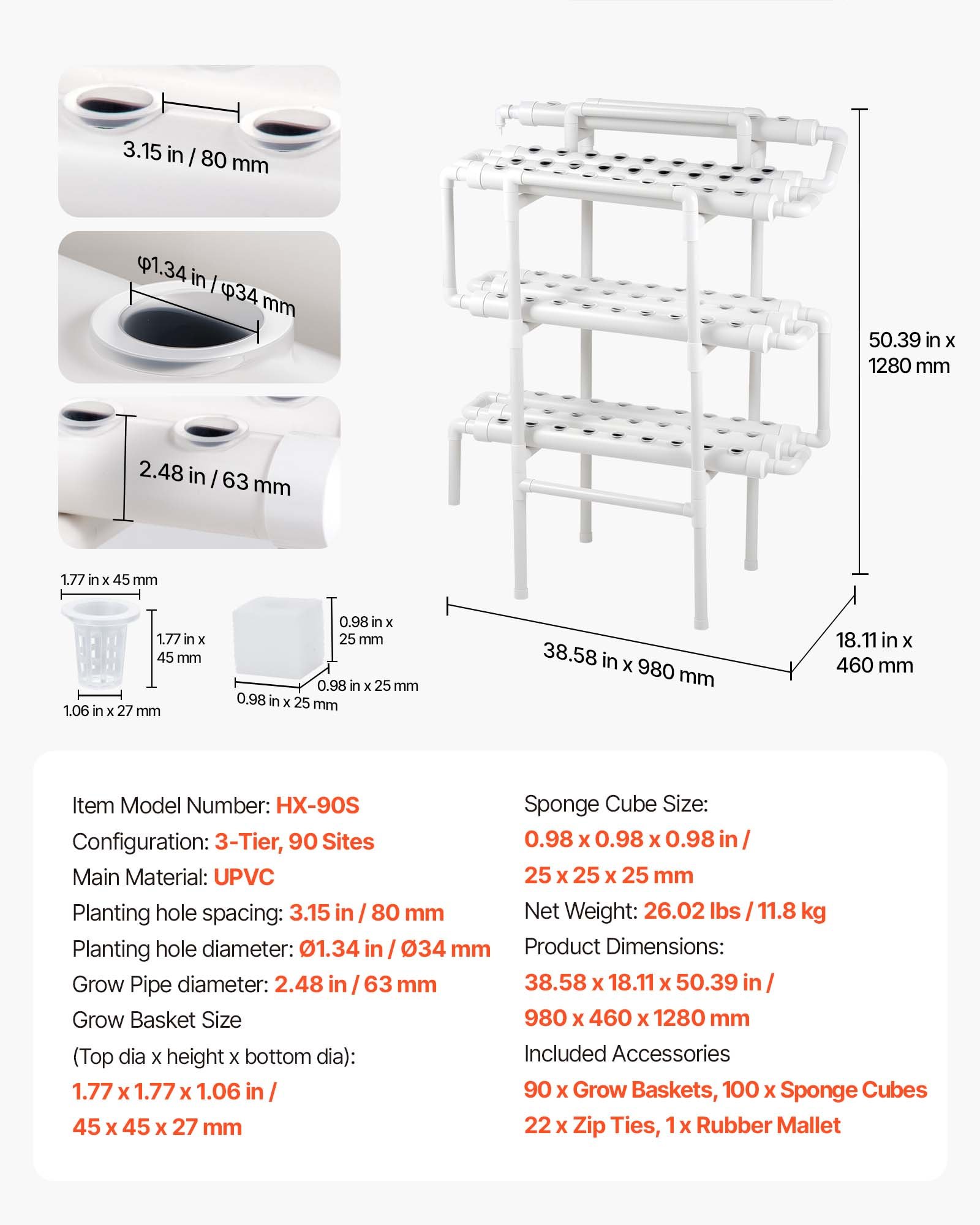 Hydroponics Growing System Kit, 3-Tier 90 Sites UPVC Pipe Hydroponic Grow Kit With Timed Irrigation, Sun & Light Blocking Pipes, Indoor Home Garden Vegetable Planting Kits For Fruit Herb$82.99View on Mallflare
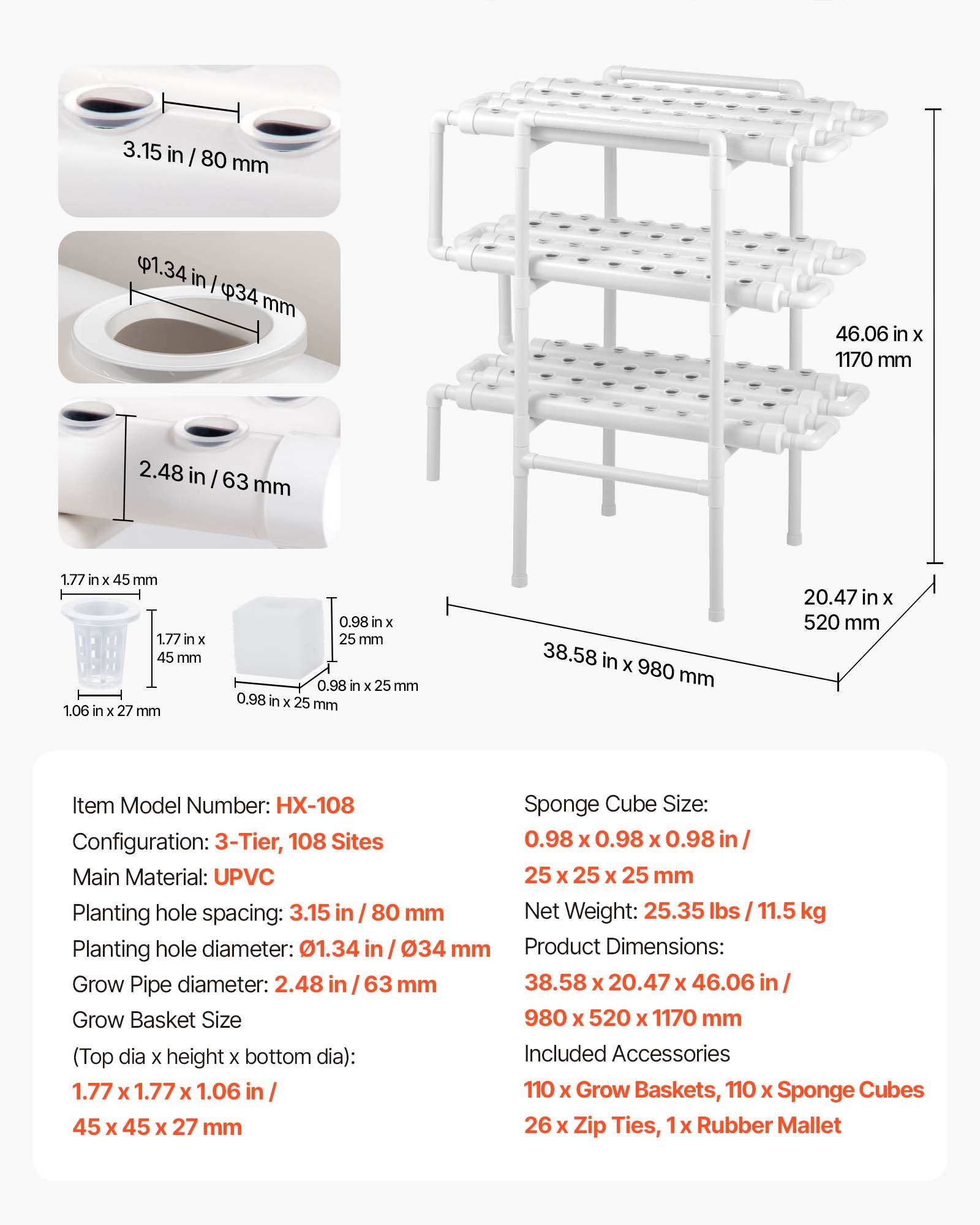 Hydroponics Growing System Kit, 3-Tier 108 Sites UPVC Pipe Hydroponic Grow Kit With Timed Irrigation, Thickened Pipes, Indoor Home Garden Vegetable Planting Kits For Fruit Herb$83.99View on Mallflare
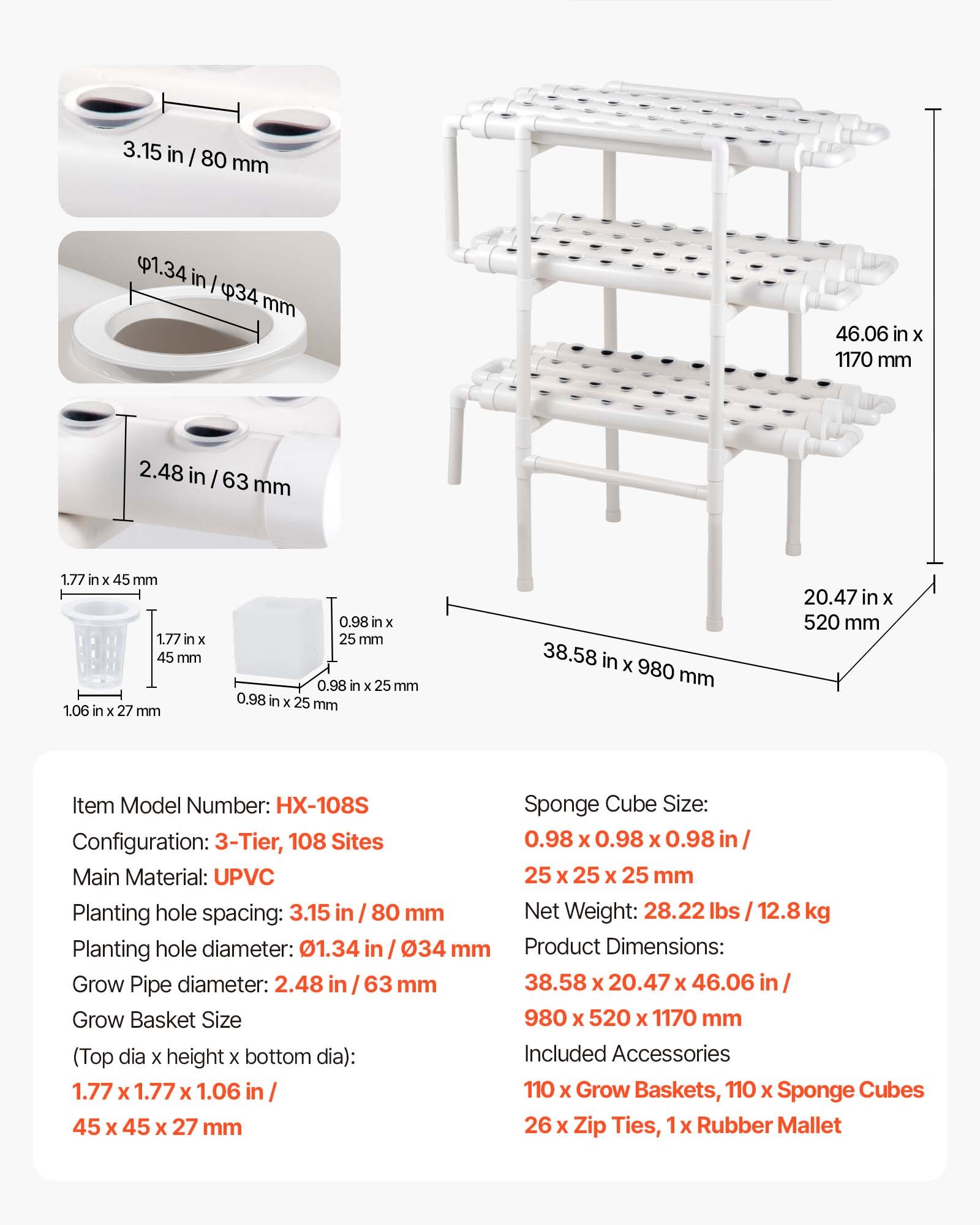 Hydroponics Growing System Kit, 3-Tier 108 Sites UPVC Pipe Hydroponic Grow Kit With Timed Irrigation, Sun & Light Blocking Pipes, Indoor Home Garden Vegetable Planting Kits For Fruit Herb$104.99View on Mallflare
Highlights
- Active recirculating kits use a submersible pump (typically 15-30W) plus a timer; passive wick/Kratky kits have no moving parts and rely on capillary action.
- Site count is determined by pipe diameter and spacing: 2-inch net pots fit 2-inch holes; NFT pipe systems commonly space sites 6-8 inches apart along 3-4 inch UPVC channels.
- Light-blocking or opaque UPVC pipe prevents algae growth in nutrient solution; clear or thin-walled pipe requires opaque sleeves or frequent cleaning.
- Reservoir volume drives stability: 10-20 gallon tanks buffer pH swings for 20-40 sites; smaller 5-gallon tanks suit 6-12 sites and demand more frequent top-offs.
Best use cases
- Best fit: 3-tier 90-108 site UPVC pipe kits for a dedicated grow room or sunroom with strong ambient light and space for a 20+ gallon reservoir — pick these for lettuce, herbs, and leafy greens at scale.
- Wrong fit: a 108-site kit in a dim apartment corner without supplemental LED grow lights — high site count without adequate PPFD yields spindly, low-mass plants; choose a smaller kit with integrated full-spectrum LEDs instead.
- Best fit: passive wick or Kratky countertop kits for beginners growing basil, mint, and lettuce — zero pumps, silent operation, and forgiving of occasional neglect.
- Wrong fit: active recirculating kits for vining fruiting crops (tomatoes, peppers) without a trellis and 300+ PPFD lighting — pipe systems lack root-zone volume for heavy fruiting plants; use Dutch bucket or drip systems instead.
Buying tips
- Match site count to reservoir volume: plan at least 0.5 gallon of nutrient solution per active site; a 108-site kit needs a 50+ gallon reservoir or frequent dosing.
- Choose opaque or light-blocking UPVC channels over clear pipe — algae competes with roots for oxygen and nutrients and clogs pumps.
- Verify pump head height and flow rate: a 3-tier vertical system needs a pump rated to lift water at least the tier height plus 1-2 feet of head loss.
- Prefer kits with a programmable digital timer (15-minute increments) over fixed analog timers; NFT cycles typically run 15 minutes on, 15-30 minutes off during lights-on.
Specs
| System Type | Active recirculating vs passive wick |
|---|---|
| Site Count | 6-12 / 20-40 / 90-108 sites |
| Channel Material | Opaque UPVC vs clear PVC |
| Tier Height | 1-2 tiers / 3-tier vertical (5-6 ft) |
Related searches
What to check before buying
- Measure ceiling height and floor footprint: a 3-tier kit typically stands 5-6 feet tall and spans 3-4 feet wide — confirm clearance for reservoir access and plant canopy.
- Confirm electrical: pump and LED drivers are 110-120V AC in North America; verify GFCI outlet proximity since reservoirs and water lines sit nearby.
- Check floor and drainage: recirculating kits can leak at bulkheads and fittings; place on waterproof flooring or a drip tray with a drain path.
- Verify included companion parts: net pots, rockwool or clay pebbles, pH/EC meter, and grow light are often sold separately — budget for these before committing to a bare pipe kit.
FAQ
Data sources: eBay / Amazon listings and product attribute feeds. Updated Nov 27, 2026.
Some links on this page are affiliate links. If you buy after clicking one, we may earn a commission at no extra cost to you. This does not change which products appear here or their order. Affiliate disclosure.