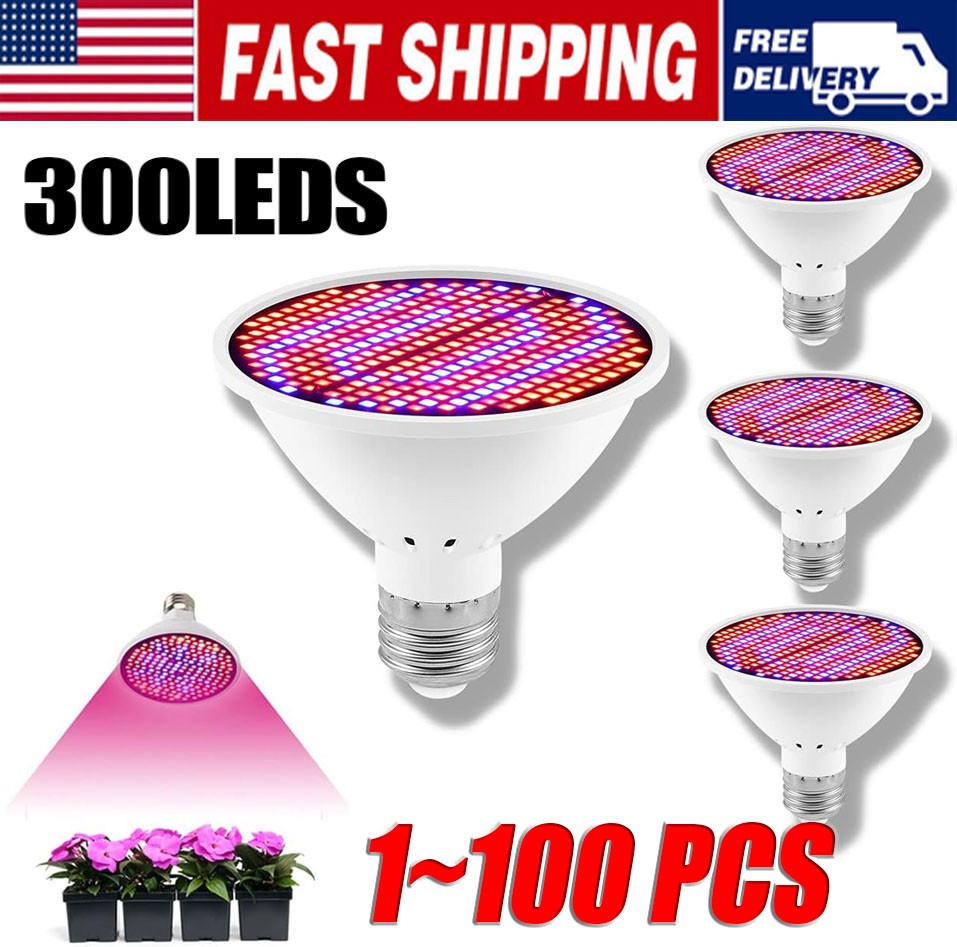

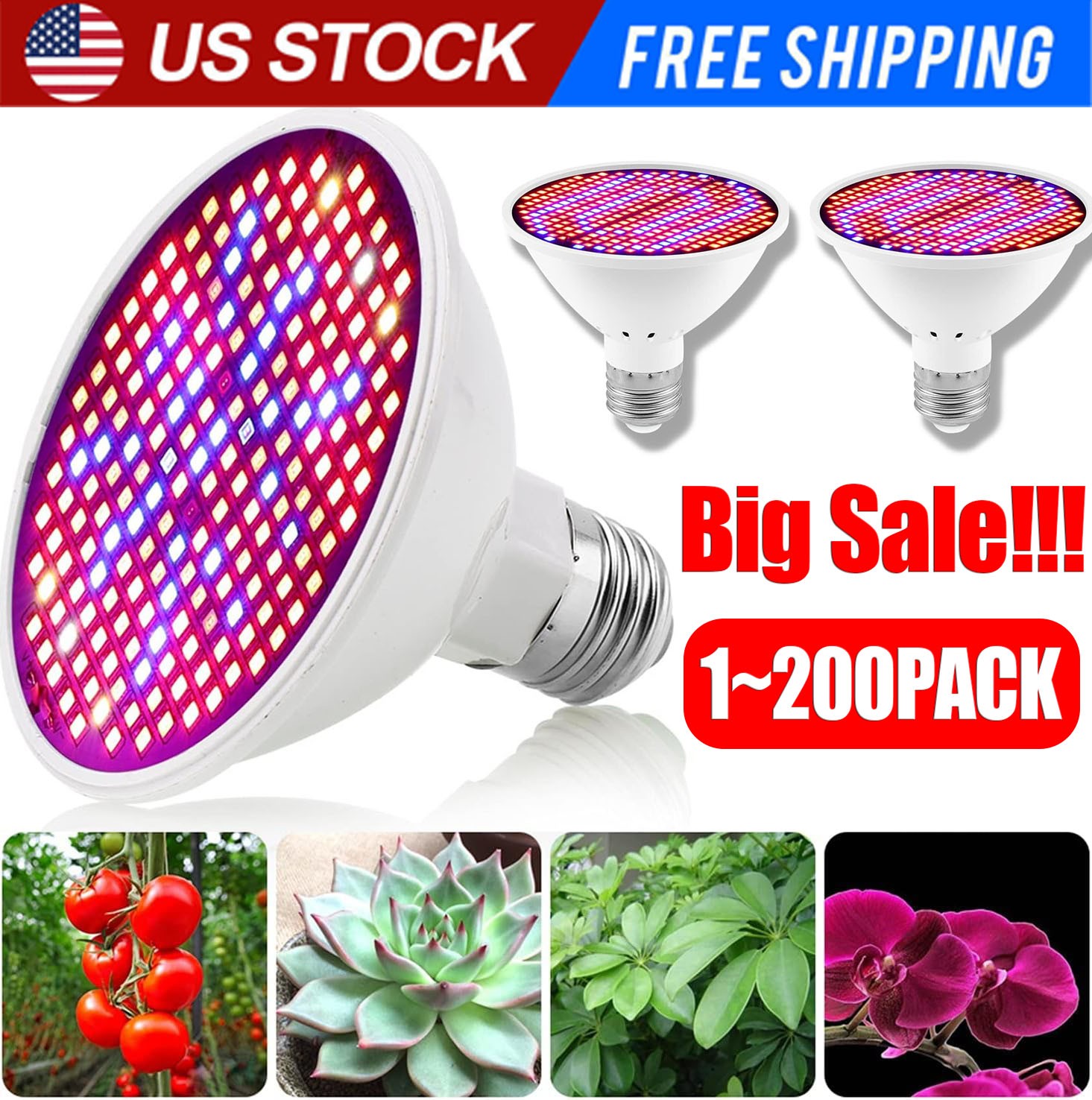
Photos from current listings. Actual item, color, and included accessories may vary.
Full Spectrum Light Bulb Plant Buying Guide
A full-spectrum plant light bulb is a screw-in or pin-base LED designed to emit a balanced spectrum (roughly 380–780 nm) for photosynthesis across vegetative and flowering stages. The core trade-off is true full-spectrum efficacy versus generic 'grow bulb' marketing: cheap units often lack red/far-red output and run hot. The decision rule: demand a stated PPF/PPFD or umol/j efficacy, a 5000K+ color temperature claim with red diodes, and a standard E26/E27 base; skip any bulb that cannot name its spectrum or wattage draw.
Median $571.24 · New listings
Key takeaways
- True full-spectrum LEDs combine white diodes (5000–6500K) with 660nm deep-red and 730nm far-red chips; mono-color 'blurple' bulbs are not full-spectrum.
- Photosynthetic efficacy is measured in PPF (µmol/s) or PPFD at a given distance; a legitimate bulb states these values rather than only 'watt equivalent'.
- Screw-base bulbs use E26 (North America) or E27 (Europe/Asia) fittings; pin-base PL/2G11 and GU24 formats exist and require matching fixtures.
At a glance
- Category
- Greenhouse & Hydroponics
- Last updated
- Nov 28, 2026
Current offers
Highlights
- True full-spectrum LEDs combine white diodes (5000–6500K) with 660nm deep-red and 730nm far-red chips; mono-color 'blurple' bulbs are not full-spectrum.
- Photosynthetic efficacy is measured in PPF (µmol/s) or PPFD at a given distance; a legitimate bulb states these values rather than only 'watt equivalent'.
- Screw-base bulbs use E26 (North America) or E27 (Europe/Asia) fittings; pin-base PL/2G11 and GU24 formats exist and require matching fixtures.
- Heat management separates durable bulbs: ceramic or aluminum heatsinks with active fans survive 12+ hour daily cycles; sealed plastic housings degrade output and lifespan.
Best use cases
- Best fit: a single E26 full-spectrum LED bulb (15–30W actual draw) in a clamp lamp for seedlings and houseplants; skip high-wattage '1000W equivalent' blurple panels for this job.
- Best fit: a two- to four-bulb array on a daisy-chain cord for a 2x2 ft propagation shelf; skip single low-power bulbs if you need to cover more than 1 sq ft at flowering intensity.
- Best fit: full-spectrum bulbs with 660nm red emphasis for supplemental greenhouse lighting in winter; wrong fit if you expect a screw-in bulb to replace a dedicated 200W+ bar fixture for fruiting crops.
- Best fit: dimmable full-spectrum bulbs for adjustable houseplant corners; skip non-dimmable bulbs on smart plugs with dimming functions—use a plain timer instead.
Buying tips
- Match base type to fixture first: E26/E27 for standard lamps, GU10/GU24 for track and recessed cans, 2G11 for PL-style fixtures—adapters add bulk and heat.
- Size by actual wattage and PPF, not 'equivalent' claims: a 15W LED bulb delivers roughly 20–40 µmol/s PPF, adequate for ~1 sq ft of vegetative growth.
- Verify spectrum: look for listed 660nm red and 5000K+ white channels; a single color temperature with no red specification usually means phosphor-converted white only.
- Choose aluminum or ceramic body with visible vents for 12–18 hour daily use; plastic-clad bulbs with no heatsink are for short ornamental display, not continuous growth.
Specs
| Base Type | E26/E27 standard; GU24/2G11 variants |
|---|---|
| Spectrum | Full-spectrum 380–780nm with 660nm red |
| Actual Draw | 10–40W LED (not 'equivalent') |
| Efficacy Metric | PPF µmol/s or PPFD at distance |
Related searches
What to check before buying
- Measure your fixture socket (E26 vs E27 vs GU24 vs 2G11) and confirm bulb diameter clears any shade or reflector.
- Check fixture wattage rating and bulb physical length—high-output full-spectrum bulbs run 5–8 inches long and may not fit enclosed domes.
- Confirm your timer or smart plug supports the bulb's startup load; non-dimmable LED bulbs should not be on dimmer switches.
- For shelves, calculate canopy area: one 15–20W bulb covers about 1 sq ft; plan bulb count before buying a multi-pack.
FAQ
Data sources: eBay / Amazon listings and product attribute feeds. Updated Nov 28, 2026.
Some links on this page are affiliate links. If you buy after clicking one, we may earn a commission at no extra cost to you. This does not change which products appear here or their order. Affiliate disclosure.