
Photos from current listings. Actual item, color, and included accessories may vary.
Cold Frame Greenhouse Buying Guide
A cold frame greenhouse is a low, unheated structure with a transparent or translucent lid that extends the growing season by trapping solar heat and shielding plants from frost and wind. The decisive trade-offs are lid material—polycarbonate vs. glass vs. polyethylene film—and frame construction—solid wood vs. aluminum vs. plastic—because these determine insulation, light transmission, rot resistance, and how long the unit survives freeze-thaw cycles. Buy polycarbonate-lidded frames with rot-resistant wood or powder-coated aluminum if you need multi-season durability; accept thin plastic film or untreated softwood only as a short-term seasonal solution.
Median $145.99
Key takeaways
- Twin-wall polycarbonate lids (4–8 mm) insulate far better than single-pane glass or film and resist hail cracking, making them the standard for winter cold frames.
- Solid fir or cedar frames resist rot and insulate roots better than aluminum, but aluminum frames with polycarbonate panels last longer in wet, termite-prone climates.
- Adjustable or hinged roof panels are essential for venting—without them, interior temperatures can exceed 100°F on sunny winter days and cook plants.
At a glance
- Category
- Greenhouse & Hydroponics
- Last updated
- Nov 27, 2026
Current offers
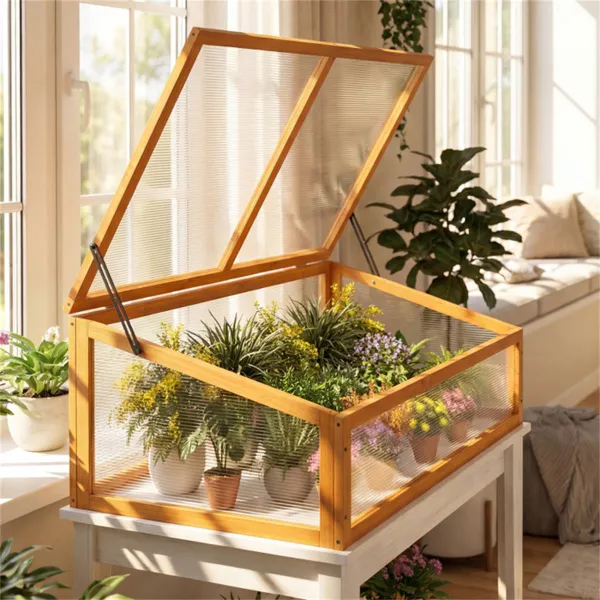 37" X 25' X 16' Wooden Cold Frame Greenhouse With Adjustable Polycarbonate Roof, Portable Mini Hot House For Extending Growing Season$133.99View on Mallflare
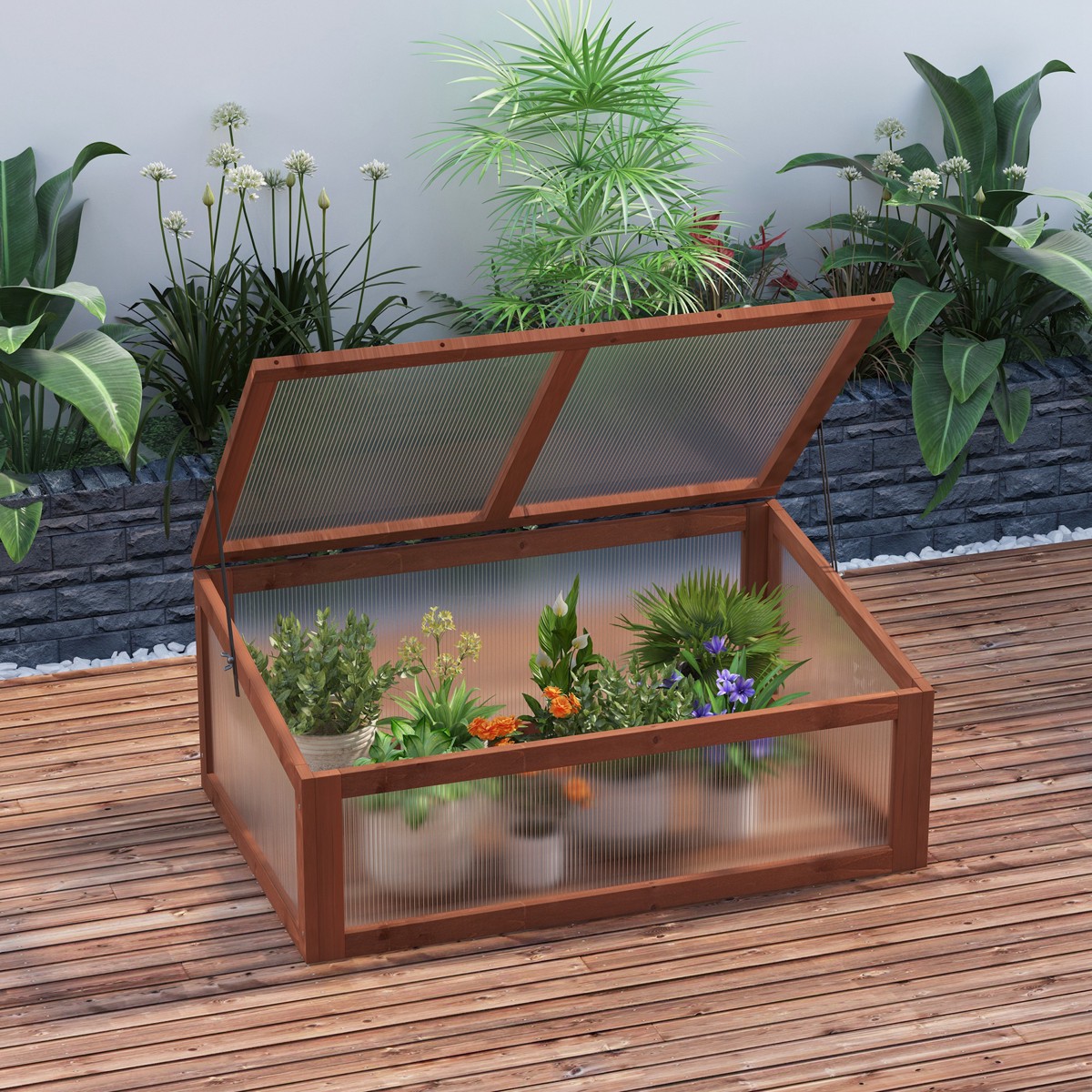 Wooden Cold Frame Greenhouse, Mini With Polycarbonate Board And Solid Wood Green House Indoor Outdoor Terrarium Planter Box, 39" X 26" X 16", Natural$145.99View on Mallflare
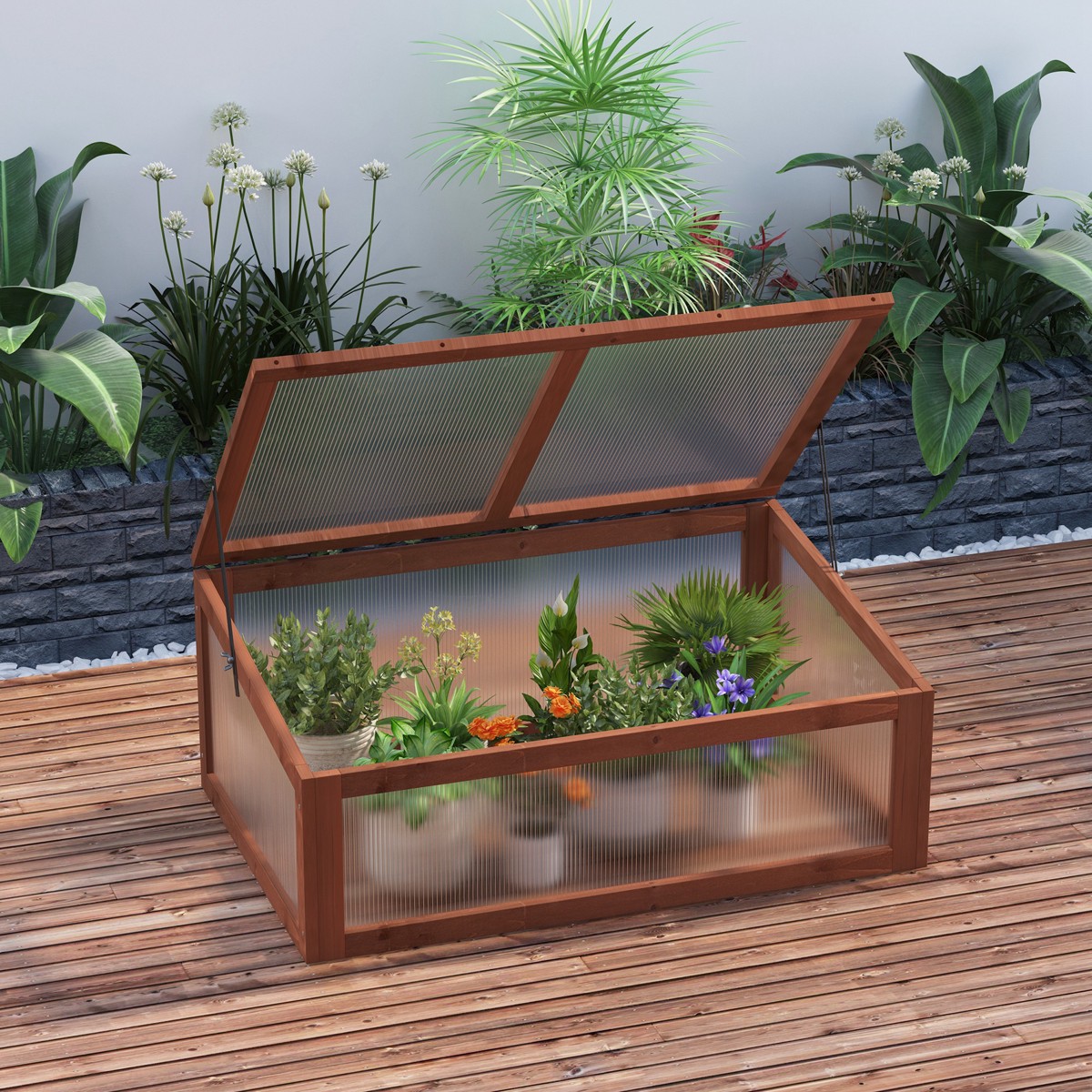 Wooden Cold Frame Greenhouse$185.99View on Mallflare
Highlights
- Twin-wall polycarbonate lids (4–8 mm) insulate far better than single-pane glass or film and resist hail cracking, making them the standard for winter cold frames.
- Solid fir or cedar frames resist rot and insulate roots better than aluminum, but aluminum frames with polycarbonate panels last longer in wet, termite-prone climates.
- Adjustable or hinged roof panels are essential for venting—without them, interior temperatures can exceed 100°F on sunny winter days and cook plants.
- Raised or elevated cold frames with slatted shelves improve airflow and drainage versus ground-set boxes, but shallow 16-inch depth suits seedlings, not tall crops.
Best use cases
- Best fit: Extending lettuce, spinach, and seedling season in a backyard garden—choose a twin-wall polycarbonate lid with an adjustable roof and 16-inch depth for low crops.
- Best fit: Balcony or patio growers needing a portable mini hot house—pick a fir wood frame with polycarbonate boards and a slatted shelf for drainage and mobility.
- Wrong fit: Overwintering tall tomato or pepper plants—skip 16-inch-tall cold frames and choose a full walk-in greenhouse, because cold frames cannot accommodate vertical growth.
- Wrong fit: High-wind or heavy-snow regions—avoid thin film covers and lightweight plastic frames; specify powder-coated aluminum or thick cedar with anchored polycarbonate panels.
Buying tips
- Match lid thickness to climate: 4 mm twin-wall polycarbonate handles light frost, while 8 mm twin-wall or triple-wall is needed for hard freeze protection.
- Measure your tallest seedling plus pot height; a 16-inch-tall frame suits 6–8 inch starts, but taller crops require a raised or hooped cold frame.
- Choose cedar, fir, or powder-coated aluminum for frames; untreated pine and thin plastic degrade within two to three seasons in wet climates.
- Confirm the lid opens at least 45 degrees and includes a prop or automatic vent opener—manual venting is the most common cause of overheating damage.
Specs
| Lid Material | Twin-wall polycarbonate / glass / film |
|---|---|
| Frame Material | Cedar, fir wood, aluminum, plastic |
| Panel Thickness | 4–8 mm twin-wall typical |
| Venting | Hinged roof / adjustable prop / auto vent |
Related searches
What to check before buying
- Measure your bed or patio footprint: 37 x 25 inch and 39 x 26 inch frames fit small raised beds, but leave clearance for the lid to swing open fully.
- Check your winter low temperatures: below 20°F, add a second layer of polycarbonate or horticultural fleece because single-wall cold frames lose heat quickly at night.
- Verify ground or surface type: set wood frames on level gravel or pavers to prevent moisture wicking and rot; anchor aluminum frames against wind uplift.
- Confirm assembly requirements: most fir wood cold frames ship flat with screws and pre-drilled panels, and polycarbonate lids need UV-resistant tape on exposed edges.
FAQ
Data sources: eBay / Amazon listings and product attribute feeds. Updated Nov 27, 2026.
Some links on this page are affiliate links. If you buy after clicking one, we may earn a commission at no extra cost to you. This does not change which products appear here or their order. Affiliate disclosure.