
Photos from current listings. Actual item, color, and included accessories may vary.
Cold Frame Buying Guide
A cold frame is an unheated, low-profile enclosure that uses solar gain and insulation to extend the growing season, harden off seedlings, and overwinter hardy plants. The core trade-off is between insulating mass and ventilation control—wood frames with twin-wall polycarbonate hold heat but can overheat without adjustable lids, while single-wall plastic units are lighter and cheaper but swing wildly in temperature. The clear decision rule: buy a frame with an adjustable or hinged roof, at least 16 inches of interior height, and a rigid glazing panel (polycarbonate or glass) rather than flimsy film.
Median $145.99
Key takeaways
- Twin-wall polycarbonate glazing (4mm–6mm) insulates roughly twice as well as single glass and resists hail cracking; solid wood (fir/cedar) frames outlast plastic by years in UV exposure.
- Adjustable roof panels are the critical thermal control—a propped lid venting at 70°F prevents cooked seedlings, while fixed-roof boxes require manual shade cloth.
- Interior height of 16 inches clears most seedling flats and low crops; elevated/slatted models add airflow underneath and bring work height to waist level.
At a glance
- Category
- Greenhouse & Hydroponics
- Last updated
- Nov 27, 2026
Current offers
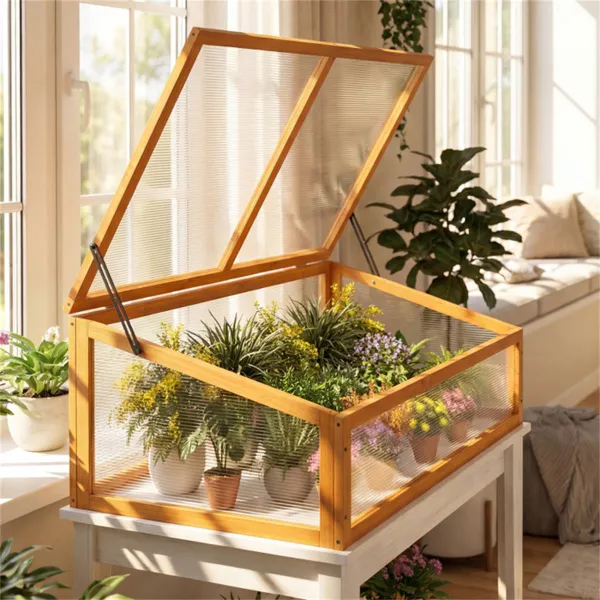 37" X 25' X 16' Wooden Cold Frame Greenhouse With Adjustable Polycarbonate Roof, Portable Mini Hot House For Extending Growing Season$133.99View on Mallflare
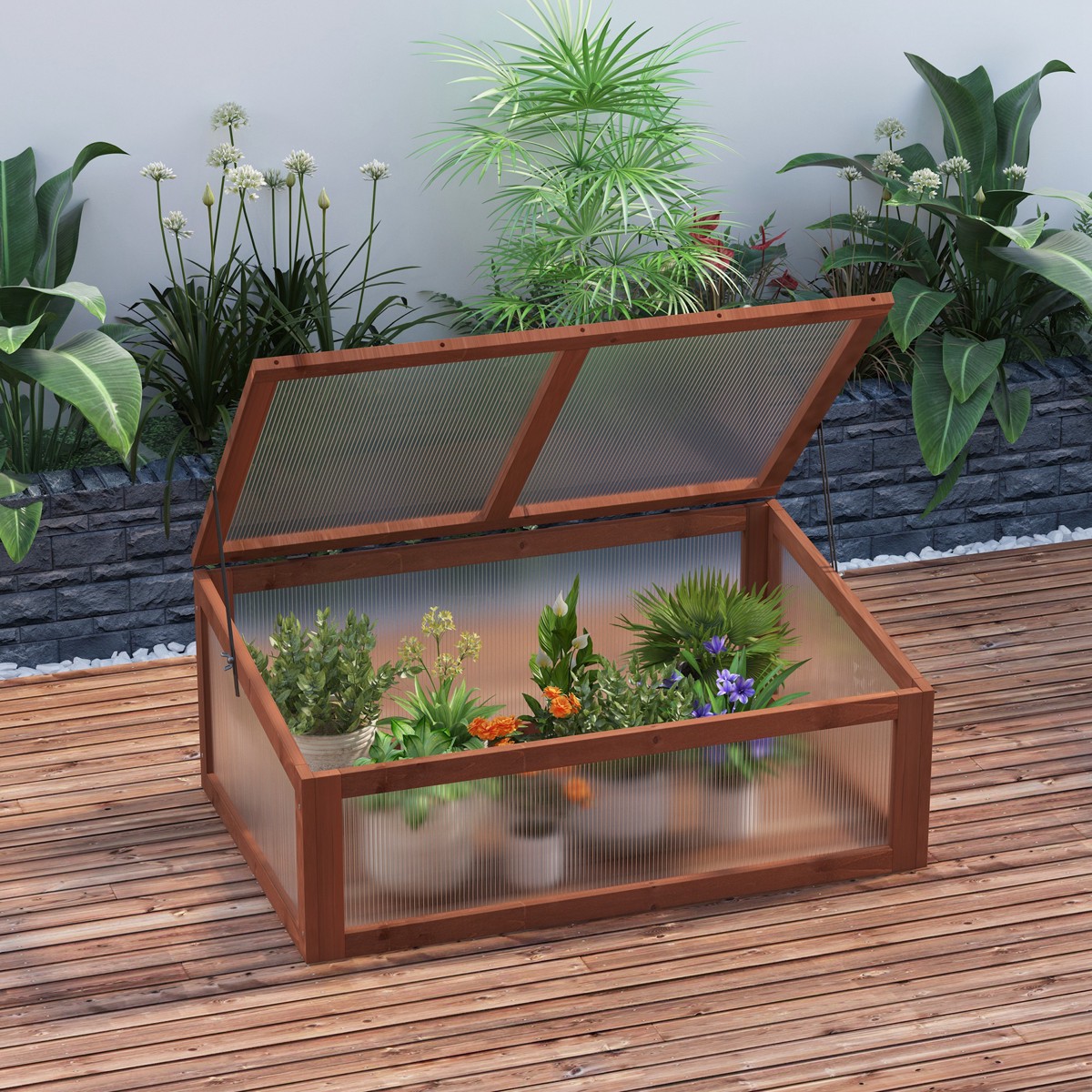 Wooden Cold Frame Greenhouse, Mini With Polycarbonate Board And Solid Wood Green House Indoor Outdoor Terrarium Planter Box, 39" X 26" X 16", Natural$145.99View on Mallflare
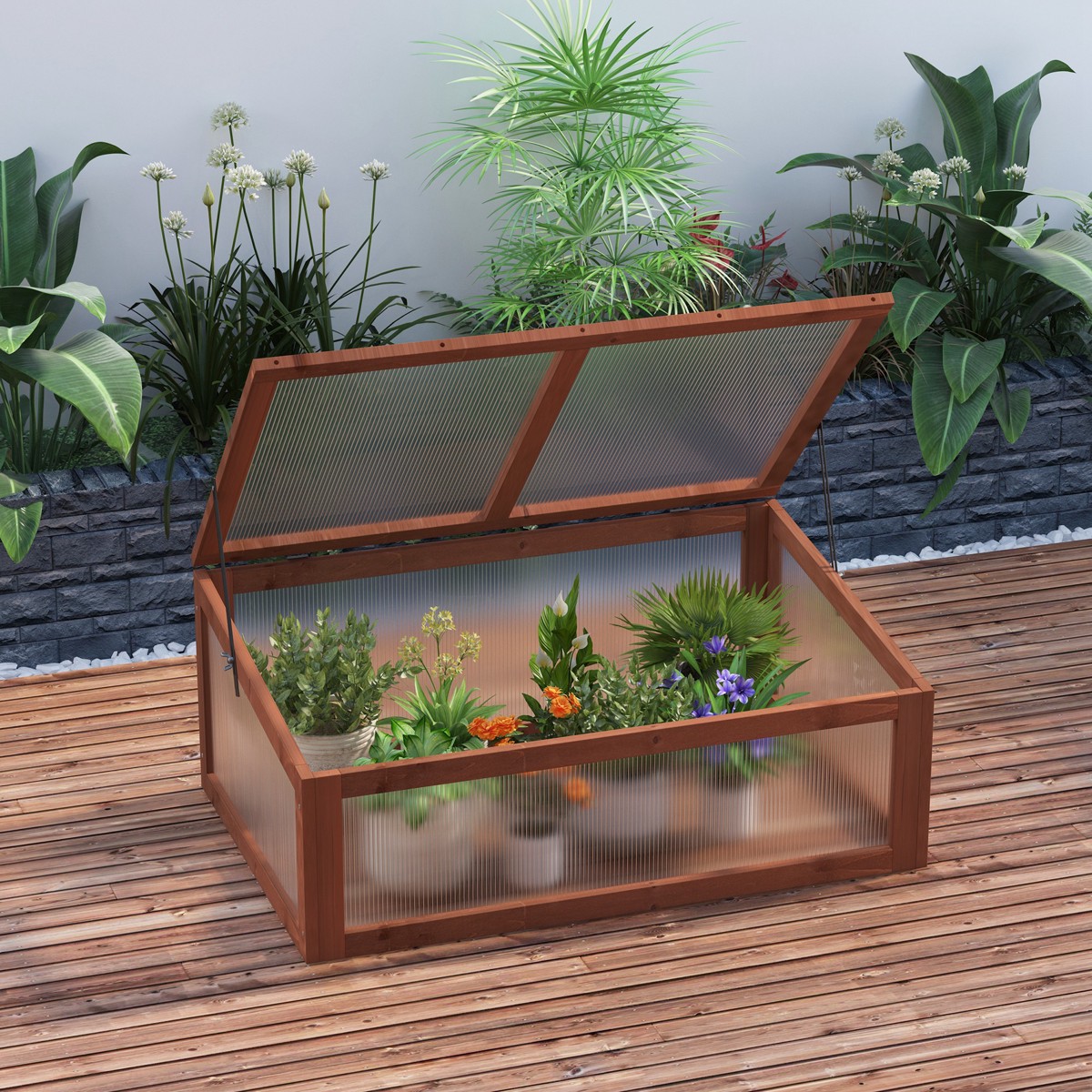 Wooden Cold Frame Greenhouse$185.99View on Mallflare
Highlights
- Twin-wall polycarbonate glazing (4mm–6mm) insulates roughly twice as well as single glass and resists hail cracking; solid wood (fir/cedar) frames outlast plastic by years in UV exposure.
- Adjustable roof panels are the critical thermal control—a propped lid venting at 70°F prevents cooked seedlings, while fixed-roof boxes require manual shade cloth.
- Interior height of 16 inches clears most seedling flats and low crops; elevated/slatted models add airflow underneath and bring work height to waist level.
- Cold frames are passive solar only—no thermostat, no power—so siting against a south-facing wall adds meaningful frost protection versus open-ground placement.
Best use cases
- Best fit: seed-starting and hardening off in spring—pick a 39x26x16-inch wooden frame with adjustable polycarbonate roof and place it south-facing; skip unvented plastic boxes that overheat on sunny 50°F days.
- Best fit: overwintering hardy greens and root crops in zone 6+—choose a twin-wall polycarbonate frame with tight joints and add straw bales around the sides; skip single-wall film covers that offer little frost buffer.
- Wrong fit: growing heat-loving summer crops like tomatoes or peppers—cold frames are passive and unheated; step up to a greenhouse or hoophouse instead of buying a larger cold frame.
- Best fit: small patios and balconies—an elevated 2-in-1 fir frame with slatted shelf and adjustable roof gives ergonomic access and drainage; skip ground-level 25-foot-long frames if you lack permanent bed space.
Buying tips
- Match frame footprint to your bed math: a 39x26-inch frame covers about 7 square feet—enough for roughly 4 standard 1020 seedling trays; a 25-foot-long frame suits market gardens, not balconies.
- Demand twin-wall or multiwall polycarbonate at 4mm or thicker; single-pane glass and corrugated plastic sheet crack or yellow under UV within a few seasons.
- Check that the roof opens at least 45 degrees or is fully removable—ventilation area should be roughly 15–20% of floor area to prevent midday heat spikes.
- Solid fir or cedar frames with screwed joints and treated bases resist rot; avoid stapled plastic hinges and untreated pine bases sitting directly on soil.
Specs
| Glazing Type | Twin-wall polycarbonate vs single glass |
|---|---|
| Frame Material | Fir/cedar wood vs UV plastic |
| Roof Ventilation | Adjustable hinged vs fixed panel |
| Interior Height | 16–24 in for flats and low crops |
Related searches
What to check before buying
- Measure your available bed or patio footprint and confirm the frame's exterior dimensions leave room for lid swing and side access.
- Verify siting: a south-facing wall or fence line with winter sun maximizes solar gain; avoid shaded north sides and low frost pockets.
- Confirm glazing spec is polycarbonate (preferably twin-wall) or horticultural glass, and that the lid has a prop rod, hinge, or louver for venting.
- Check base contact: on soil, use a rot-resistant base or gravel footing; on decks, confirm the frame has feet or an elevated shelf to prevent moisture damage.
FAQ
Data sources: eBay / Amazon listings and product attribute feeds. Updated Nov 27, 2026.
Some links on this page are affiliate links. If you buy after clicking one, we may earn a commission at no extra cost to you. This does not change which products appear here or their order. Affiliate disclosure.