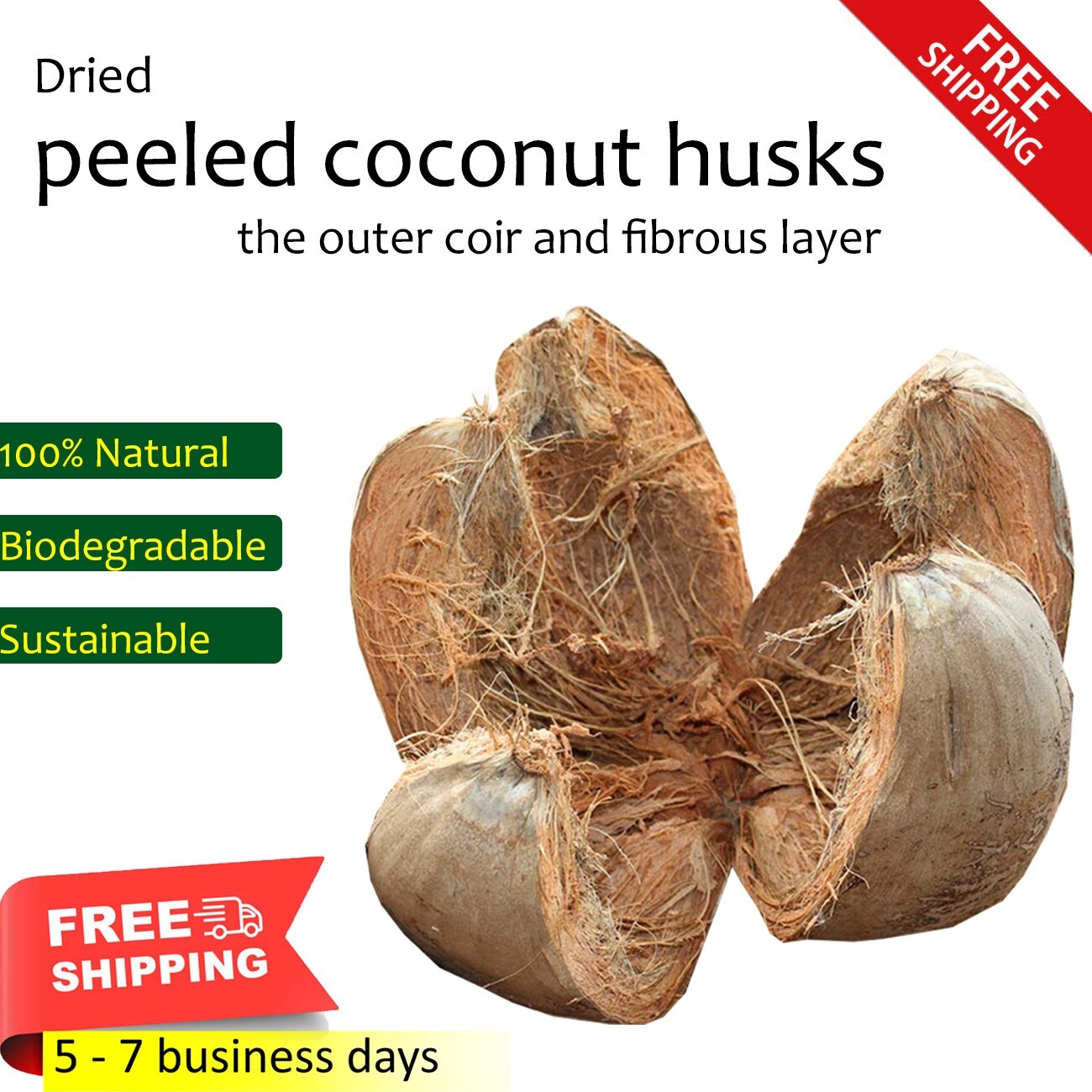

Photos from current listings. Actual item, color, and included accessories may vary.
Coconut Coir Buying Guide
Coconut coir is a renewable, pH-neutral growing medium milled from coconut husk fiber, sold as compressed bricks, loose bales, and buffered coco peat. The primary trade-off is between raw, unbuffered coir (cheap but sodium- and potassium-heavy) and pre-buffered, washed, low-EC coir that costs more but is immediately safe for sensitive seedlings and hydroponic dosing. The decision rule: choose buffered, rinsed coir with a stated low EC for hydroponics and seedlings, and accept raw unbuffered brick coir only for compost blending or salt-tolerant established plants.
Key takeaways
- Raw coir retains sodium (Na) and potassium (K) from seawater processing; buffering with calcium nitrate displaces these ions, and rinsing drops electrical conductivity (EC) to a safe 0.5-1.2 mS/cm range.
- Coir holds 8-10x its dry weight in water at 60-70% water-holding capacity, outpacing peat moss, while its 4.5-6.5 pH range sits slightly acidic to neutral and needs less liming.
- Compressed brick formats (typically 650g/5kg blocks) expand roughly 2-3x in volume with water; 650g yields about 8-9 L, while 5kg coir blocks yield 55-75 L, so volume math matters before ordering.
At a glance
- Category
- Greenhouse & Hydroponics
- Last updated
- Nov 28, 2026
Current offers
Highlights
- Raw coir retains sodium (Na) and potassium (K) from seawater processing; buffering with calcium nitrate displaces these ions, and rinsing drops electrical conductivity (EC) to a safe 0.5-1.2 mS/cm range.
- Coir holds 8-10x its dry weight in water at 60-70% water-holding capacity, outpacing peat moss, while its 4.5-6.5 pH range sits slightly acidic to neutral and needs less liming.
- Compressed brick formats (typically 650g/5kg blocks) expand roughly 2-3x in volume with water; 650g yields about 8-9 L, while 5kg coir blocks yield 55-75 L, so volume math matters before ordering.
- Coir vs peat: coir is renewable and resists compaction, but it holds more potassium and less nitrogen; coir-based mixes generally need a nitrogen-forward nutrient schedule or a 10-20% perlite cut for drainage.
Best use cases
- Best fit: hydroponic and drip-fed systems (coco slabs, perlite-coco mixes, drain-to-waste) — pick buffered, rinsed low-EC coir in slab or loose format so nutrient dosing stays predictable.
- Best fit: seed starting and propagation — choose fine-milled, pre-buffered coco peat with low EC, and skip raw brick coir that can burn germinating roots with excess salts.
- Best fit: potting mixes and garden beds amended with coir — raw unbuffered brick coir is economical here when blended 20-30% with compost and perlite, since the mix buffers salinity.
- Wrong fit: pure fine coco peat in large containers or long-term indoor pots without perlite or bark — it compacts and holds too much water, risking root rot; use a chunky coco-chip or coco-perlite blend instead.
Buying tips
- Match format to volume need: a 650g brick expands to about 8-9 L; a 5kg block to 55-75 L; order by expanded liters, not compressed shipping weight.
- For hydroponics and seedlings, require the label to state 'buffered' and 'rinsed' with a low EC (0.5-1.2 mS/cm) — unbuffered coir can exceed 3 mS/cm and disrupt nutrient balance.
- Particle size selects the job: fine coco peat for propagation and flood tables, medium coir for general potting, husk chips for orchids, aroids, and fast-draining aroid mixes.
- Compare coir against peat on cost per expanded liter and nutrient plan: coir needs extra nitrogen and calcium-magnesium supplementation, so factor fertilizer cost into the decision.
Specs
| Coir Format | Brick / Block / Loose / Slab / Chips |
|---|---|
| Buffering Status | Buffered & rinsed vs raw unbuffered |
| EC Range | 0.5-1.2 mS/cm buffered / 3+ raw |
| Particle Size | Fine peat / medium coir / husk chips |
Related searches
What to check before buying
- Measure container or bed volume in liters and convert to expanded coir volume before buying bricks or blocks; a 650g brick covers roughly 8-9 L.
- Confirm your nutrient program supplies extra calcium and magnesium and a nitrogen-forward feed, since coir binds these cations.
- Check that coir is buffered and rinsed if used for seedlings or hydroponics; raw coir suits only compost blending or salt-tolerant plants.
- Plan drainage and aeration: cut coir with 10-30% perlite or use coco chips in pots deeper than 20 cm to prevent compaction and waterlogging.
FAQ
Data sources: eBay / Amazon listings and product attribute feeds. Updated Nov 28, 2026.
Some links on this page are affiliate links. If you buy after clicking one, we may earn a commission at no extra cost to you. This does not change which products appear here or their order. Affiliate disclosure.