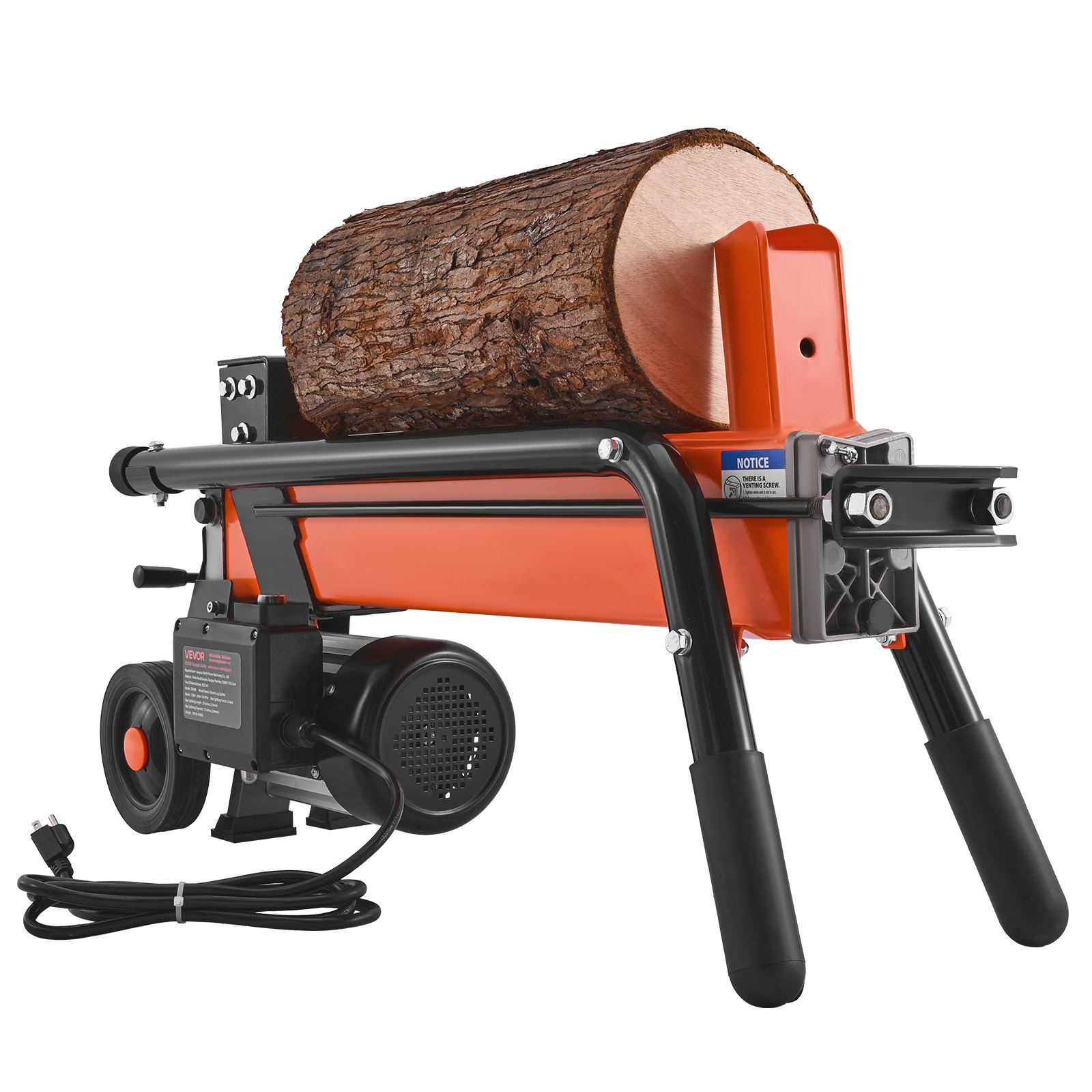

Photos from current listings. Actual item, color, and included accessories may vary.
Wood Splitter Buying Guide
A wood splitter is a hydraulic or electric machine that converts round logs into burn-ready firewood, and the core trade-off is force versus portability: gas models deliver high tonnage and cycle speed for high-volume work, while electric and manual units prioritize low maintenance and indoor/quiet operation. Buyers should match tonnage to log diameter and hardwood density, then confirm cycle time, wedge type, and power source against their actual annual cordage and site access.
Key takeaways
- Electric splitters typically run 1,500–2,000 W motors producing 6–10 tons of force, suitable for softwood and straight-grain hardwood up to about 12–16 inches in diameter.
- Gas splitters range from 20–35+ tons with 6–12 second cycle times, and two-stage pumps that shift from high-flow/low-pressure to low-flow/high-pressure at a set pressure threshold.
- Kinetic splitters use a flywheel to store energy and deliver fast cycle times (often under 3 seconds) but demand strict log-end squareness and consistent diameter.
At a glance
- Category
- Residential Outdoor Power Equipment
- Last updated
- Nov 28, 2026
Current offers
Highlights
- Electric splitters typically run 1,500–2,000 W motors producing 6–10 tons of force, suitable for softwood and straight-grain hardwood up to about 12–16 inches in diameter.
- Gas splitters range from 20–35+ tons with 6–12 second cycle times, and two-stage pumps that shift from high-flow/low-pressure to low-flow/high-pressure at a set pressure threshold.
- Kinetic splitters use a flywheel to store energy and deliver fast cycle times (often under 3 seconds) but demand strict log-end squareness and consistent diameter.
- Wedge geometry matters as much as tonnage: a 4-way or 6-way wedge multiplies output on straight-grain wood but stalls on knotty crotch pieces where a single sharp wedge with a log cradle performs better.
Best use cases
- Best fit: a homeowner burning 1–3 cords annually with softwood or clean hardwood — pick a 6–10 ton electric splitter with 6-inch wheels and a stand for garage or patio use.
- Wrong fit: processing 4+ cords of knotty oak or elm — skip electric and choose a 25–35 ton gas or towable splitter with a two-stage pump and vertical/horizontal capability.
- Best fit: rental-property or firewood-seller throughput — choose a kinetic or high-tonnage gas unit with a 4-way wedge and a log lift, not a portable electric model.
- Wrong fit: splitting in a quiet residential area or indoors — never run gas; an electric 6–7 ton unit with a 15 Amp circuit is the correct tier for noise-restricted sites.
Buying tips
- Match tonnage to the hardest wood in your stack: 6–10 tons covers softwood and straight-grain hardwood; 20–25 tons handles knotty oak; 30+ tons is for elm, hickory, and large-diameter crotch pieces.
- Check the wedge: a hardened steel single wedge with a log cradle is the safe baseline; 4-way wedges only pay off when logs are uniform and straight-grained.
- Confirm the power circuit: a 15 Amp electric splitter needs a dedicated 120 V 20 A circuit; 20+ ton gas units need a 208–240 cc engine and fresh ethanol-free fuel for reliable starts.
- Use cycle time and log capacity together: a 10-second cycle with a 25-inch log capacity moves more volume than a 6-second cycle with a 20-inch capacity if your logs run long.
Specs
| Power Source | Electric 120V / Gas / Manual |
|---|---|
| Splitting Force | 6–35 tons by class |
| Cycle Time | 2–12 sec (kinetic to hydraulic) |
| Log Capacity | 20–25 in length / 10–16 in dia |
Related searches
What to check before buying
- Measure your largest log diameter and length; the splitter's log capacity (typically 20–25 inches long, 10–16 inches diameter) must exceed your typical rounds, not your average.
- Verify the power source at the splitting site: a grounded 120 V 15–20 A outlet for electric, or a ventilated outdoor area with ethanol-free fuel storage for gas.
- Check wheel and stand configuration: 6-inch wheels and a stand suit flat patios; 10–16 inch pneumatic tires and a tow hitch are required for uneven ground or field transport.
- Confirm whether the unit splits horizontally only or also vertically; vertical operation is essential for rounds heavier than roughly 50–75 pounds that you cannot lift onto the beam.
FAQ
Data sources: eBay / Amazon listings and product attribute feeds. Updated Nov 28, 2026.
Some links on this page are affiliate links. If you buy after clicking one, we may earn a commission at no extra cost to you. This does not change which products appear here or their order. Affiliate disclosure.