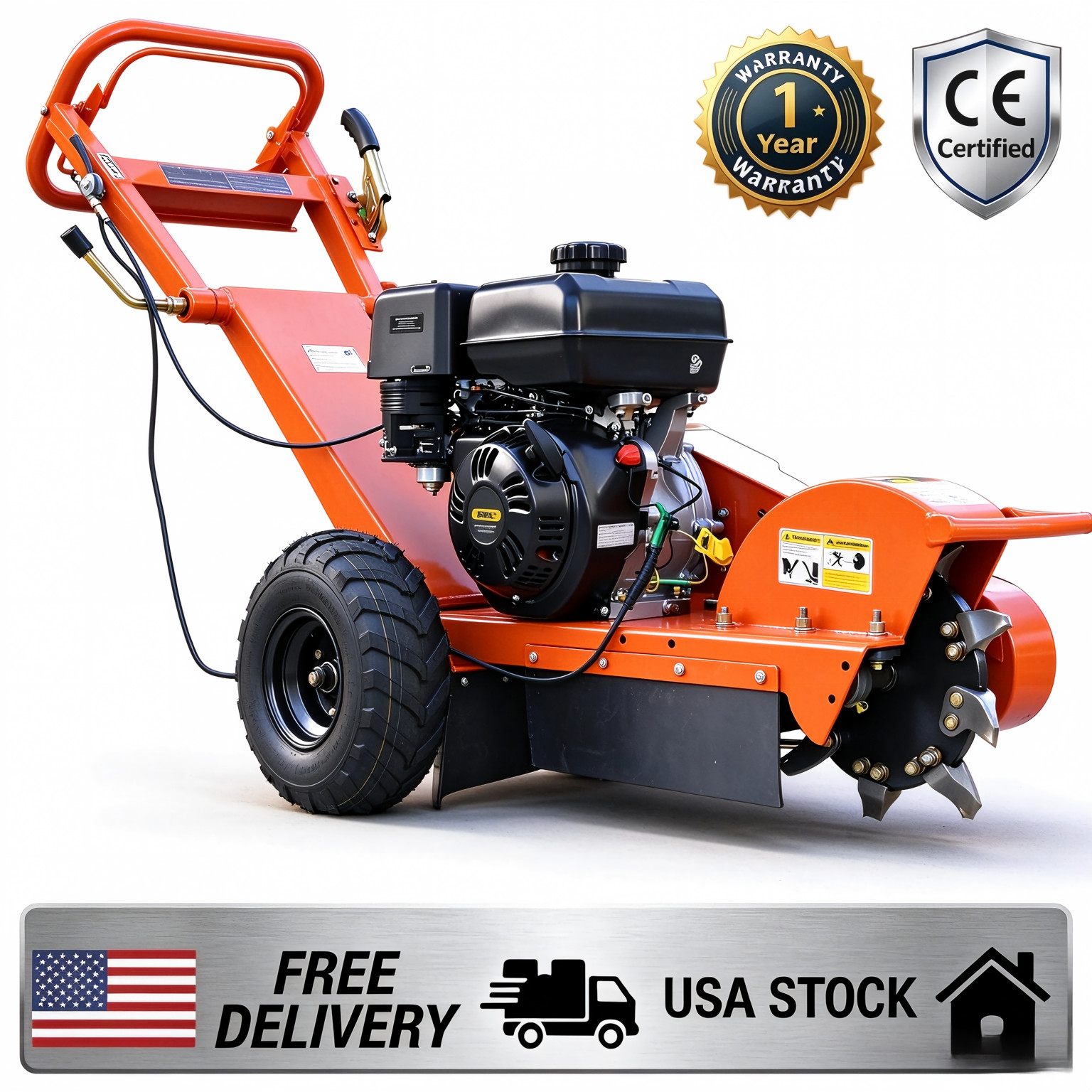

Photos from current listings. Actual item, color, and included accessories may vary.
Tree Stump Grinder Buying Guide
A tree stump grinder is a dedicated outdoor power tool that reduces a stump below grade using a rotating carbide-tooth cutting wheel, and the primary trade-off is between engine/head torque and machine weight versus maneuverability and access. Durable options use a forged or billet steel cutting wheel with replaceable carbide teeth, while compromises rely on stamped wheels, soft or non-replaceable teeth, and undersized engines that stall in hardwood. The decision rule: match cutting-wheel drive type and engine displacement to stump diameter and wood hardness, then pick the chassis (walk-behind, tracked, or tow-behind) that fits your access path.
Key takeaways
- Cutting-wheel drive splits into direct belt-driven and hydrostatic/hydraulic systems; hydraulic feed gives consistent tooth load in hardwoods and reduces engine stalling versus manual lever feed.
- Carbide teeth are the wear part: replaceable bolt-on or press-fit carbide tips outlast welded or hardened-steel teeth and are the clearest marker of a serviceable machine.
- Engine class anchors capability: 9–14 hp gas units handle typical residential stumps up to roughly 12–18 in diameter, while sub-6 hp units suit softwood and small diameter only.
At a glance
- Category
- Residential Outdoor Power Equipment
- Last updated
- Nov 28, 2026
Current offers
Highlights
- Cutting-wheel drive splits into direct belt-driven and hydrostatic/hydraulic systems; hydraulic feed gives consistent tooth load in hardwoods and reduces engine stalling versus manual lever feed.
- Carbide teeth are the wear part: replaceable bolt-on or press-fit carbide tips outlast welded or hardened-steel teeth and are the clearest marker of a serviceable machine.
- Engine class anchors capability: 9–14 hp gas units handle typical residential stumps up to roughly 12–18 in diameter, while sub-6 hp units suit softwood and small diameter only.
- Chassis type governs access: walk-behind wheels suit open yards, tracked units handle slopes and soft ground, and tow-behind models require a vehicle and wider gate clearance.
Best use cases
- Best fit: a single homeowner stump up to 12 in diameter in softwood or pine — pick a walk-behind gas unit with a belt-driven carbide wheel and manual feed; skip tracked or hydraulic units.
- Best fit: multiple hardwood stumps and repeated use across a property — choose a tracked or hydraulic-feed unit with a 13–14 hp engine class and replaceable carbide teeth; avoid sub-6 hp or non-replaceable-tooth models.
- Wrong fit: a stump tight against a foundation, fence, or in a fenced backyard with a narrow gate — a tow-behind or wide walk-behind will not clear; pick a compact tracked unit with a narrow deck or hire a contractor.
- Wrong fit: rocky or root-bound soil with embedded debris — consumer carbide wheels chip and throw teeth; rent a commercial grinder or contract the job rather than buying a residential unit.
Buying tips
- Size the machine by stump diameter above grade and wood species: 12–18 in hardwood stumps demand a 13–14 hp class engine; 6–12 in softwood stumps work with a 9–10 hp class unit.
- Confirm the cutting wheel uses replaceable carbide teeth (bolt-on or press-fit) and that spare teeth and the correct wrench are orderable — welded-tooth wheels cannot be economically refurbished.
- Measure your narrowest access path (gate, side yard, doorway) and pick a chassis that clears it with margin; tracked units are typically narrower than walk-behind tow models.
- For tow-behind units, verify the hitch, ball size, and towing vehicle rating, and confirm the grinder has its own engine rather than relying on PTO or vehicle power.
Specs
| Cutting Wheel Drive | Belt-driven / Hydraulic / Geared |
|---|---|
| Engine Class | 9-14 hp gas / Electric / Battery |
| Tooth Type | Replaceable carbide vs welded steel |
| Chassis Type | Walk-behind / Tracked / Tow-behind |
Related searches
What to check before buying
- Measure the stump diameter at and just above grade, plus the widest root flare, and record wood species (softwood vs hardwood) before choosing an engine class.
- Walk the access route and measure the narrowest gate or path width; confirm the grinder chassis and handlebar width pass with clearance.
- Check ground conditions — slope, soft turf, and mud favor tracked chassis; flat firm ground allows walk-behind wheels.
- Confirm fuel type and voltage/plug standard for any electric-start or battery model, and verify the engine's fuel (gasoline vs propane) matches your storage.
FAQ
Data sources: eBay / Amazon listings and product attribute feeds. Updated Nov 28, 2026.
Some links on this page are affiliate links. If you buy after clicking one, we may earn a commission at no extra cost to you. This does not change which products appear here or their order. Affiliate disclosure.