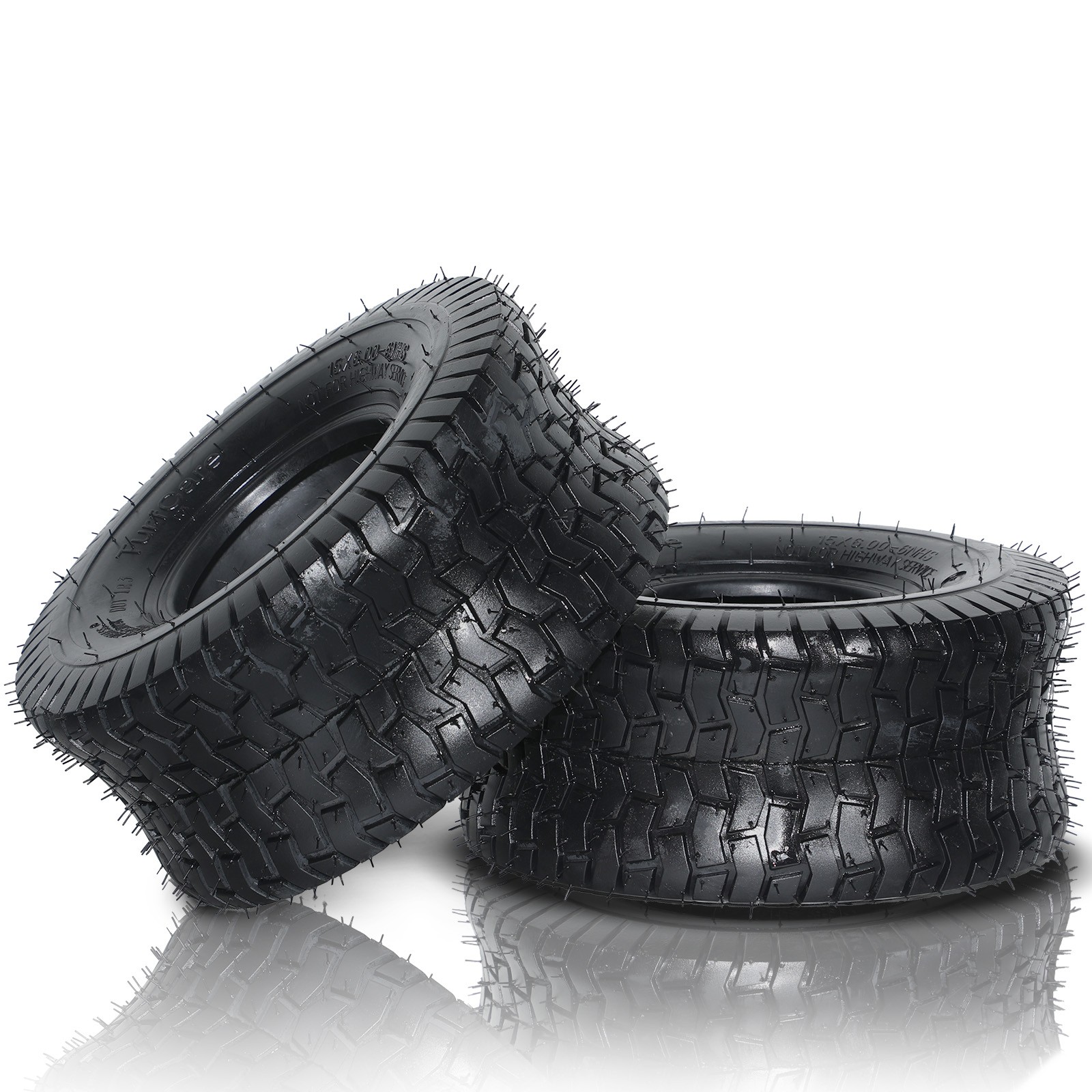

Photos from current listings. Actual item, color, and included accessories may vary.
Rubber Tire Buying Guide
Rubber tires for residential outdoor power equipment are defined by the tire's ply rating, tread pattern, and exact size code, which together determine load capacity, traction, and fit on mowers, tractors, and utility carts. The primary trade-off is between soft turf-friendly treads that resist lawn damage and aggressive lug patterns that grip loose soil but tear grass. The decision rule: match the sidewall size code exactly, choose 2-ply for light residential use, and upgrade to 4-ply or a lug tread only when carrying heavy loads or working steep, loose ground.
Key takeaways
- Size codes like 15x6.00-6 mean 15-inch outer diameter, 6-inch width, and 6-inch rim diameter; all three numbers must match the original tire.
- 2-ply rating suits mowers and carts under moderate load, while 4-ply (or 6-ply) resists punctures and sidewall flex on heavier tractors and rough terrain.
- Turf/smooth tread minimizes grass scuffing for regular lawn mowing; chevron or lug tread trades lawn gentleness for grip on slopes, mud, and loose soil.
At a glance
- Category
- Residential Outdoor Power Equipment
- Last updated
- Nov 28, 2026
Current offers
Highlights
- Size codes like 15x6.00-6 mean 15-inch outer diameter, 6-inch width, and 6-inch rim diameter; all three numbers must match the original tire.
- 2-ply rating suits mowers and carts under moderate load, while 4-ply (or 6-ply) resists punctures and sidewall flex on heavier tractors and rough terrain.
- Turf/smooth tread minimizes grass scuffing for regular lawn mowing; chevron or lug tread trades lawn gentleness for grip on slopes, mud, and loose soil.
- Rubber compounds with UV stabilizers resist cracking and sun damage, while cheap reclaimed-rubber blends harden and weather-check within a few seasons.
Best use cases
- Best fit: Replacing worn drive or caster tires on a residential riding mower or lawn tractor where the original size code and turf tread pattern are known — buy 2-ply turf tires in the exact size.
- Best fit: Utility carts, wheelbarrows, and garden trailers that see gravel, mud, or repeated loading — choose 4-ply rated tires with a lug or knobby tread for puncture resistance and traction.
- Wrong fit to skip: Buying a wider or taller tire to 'improve traction' without verifying rim width and fender clearance; oversize tires rub decks, hit fenders, and load the transaxle.
- Wrong fit to skip: Installing aggressive lug tires on a fine lawn mower used mainly for manicured grass — the tread tears turf and leaves ruts, especially on soft ground after rain.
Buying tips
- Read the sidewall code (e.g., 15x6.00-6) and match all three dimensions; rim diameter must equal the wheel, and width must fit rim width within about half an inch.
- Choose 2-ply for push mowers and light riding mowers; step up to 4-ply for tractors over roughly 500 lb operating weight or any use on gravel and rough ground.
- Select turf/smooth tread for mowing-only duty, chevron for mixed mowing and towing, and lug/knobby for carts and trailers on loose or wet terrain.
- Buy tires in pairs for drive axles so both sides have equal diameter and tread; mismatched sizes cause uneven pull and premature transaxle wear.
Specs
| Tire Size Code | e.g. 15x6.00-6 (OD x Width - Rim) |
|---|---|
| Ply Rating | 2-ply light duty / 4-ply heavy duty |
| Tread Pattern | Turf / Chevron / Lug |
| Rim Fitment | Match rim dia & width range |
Related searches
What to check before buying
- Measure the old tire's outer diameter, width, and rim diameter, or read the sidewall code — do not rely on the mower model alone.
- Check rim width against the tire's specified rim range; a 6-inch-wide tire typically fits rims about 4.5 to 5.5 inches wide.
- Confirm fender and deck clearance for the new tire's diameter and width, especially if changing from the original size.
- Verify the wheel's bolt pattern, hub bore, and valve-stem position if buying a tire-and-wheel assembly rather than a bare tire.
FAQ
Data sources: eBay / Amazon listings and product attribute feeds. Updated Nov 28, 2026.
Some links on this page are affiliate links. If you buy after clicking one, we may earn a commission at no extra cost to you. This does not change which products appear here or their order. Affiliate disclosure.