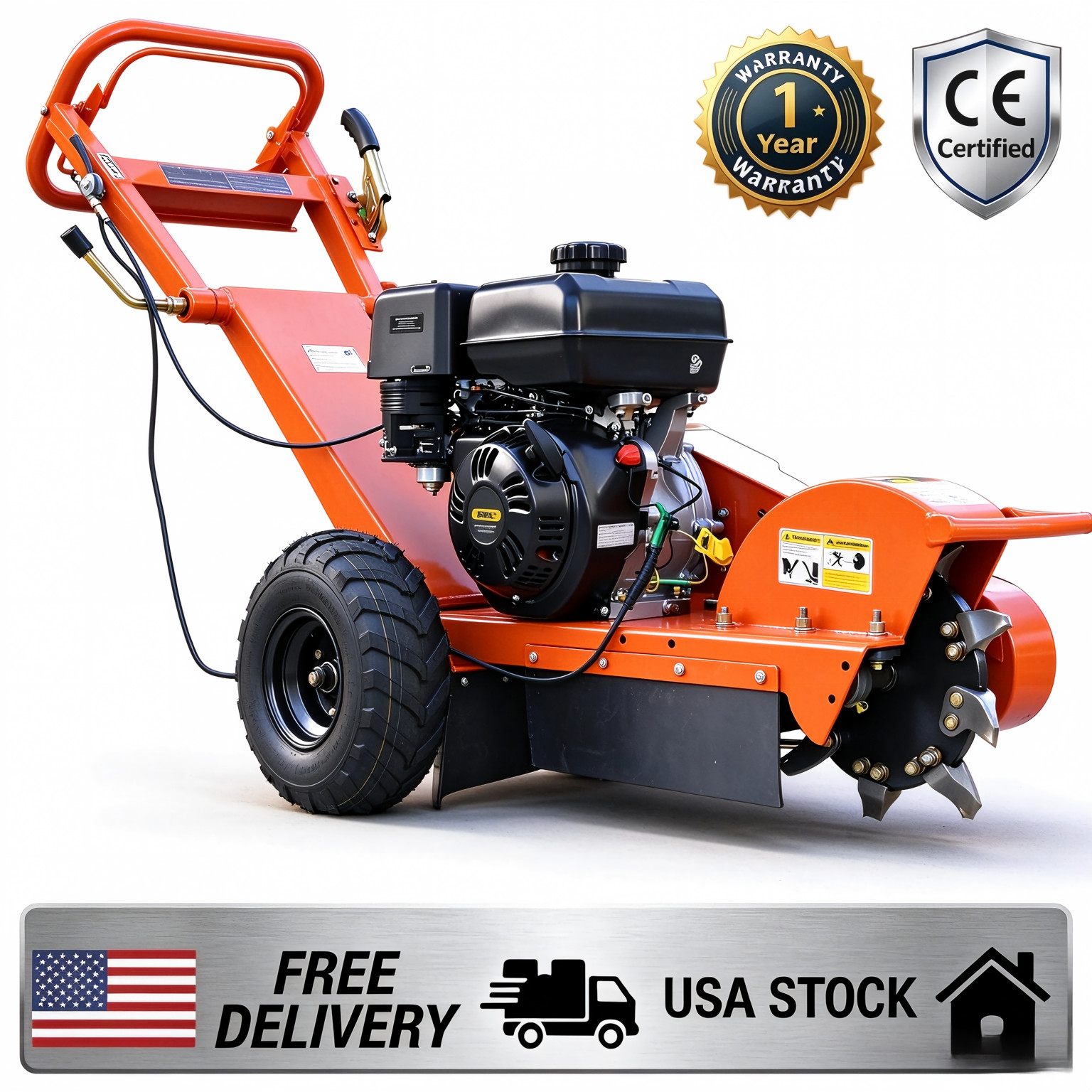

Photos from current listings. Actual item, color, and included accessories may vary.
Root Grinder Buying Guide
A root grinder is a heavy-duty stump and surface-root reduction tool that turns below-grade woody material into chips or dust, distinct from a stump grinder's deep plunge cut. The core trade-off is cutting mechanism versus power source: carbide-toothed wheel grinders need engine torque and weight, while hand-fed flywheel or drum chippers demand consistent feed and safety discipline. Buy a dedicated carbide stump/root cutter for repeated large-root removal; skip a converted chipper or underpowered electric unit for anything beyond surface roots.
Key takeaways
- Stump/root grinders use a vertical or horizontal carbide-toothed cutting wheel; wood chippers use flywheel knives or drum blades—they are not interchangeable for subsurface root work.
- Cutting-wheel diameter and tooth count determine max root depth and chip clearance; wheels under 12 in stall in hardwood roots above 4 in diameter.
- Engine class drives sustained torque: 9–14 hp gas units clear 6–12 in stumps, while 3–5 hp electric units handle surface roots under 2 in.
At a glance
- Category
- Residential Outdoor Power Equipment
- Last updated
- Nov 28, 2026
Current offers
Highlights
- Stump/root grinders use a vertical or horizontal carbide-toothed cutting wheel; wood chippers use flywheel knives or drum blades—they are not interchangeable for subsurface root work.
- Cutting-wheel diameter and tooth count determine max root depth and chip clearance; wheels under 12 in stall in hardwood roots above 4 in diameter.
- Engine class drives sustained torque: 9–14 hp gas units clear 6–12 in stumps, while 3–5 hp electric units handle surface roots under 2 in.
- Self-propelled track or wheel drive with hydraulic swing reduces operator fatigue and improves control on slopes and tight residential access.
Best use cases
- Best fit: a 9–14 hp gas stump/root grinder with a carbide wheel for removing 6–12 in stumps and surface roots in a residential yard—pick tracked drive for uneven ground.
- Best fit: a 3–5 hp electric root grinder for shallow surface roots along paths and beds; skip it for stumps over 4 in or repeated hardwood work.
- Wrong fit: a standard wood chipper for subsurface roots—it will stall, dull knives, and cannot reach below grade; use a dedicated grinder.
- Best fit: a walk-behind hydraulic swing grinder when access is wider than 36 in; skip tow-behind models if the gate or path is narrower than the machine's track width.
Buying tips
- Match cutting wheel diameter to root depth: a 12 in wheel reaches roughly 6 in below grade per pass; a 20 in wheel reaches deeper with fewer repositioning moves.
- Choose carbide teeth over hardened steel for rocky or sandy soil; carbide holds an edge 3–5x longer and is replaceable per tooth rather than full-wheel.
- Verify engine displacement and torque, not just horsepower: 200–420 cc gas engines with cast-iron sleeves tolerate sustained load better than aluminum-bore engines.
- Confirm the grinder's outside width versus your narrowest gate; tracked units commonly run 26–36 in wide, while tow-behind units need a vehicle hitch and clear turn radius.
Specs
| Cutting Mechanism | Carbide wheel vs flywheel knife |
|---|---|
| Engine Class | 3–5 hp electric / 9–14 hp gas |
| Wheel Diameter | 12–24 in (depth 6–10 in) |
| Drive Type | Walk-behind / tracked / tow-behind |
What to check before buying
- Measure gate, path, and turn clearance: machine width plus 6 in each side is the practical minimum for safe walk-behind operation.
- Check soil and debris: rocky or clay soil favors carbide teeth and higher torque; loose sandy soil needs chip clearance and dust control.
- Confirm fuel and voltage: gas units need fresh unleaded and oil; electric units need a dedicated 20 A circuit and proper gauge extension cord within cord-length limits.
- Plan debris and stump disposal: grinding leaves a chip pile 2–3x the stump volume; confirm you can haul or spread it and that buried utilities are marked before digging.
FAQ
Data sources: eBay / Amazon listings and product attribute feeds. Updated Nov 28, 2026.
Some links on this page are affiliate links. If you buy after clicking one, we may earn a commission at no extra cost to you. This does not change which products appear here or their order. Affiliate disclosure.