
Photos from current listings. Actual item, color, and included accessories may vary.
Replacement Lawn Mower Tire Buying Guide
Replacement lawn mower tires restore traction and protect your turf, but the segment splits sharply between thin OEM-style rubber and thicker, load-rated tires that resist punctures and sidewall failure. The primary trade-off is tire construction and ply rating versus exact fitment: a slightly wrong hub bore, offset, or tread profile turns a cheap fix into a wobbling, scalping liability. The clear decision rule is to match the tire's sidewall size code, load capacity, and hub hardware to your mower's original spec—buy the correct size and ply rating even if it costs more, and skip any tire with a mismatched bead diameter or vague load rating.
Median $70.49
Key takeaways
- Sidewall size codes (e.g., 15x6.00-6) encode outer diameter, width, and rim diameter—all three must match the original tire, not just the rim number.
- Ply rating and load capacity (2-ply vs 4-ply, 250-400+ lb per tire) determine puncture resistance and how well the tire handles a loaded deck and bagger on slopes.
- Tread type dictates use: turf/smooth tread for manicured lawns, chevron or lug tread for slopes and rough terrain, and rib tread for front caster wheels.
At a glance
- Category
- Residential Outdoor Power Equipment
- Last updated
- Nov 29, 2026
Current offers
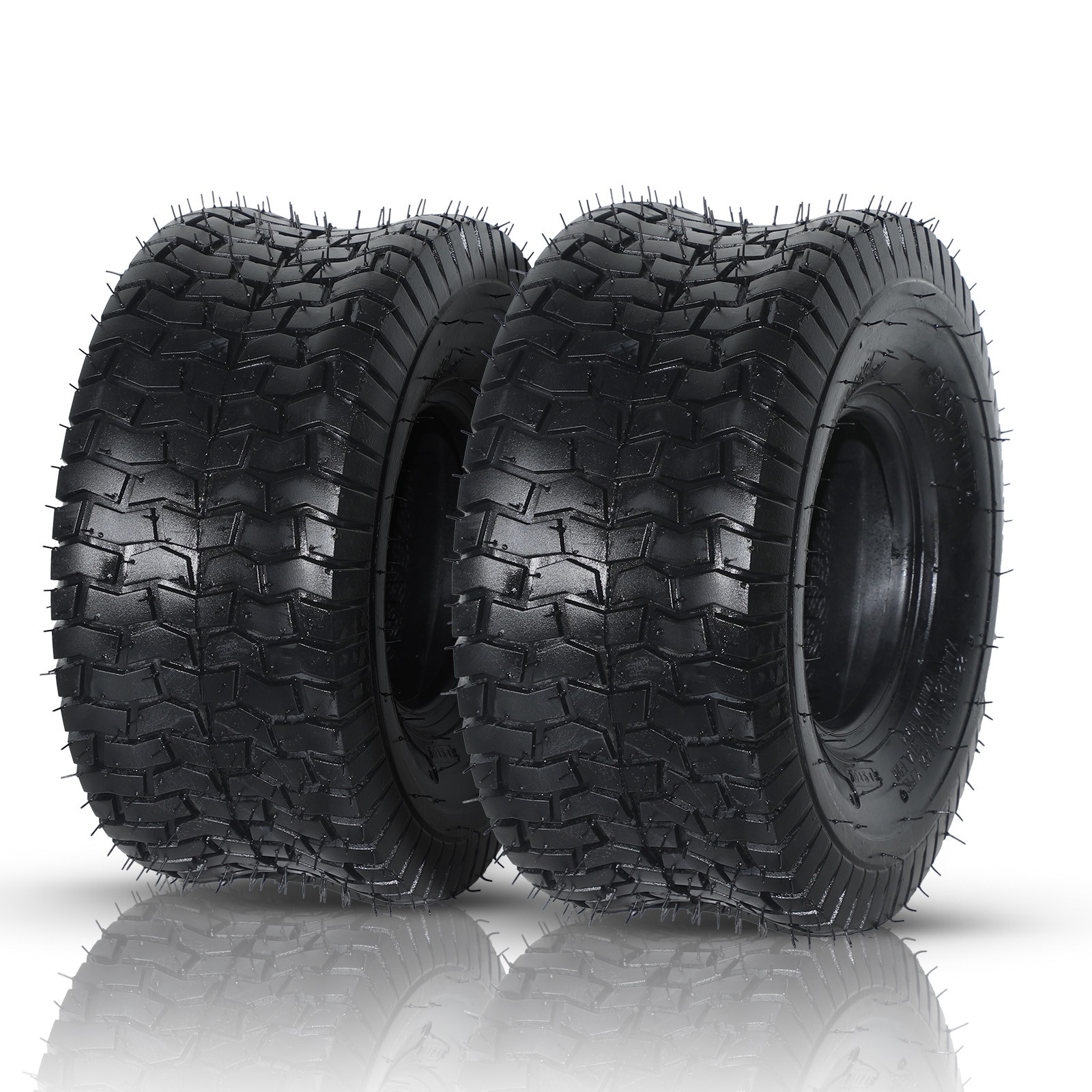 Two 15x6.00-6 15x6-6 15x6x6 Lawn Mower Garden Tractor Turf Tires 2 Ply Rated$43.99Last checked Nov 19, 2026View on eBay
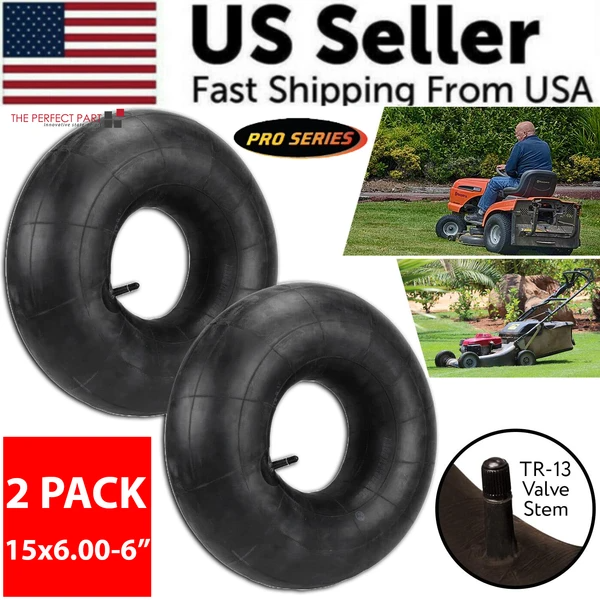 2PCS 15x6.00-6 Lawn Mower Tire Inner Tubes 15X6-6, 15X6x6, 15 6x6 TR13 Valve ATV$29.99View on Mallflare
- Set of 2 15x6.00-6 Lawn & Garden Mower Tractor Turf Tires 2 Ply 15x6-6 15x6x6$43.99Last checked Nov 19, 2026View on eBay
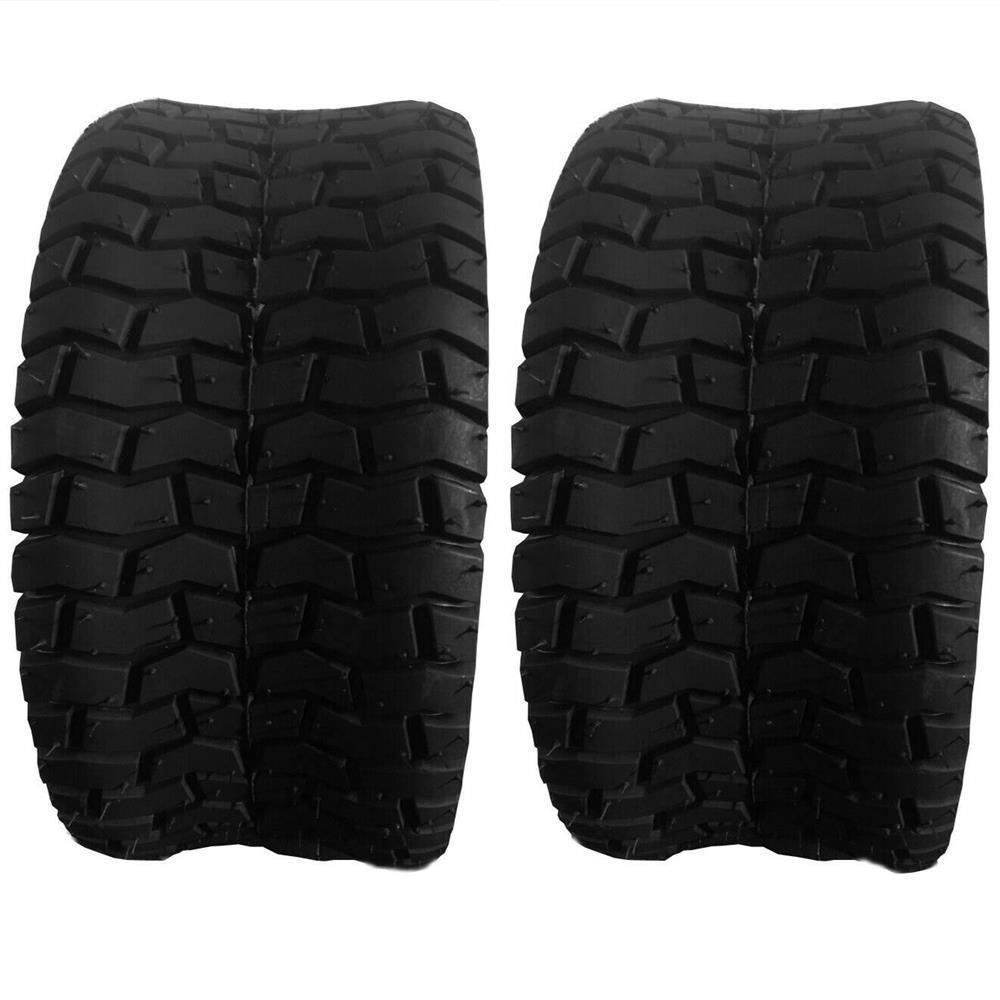 SET Of TWO 13x5.00-6 Turf Tires for Garden Tractor Lawn Mower Riding$64.99View on Mallflare
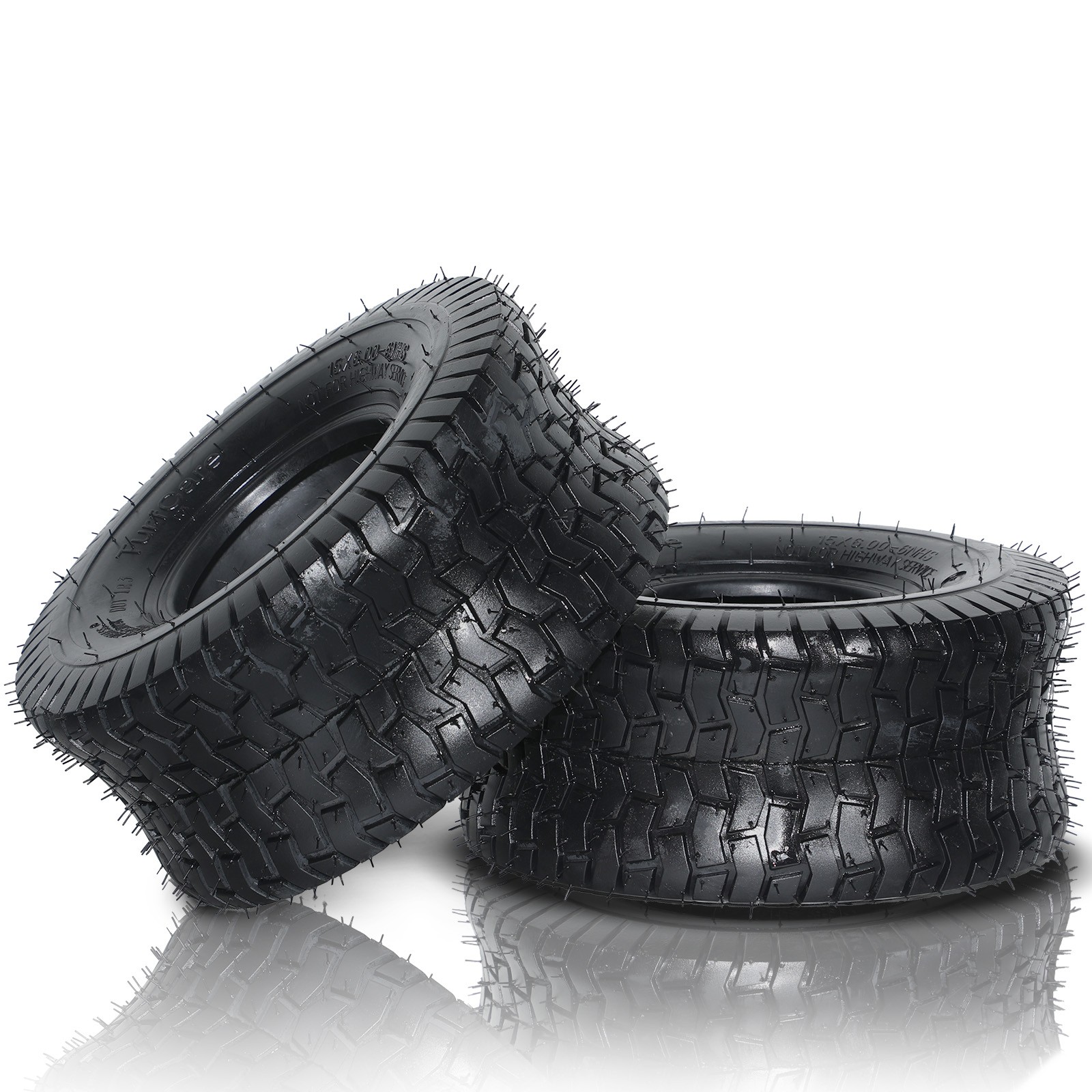 Two 15x6.00-6 Lawn & Garden Mower Tractor Turf Tires 2 Ply 15x6-6 Black Rubber$44.19Last checked Nov 19, 2026View on eBay
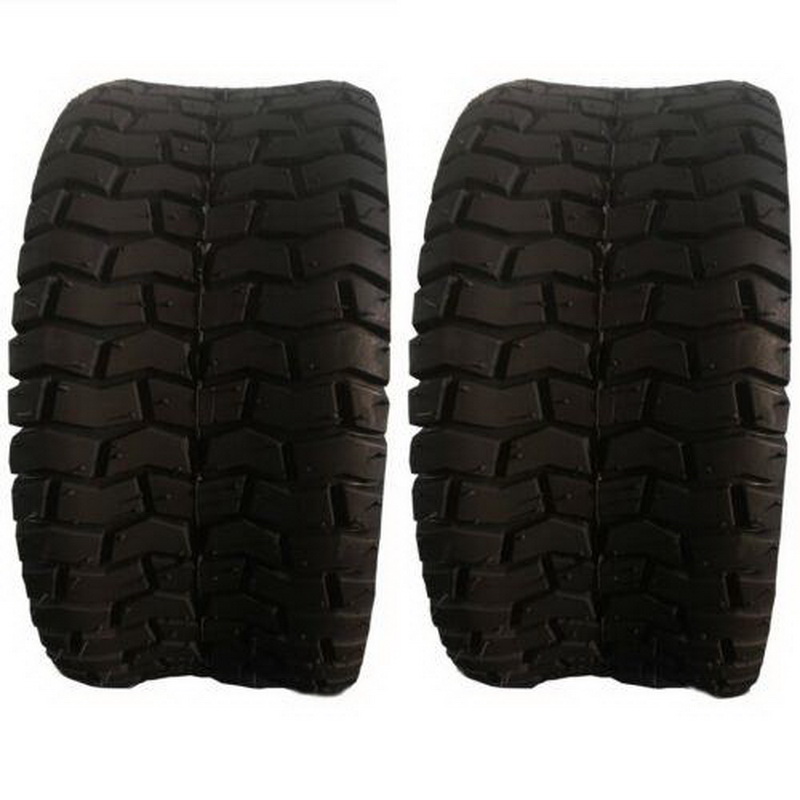 2PK 15x6.00-6 15-6.00-6 4PLY Turf Lawn Mower Go Kart Tires$75.99View on Mallflare
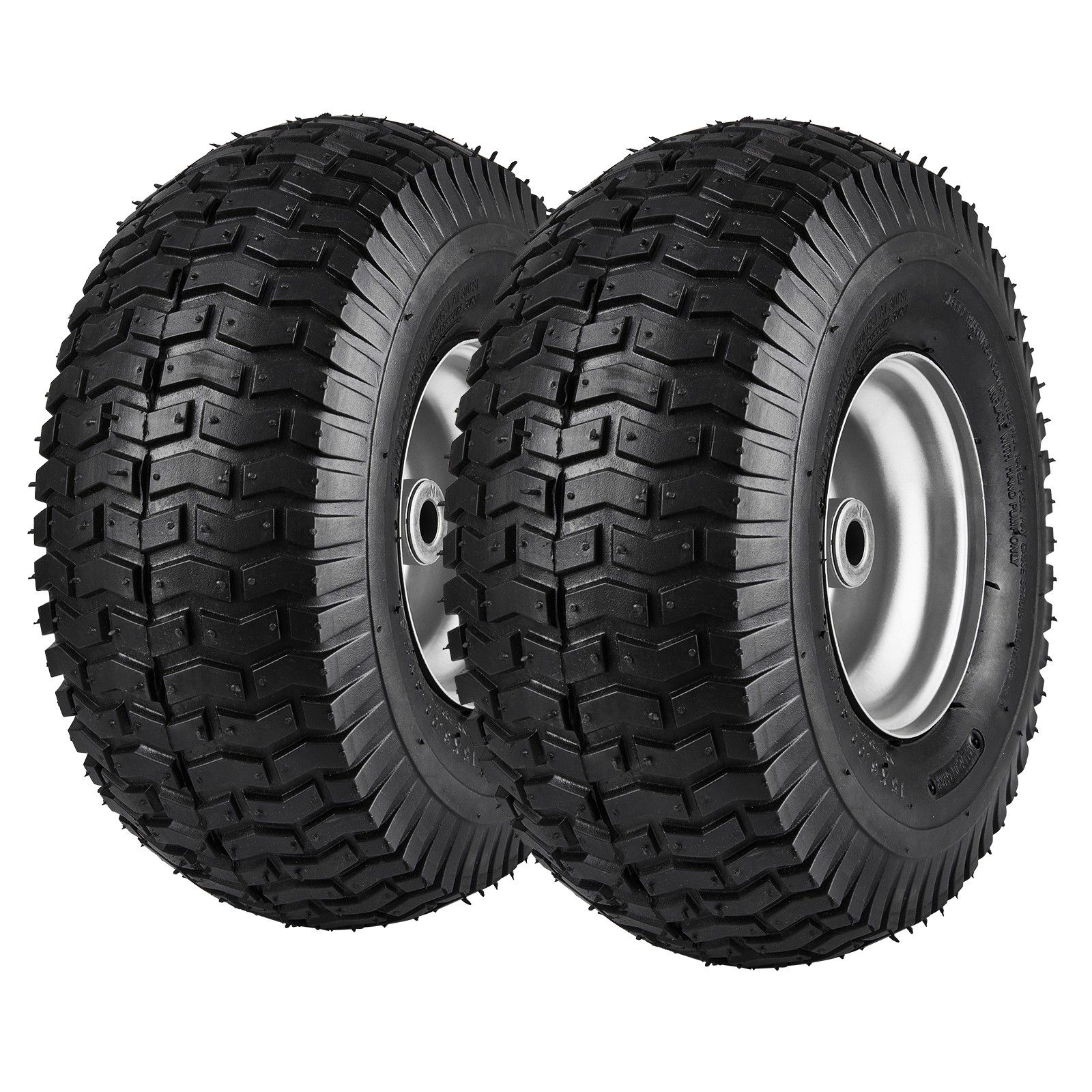 Lawn Mower Tires 15x6-6" Lawn Tractor Tires 2-Pack Turf Pneumatic Tires$54.99Last checked Nov 28, 2026View on eBay
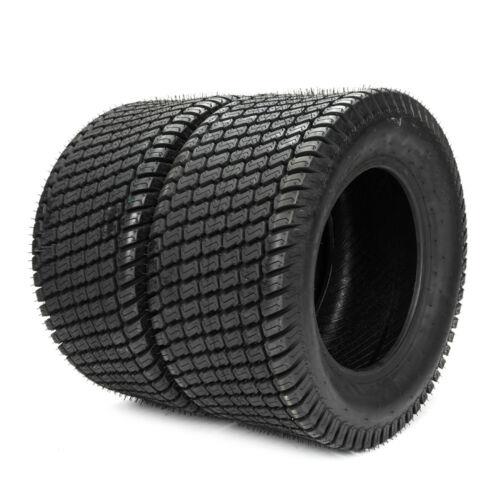 Set of 2 * New 18x9.50-8 Lawn Mower Golf Cart Turf Tires P322 /4PR - 13032$124.99View on Mallflare
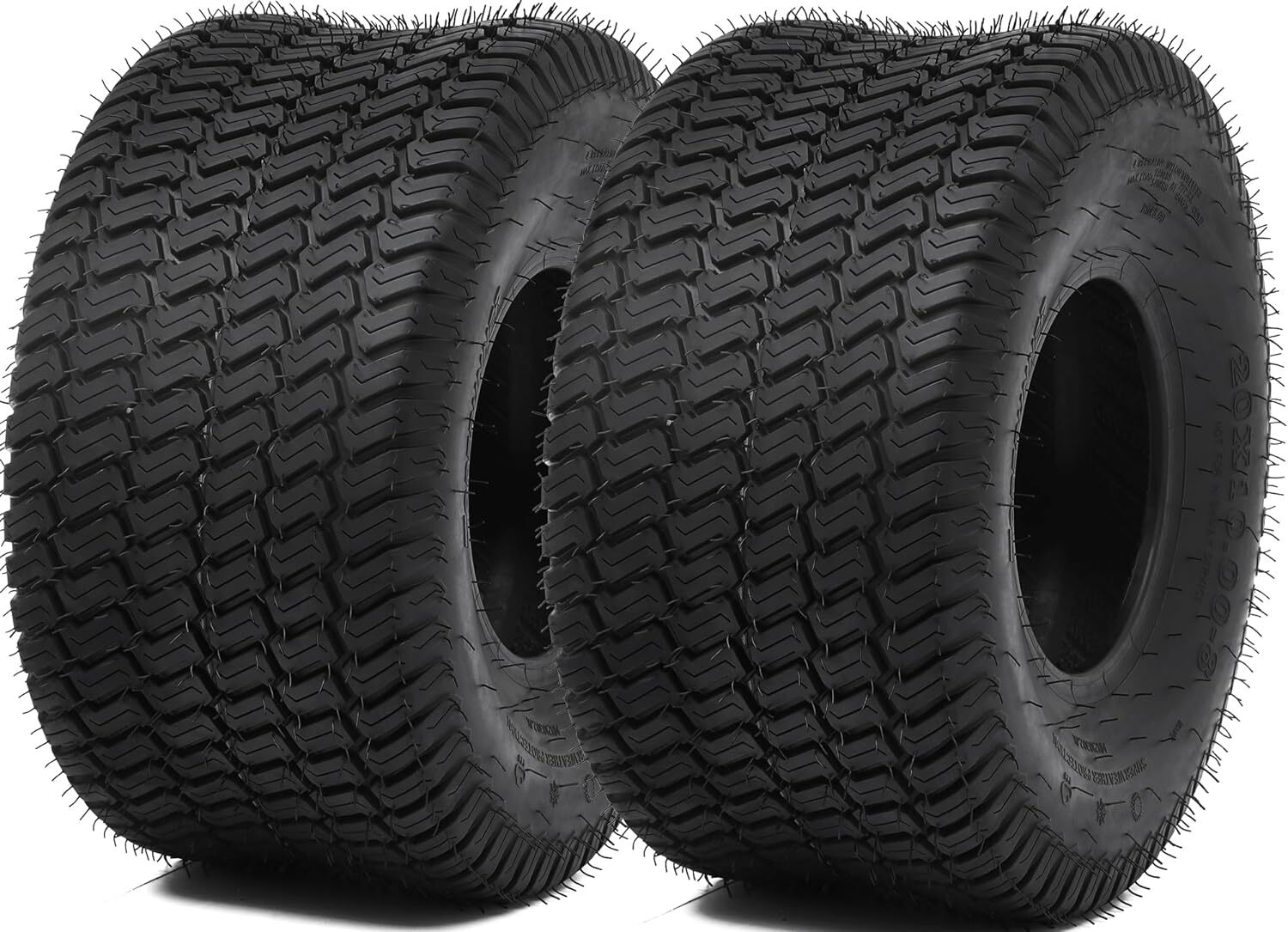 4Ply 20x10.00-8"/ 20x8.00-8"/18x8.50-8" Lawn Mower Tire for Lawn & Garden Mower$76.99Last checked Nov 19, 2026View on eBay
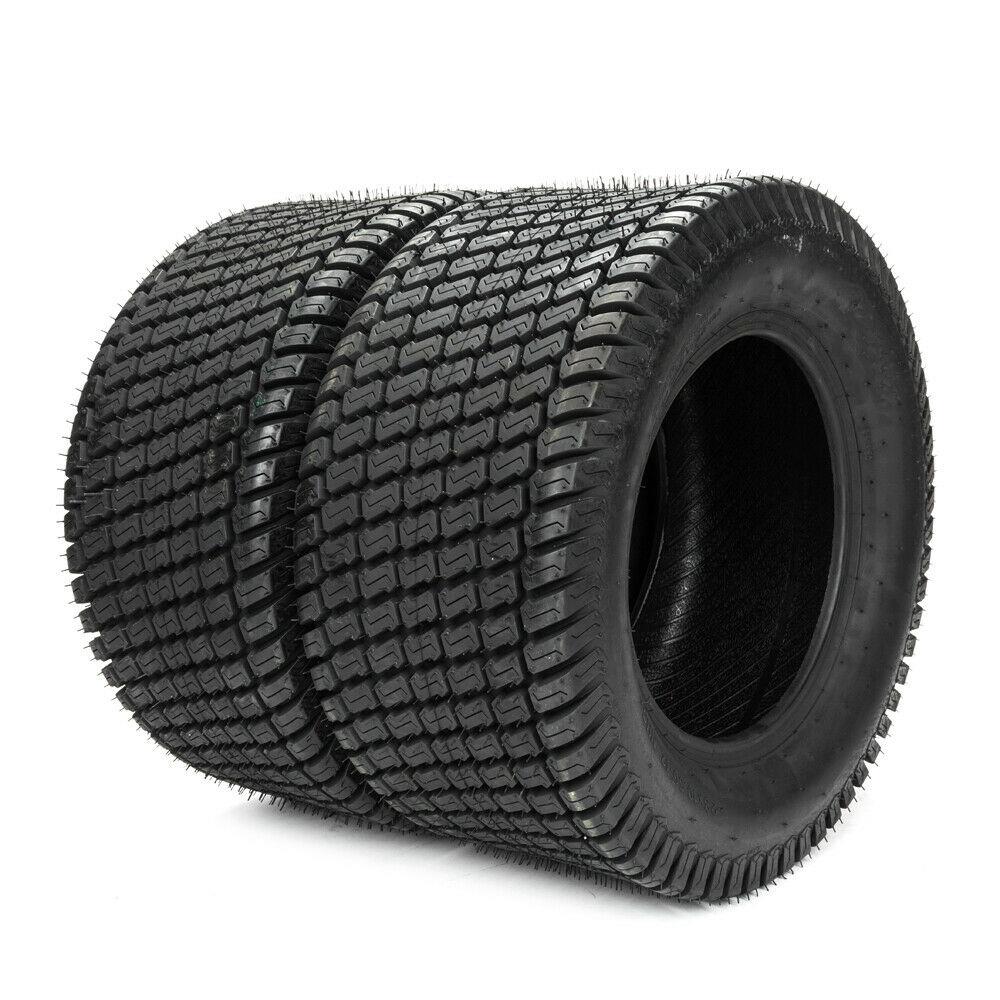 wheels 2qty 20x8.00-8 millionparts 950Lbs P332 Garden Lawn Mowers Turf Tires$127.99View on Mallflare
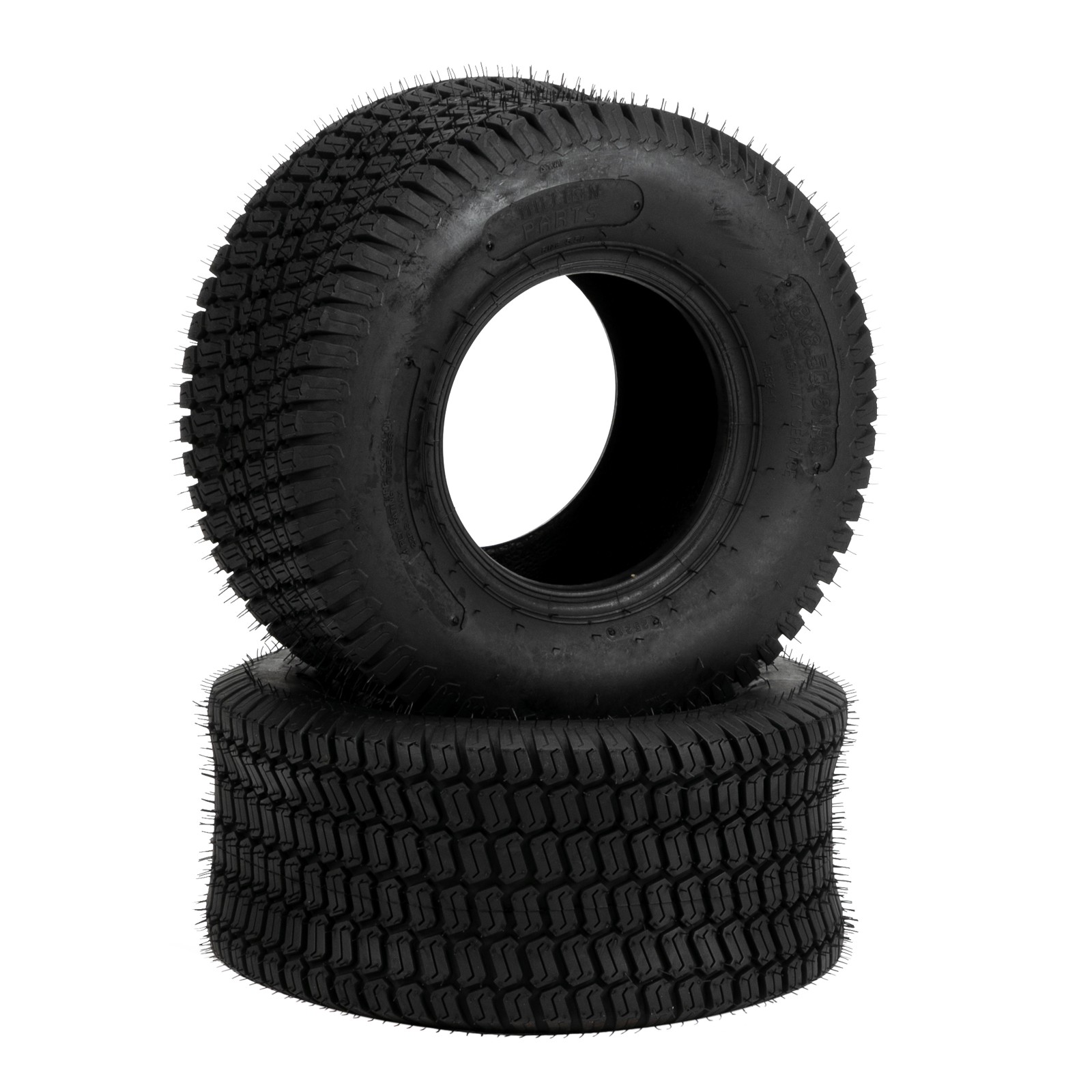 2pcs 18x8.50-8 Lawn & Garden Mower Tractor Turf Tires 4 Ply 18x8.5x8 18x8.5-8$77.99Last checked Nov 18, 2026View on eBay
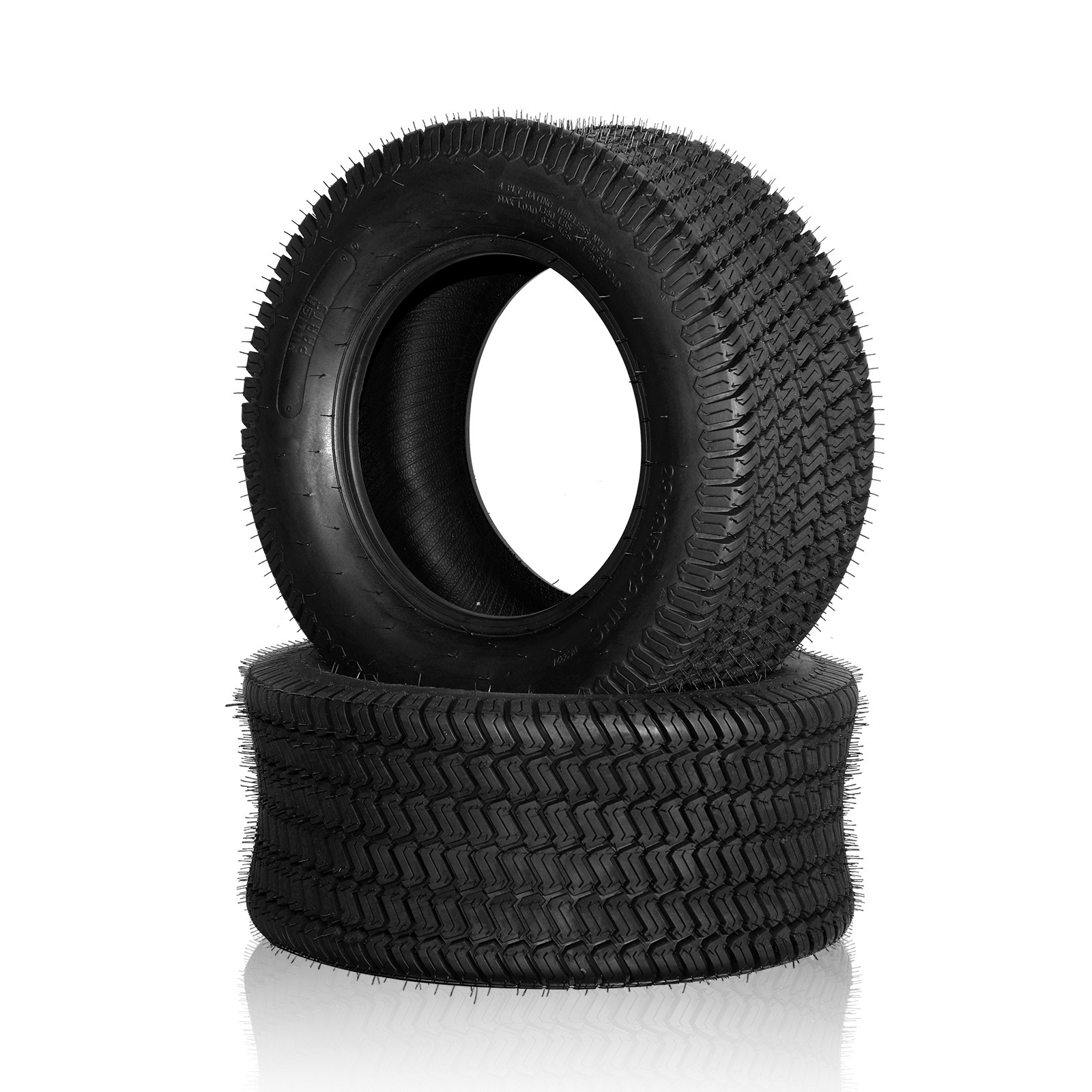 2pcs 23x9.50-12 Lawn & Garden Mower Tractor Cart Turf Tires 4 Ply 23x9.5-12$111.99Last checked Nov 19, 2026View on eBay
Highlights
- Sidewall size codes (e.g., 15x6.00-6) encode outer diameter, width, and rim diameter—all three must match the original tire, not just the rim number.
- Ply rating and load capacity (2-ply vs 4-ply, 250-400+ lb per tire) determine puncture resistance and how well the tire handles a loaded deck and bagger on slopes.
- Tread type dictates use: turf/smooth tread for manicured lawns, chevron or lug tread for slopes and rough terrain, and rib tread for front caster wheels.
- Hub hardware—bore diameter, keyway, and offset—must match the mower's axle and wheel assembly; sealed bearing hubs are more durable than plain bushings on drive wheels.
Best use cases
- Best fit: Replace a flat or cracked rear drive tire on a walk-behind or riding mower with the exact sidewall size and a 4-ply turf tread—skip 2-ply tires if your lawn has roots, stones, or slopes.
- Best fit: Front caster wheels on zero-turn mowers take smooth or rib-tread tires with sealed bearings; pick a matching bore and offset to avoid shimmy, and skip lug treads that tear turf on turns.
- Wrong fit: Buying a wider or taller tire to 'improve traction' changes the deck height and can cause blade scalping or fender rub—stay within the OEM sidewall code.
- Wrong fit: Using a tire with the same rim diameter but different width or outer diameter will not seat correctly or will alter ground speed and cutting height—skip any size that deviates from the original code.
Buying tips
- Read the sidewall code on the old tire (e.g., 15x6.00-6) and match all three numbers: outer diameter, width, and rim diameter—never substitute by rim size alone.
- Choose ply rating by duty: 2-ply for light residential flat lawns, 4-ply for loaded baggers, slopes, or rough ground; higher ply also resists sidewall cuts.
- Verify the hub: measure axle bore diameter, keyway width, and wheel offset—sealed bearings cost more but outlast bushing hubs on drive wheels.
- Match tread to terrain: turf/smooth tread for fine lawns, chevron/lug for hills and uneven ground, rib tread for front casters; aggressive tread on a manicured lawn causes turf damage.
Specs
| Tire Size Code | Diameter x Width - Rim (e.g., 15x6.00-6) |
|---|---|
| Ply Rating | 2-ply light duty / 4-ply heavy duty |
| Tread Pattern | Turf / Chevron / Lug / Rib |
| Hub Type | Keyed bore / Plain bore / Sealed bearing |
Related searches
What to check before buying
- Note the exact sidewall size code and ply rating from your current tire before ordering; confirm the replacement matches all three size numbers.
- Measure the axle bore diameter, keyway, and offset, and confirm the wheel includes the correct bearing or bushing type for your mower.
- Check clearance: ensure the new tire's outer diameter and width fit under the fender and deck without rubbing at full steering lock.
- Confirm valve stem type and inflation spec, and verify the mower's recommended PSI—overinflation reduces traction and can damage the tire bead.
FAQ
Data sources: eBay / Amazon listings and product attribute feeds. Updated Nov 29, 2026.
Some links on this page are affiliate links. If you buy after clicking one, we may earn a commission at no extra cost to you. This does not change which products appear here or their order. Affiliate disclosure.