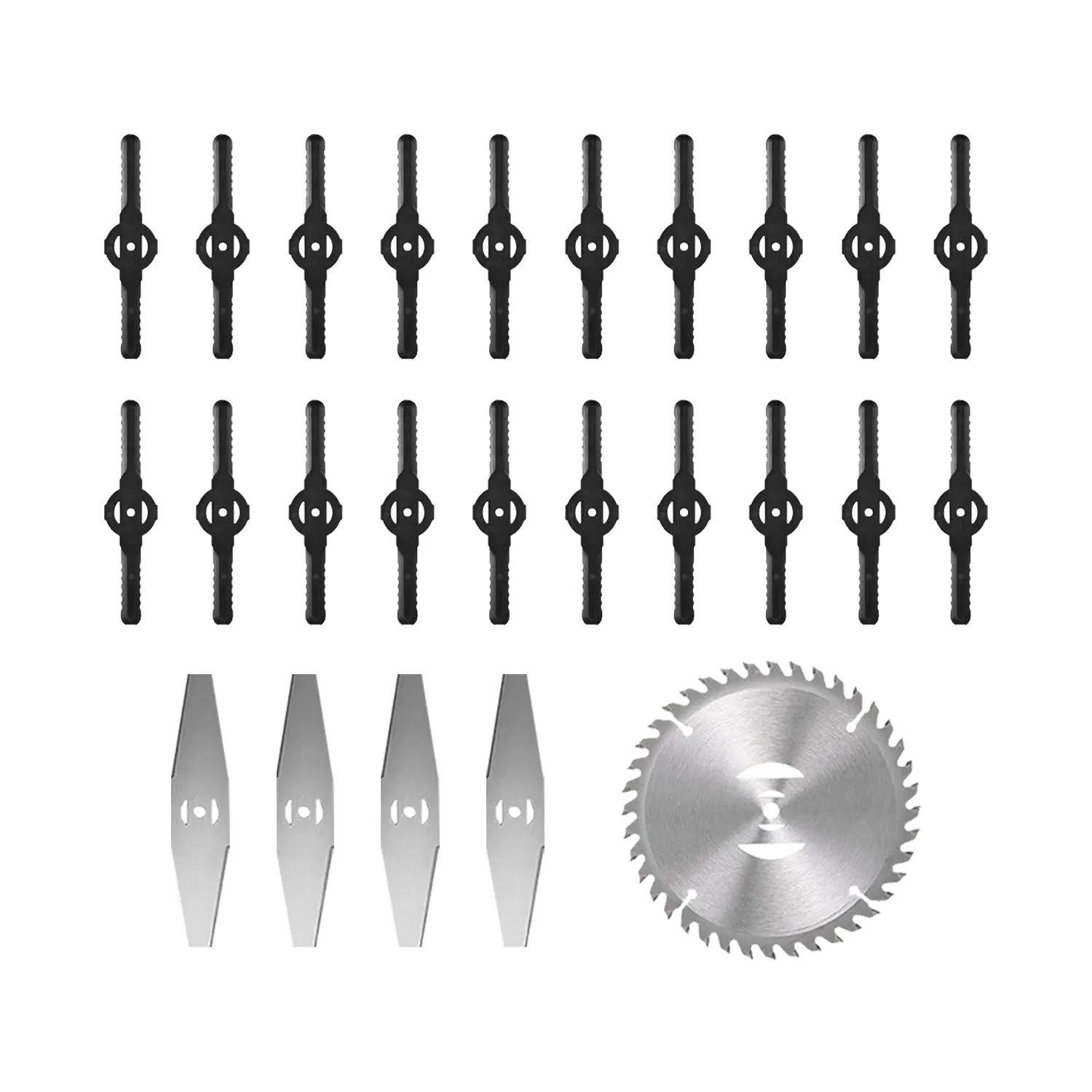

Photos from current listings. Actual item, color, and included accessories may vary.
Replacement Blade Buying Guide
A replacement blade is the single highest-leverage wear part on a walk-behind or riding mower, and getting the right one hinges on blade length, center-hole pattern, and lift style rather than brand name alone. Buyers often grab a blade that physically mounts but has the wrong offset or airfoil, causing uneven cut, excessive vibration, or premature spindle wear. Measure your existing blade and deck first—Troy-Bilt and other residential decks use several distinct blade families that are not interchangeable.
Key takeaways
- Blade length must match deck cutting width minus overlap; a 42-inch deck typically uses two 21-inch blades or one 42-inch bar, while 46-inch decks use two 23-inch blades.
- Center-hole diameter and star or keyed patterns vary by spindle: 5-point star, 6-point star, round 3/4-inch, and 5/8-inch round are common and non-interchangeable.
- Mulching blades use a curved or gator-tooth profile for recirculation; high-lift blades have a tall airfoil for bagging; 3-in-1 blades split the difference with moderate lift.
At a glance
- Category
- Residential Outdoor Power Equipment
- Last updated
- Nov 28, 2026
Current offers
Highlights
- Blade length must match deck cutting width minus overlap; a 42-inch deck typically uses two 21-inch blades or one 42-inch bar, while 46-inch decks use two 23-inch blades.
- Center-hole diameter and star or keyed patterns vary by spindle: 5-point star, 6-point star, round 3/4-inch, and 5/8-inch round are common and non-interchangeable.
- Mulching blades use a curved or gator-tooth profile for recirculation; high-lift blades have a tall airfoil for bagging; 3-in-1 blades split the difference with moderate lift.
- Blade steel thickness (typically 0.135–0.187 inch) and heat treatment determine bend resistance; stamped residential blades are thinner than forged commercial blades.
Best use cases
- Best fit: side-discharge or bagging on a known Troy-Bilt deck—pick the exact OEM-length bar with matching center hole and high-lift airfoil for clean bag fill.
- Best fit: mulching leaves and clippings—choose a dedicated mulching blade with gator teeth and a deck-matched length, accepting slower ground speed in tall grass.
- Wrong fit: buying by brand name only—Troy-Bilt has used multiple blade families across generations, so a 'Troy-Bilt blade' may not fit your specific deck.
- Wrong fit: using a longer blade on a smaller deck to 'cover more'—overhang causes deck housing contact and dangerous imbalance.
Buying tips
- Measure the existing blade tip-to-tip and the center-hole diameter, and note any star pattern before ordering; do not rely on deck width alone.
- Choose high-lift for bagging, mulching profile for recirculation, and 3-in-1 for mixed use; airfoil height directly affects discharge distance and bag fill.
- Inspect steel thickness and balance marks; thinner stamped blades dull faster and bend more easily on rocky residential lawns.
- Replace blades in pairs on twin-blade decks and torque spindle bolts to the mower manufacturer's specification to avoid vibration and spindle damage.
Specs
| Blade Length | Match deck width (e.g., 21 in, 23 in) |
|---|---|
| Center Hole Pattern | Round, star, or keyed—match spindle |
| Blade Type | High-lift, mulching, or 3-in-1 |
| Steel Thickness | 0.135–0.187 in stamped residential |
Related searches
What to check before buying
- Measure deck cutting width and existing blade length tip-to-tip; confirm the replacement length matches the deck's spindle spacing.
- Identify center-hole type and size (round, star, keyed) by removing the blade and comparing against the new blade's mount.
- Check spindle condition and blade bolt thread; worn spindles or stripped bolts require replacement before fitting a new blade.
- Verify deck housing clearance and discharge chute orientation so the blade's airfoil and length do not contact the housing.
FAQ
Data sources: eBay / Amazon listings and product attribute feeds. Updated Nov 28, 2026.
Some links on this page are affiliate links. If you buy after clicking one, we may earn a commission at no extra cost to you. This does not change which products appear here or their order. Affiliate disclosure.