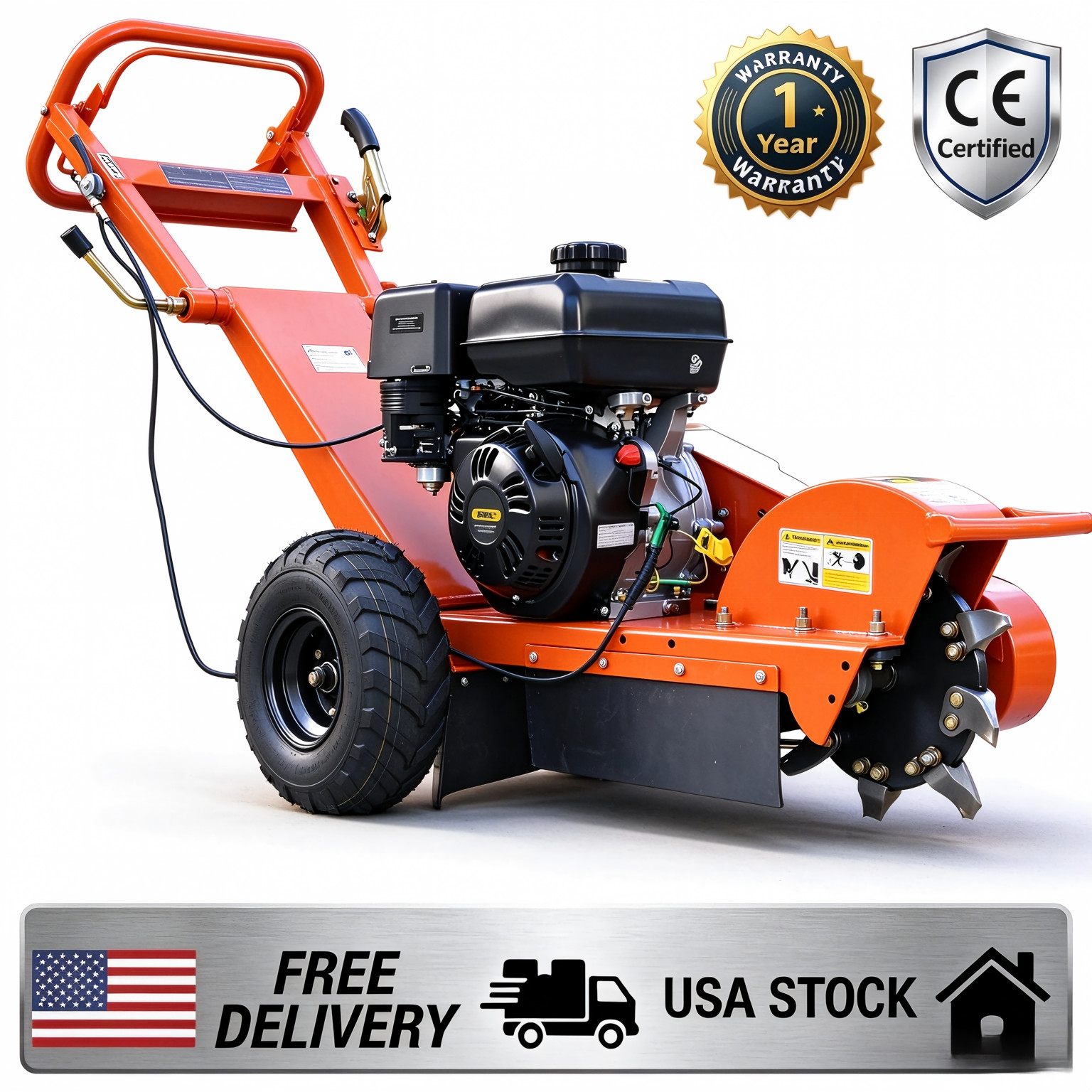

Photos from current listings. Actual item, color, and included accessories may vary.
Portable Stump Grinder Buying Guide
Portable stump grinders let homeowners and small crews eliminate tree stumps without hauling in a tow-behind commercial unit. The real decision hinges on engine power, cutting-wheel reach, and whether the machine must fit through a gate or be carried by two people. Most buyers underestimate stump diameter and root flare, then pick a grinder that stalls out or cannot reach the soil line.
Median $1,499.00 · New listings
Key takeaways
- Walk-behind petrol models use 4-stroke engines from roughly 160cc to 420cc; higher displacement gives faster wheel speed and fewer stalls in hardwood.
- Cutting wheels run 7–14 inches in diameter; larger wheels increase cutting depth per pass and reduce repositioning time.
- Replaceable carbide-tipped teeth are the standard wear part; tooth count and grade determine cutting speed and cost per stump.
At a glance
- Category
- Residential Outdoor Power Equipment
- Last updated
- Nov 28, 2026
Current offers
Highlights
- Walk-behind petrol models use 4-stroke engines from roughly 160cc to 420cc; higher displacement gives faster wheel speed and fewer stalls in hardwood.
- Cutting wheels run 7–14 inches in diameter; larger wheels increase cutting depth per pass and reduce repositioning time.
- Replaceable carbide-tipped teeth are the standard wear part; tooth count and grade determine cutting speed and cost per stump.
- Hand-carried and track-mounted frames differ in weight and gate width; typical walk-behind widths start around 24–30 inches.
Best use cases
- Best fit: a homeowner with 1–3 stumps under 12 inches across and clear gate access — choose a walk-behind petrol model with a 9–13 hp engine and 12-inch wheel.
- Best fit: a rental-yard or small landscaper grinding stumps weekly — prioritize a track-mounted or towable unit with a 14-inch wheel and high-tooth-count carbide setup.
- Wrong fit: a property with stumps over 24 inches or dense root flares — skip portable units and hire a commercial tow-behind grinder with a 25+ hp engine.
- Wrong fit: steep or soft lawns without track or wide-pneumatic support — hand-carried units tip and sink; choose a track-driven frame instead.
Buying tips
- Check engine displacement against stump diameter: 160–200cc suits softwood stumps under 8 inches; 300cc+ handles hardwood and 12–18 inch stumps.
- Prioritize carbide-tipped teeth over hardened steel for rocky or sandy soil; carbide holds an edge longer and resists chipping.
- Measure your narrowest gate and path clearance first — walk-behind frames often exceed 26 inches and will not pass standard garden gates.
- Compare wheel diameter and head travel: a 12–14 inch wheel with at least 20 inches of lateral sweep reduces repositioning and finish time.
Specs
| Engine Class | 160–420cc 4-stroke petrol |
|---|---|
| Cutting Wheel | 7–14 in diameter |
| Tooth Type | Carbide-tipped vs hardened steel |
| Frame Type | Walk-behind / track / hand-carried |
Related searches
What to check before buying
- Measure the widest stump diameter and add 6 inches for root flare; confirm the grinder's maximum cutting height and sweep.
- Verify gate, doorway, and path width against the machine's overall width — most walk-behind units need 26–30 inches of clearance.
- Confirm fuel type and voltage: petrol engines need fresh unleaded; electric models require a GFCI outlet within cord reach.
- Check that replacement teeth and belts are standard consumables available locally before committing to a model.
FAQ
Data sources: eBay / Amazon listings and product attribute feeds. Updated Nov 28, 2026.
Some links on this page are affiliate links. If you buy after clicking one, we may earn a commission at no extra cost to you. This does not change which products appear here or their order. Affiliate disclosure.