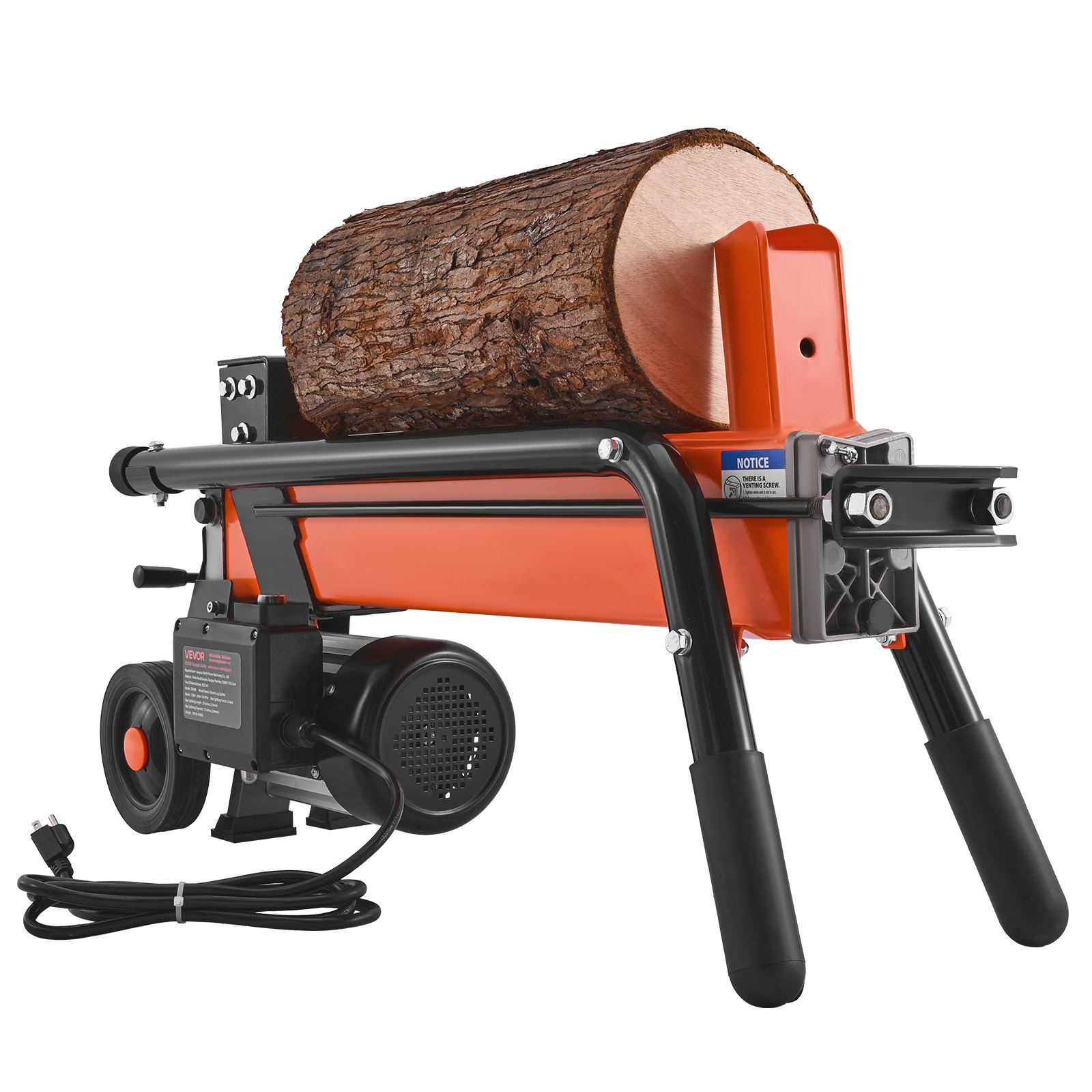

Photos from current listings. Actual item, color, and included accessories may vary.
Log Splitter With Lift Buying Guide
A log splitter with a lift removes the back-breaking work of heaving heavy rounds onto the beam, but the lift mechanism itself determines whether the machine saves your back or just adds another failure point. Buyers should focus on lift type (hydraulic table vs. winch vs. manual pivot), tonnage class, and cycle time rather than cosmetic features. The most common mistake is buying a lift that cannot handle the diameter and weight of the wood you actually split.
Key takeaways
- Hydraulic lift tables are the most robust option: they cradle the round and raise it to beam height without the operator lifting, but they add hydraulic complexity and typically appear on 25-ton and larger models.
- Winch-style lifts use a cable and hook to drag rounds up a ramp; they are simpler and cheaper but require the operator to secure the chain and can slip on smooth bark.
- Manual pivot lifts (also called log cradles) are the least expensive and most reliable—a hinged tray lets you roll the round up—but they still demand some lifting effort and suit rounds under roughly 100 lb.
At a glance
- Category
- Residential Outdoor Power Equipment
- Last updated
- Nov 28, 2026
Current offers
Highlights
- Hydraulic lift tables are the most robust option: they cradle the round and raise it to beam height without the operator lifting, but they add hydraulic complexity and typically appear on 25-ton and larger models.
- Winch-style lifts use a cable and hook to drag rounds up a ramp; they are simpler and cheaper but require the operator to secure the chain and can slip on smooth bark.
- Manual pivot lifts (also called log cradles) are the least expensive and most reliable—a hinged tray lets you roll the round up—but they still demand some lifting effort and suit rounds under roughly 100 lb.
- Tonnage and cycle time matter more than lift type for throughput: 20–25 tons handles most residential hardwood, while 30+ tons is needed for knotty oak or elm; cycle times under 12 seconds keep a two-person crew productive.
Best use cases
- Best fit: A homeowner splitting 16–20 inch oak rounds alone should choose a 25–30 ton hydraulic lift-table splitter—the table eliminates the heaviest lift and the tonnage handles dense hardwood.
- Best fit: An occasional user splitting softwood under 14 inches can save money with a manual pivot cradle on a 20-ton vertical/horizontal unit; the lift effort is modest and there is less to maintain.
- Wrong fit: A winch lift on a lightweight 10–15 ton splitter is a false economy for large rounds—the winch drags slowly and the low tonnage will stall on knots, so skip it and size up the tonnage first.
- Best fit: A two-person operation prioritizing speed should pick a hydraulic lift table with a fast cycle time and a log catcher, not a winch, because the table keeps the beam clear for the next round.
Buying tips
- Prioritize tonnage over lift complexity: a 25-ton splitter with a manual cradle out-splits a 15-ton unit with a hydraulic table on hardwood.
- Check the lift's rated round weight and diameter—most hydraulic tables are rated for 100–150 lb rounds, and exceeding that can bend the table linkage.
- Inspect the hydraulic system for a separate lift valve and cylinder; shared-valve designs can slow the wedge cycle and complicate repairs.
- Choose a horizontal/vertical convertible model only if you will actually use vertical mode for oversized rounds—vertical mode often bypasses the lift entirely.
Specs
| Lift Type | Hydraulic table / winch / manual cradle |
|---|---|
| Tonnage Class | 20–25 ton residential / 30+ ton hardwood |
| Cycle Time | 10–15 sec typical / under 12 sec fast |
| Engine / Power | Gas recoil or electric start / 120V |
Related searches
What to check before buying
- Measure your largest typical rounds (diameter and weight) and confirm the lift table or cradle is rated for them, not just the splitter's tonnage.
- Verify the tow coupler and tire size if you plan to move the splitter—hydraulic lift models are heavier and may need a 2-inch ball and highway-rated tires.
- Confirm engine voltage and plug standard (typically 120V electric start or recoil gas) and that your storage area has clearance for the lift's raised height.
- Check that a log catcher or table extension is available or included—without it, split pieces fall to the ground and negate the lift's labor savings.
FAQ
Data sources: eBay / Amazon listings and product attribute feeds. Updated Nov 28, 2026.
Some links on this page are affiliate links. If you buy after clicking one, we may earn a commission at no extra cost to you. This does not change which products appear here or their order. Affiliate disclosure.