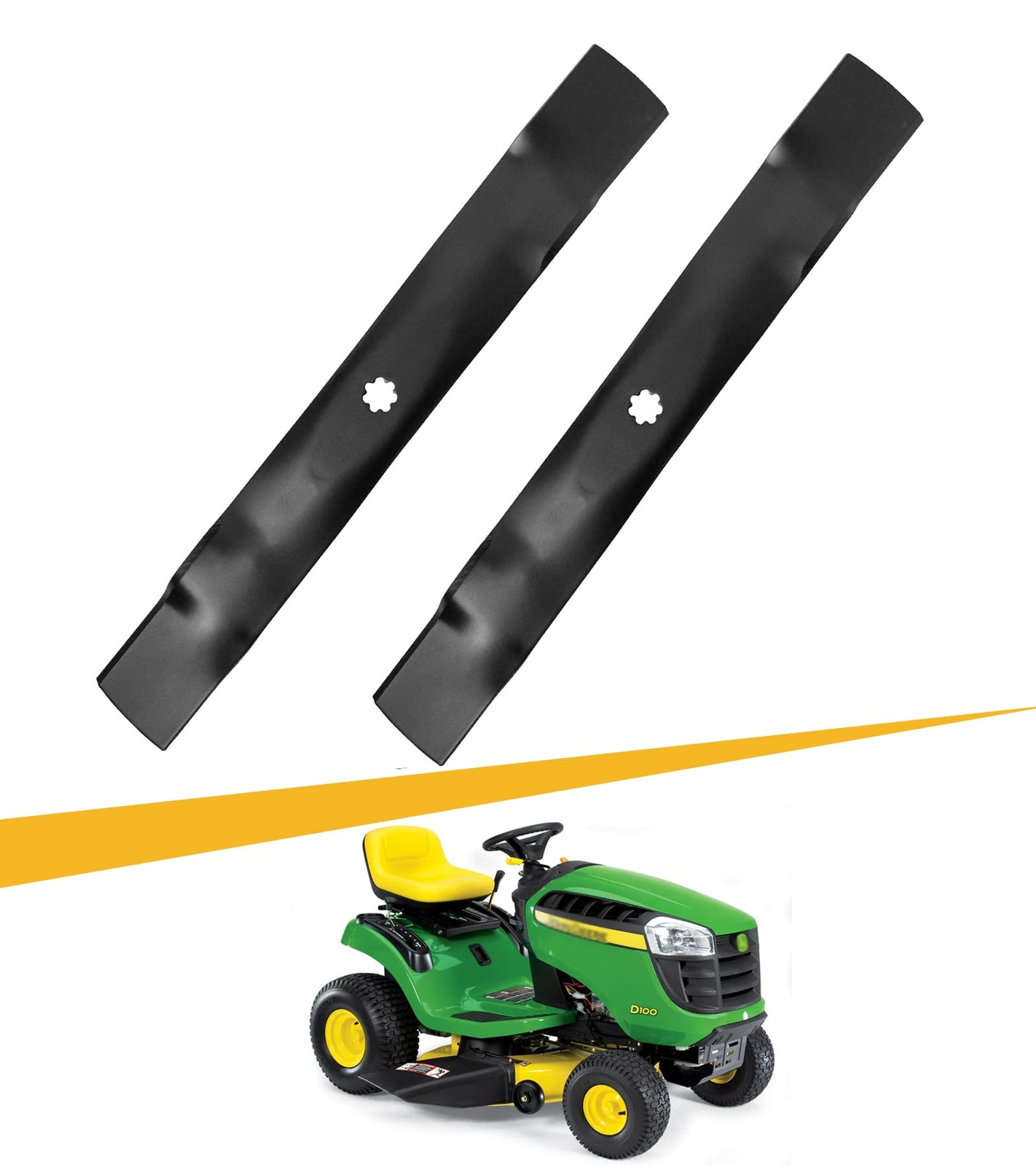

Photos from current listings. Actual item, color, and included accessories may vary.
John Deere Blade Buying Guide
Replacement John Deere blades are not one-size-fits-all: deck width, spindle type, and blade style (standard, mulching, high-lift) must match your tractor's deck and cutting goals. Most buying mistakes come from ordering a blade for the wrong deck series or mixing blade types across a set, which causes uneven cut quality and premature spindle wear.
Deck Width:42 in / 48 in / 54 inBlade Style:High-lift / Mulching / StandardCenter Hole Type:Star / Round / SplinedBlade Material:Hardened steel vs stamped steel
Typical price range$22.35
Key takeaways
- Deck width determines blade length: 42-inch decks use three 14.5–15-inch blades, while 48-inch decks use three 16.5–17-inch blades; blades are not interchangeable between deck sizes.
- Blade style changes airflow and discharge: high-lift blades maximize bagging and side discharge, mulching blades recirculate clippings, and standard blades balance both but excel at neither.
- Spindle and center-hole configuration must match: John Deere decks use star-shaped, round, or splined center holes depending on series (e.g., 100-series vs 300-series), and a mismatched hole will not seat safely.
At a glance
- Category
- Residential Outdoor Power Equipment
- Last updated
- Nov 28, 2026
Current offers
Highlights
- Deck width determines blade length: 42-inch decks use three 14.5–15-inch blades, while 48-inch decks use three 16.5–17-inch blades; blades are not interchangeable between deck sizes.
- Blade style changes airflow and discharge: high-lift blades maximize bagging and side discharge, mulching blades recirculate clippings, and standard blades balance both but excel at neither.
- Spindle and center-hole configuration must match: John Deere decks use star-shaped, round, or splined center holes depending on series (e.g., 100-series vs 300-series), and a mismatched hole will not seat safely.
- PTO clutch assemblies like the X0753 are separate wear items from blades—replace the clutch when the electric PTO fails to engage, not as part of routine blade service.
Best use cases
- Best fit: a 42-inch deck owner who bags or side-discharges regularly should choose high-lift blades sized for 42-inch decks (three 14.5–15-inch blades) to maintain strong airflow and clean discharge.
- Best fit: a homeowner who wants to mulch leaves and grass clippings in place should select a dedicated mulching blade set matched to their exact deck width and center-hole type, accepting slower travel speed for finer clippings.
- Wrong fit: buying a single blade or mixing blade styles on one deck—always replace all blades as a matched set, because unbalanced or mixed sets cause vibration, uneven cut, and spindle bearing wear.
- Wrong fit: ordering a PTO clutch (e.g., X0753 for 318 tractors) when the actual problem is dull or bent blades—diagnose engagement vs cut quality before buying either part.
Buying tips
- Confirm deck width and blade count first: measure the cutting swath or read the deck model tag, then match blade length and count exactly (42-inch decks take three shorter blades, not two long ones).
- Inspect the center hole shape on your existing blade—star, round, or splined—and order the same configuration; hole style is deck-series-specific and cannot be adapted.
- Choose blade material and gauge deliberately: hardened steel blades hold an edge longer in sandy soil, while standard stamped steel suits clean lawns and lower cost.
- Replace blades as a full set and torque spindle bolts to the manufacturer's spec; reusing worn bolts or mixing new and old blades invites vibration and spindle failure.
Specs
| Deck Width | 42 in / 48 in / 54 in |
|---|---|
| Blade Style | High-lift / Mulching / Standard |
| Center Hole Type | Star / Round / Splined |
| Blade Material | Hardened steel vs stamped steel |
Related searches
What to check before buying
- Deck width and model number (e.g., 42-inch, 48-inch) verified from the deck tag or owner's manual before ordering.
- Center-hole type (star, round, splined) confirmed against the existing blade or spindle shaft.
- Blade style chosen for primary task: bagging/side discharge (high-lift), mulching, or general-purpose standard.
- Spindle condition checked—worn bearings or bent shafts will ruin new blades and should be repaired first.
FAQ
Data sources: eBay / Amazon listings and product attribute feeds. Updated Nov 28, 2026.
Some links on this page are affiliate links. If you buy after clicking one, we may earn a commission at no extra cost to you. This does not change which products appear here or their order. Affiliate disclosure.