
Photos from current listings. Actual item, color, and included accessories may vary.
Handheld Gas Blower Buying Guide
Handheld gas blowers are portable, engine-driven tools for clearing leaves and debris where cordless runtime or corded reach falls short. The core trade-off is two-stroke vs four-stroke architecture: two-strokes deliver the best power-to-weight ratio but require pre-mixed fuel, while four-strokes run on straight gasoline with cleaner emissions at a weight penalty. Buy a four-stroke for low-maintenance homeowner use and a two-stroke when maximum air speed per pound matters.
Median $149.49
Key takeaways
- Two-stroke engines (25-30cc typical) make 0.7-1.0 hp and run 50:1 premix; four-stroke units (25-30cc) make similar power on straight gas but add roughly 1-1.5 lb.
- Air performance is measured in CFM (volume) and MPH (velocity): handheld gas models cluster around 300-450 CFM and 120-180 MPH.
- Most handheld gas blowers are pull-start, air-cooled, and weigh 8-14 lb; professional-grade models add vibration isolation and metal impellers.
At a glance
- Category
- Residential Outdoor Power Equipment
- Last updated
- Nov 28, 2026
Current offers
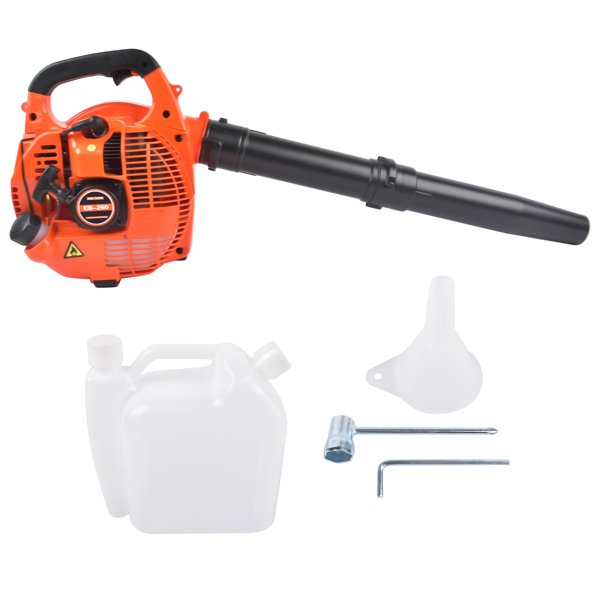 Handheld Leaf Lawn Grass Blower 1.0 Hp/0.75 KW Large Air Volume Gas Powered 26CC Low Noise Level$102.99View on Mallflare
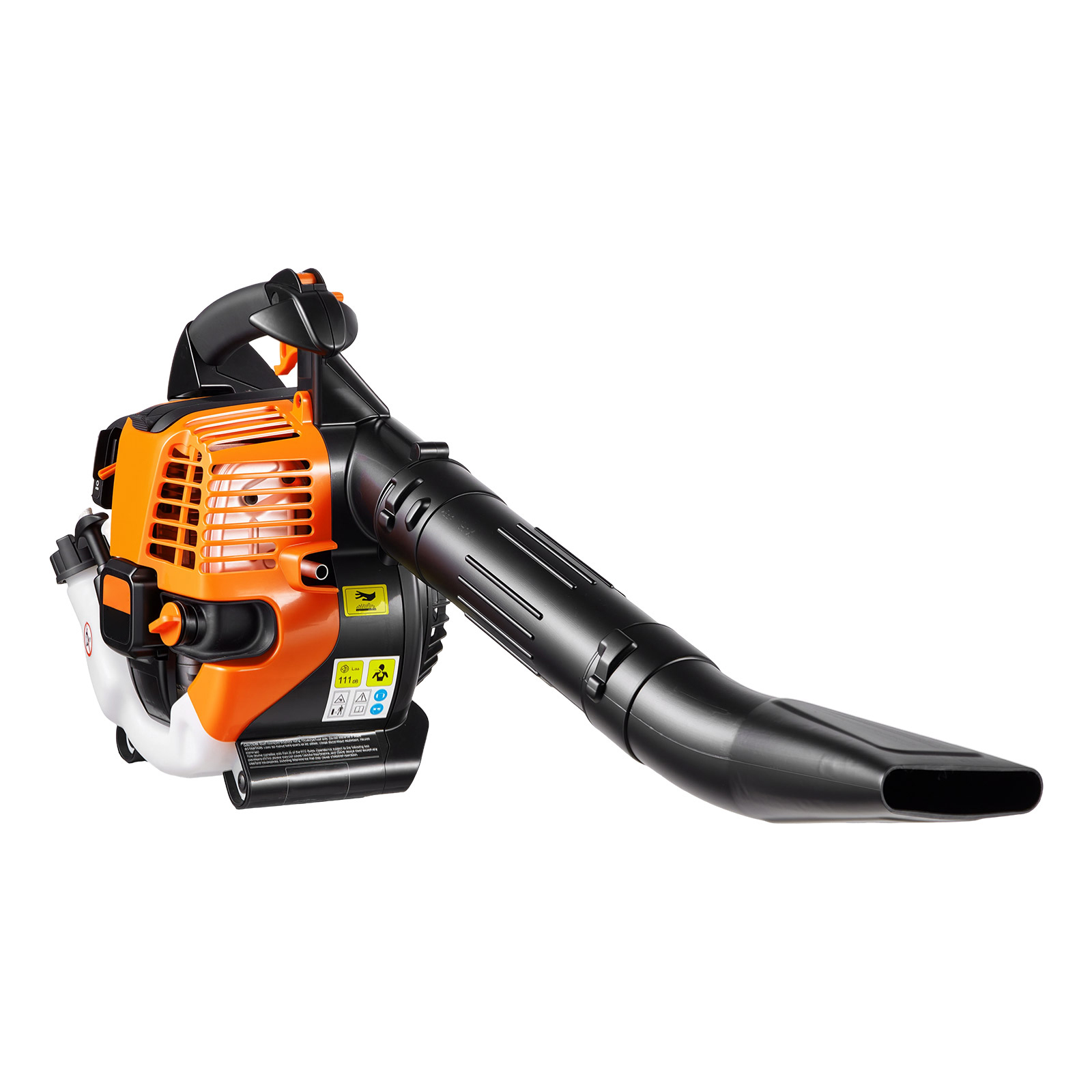 Gas Leaf Blower, 25.4CC 4-Stroke Gas Powered Handheld With 0.75L Fuel Tank, 340 CFM Air Volume, 130 MPH Air Speed, Ideal For Lawn Care, Leaves Cleaning, Yard Debris & Snow Removal$195.99View on Mallflare
Highlights
- Two-stroke engines (25-30cc typical) make 0.7-1.0 hp and run 50:1 premix; four-stroke units (25-30cc) make similar power on straight gas but add roughly 1-1.5 lb.
- Air performance is measured in CFM (volume) and MPH (velocity): handheld gas models cluster around 300-450 CFM and 120-180 MPH.
- Most handheld gas blowers are pull-start, air-cooled, and weigh 8-14 lb; professional-grade models add vibration isolation and metal impellers.
- Fuel tanks run 0.5-1.0 L, giving roughly 20-40 minutes at full throttle; four-strokes avoid the stale-premix gumming that kills two-stroke carburetors.
Best use cases
- Choose a 25-30cc four-stroke handheld for suburban lawns, driveways, and gutters where straight-pump-gas convenience and lower exhaust smell matter more than the last ounce of power.
- Choose a 25-30cc two-stroke handheld for maximum air speed per pound when clearing wet leaves or heavy debris across large yards and you accept mixing fuel.
- Skip handheld gas entirely for small urban lots or indoor-garage storage: a cordless blower avoids fuel storage, starting fuss, and emissions.
- Step up to a backpack gas blower when jobs exceed roughly half an acre or run longer than 30 minutes; handheld weight and tank size become the limiting factor.
Buying tips
- Match engine size to task: 25-30cc covers most residential work; below 25cc struggles with wet debris, and above 30cc handhelds get heavy fast.
- Prefer four-stroke if the tool will sit for weeks between uses; two-stroke premix degrades and can gum carburetors if stored improperly.
- Check CFM and MPH together: high MPH alone moves light debris, but you need 350+ CFM to push wet leaves and grass clippings.
- Confirm the starting system and warranty: easy-start (spring-assist) and 2-year consumer warranties are baseline; commercial use usually voids consumer coverage.
Specs
| Engine Type | 2-stroke premix vs 4-stroke gas |
|---|---|
| Displacement | 25-30cc residential handheld |
| Air Performance | 300-450 CFM / 120-180 MPH |
| Unit Weight | 8-14 lb handheld |
Related searches
What to check before buying
- Measure your largest debris area: handheld gas suits roughly quarter- to half-acre lots; larger yards favor backpack units.
- Confirm you can store and handle gasoline safely — approved container, ventilated space, and no indoor fuel storage.
- Check local noise ordinances: gas blowers often face seasonal or decibel limits that cordless or electric models avoid.
- Verify you have the right fuel: two-stroke needs 50:1 premix; four-stroke needs straight gasoline with no ethanol blend above E10.
FAQ
Data sources: eBay / Amazon listings and product attribute feeds. Updated Nov 28, 2026.
Some links on this page are affiliate links. If you buy after clicking one, we may earn a commission at no extra cost to you. This does not change which products appear here or their order. Affiliate disclosure.