
Photos from current listings. Actual item, color, and included accessories may vary.
Gas Water Pump Buying Guide
A gas water pump earns its keep only when the inlet size, total head, and solids handling match the actual job—irrigation from a pond, dewatering a flooded basement, or transferring to a tank. Most buyers oversize the engine and undersize the hose, then wonder why flow collapses at 25 feet of lift. Start from the discharge you need at the height you must push, then pick the 2-inch or 3-inch class and semi-trash impeller accordingly.
Median $282.99
Key takeaways
- 2-inch pumps typically move 130–150 GPM with a 7HP 212cc engine; 3-inch units jump to roughly 260 GPM but burn more fuel and weigh more.
- Cast-iron impellers and volutes resist abrasive silt better than aluminum or plastic, which is why semi-trash models specify them for pond and irrigation duty.
- NPT threaded ports in 2-inch and 3-inch sizes are the US standard; cam-lock or quick-connect adapters are separate purchases that change setup time.
At a glance
- Category
- Residential Outdoor Power Equipment
- Last updated
- Nov 28, 2026
Current offers
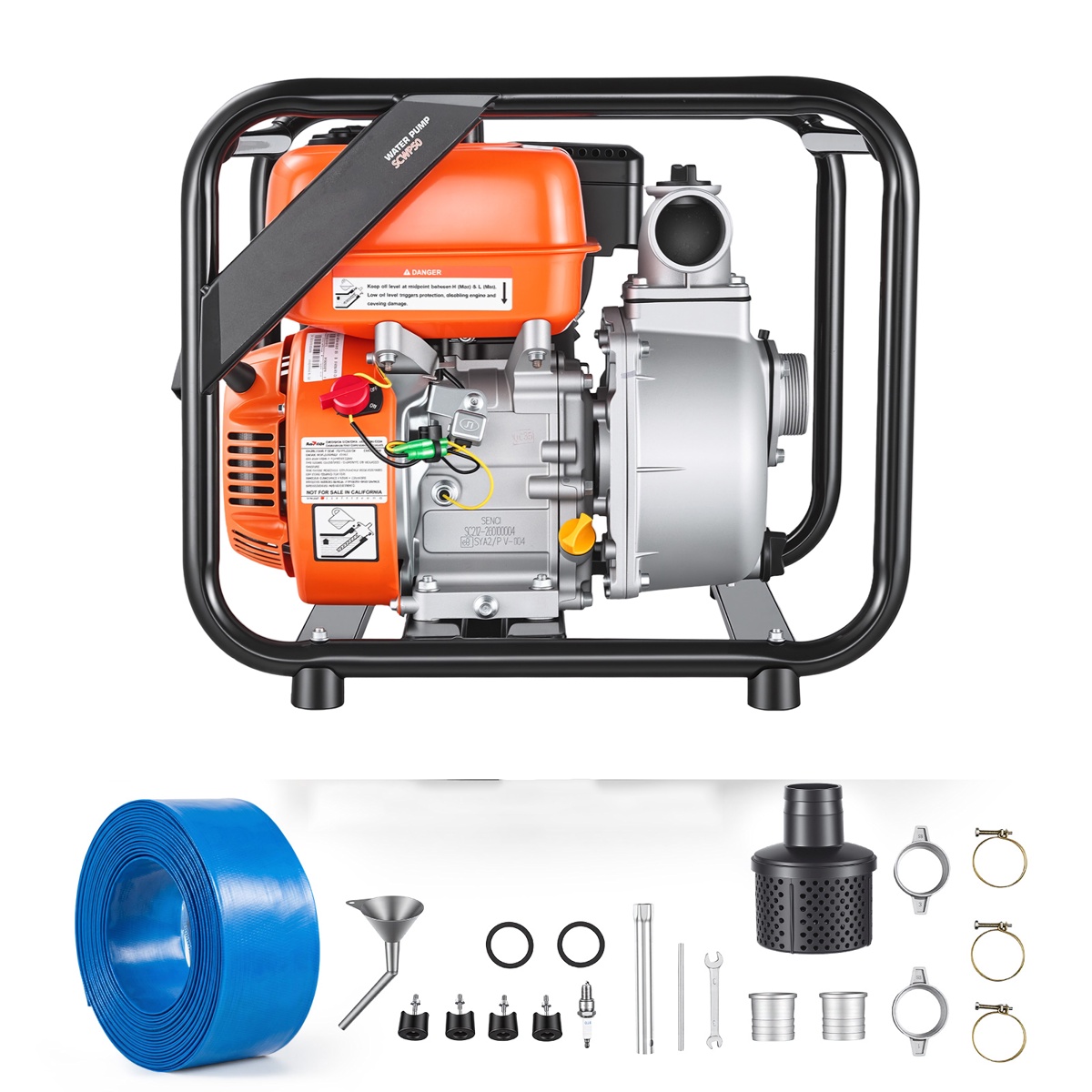 Gas Powered Water Pump, 2 In, 142 GPM 7HP Semi Trash Transfer Portable, Gasoline Engine With 25 Ft Discharge Hose, Heavy Duty Frame, Cast Iron Impeller, For Irrigation, Ponds, Pools$239.99View on Mallflare
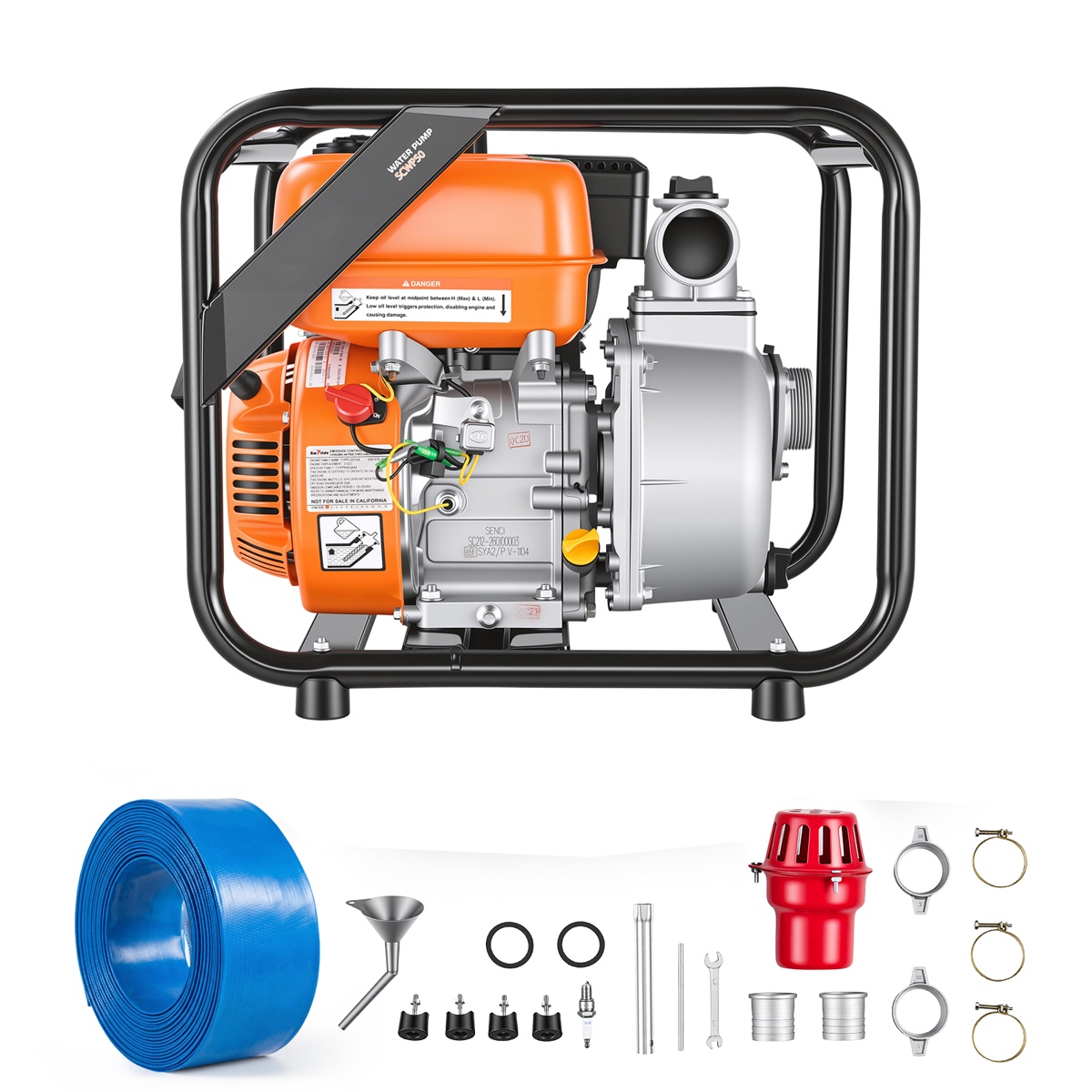 Gas Powered Water Pump, 2 In, 132 GPM 7HP Semi Trash Transfer Portable, Gasoline Engine With 25 Ft Discharge Hose, Heavy Duty Frame, Cast Iron Impeller, For Irrigation, Ponds, Pools$282.99View on Mallflare
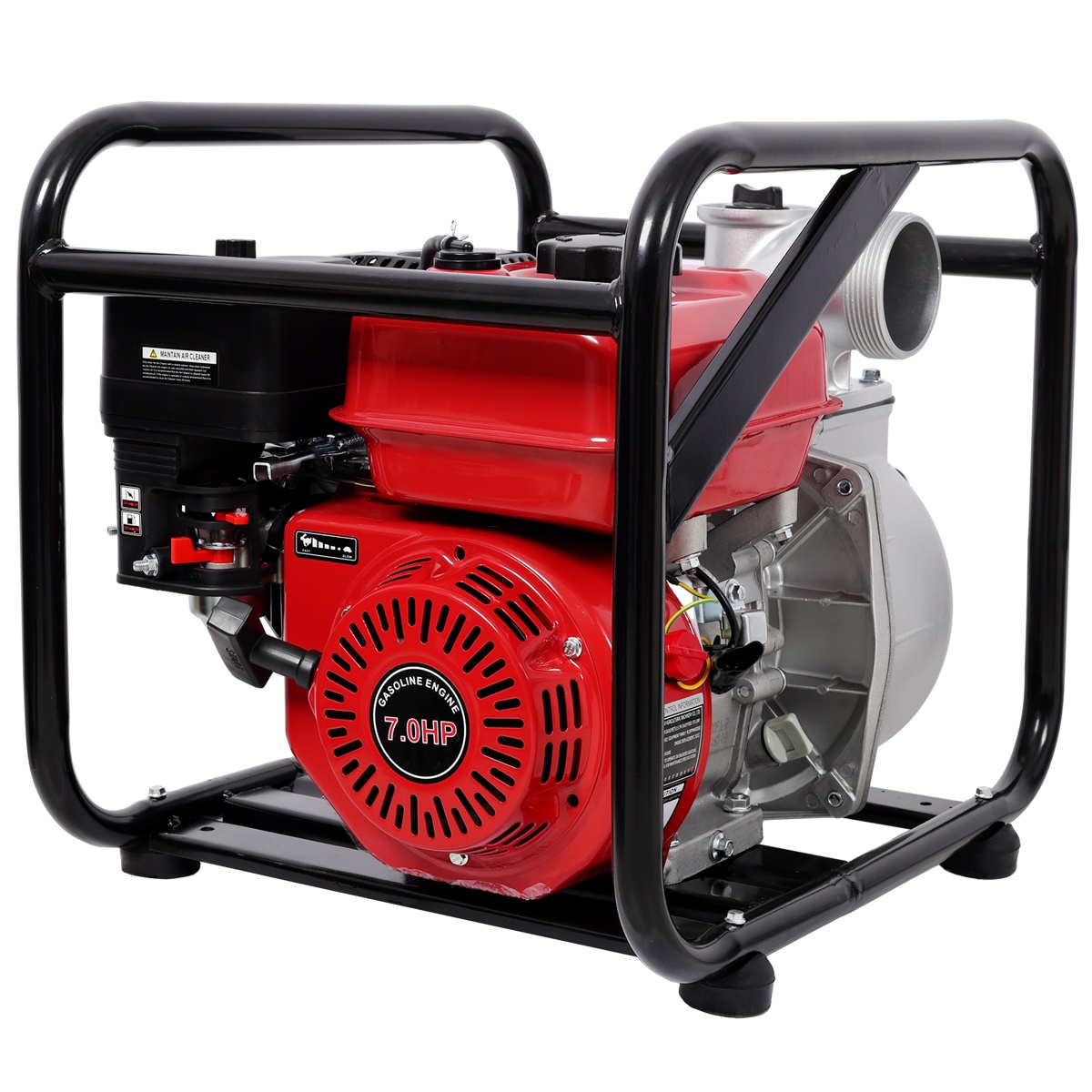 Gas Engine Powered Water Pump 3" inlet&outlet, Flow:264Gpm , 7HP 212CC, EPA Certificated, 3in NPT Connector, with 25FT Flat Hose outlet$384.99View on Mallflare
Highlights
- 2-inch pumps typically move 130–150 GPM with a 7HP 212cc engine; 3-inch units jump to roughly 260 GPM but burn more fuel and weigh more.
- Cast-iron impellers and volutes resist abrasive silt better than aluminum or plastic, which is why semi-trash models specify them for pond and irrigation duty.
- NPT threaded ports in 2-inch and 3-inch sizes are the US standard; cam-lock or quick-connect adapters are separate purchases that change setup time.
- A 25-foot discharge hose is a starter length—total head falls as hose runs longer and rises, so plan for the vertical lift plus friction loss before choosing a tier.
Best use cases
- Best fit: 2-inch semi-trash pump with cast-iron impeller for pond irrigation, pool filling, or light flood cleanup where debris under about 1/4 inch is expected; skip it for heavy mud or sand.
- Best fit: 3-inch 7HP pump for high-volume transfer between tanks, large garden zones, or faster dewatering where 260 GPM matters more than portability; skip it for small yards where the extra weight and fuel are wasted.
- Wrong fit: a clear-water pump for muddy construction water or leaf-filled ponds—solids will clog the impeller; choose a semi-trash or trash-rated model instead.
Buying tips
- Size the pump by required flow at total head, not by engine horsepower alone—a 7HP engine on a 2-inch pump still loses flow at 25 feet of lift.
- Prioritize cast-iron impeller and volute when pumping from ponds, creeks, or any source that carries grit; aluminum wears faster under abrasive duty.
- Check that the discharge hose and fittings match the NPT port size—a 25-foot hose with mismatched threads needs adapters before first use.
- Avoid clear-water models for anything but clean pool or tank water; semi-trash units pass small solids and are the safer default for outdoor sources.
Specs
| Inlet/Outlet Size | 2 in vs 3 in NPT |
|---|---|
| Typical Flow | 130-150 GPM (2 in) / ~260 GPM (3 in) |
| Impeller Material | Cast iron vs aluminum/plastic |
| Engine Class | 7HP 212cc gasoline, EPA certified |
Related searches
What to check before buying
- Measure the vertical lift from water surface to discharge point plus the longest horizontal run—total head determines whether a 2-inch or 3-inch pump holds flow.
- Confirm the suction source depth and debris load: sandy or leaf-filled water demands a semi-trash impeller and a strainer on the suction line.
- Verify you have the right NPT fittings, suction hose, and clamps for the inlet size; these are not included with most pump heads.
- Check fuel capacity and engine oil requirements for the runtime you need, and store gasoline safely away from the pump and living areas.
FAQ
Data sources: eBay / Amazon listings and product attribute feeds. Updated Nov 28, 2026.
Some links on this page are affiliate links. If you buy after clicking one, we may earn a commission at no extra cost to you. This does not change which products appear here or their order. Affiliate disclosure.