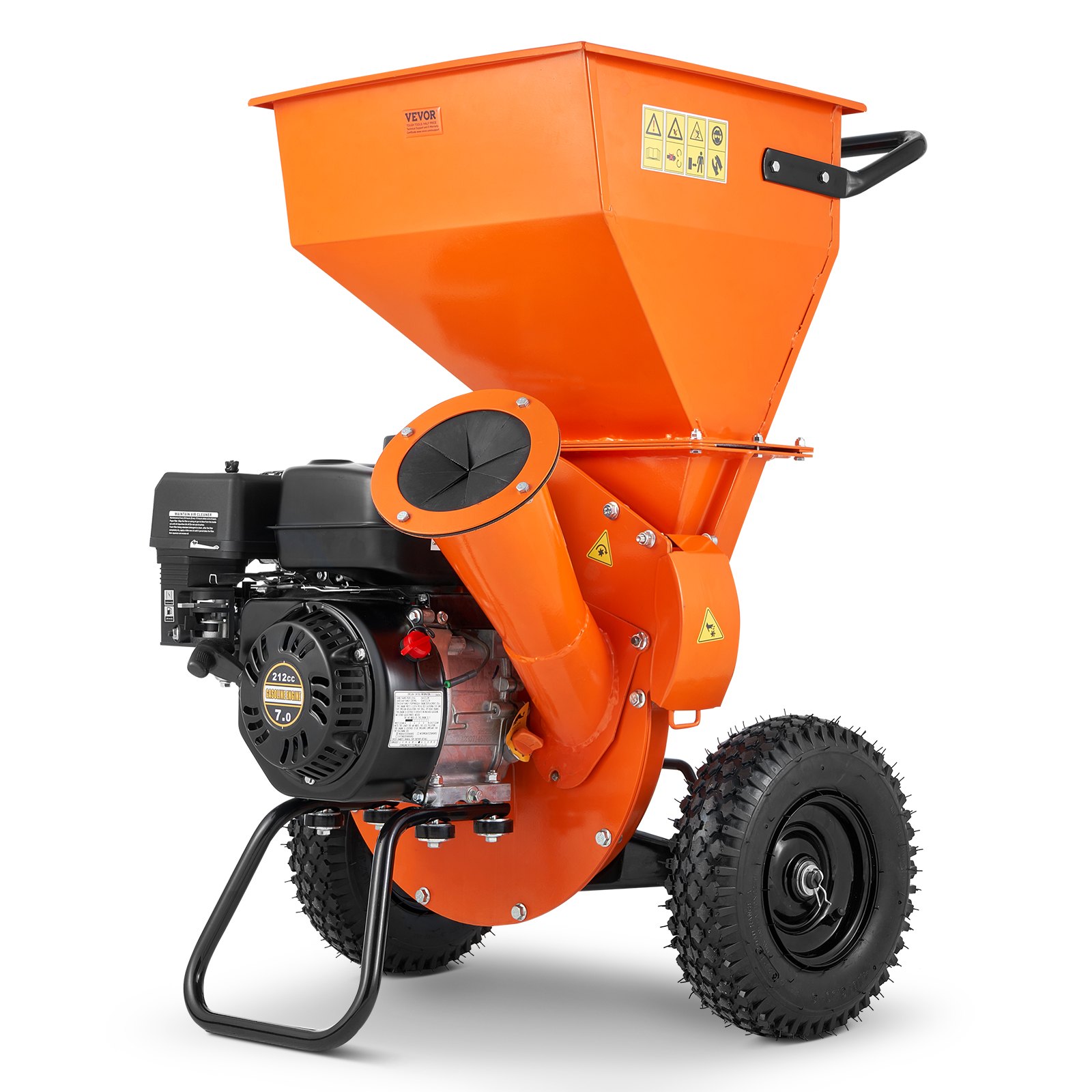

Photos from current listings. Actual item, color, and included accessories may vary.
Gas Powered Wood Chipper Buying Guide
Gas-powered wood chippers turn brush, storm debris, and pruned limbs into mulch, but engine size, chute design, and discharge method determine whether a model clears a yard or jams on every branch. Buyers commonly mismatch engine displacement to the diameter of their typical cuttings and overlook how feed geometry and blade type affect throughput more than raw horsepower. Focus on the cutting system and realistic limb size before comparing engine labels.
Key takeaways
- Engine displacement separates classes: 212cc (~7 HP) units handle up to 3-inch softwood, while 420cc+ engines with dual-blade flywheels take 4-inch hardwood.
- Cutting systems differ: flail/shredder hammers pulverize leaves and vines, while flywheel-mounted chipper blades slice limbs cleanly for faster discharge.
- Feed orientation matters: gravity-feed vertical chutes accept straight branches, but angled or horizontal feed hoppers reduce kickback and improve operator control.
At a glance
- Category
- Residential Outdoor Power Equipment
- Last updated
- Nov 28, 2026
Current offers
Highlights
- Engine displacement separates classes: 212cc (~7 HP) units handle up to 3-inch softwood, while 420cc+ engines with dual-blade flywheels take 4-inch hardwood.
- Cutting systems differ: flail/shredder hammers pulverize leaves and vines, while flywheel-mounted chipper blades slice limbs cleanly for faster discharge.
- Feed orientation matters: gravity-feed vertical chutes accept straight branches, but angled or horizontal feed hoppers reduce kickback and improve operator control.
- Discharge type affects workflow: side-discharge throws chips clear of the operator, while bottom-drop designs require a bag or tarp and clog more easily.
Best use cases
- Choose a 212cc/3-inch gravity-feed chipper for routine yard cleanup of branches under 3 inches and light leaf shredding; skip it for regular 4-inch hardwood or commercial volume.
- Pick a 4-inch-class unit with a 420cc+ engine and dual-blade flywheel for storm cleanup and mature-tree pruning; a 3-inch model will stall repeatedly on dense hardwood.
- Avoid flail-only shredders if your primary material is straight limbs; they excel at leaves and vines but lack the clean slicing action of a flywheel chipper blade.
Buying tips
- Size the cutting capacity to your thickest routine limb, not the occasional branch; a 3-inch rating means 3 inches of softwood, less for dry hardwood.
- Prioritize a flywheel chipper with hardened, reversible blades if limbs dominate your debris; flail hammers suit leaf and garden-waste shredding.
- Check feed chute geometry: vertical gravity feed is simplest for straight branches, while angled hoppers demand more operator guidance but resist kickback.
- Compare engine displacement and flywheel mass together; a larger engine on a light flywheel delivers less sustained chipping torque than a heavier flywheel setup.
Specs
| Engine Displacement | 212cc (3 in) vs 420cc+ (4 in) |
|---|---|
| Cutting System | Flywheel chipper vs flail shredder |
| Feed Chute | Vertical gravity vs angled/horizontal |
| Discharge Type | Side throw vs bottom drop |
Related searches
What to check before buying
- Measure your typical branch diameter and confirm the rated cutting capacity exceeds it by at least half an inch for hardwood.
- Verify your property allows gas-powered equipment and that you have a level, ventilated area away from windows for operation.
- Confirm the unit ships with the correct plug type for your region if it includes electric start, and check fuel capacity against your runtime needs.
- Ensure you have a chip collection method (tarp, bag, or discharge direction) and enough storage space for the machine's footprint.
FAQ
Data sources: eBay / Amazon listings and product attribute feeds. Updated Nov 28, 2026.
Some links on this page are affiliate links. If you buy after clicking one, we may earn a commission at no extra cost to you. This does not change which products appear here or their order. Affiliate disclosure.