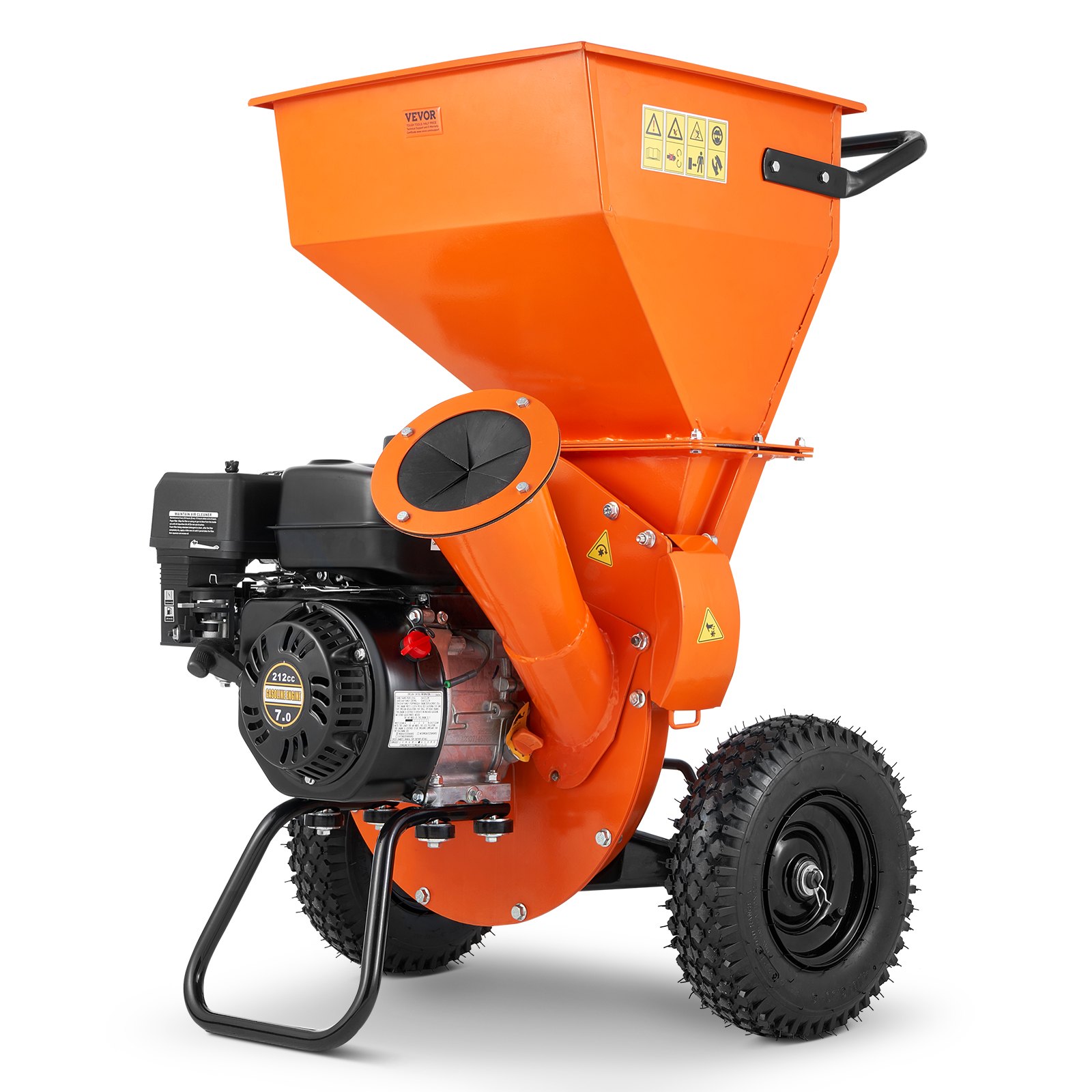

Photos from current listings. Actual item, color, and included accessories may vary.
Gas Chipper Shredder Buying Guide
Gas chipper shredders earn their place when you have a steady supply of branches and yard debris that would otherwise go to the curb or a burn pile. The real decision comes down to chipping capacity, feed system, and engine displacement—not the marketing horsepower number. Most buyers either oversize for occasional twig cleanup or undersize for regular 3-inch limb duty.
Key takeaways
- Chipping capacity is set by the flywheel and housing geometry, not engine size: 3-inch machines handle softwoods and green limbs, while 4-inch units need a larger feed throat and heavier rotor.
- Engine displacement (cc) correlates more reliably with real throughput than sticker HP; 200–212cc units are the practical floor for serious 3-inch chipping.
- Self-feeding designs use angled feed chutes and a weighted flail or feed roller to pull branches in, reducing kickback and operator fatigue versus straight-drop gravity chutes.
At a glance
- Category
- Residential Outdoor Power Equipment
- Last updated
- Nov 28, 2026
Current offers
Highlights
- Chipping capacity is set by the flywheel and housing geometry, not engine size: 3-inch machines handle softwoods and green limbs, while 4-inch units need a larger feed throat and heavier rotor.
- Engine displacement (cc) correlates more reliably with real throughput than sticker HP; 200–212cc units are the practical floor for serious 3-inch chipping.
- Self-feeding designs use angled feed chutes and a weighted flail or feed roller to pull branches in, reducing kickback and operator fatigue versus straight-drop gravity chutes.
- Reduction ratio (often 10:1 to 20:1) depends on the shredder screen and flail hammers; finer screens produce mulch faster but clog more with wet, leafy material.
Best use cases
- Best fit: homeowners with periodic storm debris and a few 2–3 inch limbs—choose a 3-inch, 200cc+ gravity-feed unit and skip commercial tow-behind models.
- Wrong fit: properties generating daily large-volume brush or 4-inch-plus logs—step up to a 4-inch self-feeding chipper or rent a commercial unit rather than pushing a 3-inch machine past its throat.
- Best fit: leaf and garden-waste composting—prioritize a shredder with a fine screen and flail hammers; skip dedicated chipper-only rotors that produce coarse chunks.
- Wrong fit: steep, muddy, or terraced yards with wheeled push units—choose a tow-behind or tracked chassis instead of dragging a 100+ lb machine uphill.
Buying tips
- Size the feed throat to your thickest regular branch, not your occasional maximum; a 3-inch machine regularly fed 2.5-inch hardwood will last far longer than one strained at its limit.
- Prioritize engine displacement and flywheel mass over advertised horsepower—212cc-class engines with heavier rotors maintain rpm under load better than lighter 7HP-labeled units.
- Choose a self-feeding or roller-feed chute if you process many branched limbs; gravity-drop chutes demand more manual stuffing and increase kickback risk.
- Inspect discharge and screen design: adjustable or interchangeable screens let you switch between fine mulch and faster coarse reduction without buying a second machine.
Specs
| Chipping Capacity | 3 in vs 4 in feed throat |
|---|---|
| Engine Class | 200–212cc vs 250cc+ displacement |
| Feed System | Gravity-drop vs self-feeding roller |
| Reduction Type | Flywheel chipper + flail shredder |
Related searches
What to check before buying
- Measure your typical branch diameter and weekly debris volume before choosing between 3-inch and 4-inch capacity classes.
- Confirm storage and access: most gas units are 100+ lb and need a flat path at least as wide as the axle track to reach the work area.
- Check fuel and oil requirements—most 200–212cc engines run on regular unleaded and require break-in oil changes within the first few hours.
- Verify local noise and emissions rules; some municipalities restrict gas-powered yard equipment during certain seasons or hours.
FAQ
Data sources: eBay / Amazon listings and product attribute feeds. Updated Nov 28, 2026.
Some links on this page are affiliate links. If you buy after clicking one, we may earn a commission at no extra cost to you. This does not change which products appear here or their order. Affiliate disclosure.