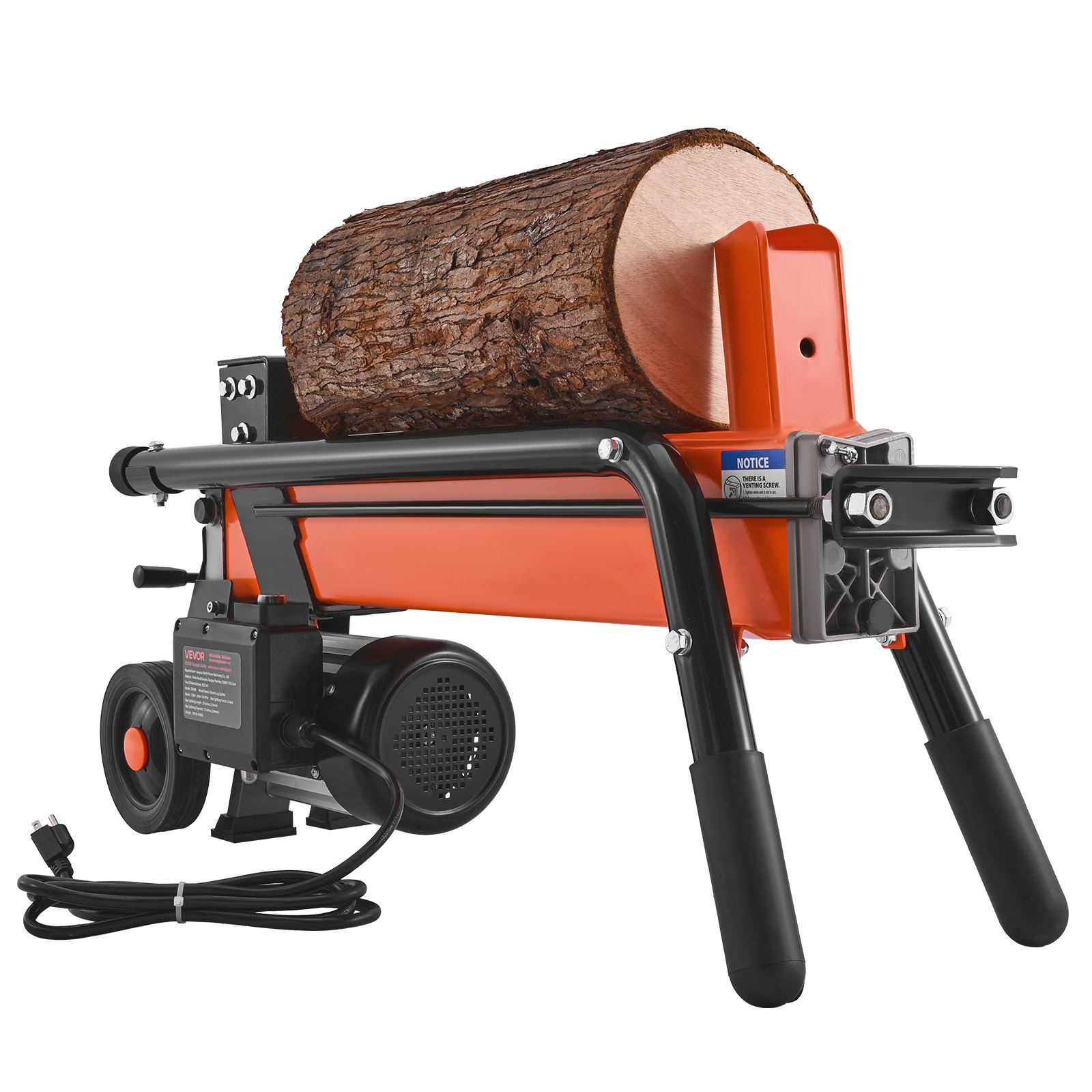

Photos from current listings. Actual item, color, and included accessories may vary.
Electric Splitter Buying Guide
Electric splitters trade raw cycle speed for quiet, fume-free operation, making them the right call for homeowners processing a few cords a year in a garage or near the house. The common mistake is buying on tonnage alone while ignoring log diameter capacity, cycle time, and whether the motor is induction or brushed. Fit the machine to your typical log size and where you split, not to a single spec-sheet number.
Key takeaways
- Tonage ratings from 5 to 10 tons cover most residential rounds; 6-7 ton units handle 10-12 inch softwood and straight-grain hardwood, while 10+ tons is needed for knotty oak and 16-inch-plus diameters.
- Induction motors run quieter and cooler for long sessions; brushed universal motors are lighter and cheaper but sacrifice duty cycle and service life under continuous loads.
- Two-stage hydraulic pumps dominate residential models, delivering a fast approach and slower splitting stroke; single-stage pumps are slower but simpler and less expensive.
At a glance
- Category
- Residential Outdoor Power Equipment
- Last updated
- Nov 28, 2026
Current offers
Highlights
- Tonage ratings from 5 to 10 tons cover most residential rounds; 6-7 ton units handle 10-12 inch softwood and straight-grain hardwood, while 10+ tons is needed for knotty oak and 16-inch-plus diameters.
- Induction motors run quieter and cooler for long sessions; brushed universal motors are lighter and cheaper but sacrifice duty cycle and service life under continuous loads.
- Two-stage hydraulic pumps dominate residential models, delivering a fast approach and slower splitting stroke; single-stage pumps are slower but simpler and less expensive.
- Cycle times of 10-18 seconds separate productive units from frustrating ones; log capacity (diameter and length) and wedge design matter as much as tonnage for real throughput.
Best use cases
- Best fit: a homeowner splitting 1-3 cords of 12-16 inch softwood or straight hardwood near an outlet — choose a 6-7 ton unit with 10-12 second cycle time and 10-inch log capacity.
- Wrong fit: processing large knotty oak rounds over 16 inches — skip electric and step up to a 20+ ton gas or towable splitter; electric units stall and heat under that load.
- Best fit: garage or shed work where fumes and noise are unacceptable — pick an induction-motor electric splitter with wheel kit for portability and low dB operation.
- Wrong fit: remote woodlot splitting far from power — a corded electric splitter needs an outlet or heavy gauge extension cord; choose a battery or gas model instead.
Buying tips
- Size tonnage to log diameter and species: 5-6 tons for kindling and small softwood, 7-9 tons for mixed hardwood up to 12 inches, 10+ tons for knotty oak and 16-inch rounds.
- Prioritize induction motors over brushed universal motors if you split more than a face cord per session; they handle sustained loads without overheating.
- Check cycle time and log capacity together — a 10-second cycle with a 10-inch capacity beats a 15-second cycle with a 25-inch capacity for typical residential rounds.
- Inspect the wedge and log cradle: bolt-on wedges are replaceable, and a cradle that holds rounds steady reduces jams and kickback risk.
Specs
| Tonnage Class | 5-7 / 8-9 / 10+ tons |
|---|---|
| Motor Type | Induction vs brushed universal |
| Log Capacity | 10-12 in dia / 16-20 in length |
| Cycle Time | 10-18 sec per split |
Related searches
What to check before buying
- Measure your typical log diameter and length; confirm the splitter's rated log capacity exceeds your largest rounds by at least 2 inches.
- Verify outlet and circuit: 15-amp models run on standard 120V household circuits, but confirm the breaker and extension cord gauge (12 AWG for runs over 25 feet).
- Check wheel size and machine weight for your storage path — 6-inch wheels roll on gravel, but 8-inch or larger is needed for uneven ground.
- Confirm hydraulic fluid type and service access; most units ship filled but require periodic fluid checks and a drain plug you can reach.
FAQ
Data sources: eBay / Amazon listings and product attribute feeds. Updated Nov 28, 2026.
Some links on this page are affiliate links. If you buy after clicking one, we may earn a commission at no extra cost to you. This does not change which products appear here or their order. Affiliate disclosure.