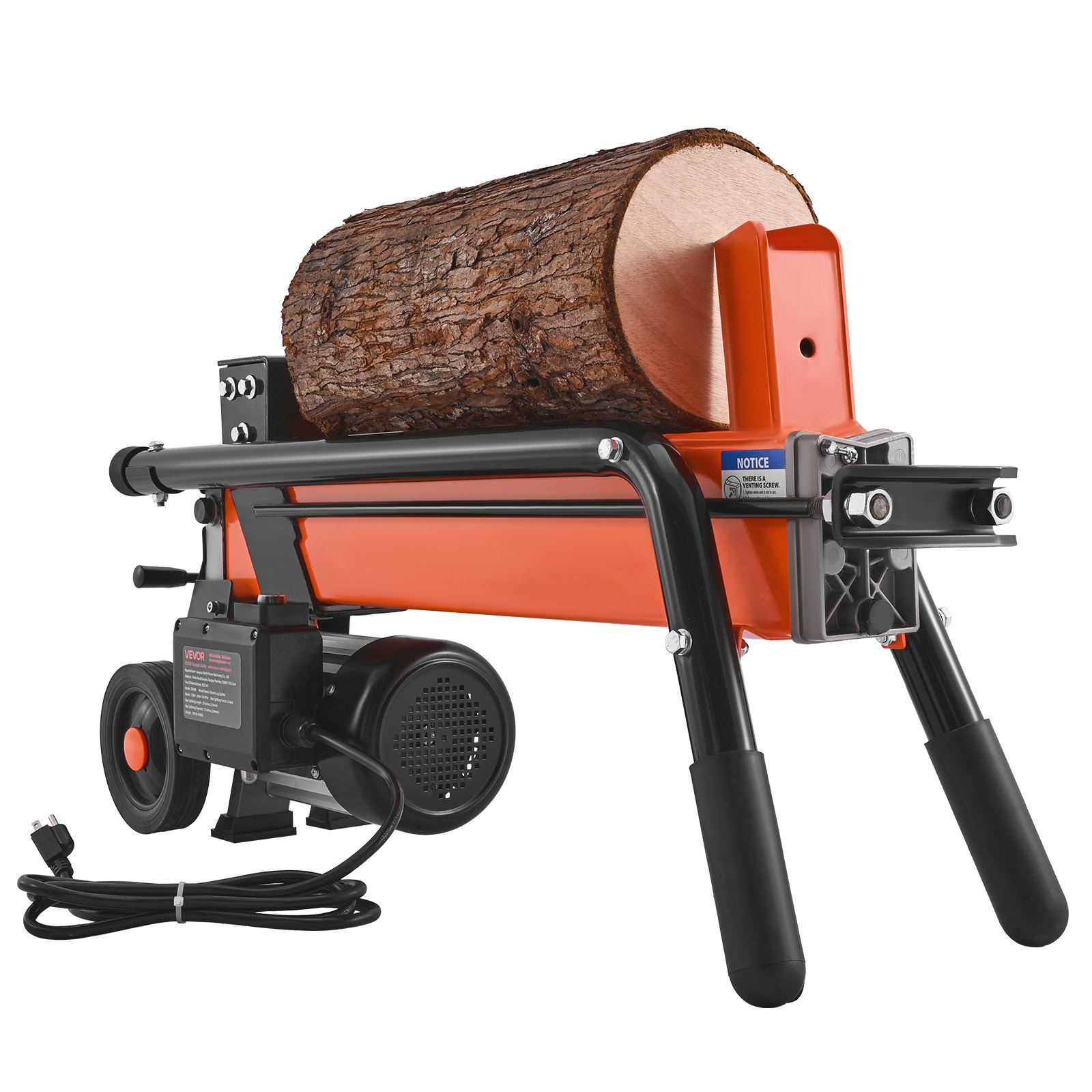

Photos from current listings. Actual item, color, and included accessories may vary.
Electric Log Splitter Buying Guide
Electric log splitters trade raw cycle speed for quiet, fume-free operation, making them the right choice for homeowners splitting seasoned rounds in a garage or near the house. The decisive variables are tonnage versus wood diameter, motor amperage against your circuit, and whether the wedge stroke geometry actually clears your log length. Most buyer mistakes come from overbuying tonnage for softwood or undersizing the circuit for a 15-amp motor.
Key takeaways
- Tonnage ratings of 5–7 tons cover most seasoned softwood and small hardwood rounds; 10–13 tons is the practical floor for knotty oak and elm.
- A 15-amp, 1500W motor is the standard residential tier and requires a dedicated 20-amp circuit to avoid breaker trips under load.
- Two-hand hydraulic controls are mandated by consumer safety standards; never defeat the second-hand release on any electric splitter.
At a glance
- Category
- Residential Outdoor Power Equipment
- Last updated
- Nov 28, 2026
Current offers
Highlights
- Tonnage ratings of 5–7 tons cover most seasoned softwood and small hardwood rounds; 10–13 tons is the practical floor for knotty oak and elm.
- A 15-amp, 1500W motor is the standard residential tier and requires a dedicated 20-amp circuit to avoid breaker trips under load.
- Two-hand hydraulic controls are mandated by consumer safety standards; never defeat the second-hand release on any electric splitter.
- Log capacity is set by wedge height and stroke length, typically 10–12 inch diameter and 20–25 inch log length on portable units.
Best use cases
- Best fit: a homeowner with a wood stove and seasoned rounds under 12 inches who wants quiet, indoor-adjacent splitting — pick a 6.5–7 ton unit with 15-amp motor.
- Wrong fit: splitting green, knotty oak over 14 inches — skip electric and rent a gas or towable hydraulic splitter for that workload.
- Best fit: a small lot with limited storage — choose a compact wheeled unit with 6-inch wheels and a stand that doubles as a vertical splitter.
- Wrong fit: continuous commercial volume — electric motors overheat under sustained duty; a gas engine handles all-day cycles.
Buying tips
- Check the circuit first: a 15-amp motor needs a 20-amp dedicated outlet; a 10-amp unit can share a standard 15-amp circuit.
- Prioritize tonnage by wood species, not marketing — 6–7 tons for pine and fir, 10+ tons for oak, hickory, and elm.
- Inspect wedge geometry: a sharp, hardened wedge with a log cradle reduces jams more than extra tonnage on softwood.
- Avoid units without a two-hand control and a log retention cradle; these are the primary safety and usability differentiators.
Specs
| Splitting Force | 5–13 tons (residential) |
|---|---|
| Motor Tier | 10-amp vs 15-amp (1500W) |
| Log Capacity | 10–12 in dia / 20–25 in length |
| Cycle Time | 10–20 sec (electric) |
Related searches
What to check before buying
- Measure your longest log rounds — the splitter's stroke and wedge height must clear them without re-cutting.
- Confirm a grounded 20-amp circuit near the splitting area; extension cords must be 12-gauge or heavier for 15-amp motors.
- Check wheel size and stand height — 6-inch wheels roll on grass, but gravel and mud demand larger pneumatic tires.
- Verify the unit ships with hydraulic fluid or that you can source the specified grade locally before first use.
FAQ
Data sources: eBay / Amazon listings and product attribute feeds. Updated Nov 28, 2026.
Some links on this page are affiliate links. If you buy after clicking one, we may earn a commission at no extra cost to you. This does not change which products appear here or their order. Affiliate disclosure.