
Photos from current listings. Actual item, color, and included accessories may vary.
Cordless Tiller Buying Guide
Cordless tillers are battery-powered cultivators that loosen and aerate soil without the cord or exhaust of traditional models, trading raw torque for portability. The primary trade-off is between voltage (18/20V vs 21V+) and tine material/design: lower-voltage units suit light weeding and raised beds, while higher-voltage, steel-tined models handle compacted soil and larger plots. The clear decision rule: buy a brushless motor with manganese-steel tines for durability, and skip brushed motors with stamped plastic tines if you till more than a few square meters per session.
Median $163.49
Key takeaways
- Voltage determines torque: 18V/20V models deliver 200-300 RPM for light cultivation; 21V+ systems with 800W output spin faster and resist stalling in dense clay.
- Tine material separates durable from disposable: manganese steel or forged steel tines hold an edge and resist bending; stamped steel or plastic tines deform under rocky soil.
- Motor type affects lifespan: brushless motors run cooler and last 2-3x longer than brushed motors, which wear out carbon brushes in heavy use.
At a glance
- Category
- Residential Outdoor Power Equipment
- Last updated
- Nov 28, 2026
Current offers
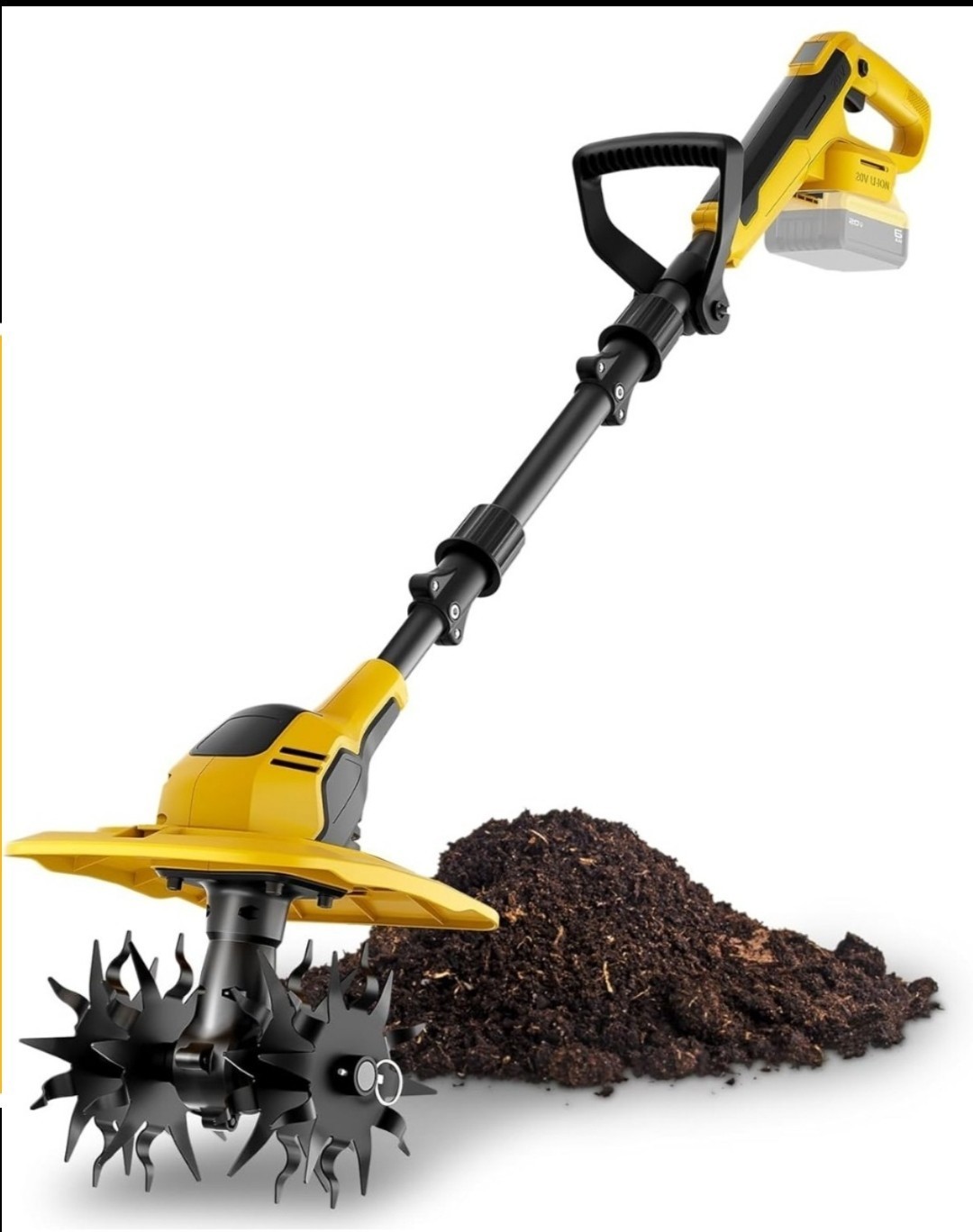 Cordless Garden Tiller Cultivator For Dewalt 20V Battery Farm Soil Cultivator$79.99View on eBay
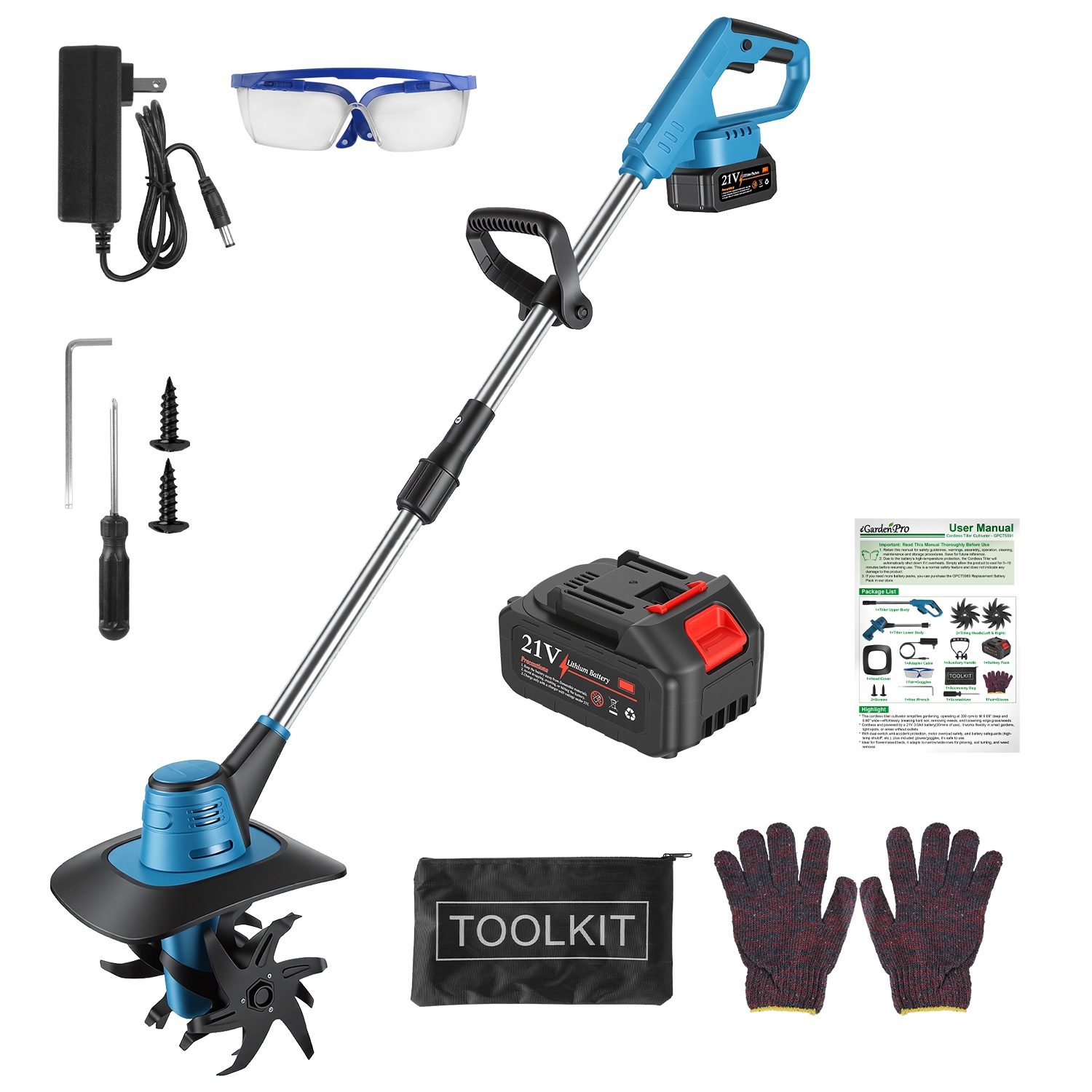 800W 21V Cordless Tiller Cultivator 3.0Ah Battery Powered Manganese Steel Tines For Soil Cultivation Weeding Gardening$124.99View on Mallflare
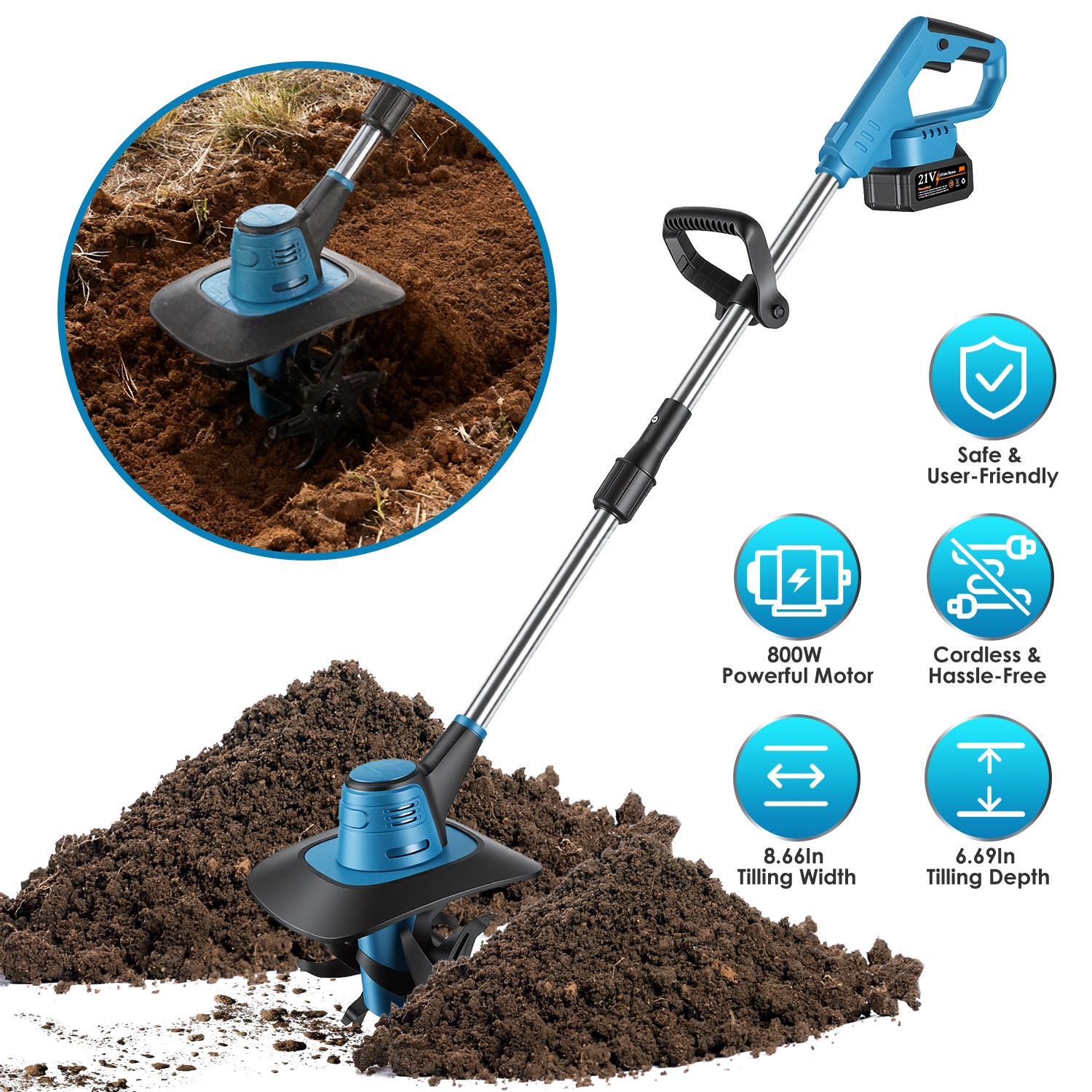 Cordless Tiller Cultivator,800W Electric Cultivator, 21V Battery Powered Soil with 6.69" Depth 8.66" Width, Handheld Garden for Yard Planting$158.99View on Mallflare
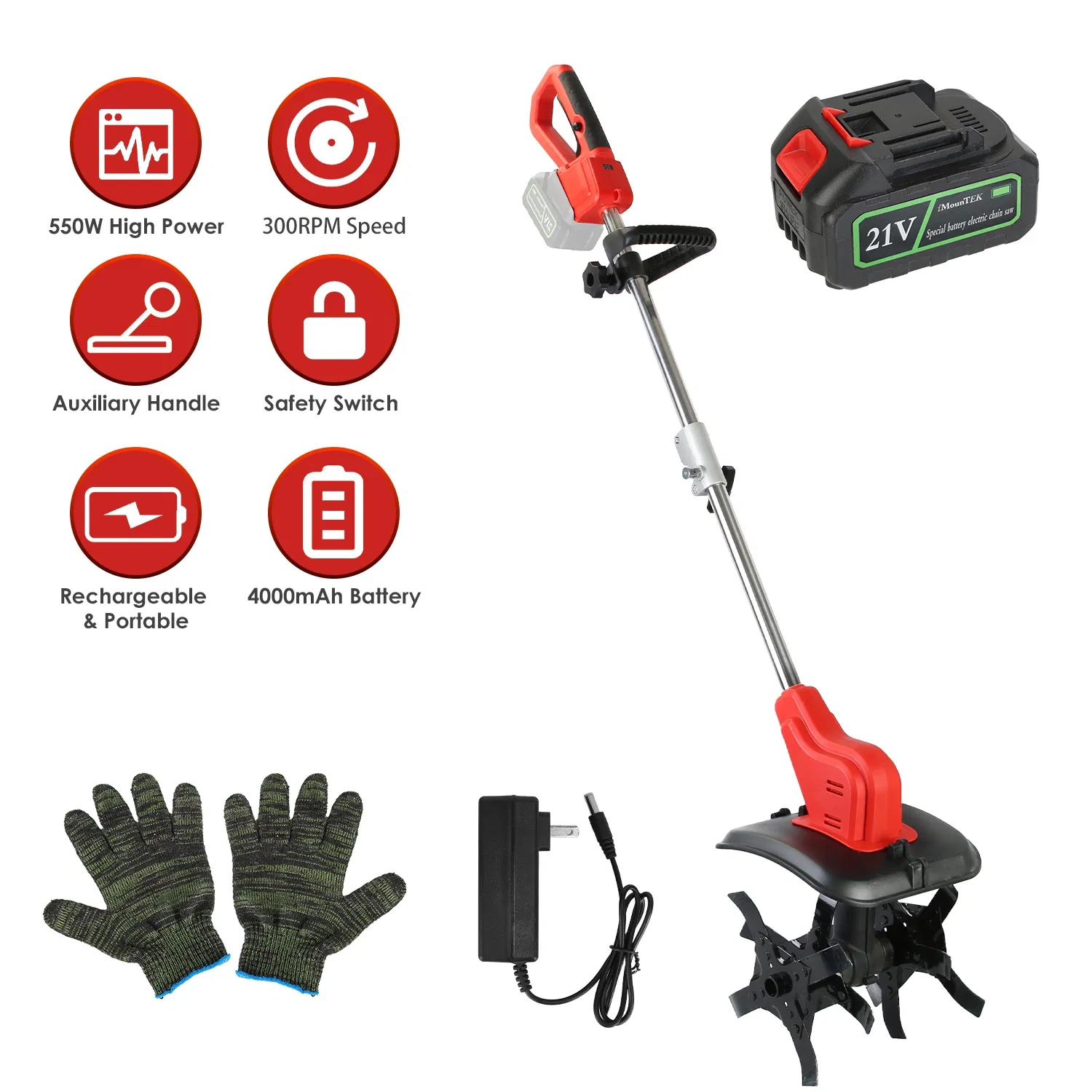 Portable Cordless Electric Tiller - 550W 300RPM Power, 16 Steel Tines, 4000mAh Battery , Safety Protection + Auxiliary Handle, Ideal for Lawn/Soil Preparation/Gardening$167.99View on Mallflare
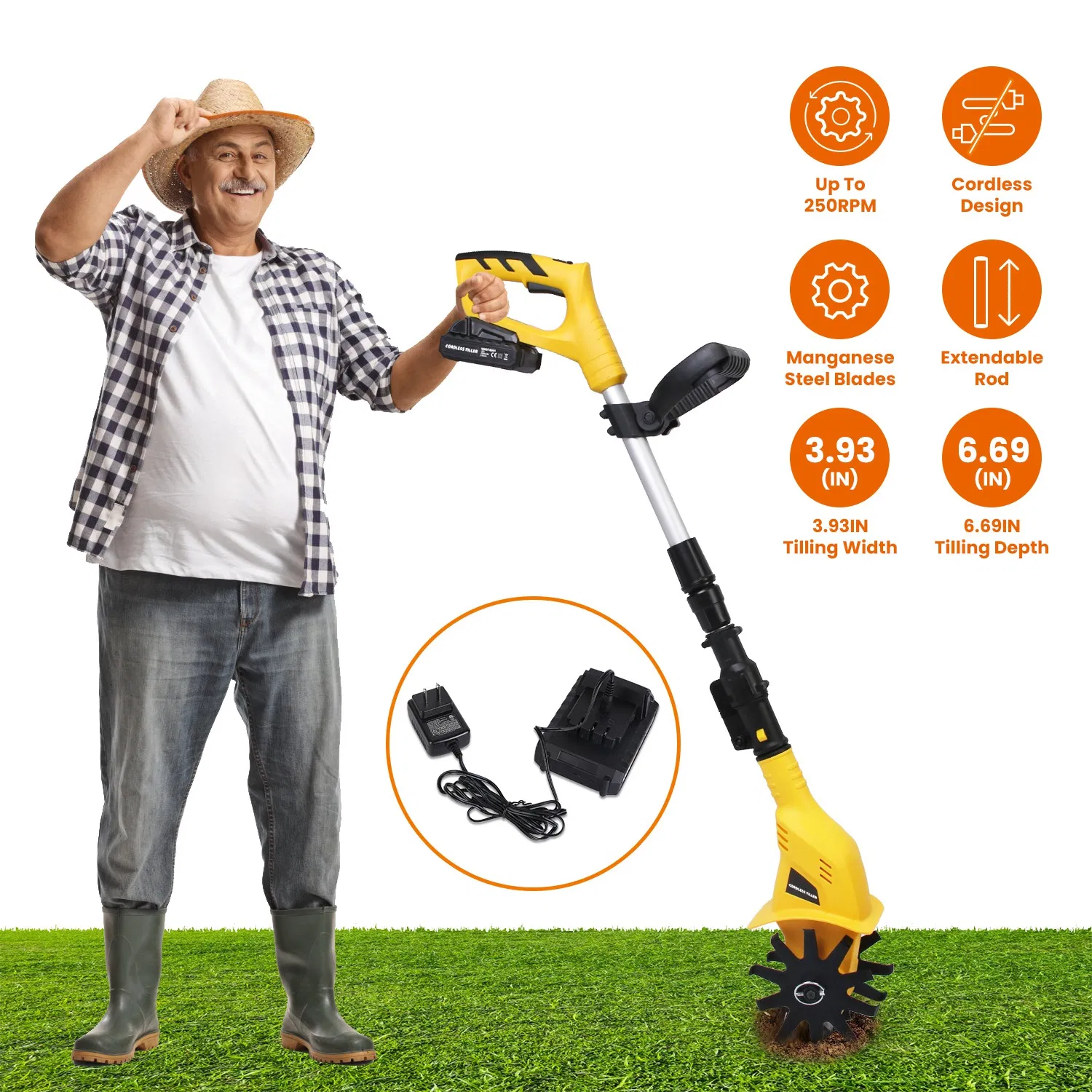 20V Cordless Tiller Cultivator, 250RPM Electric Garden Depth Rototiller for Lawn/Gardening/Soil Cultivation$181.99View on Mallflare
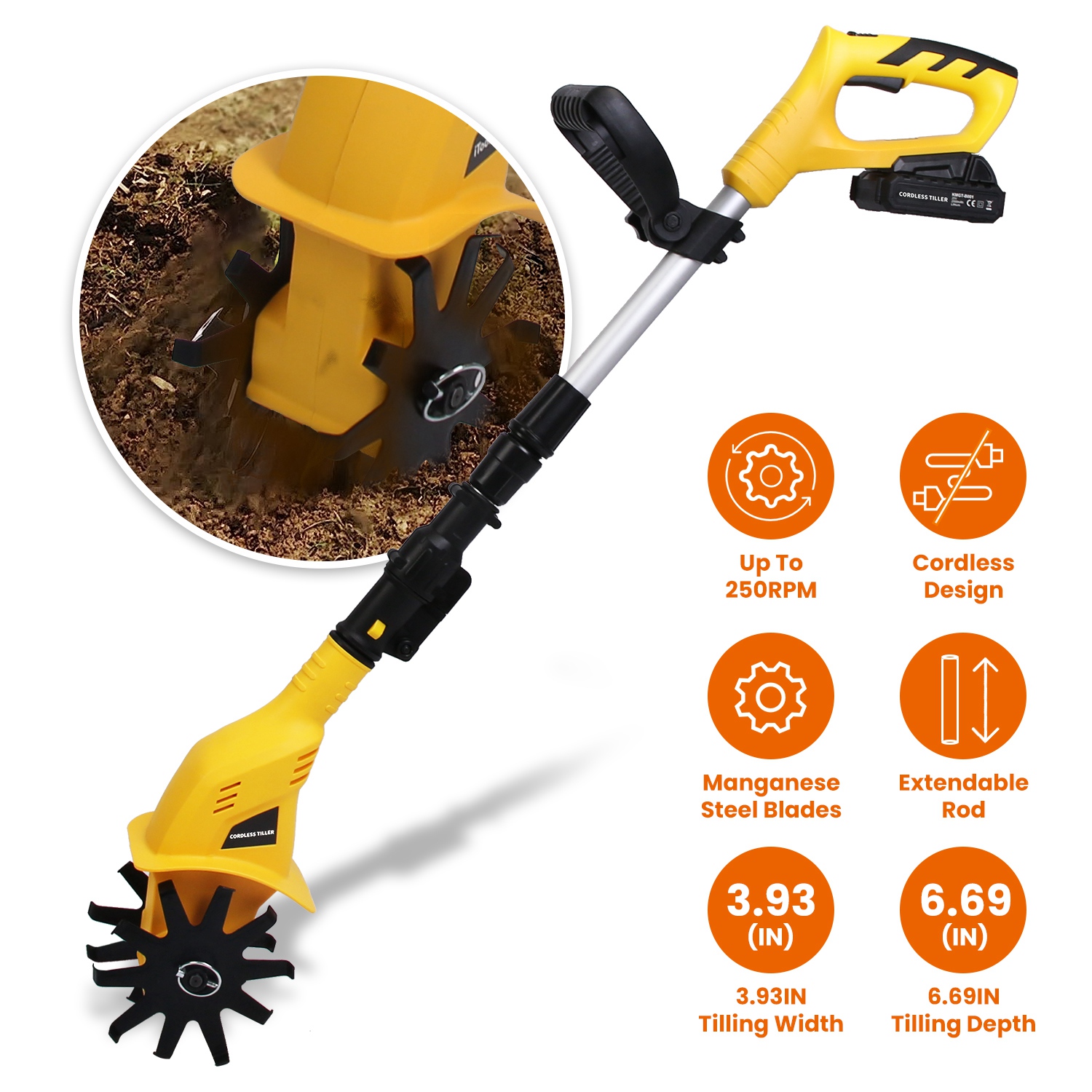 Cordless Electric Garden Tiller Cultivator With 20V Rechargeable Battery 3.93In Width 6.69In Depth 250RPM Max For Yard Farm Lawn$188.99View on Mallflare
Highlights
- Voltage determines torque: 18V/20V models deliver 200-300 RPM for light cultivation; 21V+ systems with 800W output spin faster and resist stalling in dense clay.
- Tine material separates durable from disposable: manganese steel or forged steel tines hold an edge and resist bending; stamped steel or plastic tines deform under rocky soil.
- Motor type affects lifespan: brushless motors run cooler and last 2-3x longer than brushed motors, which wear out carbon brushes in heavy use.
- Battery platform compatibility is critical: bare-tool options for DeWalt 20V or other major platforms avoid duplicate batteries, while generic 21V packs often use non-standard connectors.
Best use cases
- Best fit: raised-bed vegetable gardeners with loose, amended soil should pick a 20V/250 RPM unit with 4-8 inch tilling width; skip 800W models that are overkill and heavier.
- Best fit: homeowners breaking new ground or tilling compacted clay need a 21V+ system with manganese-steel tines and at least 4000mAh battery; skip low-voltage plastic-tined models that stall.
- Best fit: existing power-tool owners should choose a bare-tool tiller compatible with their battery platform (e.g., DeWalt 20V); skip generic 21V kits unless you need a spare battery anyway.
- Wrong fit: large plots over 200 sq ft or rocky soil require a corded electric or gas tiller; cordless hand tillers lack the torque and runtime for continuous deep tilling.
Buying tips
- Match tilling width to your bed: 4-7 inch width suits narrow raised beds and weeding; 8-10 inch width covers larger rows faster but adds weight and battery draw.
- Check tine count and material: 6-8 manganese-steel tines balance coverage and torque; 16+ tines on low-power units increase drag and reduce RPM without improving soil break-up.
- Prioritize brushless motors and listed RPM (250-300 RPM is typical); brushed motors with vague specs are a durability red flag for repeated use.
- For bare-tool purchases, confirm the battery interface matches your platform exactly—DeWalt 20V Max, Makita 18V LXT, etc.—since generic 21V packs use different rails.
Specs
| Voltage / Power | 18V-21V; 550W-800W |
|---|---|
| Tine Material | Manganese steel vs stamped steel |
| Tilling Width | 4-10 in |
| Motor Type | Brushless vs brushed |
Related searches
What to check before buying
- Measure your garden bed width and row spacing: ensure the tiller's tilling width fits between plants and within bed edges without overhang.
- Check soil type and debris: rocky or root-heavy soil demands steel tines and higher torque; light loam can use lower-voltage units.
- Verify battery platform and charger: bare tools need your existing batteries; kits should include a charger with the correct plug standard for your region.
- Confirm handle and auxiliary grip ergonomics: adjustable auxiliary handles reduce fatigue, and unit weight under 10 lbs matters for overhead or extended use.
FAQ
Data sources: eBay / Amazon listings and product attribute feeds. Updated Nov 28, 2026.
Some links on this page are affiliate links. If you buy after clicking one, we may earn a commission at no extra cost to you. This does not change which products appear here or their order. Affiliate disclosure.