
Photos from current listings. Actual item, color, and included accessories may vary.
Cordless Electric Cultivator Buying Guide
Cordless electric cultivators are battery-powered handheld or walk-behind tillers for loosening soil in garden beds, borders, and raised planters without gas or cords. The core trade-off is between 18–21V handheld units (light, narrow, shallow) and 36–40V+ walk-behind units (deeper tilling, wider swath, heavier). Choose a handheld 20V class only for established beds and surface weeding; step up to higher-voltage or corded power for breaking new ground or clay soils.
Median $181.99
Key takeaways
- Voltage class determines torque: 18–21V handheld units deliver roughly 250–300 RPM and 4–9 inch widths, while 36V+ walk-behind models reach 10–16 inch widths and 8+ inch depth.
- Tine material matters more than motor wattage: forged or stamped steel tines hold an edge and resist bending; plastic or mild-steel tines dull and deform in rocky or clay soil.
- Battery platform lock-in is the real long-term cost: bare-tool purchases require an existing same-brand battery and charger, and cross-brand adapters void most warranties.
At a glance
- Category
- Residential Outdoor Power Equipment
- Last updated
- Nov 28, 2026
Current offers
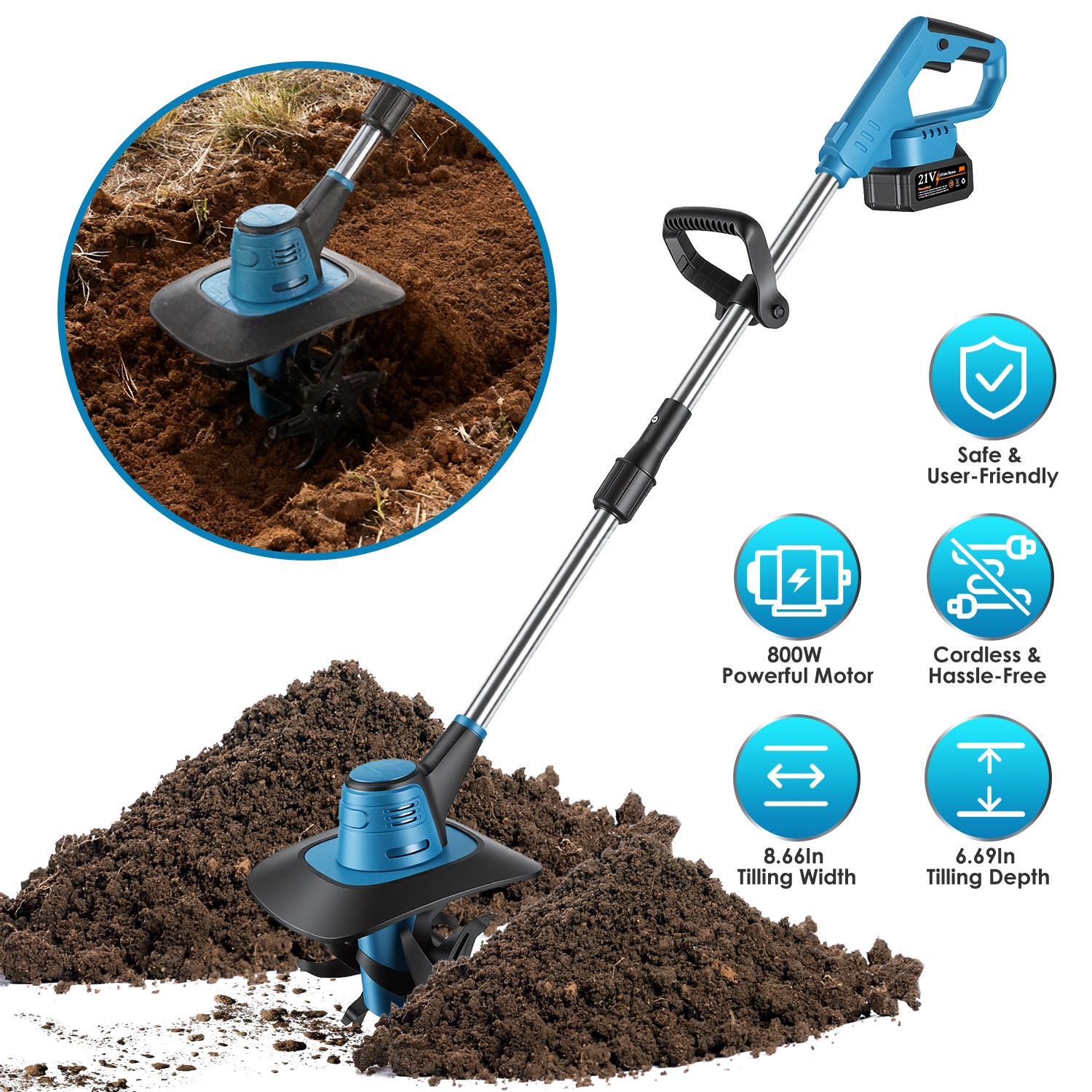 Cordless Tiller Cultivator,800W Electric Cultivator, 21V Battery Powered Soil with 6.69" Depth 8.66" Width, Handheld Garden for Yard Planting$158.99View on Mallflare
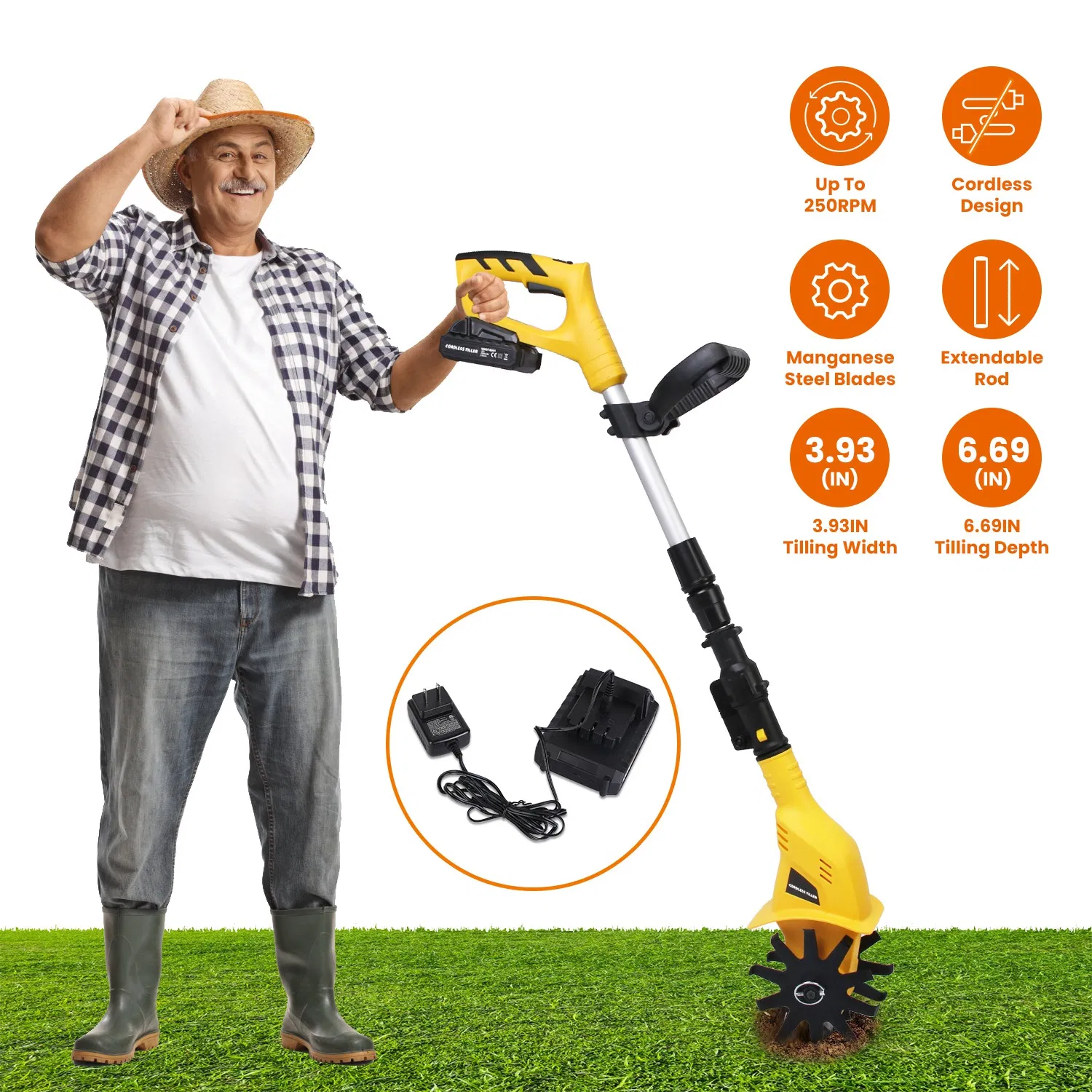 20V Cordless Tiller Cultivator, 250RPM Electric Garden Depth Rototiller for Lawn/Gardening/Soil Cultivation$181.99View on Mallflare
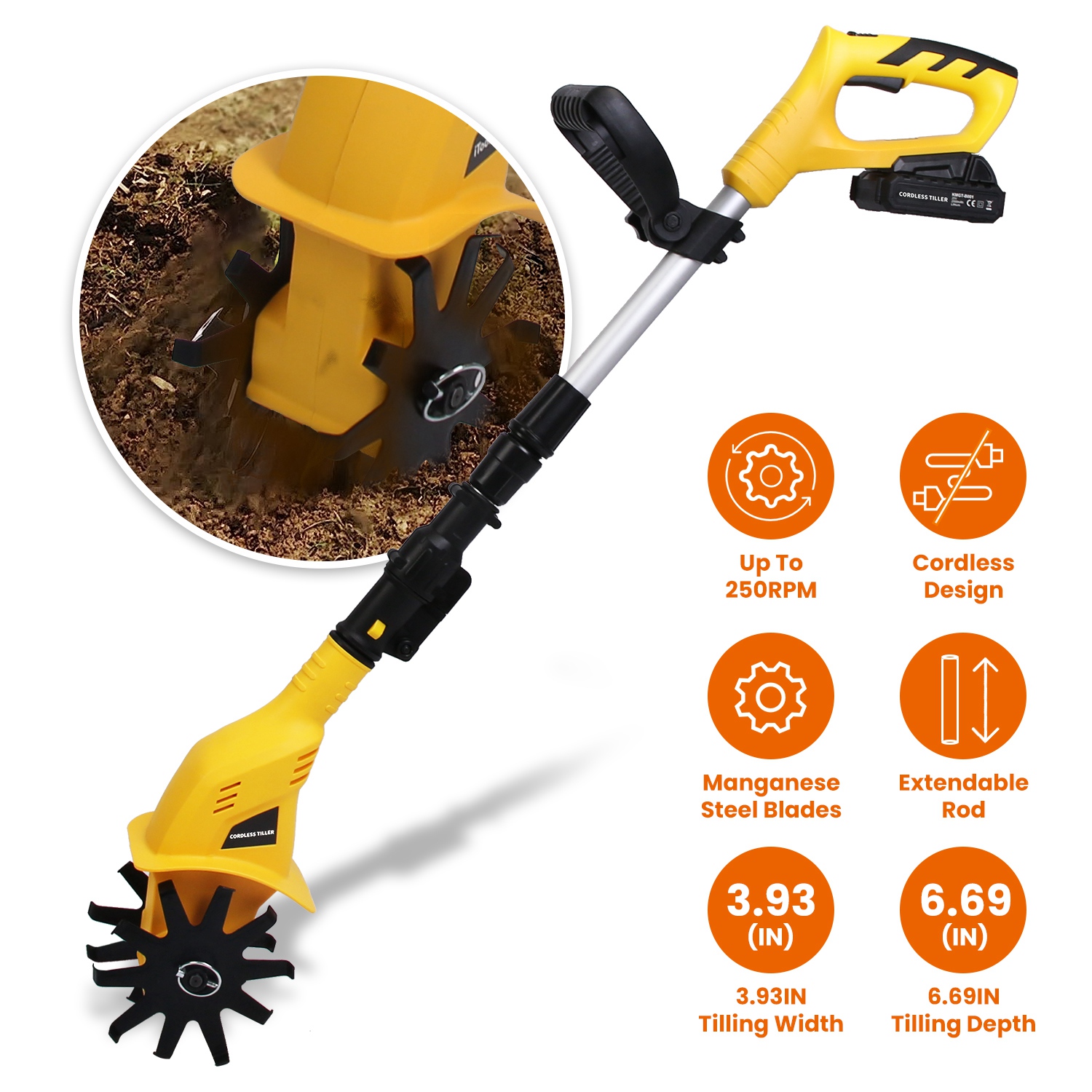 Cordless Electric Garden Tiller Cultivator With 20V Rechargeable Battery 3.93In Width 6.69In Depth 250RPM Max For Yard Farm Lawn$188.99View on Mallflare
Highlights
- Voltage class determines torque: 18–21V handheld units deliver roughly 250–300 RPM and 4–9 inch widths, while 36V+ walk-behind models reach 10–16 inch widths and 8+ inch depth.
- Tine material matters more than motor wattage: forged or stamped steel tines hold an edge and resist bending; plastic or mild-steel tines dull and deform in rocky or clay soil.
- Battery platform lock-in is the real long-term cost: bare-tool purchases require an existing same-brand battery and charger, and cross-brand adapters void most warranties.
- Handheld cultivators are designed for 6–8 inch depth in soft, previously worked soil; cutting new sod or compacted clay requires a walk-behind or corded electric tiller.
Best use cases
- Best fit: raised beds and annual flower borders in loamy soil — pick a 20V handheld with 6–8 inch steel tines and a 2–4 Ah battery for 20–30 minutes of run time.
- Best fit: large vegetable plots or new garden breaks — choose a 36–40V walk-behind with 10–16 inch width and 8+ inch depth; skip 20V handhelds, which stall in compacted ground.
- Wrong fit: rocky or heavy clay soils — a cordless cultivator will bounce and stall; use a corded electric tiller or gas-powered unit instead.
- Wrong fit: replacing a full-size rototiller for acre-scale work — battery runtime and tine width are insufficient; rent or buy a gas walk-behind tiller.
Buying tips
- Match voltage to soil: 18–21V for soft, established beds; 36V+ for new beds, clay, or repeated tilling; corded electric offers the most torque per dollar for fixed plots.
- Check tine count and diameter: 4–6 tines at 8–10 inches diameter clear soil better than 8 small tines; steel thickness of 2–3 mm resists bending.
- Buy bare-tool only if you already own the same battery platform; otherwise a kit with a 2–4 Ah battery and fast charger is the practical entry point.
- Verify handle and telescoping height plus unit weight: handheld models run 8–15 lbs and need a auxiliary handle for control; walk-behind units run 25–40 lbs and need transport wheels.
Specs
| Voltage Class | 18–21V handheld / 36–40V walk-behind |
|---|---|
| Tilling Width | 4–9 in handheld / 10–16 in walk-behind |
| Tilling Depth | 6–7 in handheld / 8+ in walk-behind |
| Tine Material | Steel (forged/stamped) vs plastic |
Related searches
What to check before buying
- Measure bed width and row spacing: handheld units till 4–9 inches per pass, so a 36-inch bed needs 4–8 passes; walk-behind units cover 10–16 inches.
- Confirm soil type and compaction: loamy soil suits 20V handhelds; clay or sod requires 36V+ or corded power and steel tines.
- Check your existing battery platform and charger voltage before buying a bare tool; mismatched platforms add the cost of a new battery and charger.
- Clear the area of rocks, roots, and debris over 1 inch; inspect tine guards and confirm the unit has a safety switch and folding handles for storage.
FAQ
Data sources: eBay / Amazon listings and product attribute feeds. Updated Nov 28, 2026.
Some links on this page are affiliate links. If you buy after clicking one, we may earn a commission at no extra cost to you. This does not change which products appear here or their order. Affiliate disclosure.