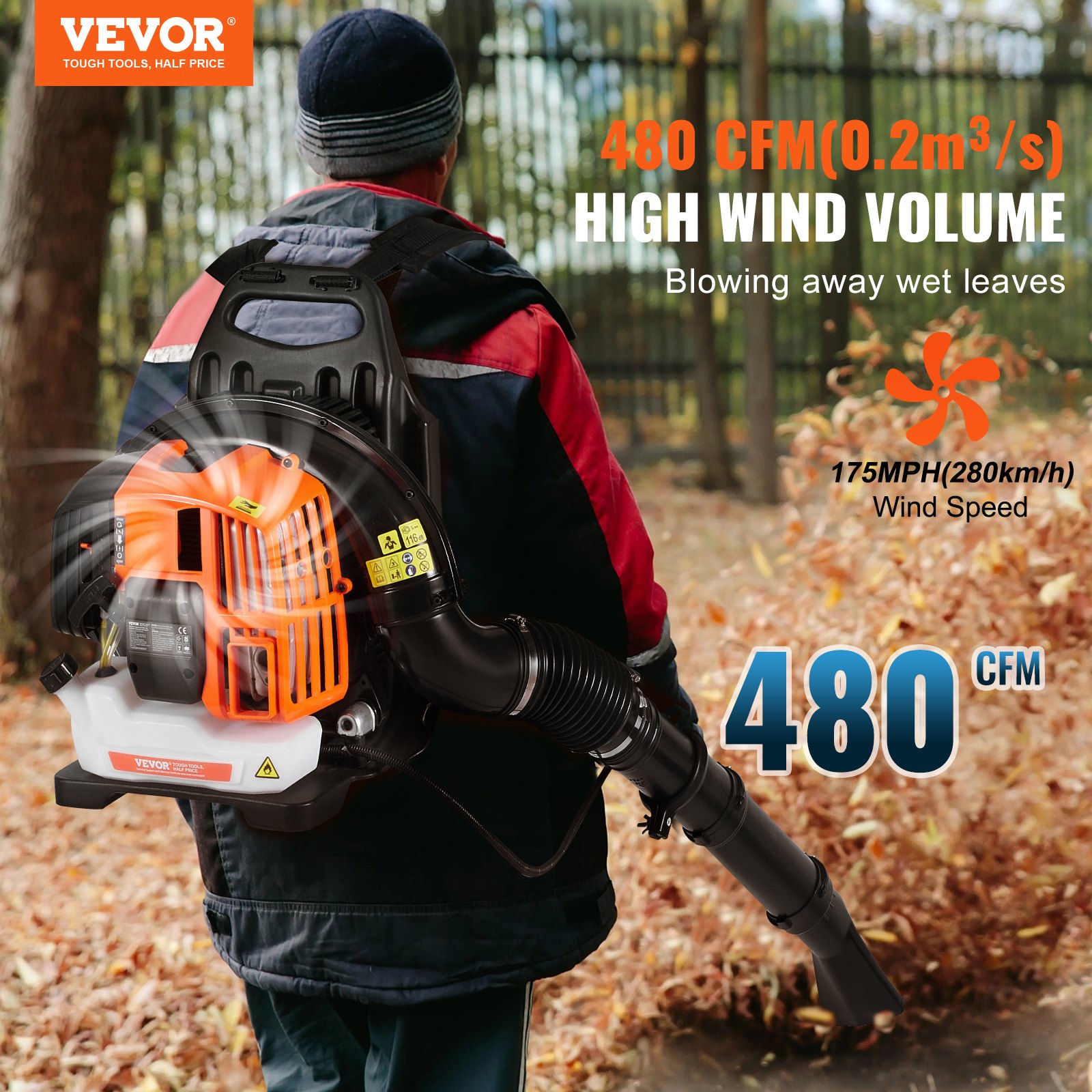

Photos from current listings. Actual item, color, and included accessories may vary.
Backpack Blower Buying Guide
A backpack blower is a high-CFM outdoor power tool worn on the back, trading portability for sustained airflow and reduced arm fatigue on large properties. The primary decision is gas 2-cycle versus battery-electric: gas delivers raw CFM/MPH for heavy wet leaves and multi-acre lots, while battery avoids fuel mixing and pull-start frustration for suburban lots. Choose gas above roughly half an acre of heavy debris, or a 56V+ battery platform for smaller yards where noise and maintenance matter more than maximum airflow.
Median $349.99
Key takeaways
- Commercial-grade gas backpack blowers use 2-cycle engines in the 50-80cc class, producing roughly 500-900 CFM and 180-250 MPH; homeowner 2-cycle units sit near 400-500 CFM.
- Battery backpack blowers on 56V-80V platforms deliver 500-700 CFM but run 30-90 minutes per charge depending on power mode and battery amp-hours.
- Tube design matters: round vs. flat nozzles and tapered vs. straight tubes change air velocity versus volume; longer tapered tubes concentrate MPH for wet leaves.
At a glance
- Category
- Residential Outdoor Power Equipment
- Last updated
- Nov 28, 2026
Current offers
Highlights
- Commercial-grade gas backpack blowers use 2-cycle engines in the 50-80cc class, producing roughly 500-900 CFM and 180-250 MPH; homeowner 2-cycle units sit near 400-500 CFM.
- Battery backpack blowers on 56V-80V platforms deliver 500-700 CFM but run 30-90 minutes per charge depending on power mode and battery amp-hours.
- Tube design matters: round vs. flat nozzles and tapered vs. straight tubes change air velocity versus volume; longer tapered tubes concentrate MPH for wet leaves.
- Frame and harness construction separates tiers: metal chassis with padded ventilated harness and anti-vibration mounts outlast plastic-frame budget units under continuous load.
Best use cases
- Pick a 2-cycle gas backpack blower (50cc+) for lots over half an acre, wet leaves, or commercial-style cleanup where maximum CFM and unlimited runtime beat noise and fuel mixing.
- Pick a 56V+ battery backpack blower for suburban lots under half an acre where you already own that brand's batteries and want push-button start with no fuel or pull cord.
- Skip budget plastic-frame gas units for daily heavy use; choose metal-frame commercial tiers with anti-vibration harness for multi-hour leaf seasons.
- Skip battery blowers for large properties with no spare batteries; runtime, not airflow, becomes the limiting factor on multi-acre fall cleanup.
Buying tips
- Match CFM to debris: 400-500 CFM handles dry leaves and grass clippings; 600+ CFM is needed for wet leaves, acorns, and pine cones.
- For battery units, buy into a platform with at least 5.0Ah batteries; a 4.0Ah pack roughly halves runtime versus 8.0Ah at the same power mode.
- Gas buyers should confirm a 2-cycle mix ratio (commonly 50:1) and carburetor access; units with primer bulbs and choke levers start more reliably cold.
- Check tube compatibility and nozzle options: tapered or flat nozzles increase velocity for stubborn debris, while round tubes favor volume for sweeping.
Specs
| Power Source | 2-cycle gas vs 56V-80V battery |
|---|---|
| Airflow (CFM) | 400-500 homeowner / 600-900 commercial |
| Air Speed (MPH) | 150-250 MPH tapered nozzle |
| Frame & Harness | Metal chassis / padded anti-vibration harness |
Related searches
What to check before buying
- Measure your property's debris area: under half an acre favors battery, over half an acre favors gas for runtime and power.
- Confirm harness fit and back-pad ventilation; backpack blowers weigh 15-25 lb loaded, so padded straps and waist belts prevent fatigue.
- For battery units, verify you own or will buy into the same voltage platform (56V, 60V, 80V) to share batteries and chargers.
- For gas units, check local noise ordinances and fuel storage; 2-cycle engines require mixed fuel and periodic carburetor maintenance.
FAQ
Data sources: eBay / Amazon listings and product attribute feeds. Updated Nov 28, 2026.
Some links on this page are affiliate links. If you buy after clicking one, we may earn a commission at no extra cost to you. This does not change which products appear here or their order. Affiliate disclosure.