
Photos from current listings. Actual item, color, and included accessories may vary.
Roll Chicken Wire Buying Guide
Roll chicken wire spans two distinct product families: welded hardware cloth (rigid square/rectangular mesh for predator-proof coops) and woven hexagonal poultry netting (flexible, lighter-duty confinement). The core trade-off is wire gauge and mesh opening versus roll length and coating: heavier gauge and smaller openings stop predators but cost more and add weight, while thin woven netting only contains birds. Choose welded hardware cloth at 16-19 gauge for permanent coop barriers and hex netting only for temporary grazing or light containment.
Median $127.99
Key takeaways
- Welded hardware cloth uses square or rectangular mesh (commonly 1/2 in, 1 in, 2x3 in) with wire gauges from 16 to 19 — lower gauge number means thicker, stronger wire.
- Hot-dip galvanized after welding (GAW) yields zinc coating over weld points for corrosion resistance; vinyl-coated mesh adds a PVC layer for longer life in humid or coastal climates.
- Woven hex poultry netting (often 1 in or 2 in hex) is flexible and lightweight, but it stretches and deforms under predator pressure and is not chew-resistant.
At a glance
- Category
- Chicken Fencing & Egg Handling
- Last updated
- Nov 27, 2026
Current offers
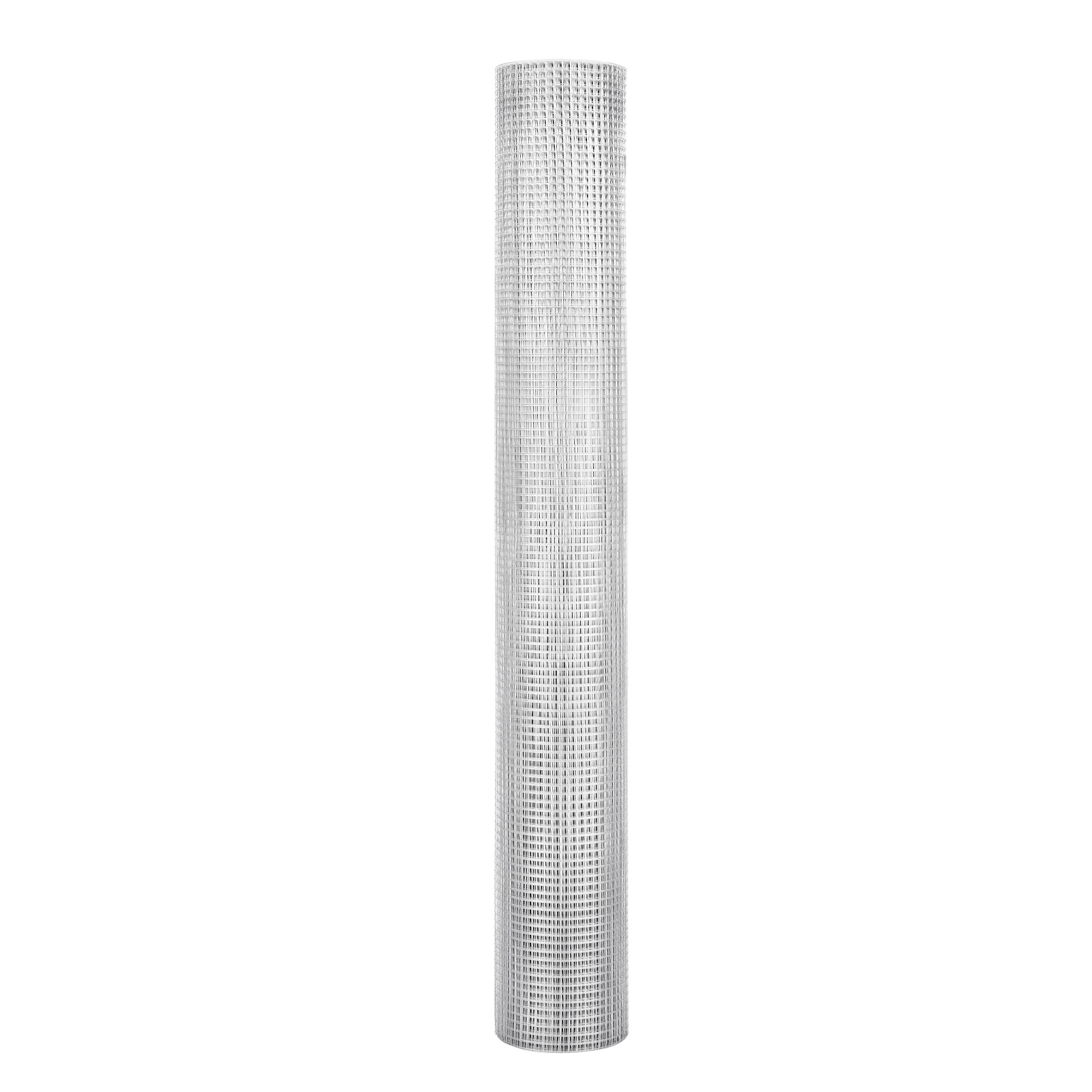 Hardware Cloth, 1/2 Inch 60 X 50 Ft 19 Gauge Chicken Wire Fence, Hot-Dip Galvanized After Welding Metal Mesh Roll, Garden Plant Welded Fencing Supports Poultry Netting Cage$104.99View on Mallflare
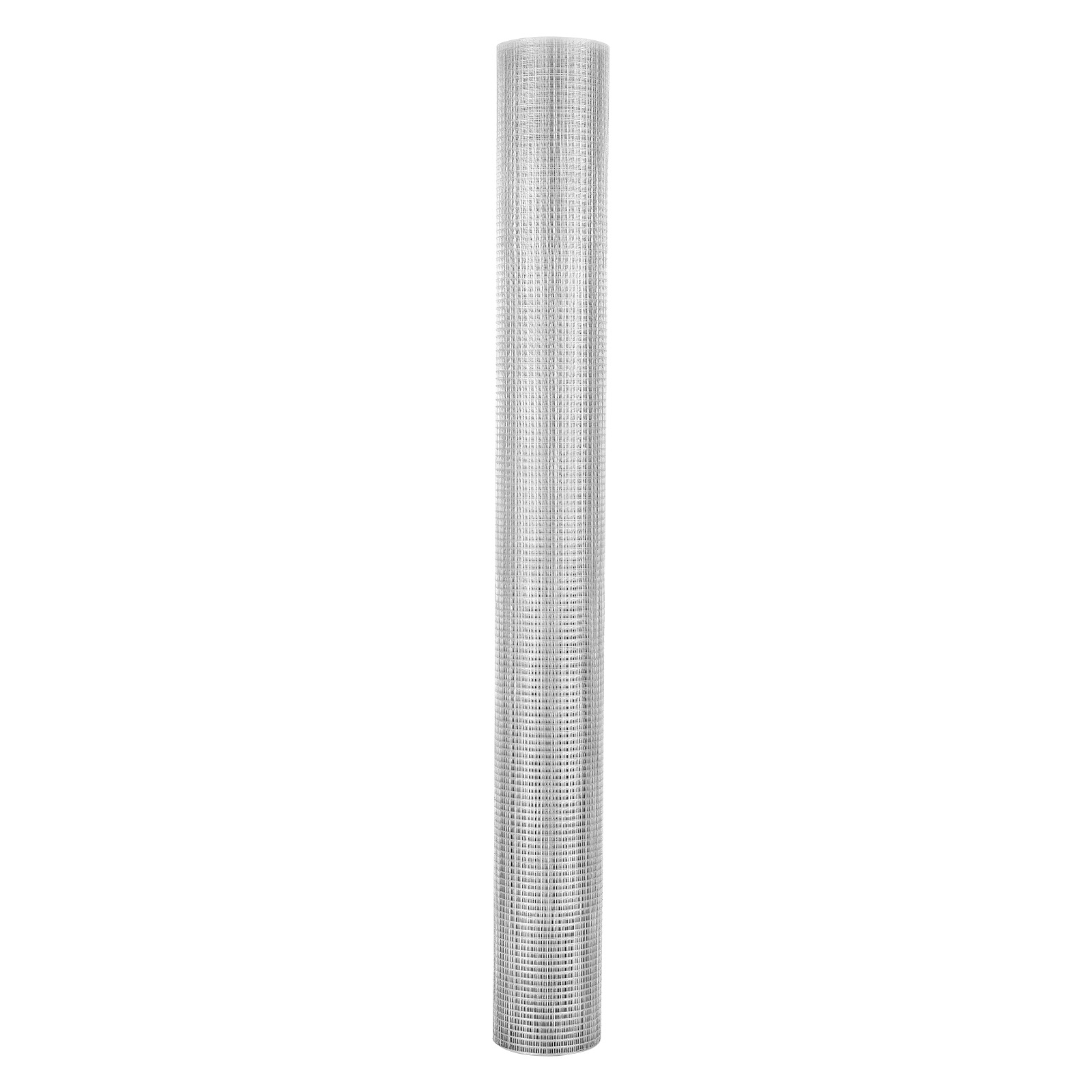 Hardware Cloth, 1/2 Inch 72 X 50 Ft 19 Gauge Chicken Wire Fence, Hot-Dip Galvanized After Welding Metal Mesh Roll, Garden Plant Welded Fencing Supports Poultry Netting Cage$127.99View on Mallflare
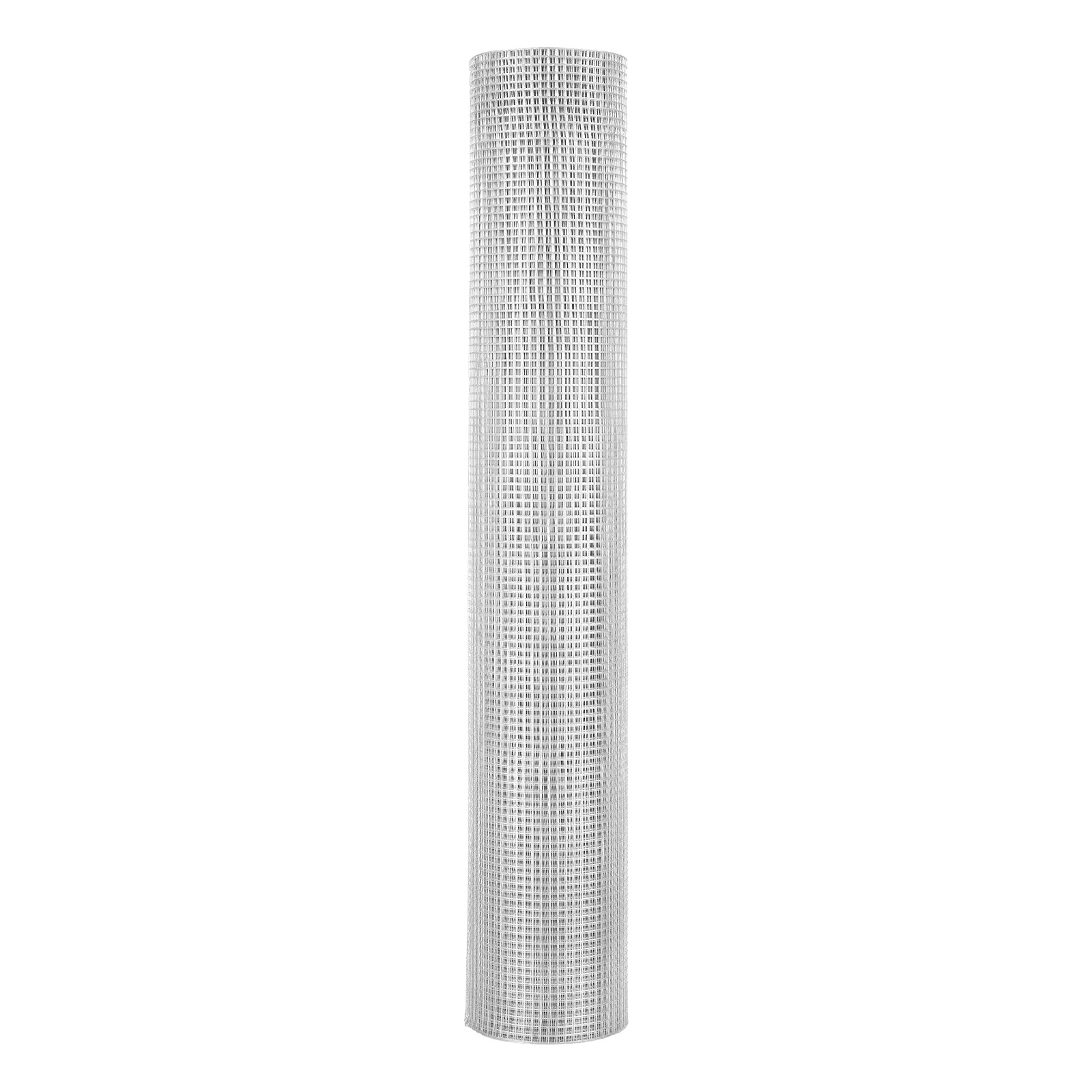 Hardware Cloth, 1/2 Inch 60 X 100 Ft 19 Gauge Chicken Wire Fence, Hot-Dip Galvanized After Welding Metal Mesh Roll, Garden Plant Welded Fencing Supports Poultry Netting Cage$177.99View on Mallflare
Highlights
- Welded hardware cloth uses square or rectangular mesh (commonly 1/2 in, 1 in, 2x3 in) with wire gauges from 16 to 19 — lower gauge number means thicker, stronger wire.
- Hot-dip galvanized after welding (GAW) yields zinc coating over weld points for corrosion resistance; vinyl-coated mesh adds a PVC layer for longer life in humid or coastal climates.
- Woven hex poultry netting (often 1 in or 2 in hex) is flexible and lightweight, but it stretches and deforms under predator pressure and is not chew-resistant.
- Roll dimensions are width x length (e.g., 24 in x 50 ft, 36 in x 50 ft, 48 in x 50 ft); coverage is width times length, so a 36 in x 50 ft roll gives 150 sq ft.
Best use cases
- Best fit: permanent coop and run walls with 1/2 in or 1 in welded hardware cloth at 16-19 gauge — small openings block snakes, rats, and weasels; skip hex netting for these barriers.
- Best fit: temporary pasture rotation or garden row covers with lightweight woven hex netting — easy to move and roll; skip hardware cloth where portability matters more than predator resistance.
- Best fit: raised garden beds and rabbit hutch floors with 1/2 in 19-gauge hardware cloth — fine mesh excludes burrowing pests; skip 2x3 in mesh for small-animal containment.
- Wrong fit: using vinyl-coated 2x3 in mesh as the sole coop wall — 2x3 in openings admit rats and small predators; pair it with 1/2 in mesh or choose 1/2 in directly.
Buying tips
- Calculate coverage before choosing roll length: width (ft) x length (ft) = sq ft; a 36 in x 50 ft roll covers 150 sq ft, so a 10 ft x 10 ft run (40 linear ft at 3 ft height) needs about 120 sq ft plus overlap.
- For predator-proofing against snakes, rats, and weasels, choose 1/2 in mesh; for raccoon and dog resistance choose 16 gauge or heavier wire; 19 gauge is acceptable only for light bird containment.
- Prefer hot-dip galvanized after welding (GAW) for outdoor longevity; vinyl coating adds corrosion protection but can hide weld quality, so inspect coating uniformity on arrival.
- Match roll width to frame spacing: 24 in rolls suit 2 ft-high brooders and brooder pens, 36 in suits 3 ft run walls, and 48 in minimizes horizontal seams on 4 ft-high fences.
Specs
| Mesh Type | Welded hardware cloth vs woven hex |
|---|---|
| Wire Gauge | 16-19 ga (lower = stronger) |
| Mesh Opening | 1/2 in, 1 in, 2x3 in |
| Roll Size | 24-48 in wide x 25-50 ft long |
Related searches
What to check before buying
- Measure the exact linear feet of fence line and height: multiply perimeter by desired height, then add 10-15% for overlaps and waste before selecting roll length.
- Confirm post or frame spacing matches mesh rigidity: welded hardware cloth needs supports every 4-6 ft, while flexible hex netting needs closer spacing or tension wire.
- Check climate exposure: coastal or humid sites warrant vinyl-coated or GAW mesh; arid sites can use standard galvanized welded mesh.
- Verify you have the companion hardware: poultry staples, J-clips or hog rings, and edge wire or tension wire are required to install mesh without sagging.
FAQ
Data sources: eBay / Amazon listings and product attribute feeds. Updated Nov 27, 2026.
Some links on this page are affiliate links. If you buy after clicking one, we may earn a commission at no extra cost to you. This does not change which products appear here or their order. Affiliate disclosure.