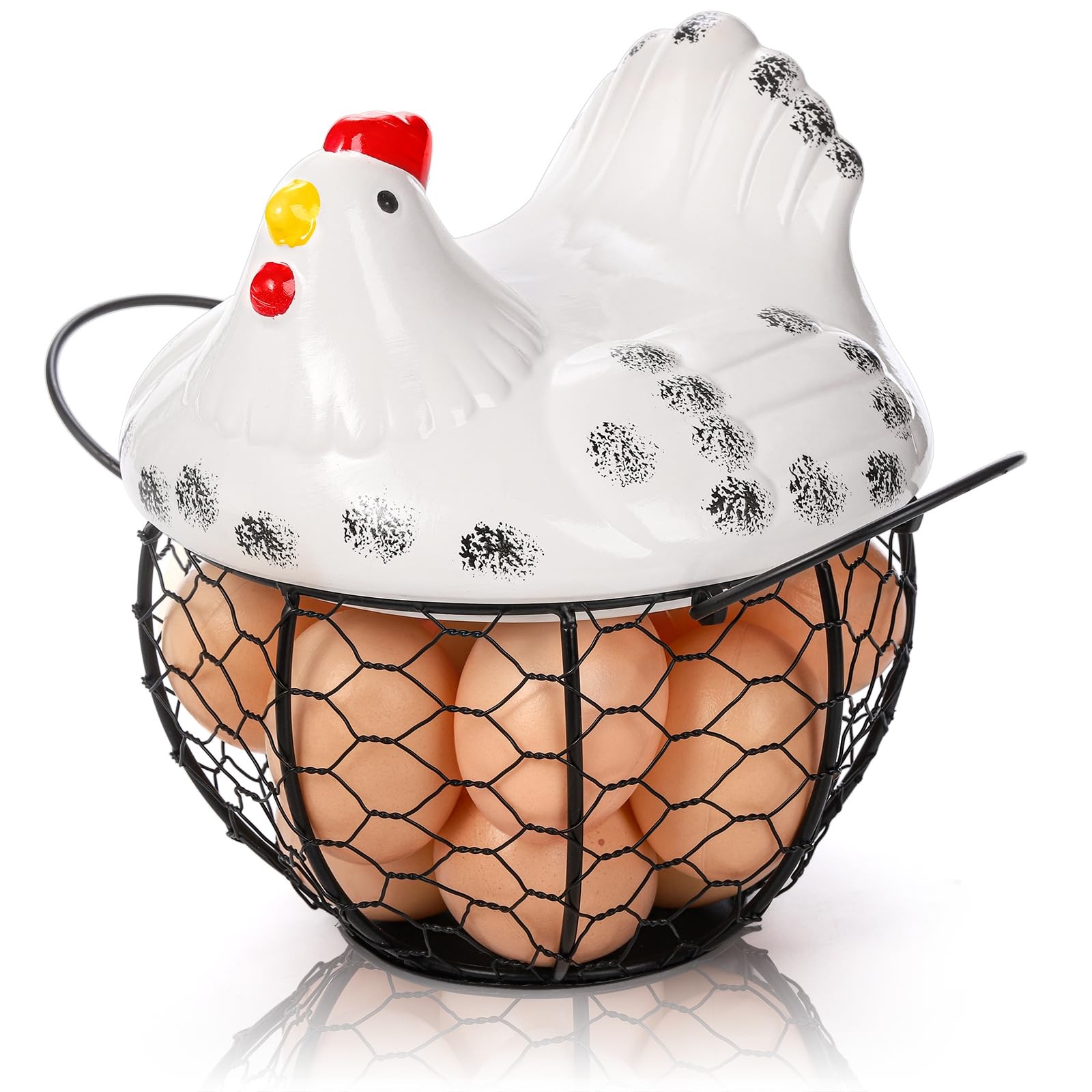

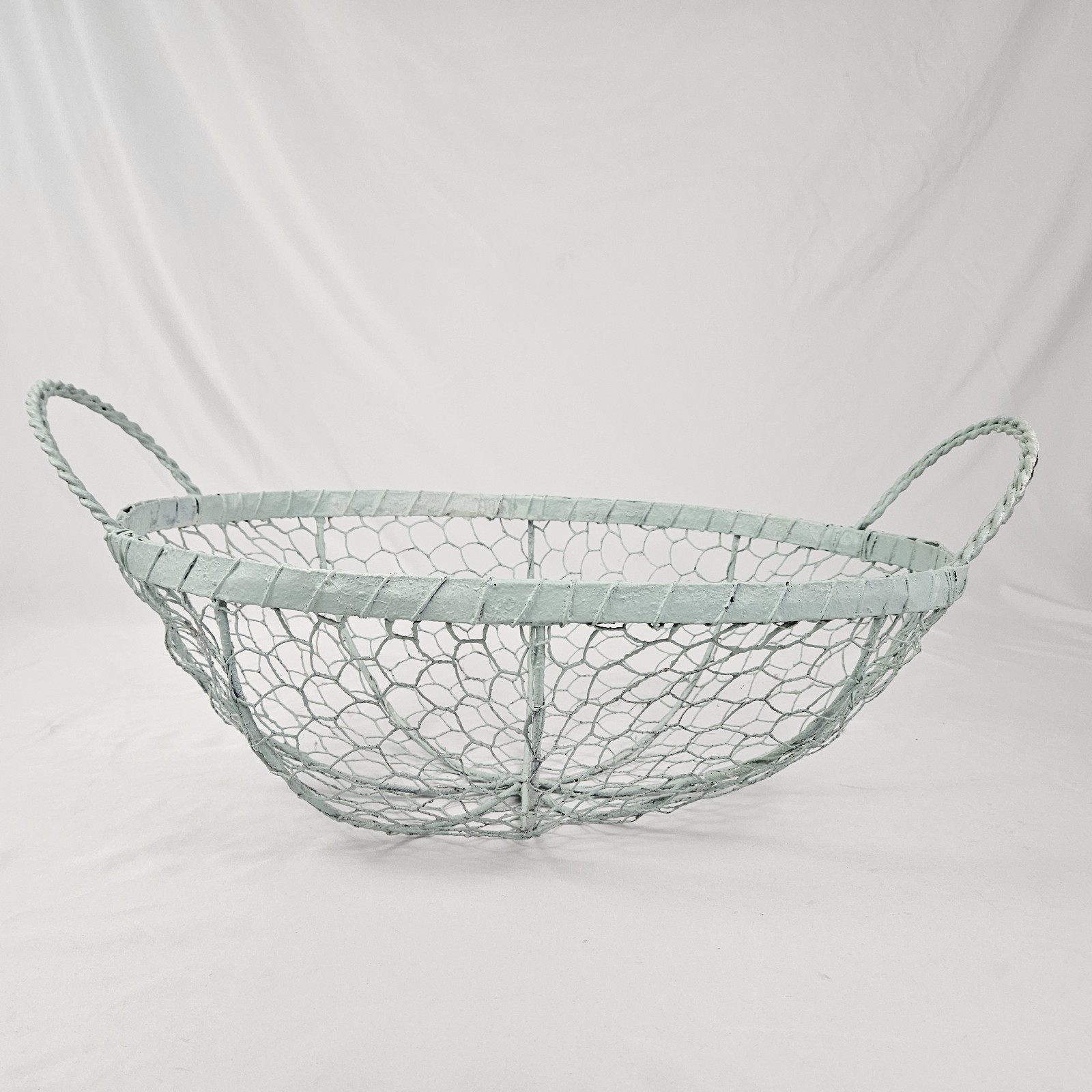
Photos from current listings. Actual item, color, and included accessories may vary.
Wire Basket Buying Guide
A wire basket for chicken eggs is a rigid wire-frame container used for collecting, sorting, and storing eggs, and its primary trade-off is between wire gauge and coating durability versus open-basket ventilation and visibility. Heavy-gauge, fully welded, powder-coated or galvanized wire resists bending and rust for years, while thin, spot-welded, painted wire deforms and corrodes within a season of barn use. The decision rule: buy baskets rated for carrying weight with continuous welds and a rust-proof finish, and skip decorative light-gauge farmhouse baskets if the basket will see daily coop duty.
Median $29.20
Key takeaways
- Wire gauge drives load capacity: 9-12 gauge wire carries a full dozen-to-two-dozen egg load without permanent deformation, while 16-gauge-and-thinner craft wire bows under a single layer of eggs.
- Welded versus twisted joints separates durable baskets from compromises: continuous spot or MIG welds hold shape under load, while hand-twisted or stapled joints loosen and snag eggs.
- Coating determines rust life in humid coops: hot-dip galvanized or powder-coated steel survives years of damp bedding exposure, while painted or bare wire rusts at scratch points within months.
At a glance
- Category
- Chicken Fencing & Egg Handling
- Last updated
- Nov 28, 2026
Current offers
Highlights
- Wire gauge drives load capacity: 9-12 gauge wire carries a full dozen-to-two-dozen egg load without permanent deformation, while 16-gauge-and-thinner craft wire bows under a single layer of eggs.
- Welded versus twisted joints separates durable baskets from compromises: continuous spot or MIG welds hold shape under load, while hand-twisted or stapled joints loosen and snag eggs.
- Coating determines rust life in humid coops: hot-dip galvanized or powder-coated steel survives years of damp bedding exposure, while painted or bare wire rusts at scratch points within months.
- Basket geometry matters for egg safety: a flat, closely spaced wire base (under 1 inch gaps) and rounded rim prevent eggs from wedging or falling through, whereas wide-gap decorative baskets crack eggs.
Best use cases
- Daily coop collection: pick a heavy-gauge welded basket with a ceramic or hinged lid and a secure handle — skip thin decorative wire baskets that deform when filled with two dozen eggs.
- Washing and air-drying station: choose an open-wire basket with 1-inch-or-smaller base gaps and a rust-proof coating so wet eggs drain and dry without contact corrosion — skip solid-bottom or painted baskets.
- Farmers-market display and gifting: a rustic powder-coated or galvanized farmhouse basket with a lid works for presentation — skip it for heavy daily hauling, where structural gauge matters more than finish.
- Refrigerator or pantry storage: a compact lidded wire basket keeps eggs visible and ventilated — skip oversized primitive cottagecore baskets that waste shelf space and have no stacking stability.
Buying tips
- Match basket volume to flock size: a standard dozen-egg basket handles 12-18 eggs, so a 20-30 hen flock needs a two-dozen-capacity basket or two baskets to avoid overloading one handle.
- Check wire gauge before buying: 9-12 gauge is load-bearing for full egg baskets, 14-16 gauge is light-duty display only, and anything thinner is decorative and will bend.
- Demand continuous welds at every wire intersection and handle attachment; twisted or stapled joints are the first failure point when a full basket is lifted by one hand.
- Choose hot-dip galvanized or powder-coated steel for humid coops and wash stations; painted or bare-steel baskets rust at scratch and weld points and contaminate egg shells.
Specs
| Wire Gauge | 9-12 ga load-bearing / 14-16 ga light-duty |
|---|---|
| Joint Construction | Welded vs twisted/stapled |
| Finish | Galvanized / powder-coated / painted |
| Base Gap | Under 1 in for egg retention |
Related searches
What to check before buying
- Measure your collection counter or sink area: a standard egg basket runs roughly 10-12 inches in diameter, so confirm clearance for a full basket plus lid swing.
- Confirm the basket's base wire spacing is under 1 inch so standard and pullet eggs cannot slip through; wide-gap decorative baskets fail this check.
- Verify handle clearance and grip: a full two-dozen egg load weighs several pounds, so a basket needs a formed, welded handle wide enough for a gloved hand.
- Check coating compatibility with your cleaning routine: powder-coated or galvanized baskets tolerate damp wiping, while painted or bare wire requires dry storage between uses.
FAQ
Data sources: eBay / Amazon listings and product attribute feeds. Updated Nov 28, 2026.
Some links on this page are affiliate links. If you buy after clicking one, we may earn a commission at no extra cost to you. This does not change which products appear here or their order. Affiliate disclosure.