
Photos from current listings. Actual item, color, and included accessories may vary.
Portable Electric Fence Buying Guide
Portable electric fences combine a pulsed energizer, conductive polywire or netting, and step-in posts into a relocatable livestock barrier. The core trade-off is joule output versus portability: higher stored energy tolerates more vegetation and longer runs but demands larger energizers and batteries. Buyers should prioritize an energizer rated for the total fence length and weed load, then match conductor and post hardware to that output.
Median $147.19
Key takeaways
- Energizer output is rated in stored joules: under 0.5 J suits short clean runs, 0.5-2 J handles light vegetation and 1-3 strands, 2+ J drives long perimeter runs.
- Poultry netting uses integrated vertical wires at roughly 3-4 inch spacing to deter foxes and raccoons; polywire at 1-2 strands only deters cattle and horses.
- Step-in posts are either fiberglass (flexible, UV-stable, 4-6 ft) or plastic (rigid, 3-4 ft); fiberglass suits rotational grazing where posts are moved weekly.
At a glance
- Category
- Chicken Fencing & Egg Handling
- Last updated
- Nov 27, 2026
Current offers
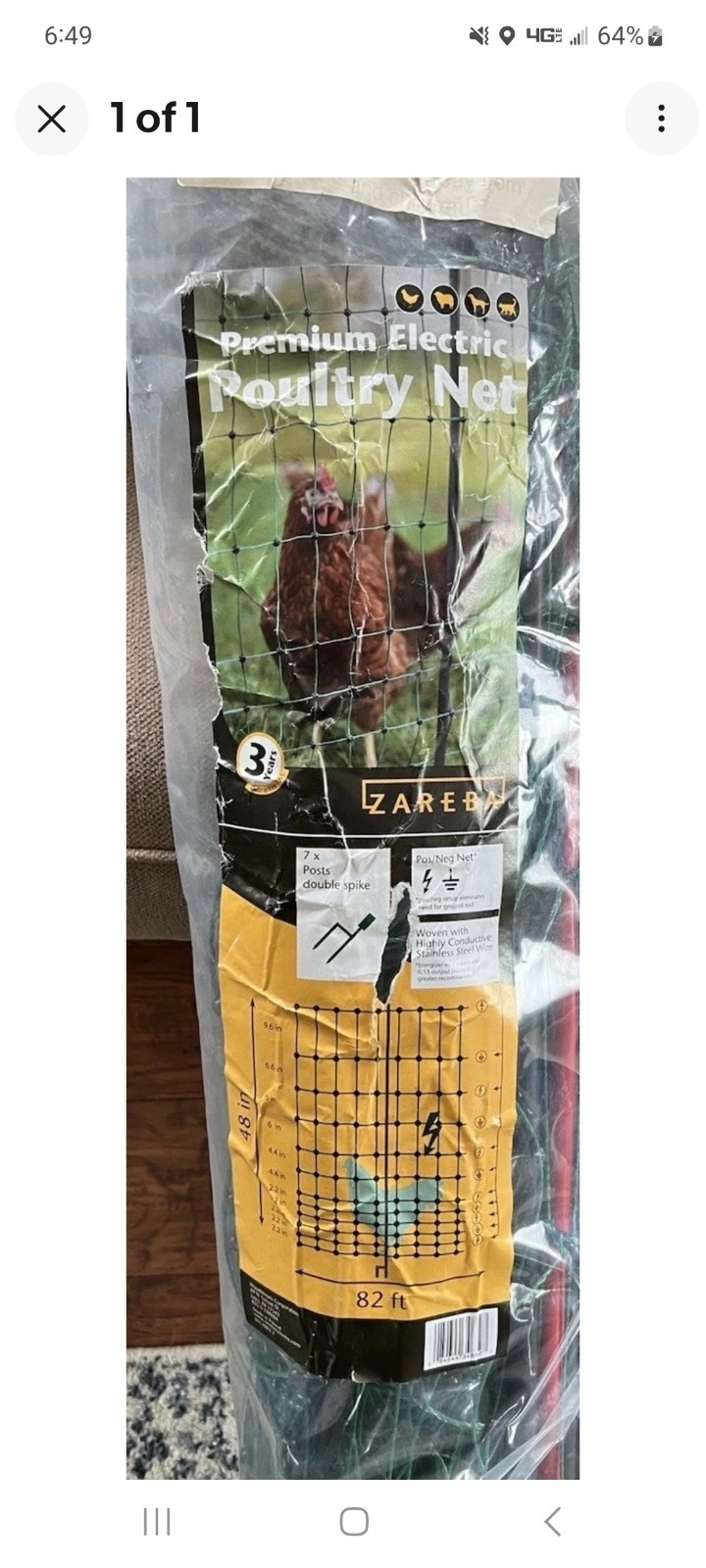 Zareba KFC4882-Z Electric Poultry Netting -48”H x 82 ftL Electric FENCE$123.45View on eBay
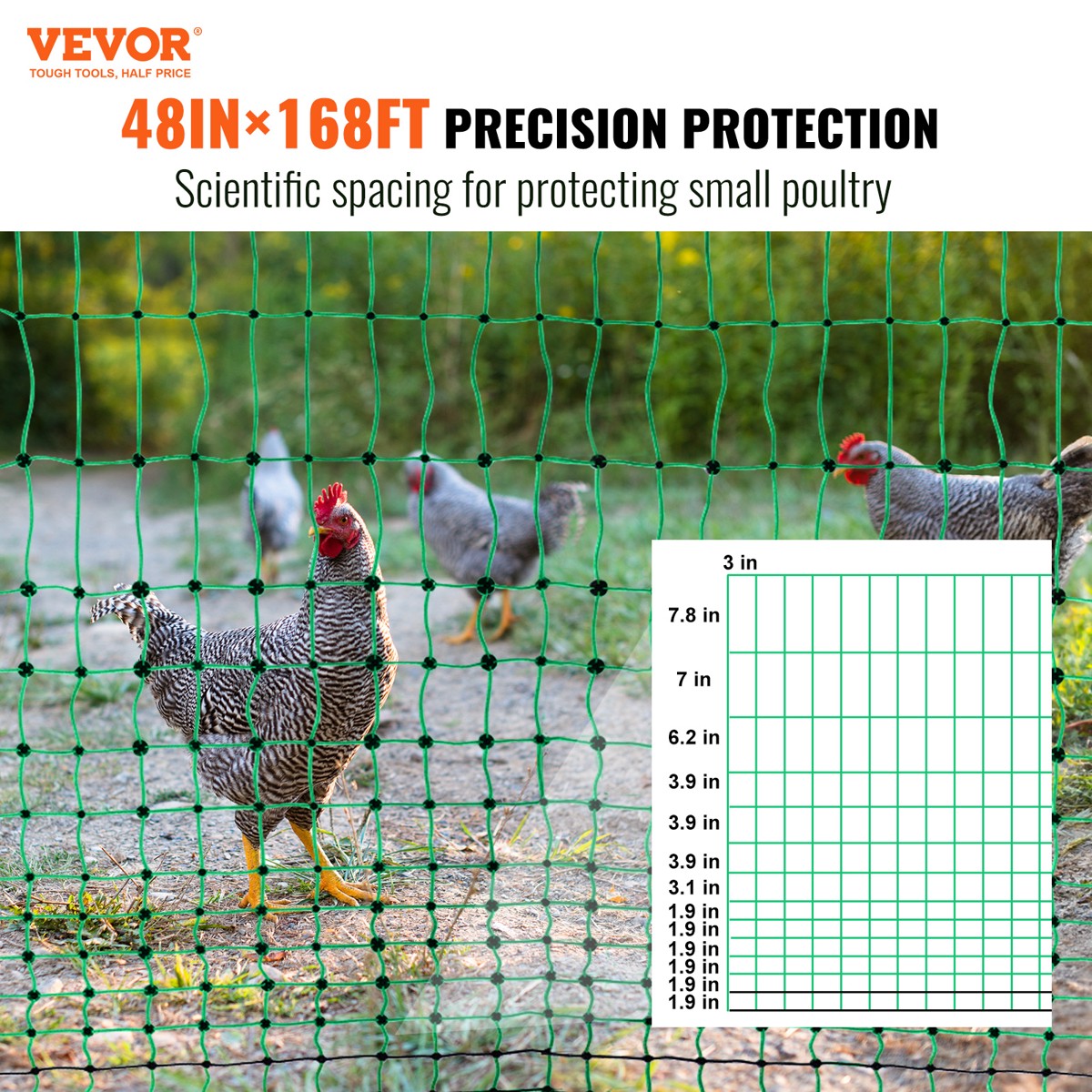 VEVOR Electric Fence Netting, 48inH X 168in L, PE Net Fencing Kit With Posts & Double-Spiked Stakes, Utility Portable Mesh For Chickens, Ducks, Geese, Rabbits, Used In Backyards, Farms, And Ranches$214.99View on Mallflare
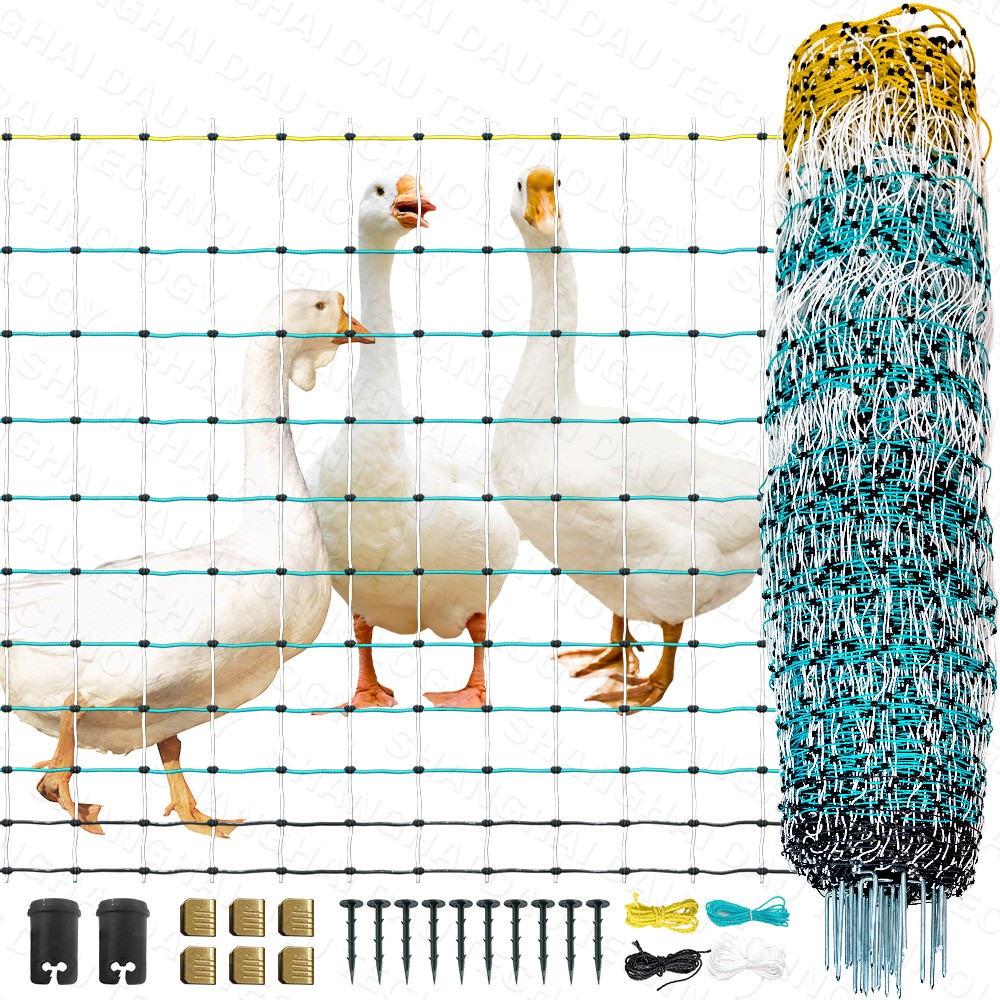 Electric Poultry Netting Chicken Fence Ducks Turkeys Sheep Geese Fence in Yard$147.19View on eBay
Highlights
- Energizer output is rated in stored joules: under 0.5 J suits short clean runs, 0.5-2 J handles light vegetation and 1-3 strands, 2+ J drives long perimeter runs.
- Poultry netting uses integrated vertical wires at roughly 3-4 inch spacing to deter foxes and raccoons; polywire at 1-2 strands only deters cattle and horses.
- Step-in posts are either fiberglass (flexible, UV-stable, 4-6 ft) or plastic (rigid, 3-4 ft); fiberglass suits rotational grazing where posts are moved weekly.
- Battery energizers run on 6V/12V sealed lead-acid or rechargeable lithium packs; solar panels rated 5-15 W maintain charge in off-grid paddocks with 4+ hours of sun.
Best use cases
- Rotational poultry grazing: choose a 42-48 inch poultry net kit with 0.5-1 J energizer and fiberglass step-in posts; skip single-strand polywire, which foxes push through.
- Temporary cattle or horse paddock: pick 2-3 strands of 12.5-gauge polywire on 4-5 ft fiberglass posts with a 2+ J energizer and 12V battery; skip low-joule solar garden units.
- Backyard garden or orchard exclusion: use 1-2 J energizer with 3-4 ft plastic step-in posts and 1-2 polywire strands; skip poultry netting, which is overkill and tangles in shrubs.
- Permanent perimeter: install high-tensile wire on fixed wood or T-posts with a mains-powered 5-10 J energizer; skip portable kits, whose posts and polywire degrade under constant tension.
Buying tips
- Size the energizer at 1 J stored output per 1-2 miles of clean single-strand fence; double the rating if the run includes weeds or 3+ strands.
- Choose polywire by conductor count: 3-6 stainless strands in UV-stabilized polyethylene suits short runs; 9+ strands or 12.5-gauge wire for runs over 1,000 ft.
- Match post height to animal: 4 ft for sheep and poultry netting, 5 ft for cattle, 6 ft for horses and deer; fiberglass posts bend and recover, plastic posts snap.
- Confirm the energizer includes a ground rod and that the fence wire, reel, and gate handle use the same conductor gauge to avoid resistance hotspots.
Specs
| Energizer Output | 0.5-10 J stored; 1 J per 1-2 mi clean run |
|---|---|
| Conductor Type | Polywire strands / poultry netting mesh |
| Post Material | Fiberglass step-in / plastic step-in |
| Power Source | Mains AC / 6-12V battery / solar |
Related searches
What to check before buying
- Measure the total fence perimeter and add 20 percent for corners and gates; the energizer's rated miles must exceed this sum with weeds factored in.
- Check soil moisture and ground conditions: dry sandy soil requires a longer or multiple ground rods (3-6 ft) for the energizer to complete the circuit.
- Confirm power source: mains energizers need a GFCI outlet within cord length; battery units need a 12V battery and solar panel sized to local winter sun hours.
- Verify netting height and mesh spacing against the target animal; poultry netting at 42-48 inches with 3-inch vertical spacing stops foxes, while 4-inch spacing does not.
FAQ
Data sources: eBay / Amazon listings and product attribute feeds. Updated Nov 27, 2026.
Some links on this page are affiliate links. If you buy after clicking one, we may earn a commission at no extra cost to you. This does not change which products appear here or their order. Affiliate disclosure.