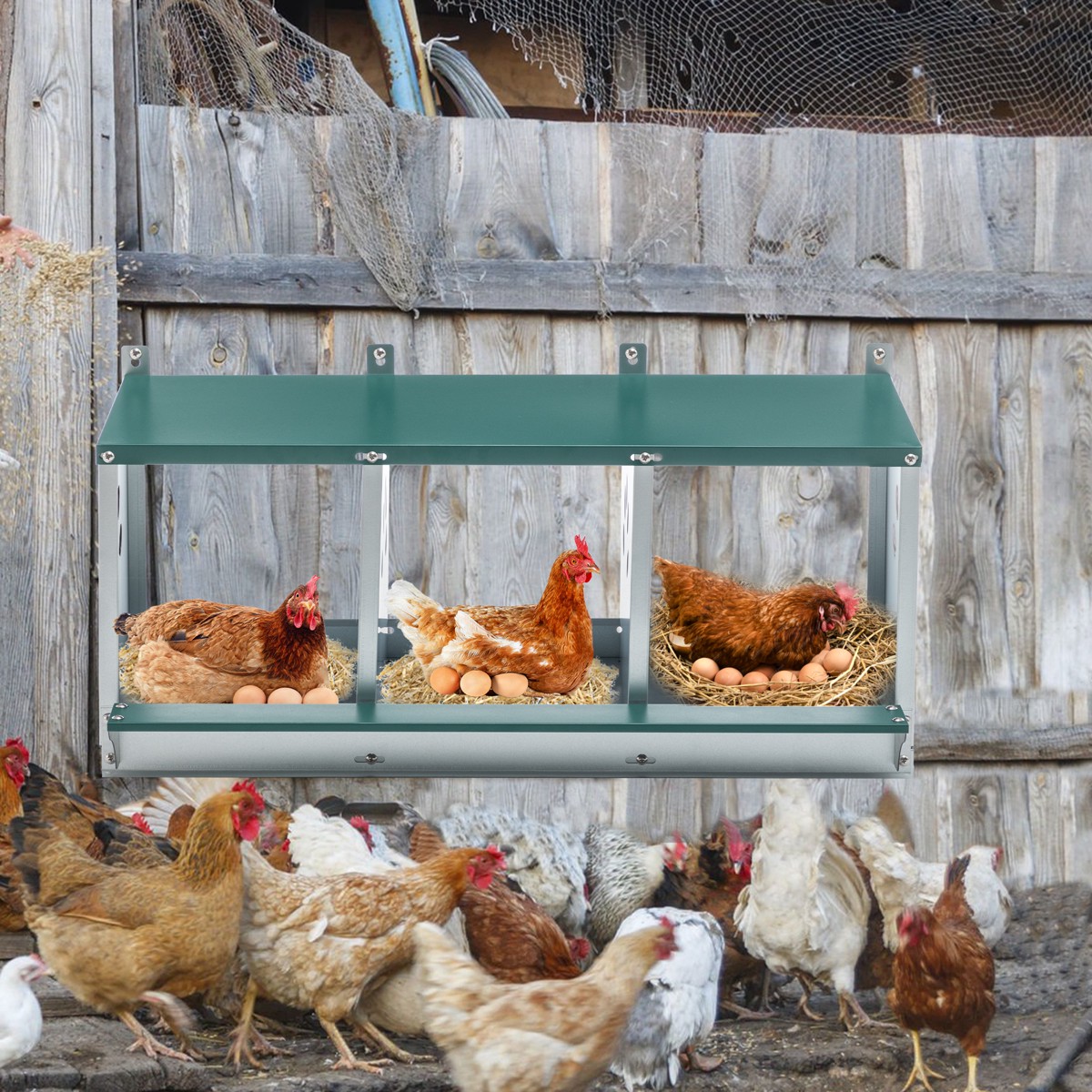

Photos from current listings. Actual item, color, and included accessories may vary.
Metal Chicken Nesting Box Buying Guide
A metal chicken nesting box is a rigid, roll-out or single-compartment egg-laying station fabricated from galvanized or powder-coated steel, designed to protect eggs from breakage and predators while simplifying collection. The primary trade-off is between thin-gauge stamped steel that dents and rusts versus heavier-gauge welded construction with sealed seams and a sloped roll-out floor. Choose welded, double-wall or reinforced-corner steel with a minimum 0.8 mm (22-gauge) thickness and a roll-out tray if you want a decade of service; skip pop-riveted, single-wall boxes under 0.6 mm for any flock over six hens.
Key takeaways
- Steel gauge is the durability benchmark: 0.8–1.2 mm (22–18 gauge) galvanized or powder-coated steel resists hen weight and cleaning; 0.5–0.6 mm stamped boxes dent at the door opening within a season.
- Roll-out floors angle 12–20 degrees so eggs roll under a lip into a collection tray, reducing cracked eggs and broody hens compared with flat-bottom single-compartment boxes.
- Welded seams and folded edges outlast pop-riveted or spot-welded corners; galvanized zinc coating (G90 or Z275) or a baked powder coat prevents red rust at manure-contact points.
At a glance
- Category
- Chicken Fencing & Egg Handling
- Last updated
- Nov 28, 2026
Current offers
Highlights
- Steel gauge is the durability benchmark: 0.8–1.2 mm (22–18 gauge) galvanized or powder-coated steel resists hen weight and cleaning; 0.5–0.6 mm stamped boxes dent at the door opening within a season.
- Roll-out floors angle 12–20 degrees so eggs roll under a lip into a collection tray, reducing cracked eggs and broody hens compared with flat-bottom single-compartment boxes.
- Welded seams and folded edges outlast pop-riveted or spot-welded corners; galvanized zinc coating (G90 or Z275) or a baked powder coat prevents red rust at manure-contact points.
- External-mount roll-out boxes with a rear collection door let you gather eggs without entering the coop, while internal single boxes are simpler to install in small coops.
Best use cases
- Best fit: a 6–12 hen backyard flock in a walk-in coop — choose an external roll-out metal box with a rear egg door and sloped floor so you collect without bending into the coop.
- Wrong fit: a flock under four hens or a tiny tractor coop — a single-compartment internal box or a plastic communal box is cheaper and adequate; a multi-bay metal roll-out unit wastes space and money.
- Best fit: a predator-heavy or humid climate — pick fully welded, G90 galvanized or powder-coated steel with sealed floor seams and a locking rear door to resist rats and moisture.
- Wrong fit: a rental or temporary setup requiring no drilling — skip external-mount boxes that cut through coop walls; a freestanding or hook-on internal box avoids wall modification.
Buying tips
- Size each compartment at minimum 12 x 12 x 12 inches (30 x 30 x 30 cm) for standard hens; allow one box per 4–5 hens and add one extra bay for heavy or dual-purpose breeds.
- Match mounting to coop wall: external roll-out boxes need a cutout roughly the box footprint plus 1 inch clearance and a reinforced exterior wall; internal boxes need a shelf or rail rated for the loaded box weight.
- Specify steel thickness and coating explicitly: 0.8 mm minimum, G90 galvanized or baked powder coat; avoid uncoated cold-rolled steel and bare welds that rust first at the tray lip.
- Choose roll-out tray depth of at least 2 inches with a front lip so eggs cushion on landing; flat-floor boxes need 3–4 inches of nesting material and more frequent cleaning.
Specs
| Steel Gauge | 0.8–1.2 mm (22–18 ga) |
|---|---|
| Coating Type | G90 galvanized or powder coat |
| Box Compartment Size | 12 x 12 x 12 in minimum |
| Mount / Floor Style | External roll-out vs internal flat |
Related searches
What to check before buying
- Measure your coop wall opening and interior clearance: external boxes require the wall cutout plus 1–2 inches for the mounting flange and rear door swing.
- Confirm the box can be fastened to your coop material — wood studs, metal framing, or plastic panels — with the supplied brackets or added blocking rated for 15–25 lb loaded.
- Check floor and climate compatibility: sloped roll-out floors work best on level ground; in freezing climates, choose a box that drains and dries to prevent frozen eggs and bedding.
- Verify companion parts: nesting pads or straw, a predator latch for the rear door, and a collection tray or egg basket that fits the tray opening.
FAQ
Data sources: eBay / Amazon listings and product attribute feeds. Updated Nov 28, 2026.
Some links on this page are affiliate links. If you buy after clicking one, we may earn a commission at no extra cost to you. This does not change which products appear here or their order. Affiliate disclosure.