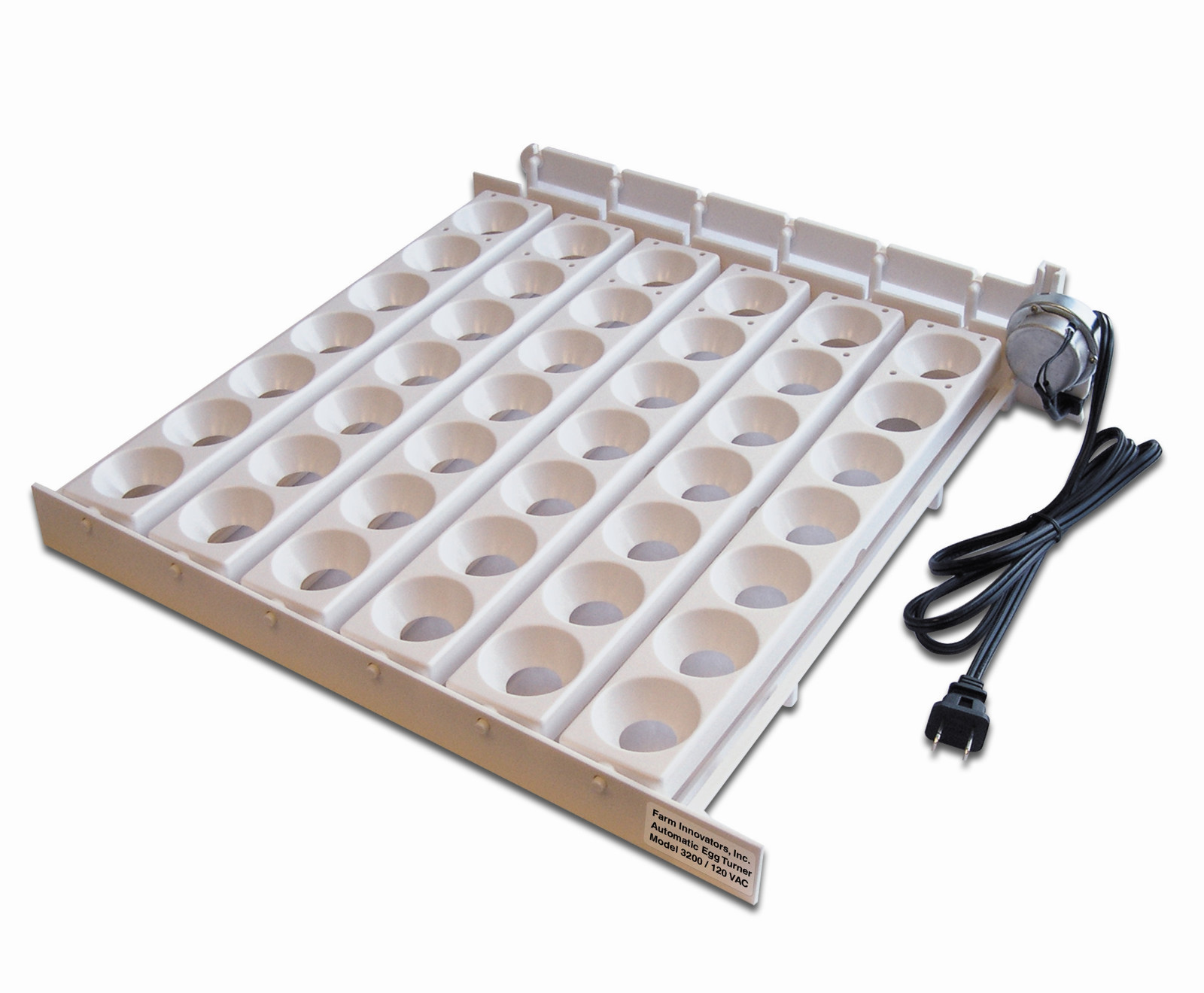

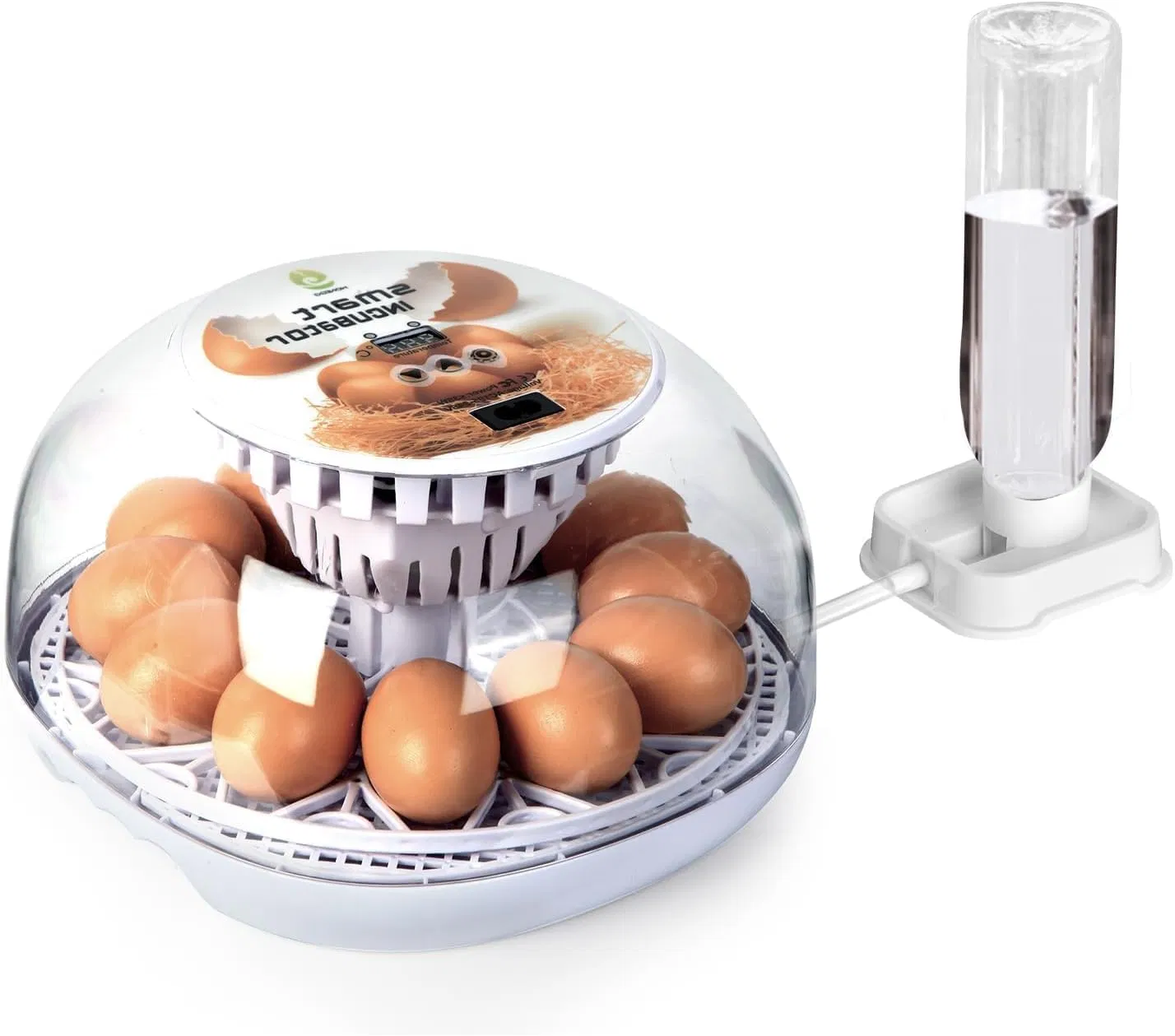
Photos from current listings. Actual item, color, and included accessories may vary.
Incubator Buying Guide
Choosing an incubator hinges on egg capacity, turning automation, and how precisely the unit holds temperature and humidity through lockdown. Most failed hatches trace to cheap wafer thermostats or manual turning schedules, not bad eggs. Size the cabinet to your flock's monthly laying output and skip bells and whistles that don't improve hatch rate.
Egg Capacity:12 / 24 / 42 / 3200-egg cabinetTurning:Automatic motorized vs manualAirflow:Forced-air (fan) vs still-airTemp Control:Digital ±0.5°F vs analog wafer
Typical price range$56.95 – $185.99
Median $121.47
Key takeaways
- Automatic turners rotate eggs every 1-2 hours; manual turning requires 3-5 daily flips and consistently lowers hatch rates.
- Forced-air circulation with a fan stabilizes temperature across the cabinet; still-air units develop hot and cold zones that skew hatch timing.
- Digital PID-style controllers hold ±0.5°F; analog wafer thermostats drift several degrees and need constant calibration.
At a glance
- Category
- Chicken Fencing & Egg Handling
- Last updated
- Nov 28, 2026
Current offers
Highlights
- Automatic turners rotate eggs every 1-2 hours; manual turning requires 3-5 daily flips and consistently lowers hatch rates.
- Forced-air circulation with a fan stabilizes temperature across the cabinet; still-air units develop hot and cold zones that skew hatch timing.
- Digital PID-style controllers hold ±0.5°F; analog wafer thermostats drift several degrees and need constant calibration.
- Lockdown at day 18 requires 55-65% humidity and turning stopped; separate humidity trays or pumps make this switch reliably.
Best use cases
- Backyard flock replacing 10-20 birds yearly: pick a 12-24 egg forced-air unit with auto turn and digital control; skip cabinet models that cost more than the flock.
- Hatching ducks, geese, or quail alongside chickens: choose adjustable rail spacing or multi-size trays, since waterfowl eggs need higher humidity and vertical clearance.
- Small hatchery or classroom running continuous batches: a 42-egg cabinet with separate hatcher or divided compartments beats stacking multiple tabletop units.
Buying tips
- Prioritize forced-air (fan-assisted) cabinets over still-air boxes; even temperature across trays is the single biggest driver of uniform hatch dates.
- Check that the turner is motorized with a metal or heavy-duty plastic gear train; stripped nylon gears are the most common failure on budget units.
- Choose digital temperature and humidity control with an external sensor probe; analog dials on entry units drift and demand a separate hygrometer.
- Size up one tier from your current laying count—incubators run best partially filled, and hatching season batches overlap.
Specs
| Egg Capacity | 12 / 24 / 42 / 3200-egg cabinet |
|---|---|
| Turning | Automatic motorized vs manual |
| Airflow | Forced-air (fan) vs still-air |
| Temp Control | Digital ±0.5°F vs analog wafer |
What to check before buying
- Measure your counter or shelf footprint and confirm clearance for the lid or door swing; cabinet units need 6-12 inches above.
- Confirm your room holds a stable 70-75°F ambient temperature; unheated garages force the element to work harder and widen temperature swings.
- Verify the unit ships with the correct plug voltage for your region (120V US vs 220-240V EU/UK) and that the cord reaches an outlet.
- Check egg tray capacity against your largest egg size—goose and duck eggs need wider rails than chicken eggs.
FAQ
Data sources: eBay / Amazon listings and product attribute feeds. Updated Nov 28, 2026.
Some links on this page are affiliate links. If you buy after clicking one, we may earn a commission at no extra cost to you. This does not change which products appear here or their order. Affiliate disclosure.