
Photos from current listings. Actual item, color, and included accessories may vary.
Electric Netting Fence Buying Guide
Electric netting fence is a portable, semi-rigid mesh powered by an energizer that delivers a short, high-voltage pulse to deter poultry and predators. The core trade-off is strand density and conductive wire count versus net height and roll length: denser verticals stop chicks and small predators, while taller nets with fewer strands suit large flocks but let small birds slip through. Buy a net rated for your smallest animal and your energizer's joule output; skip lightweight garden nets with plastic-only horizontals if you need reliable containment.
Median $147.19
Key takeaways
- Poultry net height typically ranges 40–48 in; 48-in nets deter foxes and dogs better but are heavier to move and need tighter corner bracing.
- Conductive strand count separates tiers: premium nets use 8–12 stainless or tinned-copper verticals with double horizontal wires; budget nets use 4–6 and lose voltage over long runs.
- Mesh openings of 2–4 in contain adult chickens; openings over 4 in let chicks and bantams through, requiring 2-in mesh or a secondary chick fence.
At a glance
- Category
- Chicken Fencing & Egg Handling
- Last updated
- Nov 27, 2026
Current offers
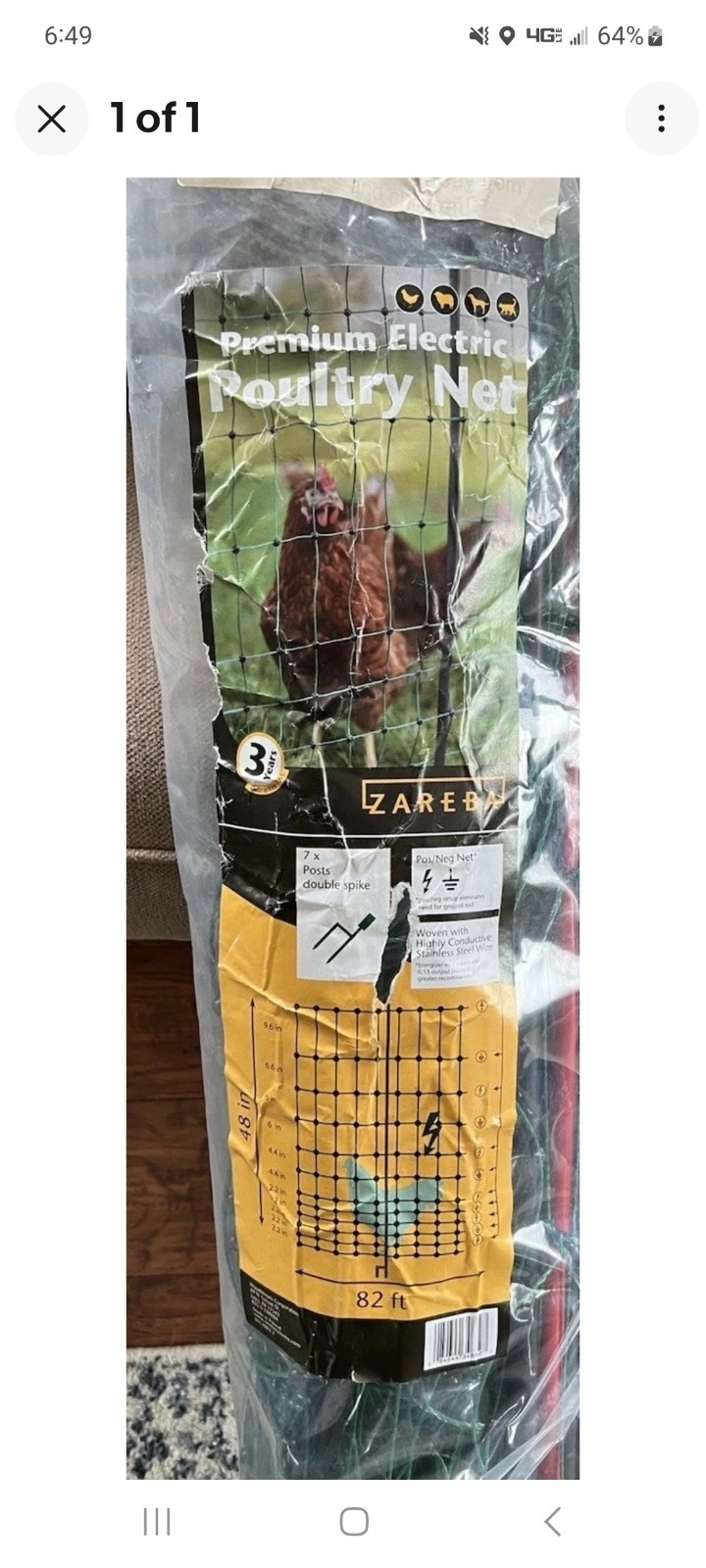 Zareba KFC4882-Z Electric Poultry Netting -48”H x 82 ftL Electric FENCE$123.45View on eBay
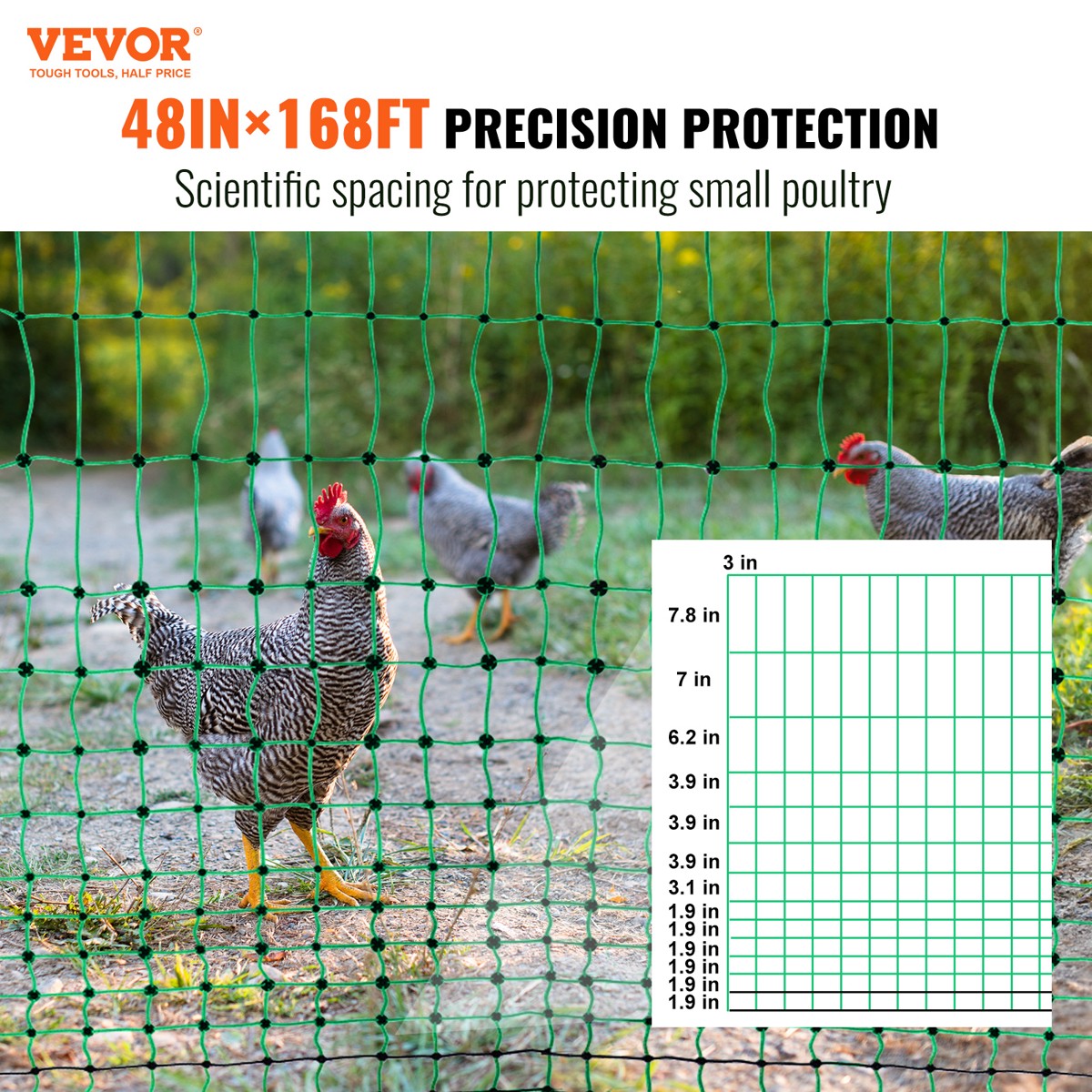 VEVOR Electric Fence Netting, 48inH X 168in L, PE Net Fencing Kit With Posts & Double-Spiked Stakes, Utility Portable Mesh For Chickens, Ducks, Geese, Rabbits, Used In Backyards, Farms, And Ranches$214.99View on Mallflare
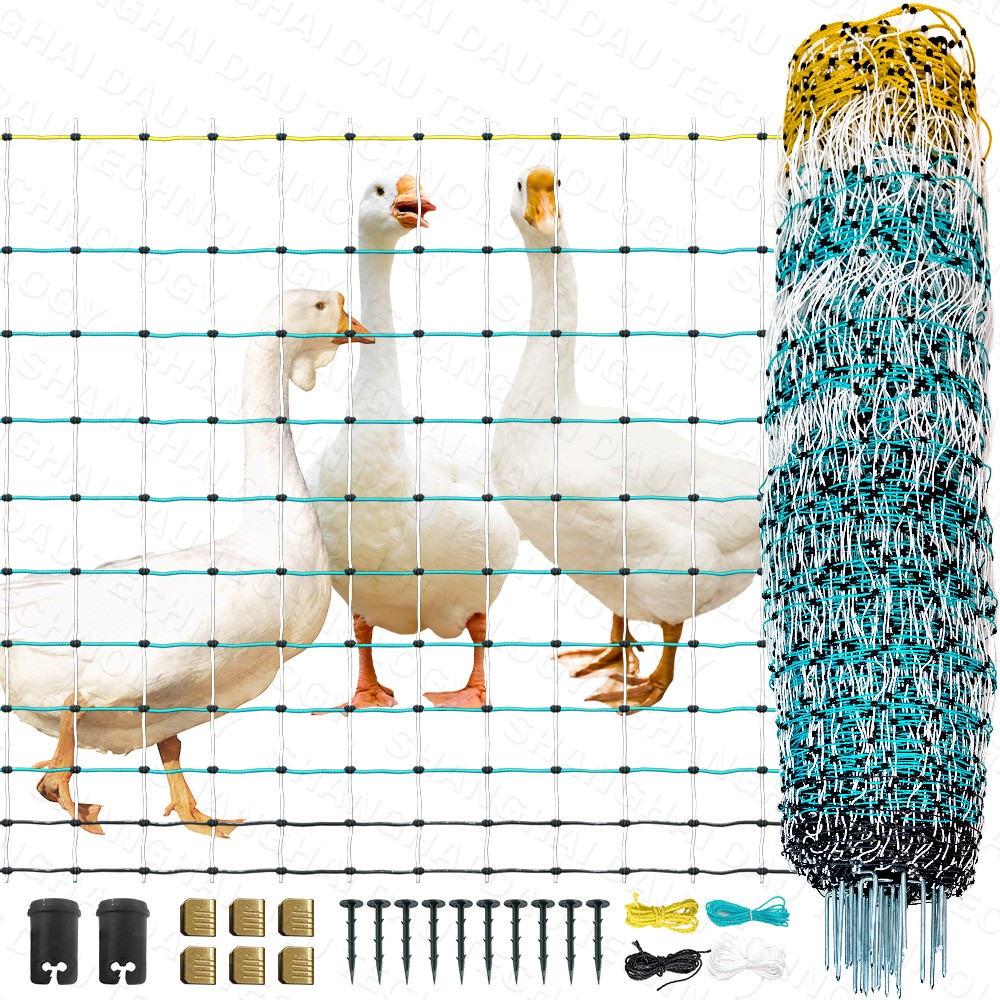 Electric Poultry Netting Chicken Fence Ducks Turkeys Sheep Geese Fence in Yard$147.19View on eBay
Highlights
- Poultry net height typically ranges 40–48 in; 48-in nets deter foxes and dogs better but are heavier to move and need tighter corner bracing.
- Conductive strand count separates tiers: premium nets use 8–12 stainless or tinned-copper verticals with double horizontal wires; budget nets use 4–6 and lose voltage over long runs.
- Mesh openings of 2–4 in contain adult chickens; openings over 4 in let chicks and bantams through, requiring 2-in mesh or a secondary chick fence.
- Net rolls are commonly 50 or 82 ft; longer runs need higher-joule energizers (0.25 J+ for 300 ft) and multiple ground rods to maintain voltage above 3 kV.
Best use cases
- Best fit: rotational grazing for 10–30 adult chickens — pick an 82-ft, 48-in net with 10+ conductive strands and a 0.5 J energizer, skipping short 25-ft garden nets that need constant repositioning.
- Best fit: backyard flock with chicks or bantams — choose 2-in mesh or add a 24-in chick net inside the main perimeter; standard 4-in mesh will leak small birds and should be skipped.
- Best fit: predator pressure from foxes and coyotes — use a 48-in net plus a top wire or offset hot wire; 40-in nets and low-joule energizers are wrong-fit and will not stop determined canids.
- Wrong fit: permanent boundary fencing — electric netting is portable and UV-degrading; buyers needing a 10-year boundary should install woven wire with a charged offset wire instead.
Buying tips
- Match energizer joules to net length: under 150 ft needs 0.1–0.25 J, 150–300 ft needs 0.5 J, and over 300 ft needs 1 J+ with a 3-ft ground rod.
- Count conductive verticals before buying: 8+ strands for predator deterrence and 10–12 for dense poultry containment; 4–6 strand nets are light-duty only.
- Verify post spacing: 10–12 ft between built-in posts keeps net tension; wider spacing sags and shorts against vegetation, dropping voltage below the 3 kV target.
- Choose UV-stabilized black or green poly with tinned-copper conductors; bare galvanized wire corrodes faster in humid climates and raises resistance over seasons.
Specs
| Net Height | 40–48 in (48 in for predators) |
|---|---|
| Roll Length | 25 / 50 / 82 ft options |
| Conductive Strands | 4–12 verticals; 10+ heavy-duty |
| Mesh Opening | 2–4 in; 2 in for chicks |
Related searches
What to check before buying
- Measure the perimeter and add 10% for corners and gates — a 100-ft run needs at least 110 ft of net or two 50-ft rolls joined with a jumper.
- Confirm a 110V or 12V energizer is available at the fence line and that the net's plug pattern matches your energizer's terminal clips.
- Check ground conditions: dry sand needs two or three 3-ft ground rods; rocky soil may require a mesh ground mat instead of driven rods.
- Clear a 12-in strip under the net line of tall grass and brush to prevent voltage leakage and shorts before installation.
FAQ
Data sources: eBay / Amazon listings and product attribute feeds. Updated Nov 27, 2026.
Some links on this page are affiliate links. If you buy after clicking one, we may earn a commission at no extra cost to you. This does not change which products appear here or their order. Affiliate disclosure.