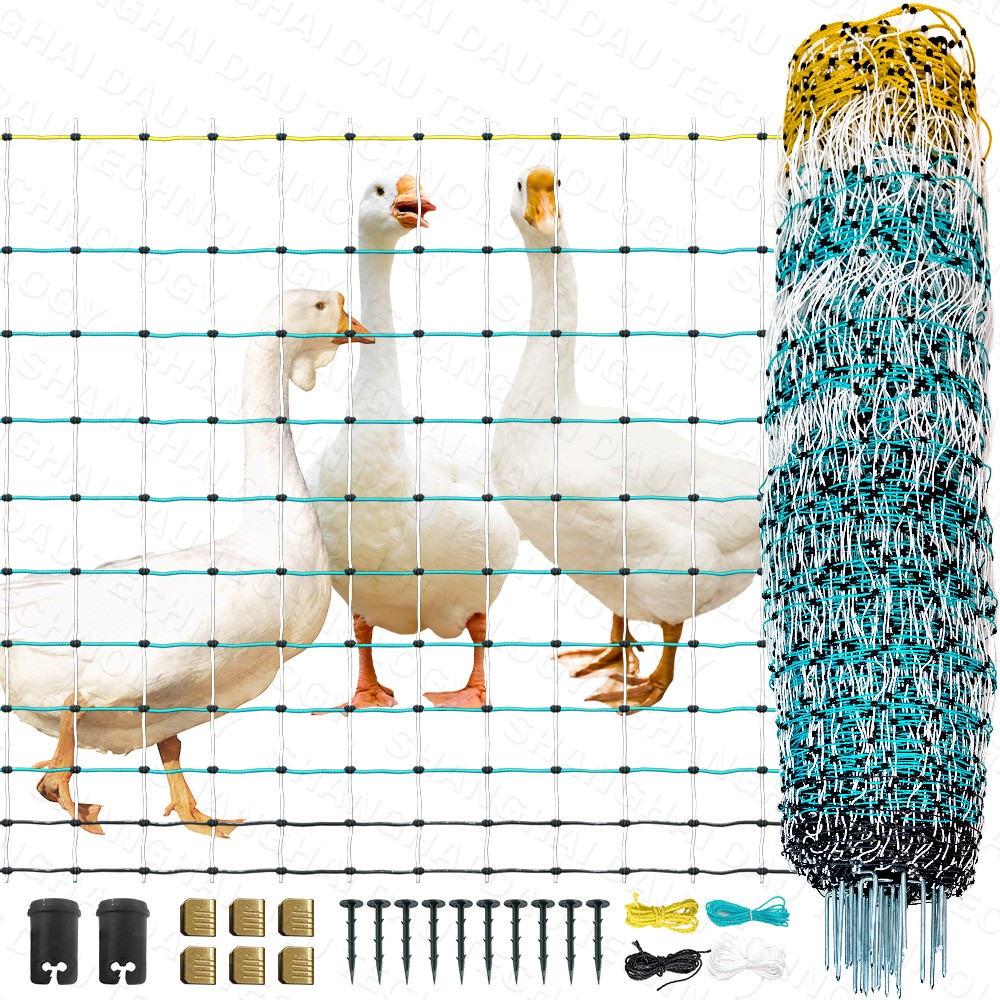

Photos from current listings. Actual item, color, and included accessories may vary.
Electric Chicken Fence Buying Guide
Electric chicken fencing is a pulsating, low-impedance containment system that pairs a energizer with conductive netting or polywire to deter ground predators and keep flocks in. The core trade-off is energizer joule output versus net mesh density and height: underpowered units on long runs lose voltage, while flimsy 1-joule kits fail on dry soil or heavy weed load. The decision rule: match energizer stored joules to total fence length, choose netting with at least 9 horizontal strands and 48-inch height for daytime ranging, and step up to double-spike or 2-joule energizers for runs beyond 164 feet or dry/sandy ground.
Key takeaways
- Energizer output is rated in stored joules; a 0.5-joule unit handles roughly 500 feet of clean netting, while 2 joules pushes past 1,500 feet.
- Poultry netting typically uses 9 to 12 horizontal conductive strands with vertical struts every 3 to 6 inches; fewer strands let chicks and small predators slip through.
- 48-inch net height stops most ground predators (fox, raccoon, dog), but coyote and deer pressure requires 60-inch netting or a second offset wire.
At a glance
- Category
- Chicken Fencing & Egg Handling
- Last updated
- Nov 28, 2026
Current offers
Highlights
- Energizer output is rated in stored joules; a 0.5-joule unit handles roughly 500 feet of clean netting, while 2 joules pushes past 1,500 feet.
- Poultry netting typically uses 9 to 12 horizontal conductive strands with vertical struts every 3 to 6 inches; fewer strands let chicks and small predators slip through.
- 48-inch net height stops most ground predators (fox, raccoon, dog), but coyote and deer pressure requires 60-inch netting or a second offset wire.
- Low-impedance energizers maintain voltage on wet vegetation and long runs; conventional units drop below the 2,000-volt minimum needed for reliable shock.
Best use cases
- Best fit: backyard flock of 6-12 hens on a rotated paddock — pick a 48-inch x 164-foot net kit with a 0.5-1 joule energizer and step-in posts; skip permanent woven wire, which is harder to move.
- Best fit: dry or sandy soil with heavy weed growth — choose a low-impedance 2-joule energizer and double-spike ground rods; skip 0.25-joule solar units that cannot push voltage through dry earth.
- Best fit: overnight predator protection in coyote country — use 60-inch netting plus a top wire or a 2-joule energizer on a 48-inch net; skip single-strand polywire, which coyotes jump or dig under.
- Wrong fit: containing chicks under 4 weeks or ducklings — net mesh and lowest strand spacing let them walk through; use a solid brooder pen until they are feathered out.
Buying tips
- Size the energizer at 1 stored joule per 500 feet of single-strand netting, then double it for dry soil, heavy weeds, or 12-strand dense mesh.
- Choose netting with at least 9 horizontal strands and vertical struts no wider than 6 inches; 12-strand netting is the minimum for chicks and bantam breeds.
- Confirm the energizer is low-impedance and rated for outdoor use; a 12-volt battery or solar setup needs a regulator to avoid overcharging.
- Match net height to predator pressure: 48 inches for fox and raccoon, 60 inches for coyote and deer, and always add a ground rod every 100 feet on long runs.
Specs
| Energizer Output | 0.5-2 stored joules low-impedance |
|---|---|
| Net Height | 48 in standard / 60 in coyote-grade |
| Horizontal Strands | 9-12 conductive strands |
| Roll Length | 164 ft typical; 100-330 ft available |
Related searches
What to check before buying
- Measure the perimeter you need to enclose and add 10% for corners and gate gaps; order netting in 164-foot rolls only if your run is under 150 feet after corners.
- Test soil moisture before buying: dry sand or gravel requires a 2-joule low-impedance energizer and at least three ground rods spaced 10 feet apart.
- Confirm your outlet or solar panel voltage matches the energizer input; 110V AC units need a nearby outlet, while 12V battery/solar units need 8-10 hours of direct sun.
- Check that the netting includes step-in posts with a spike length suited to your soil; soft ground needs 9-inch spikes, hardpan needs a post driver and 12-inch spikes.
FAQ
Data sources: eBay / Amazon listings and product attribute feeds. Updated Nov 28, 2026.
Some links on this page are affiliate links. If you buy after clicking one, we may earn a commission at no extra cost to you. This does not change which products appear here or their order. Affiliate disclosure.