
Photos from current listings. Actual item, color, and included accessories may vary.
Egg Incubator Machine Buying Guide
Egg incubators succeed or fail on two mechanical fundamentals: how evenly they move air and how precisely they hold temperature and humidity across the tray. Most beginners overbuy capacity they never fill, while serious hatchers underestimate how much egg turning and humidity stability affect hatch rates. Pick the capacity, turning method, and humidity system that match your hatch volume and species before considering cabinet size.
Median $56.95
Key takeaways
- Forced-air fan circulation is the baseline for uniform temperature; still-air incubators develop hot and cold zones that skew hatch timing across trays.
- Automatic turning runs on a timed motor that tilts trays roughly every 45-60 minutes; manual turning means opening the lid and rotating eggs by hand at least 4-6 times daily.
- Humidity control separates tiers: passive water channels require hand adjustment, while self-regulating or pump-fed systems hold relative humidity near the 45-55% incubation and 65-75% lockdown targets.
At a glance
- Category
- Chicken Fencing & Egg Handling
- Last updated
- Nov 27, 2026
Current offers
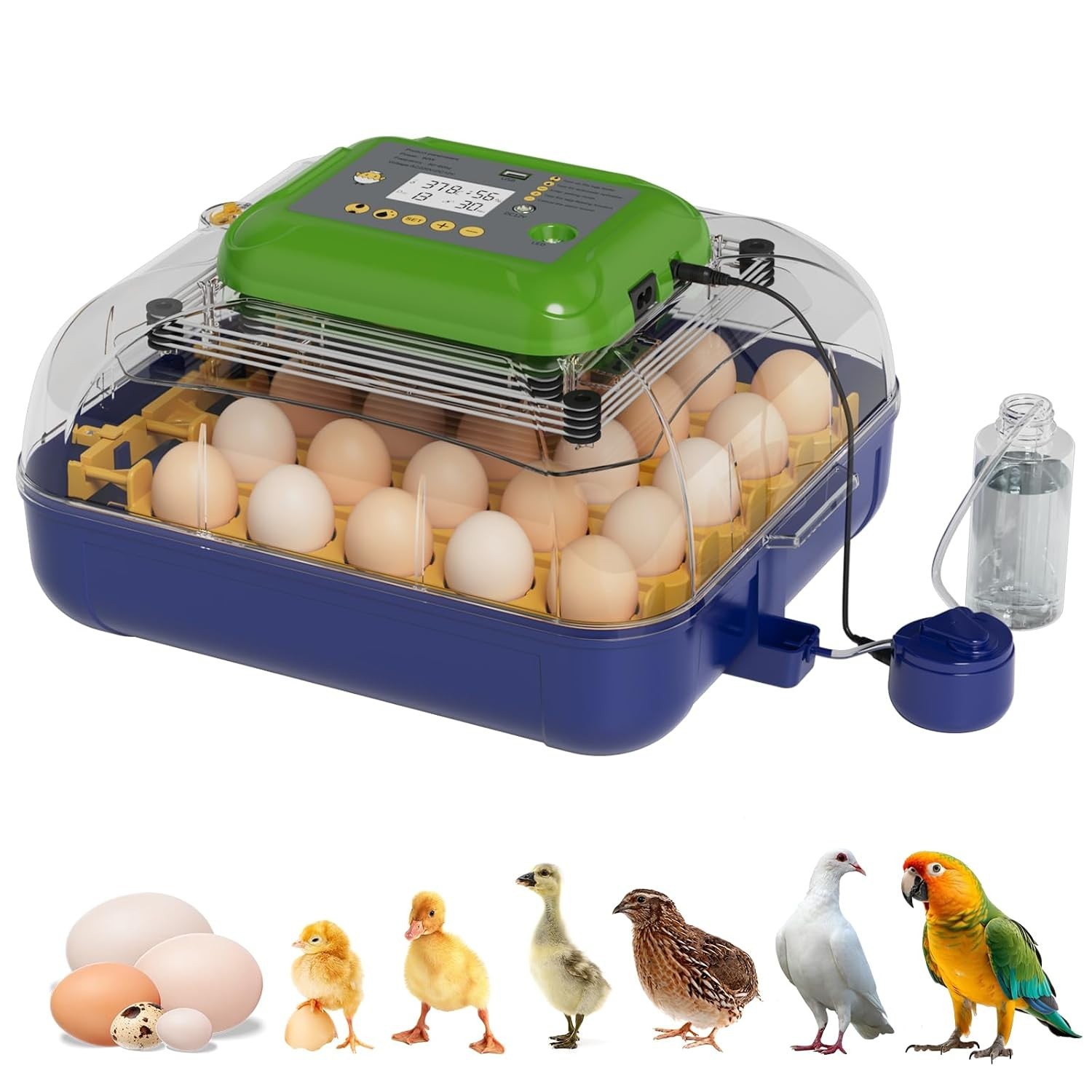 25 Egg Incubator for Hatching Eggs, Chicken Incubator with Automatic Turner,$49.99View on eBay
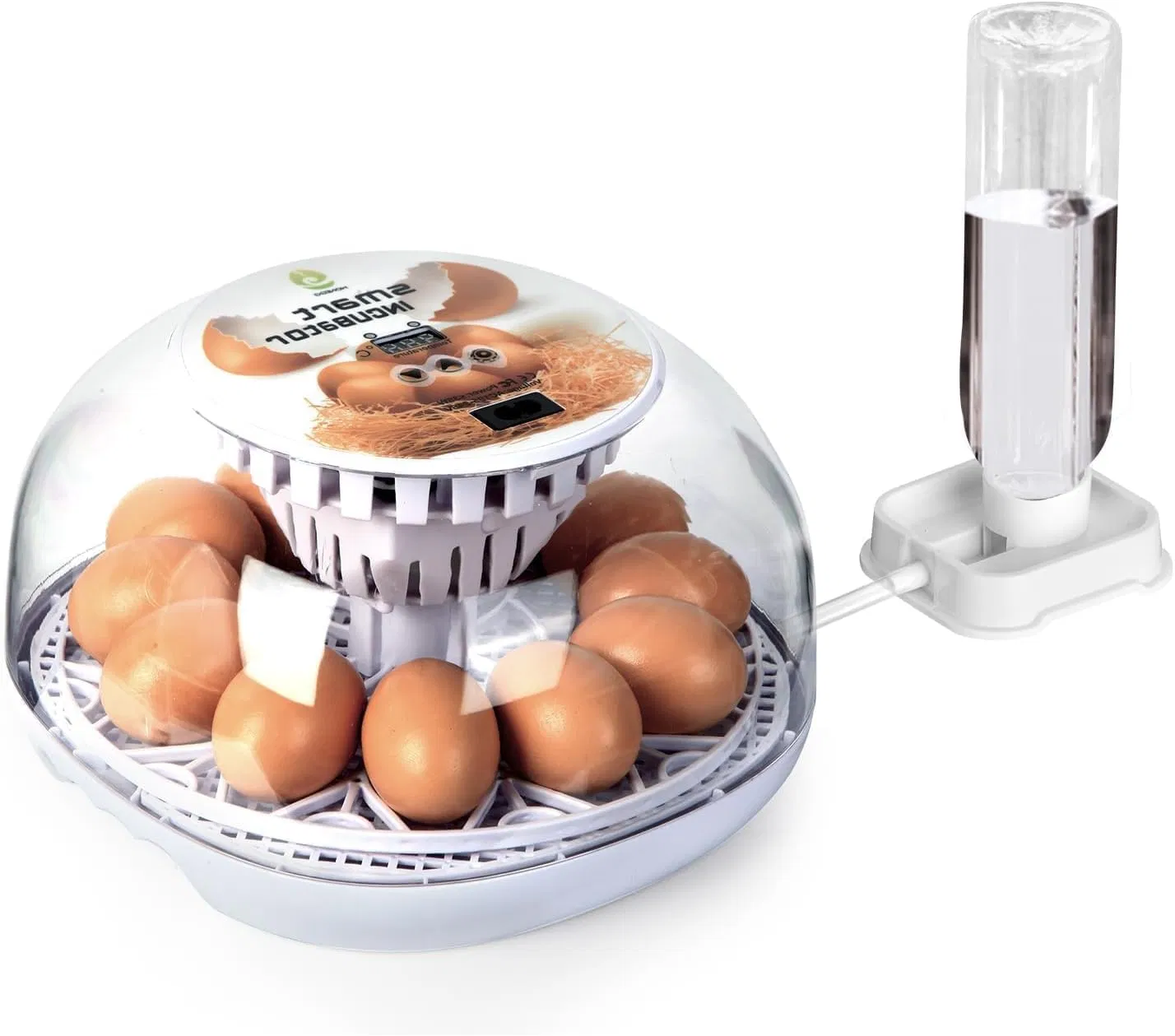 12-Egg Incubator for Beginners, Auto Egg Turn, Steady Self-Regulating Humidity & Consistent Temperature Control for Hatching Chicken, Goose, Duck, Quail, Pigeon, and Turkeys$185.99View on Mallflare
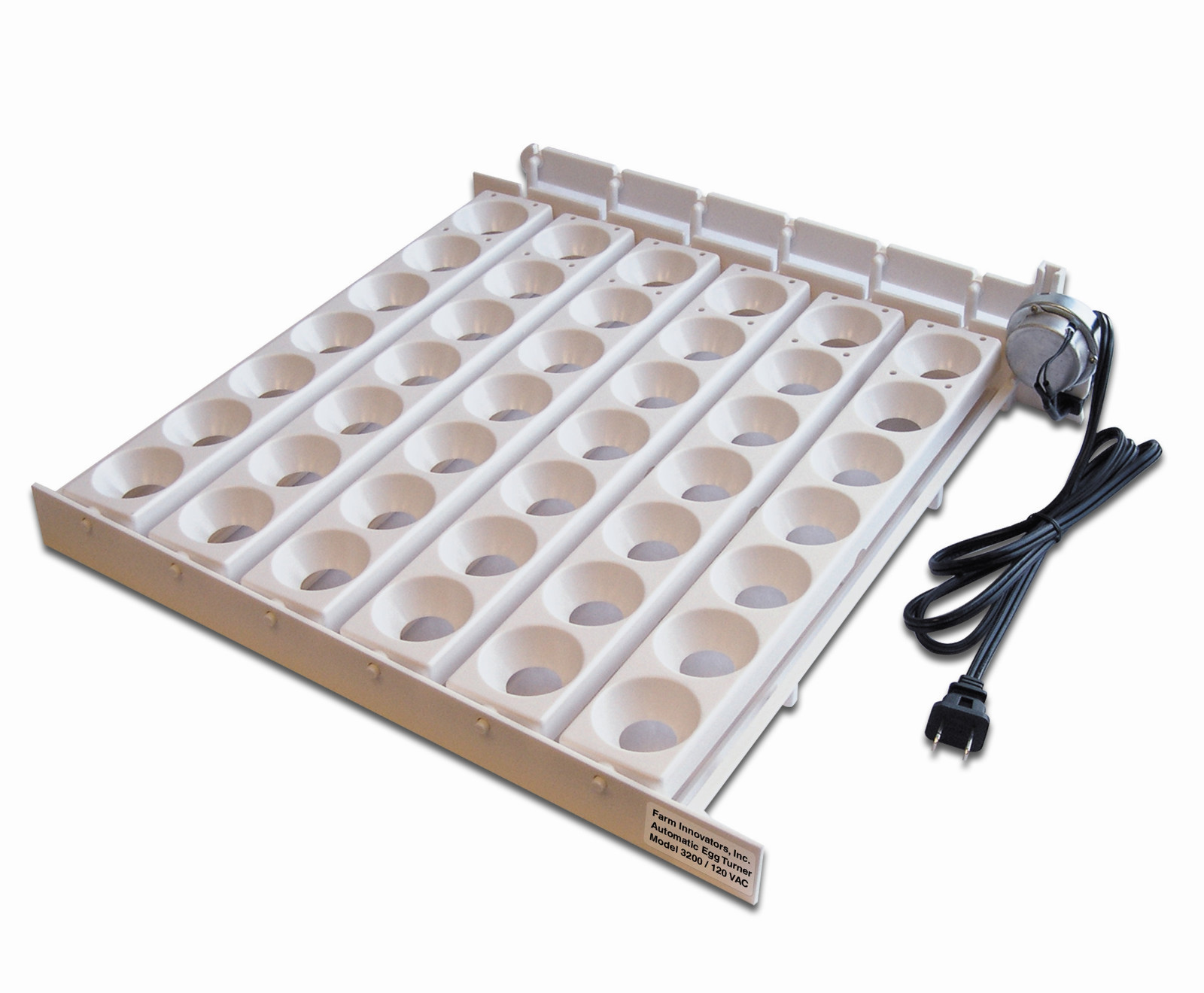 FARM INNOVATORS 3200 CHICKEN POULTRY 42 LARGE EGG INCUBATOR AUTOMATIC TURNER$56.95View on eBay
Highlights
- Forced-air fan circulation is the baseline for uniform temperature; still-air incubators develop hot and cold zones that skew hatch timing across trays.
- Automatic turning runs on a timed motor that tilts trays roughly every 45-60 minutes; manual turning means opening the lid and rotating eggs by hand at least 4-6 times daily.
- Humidity control separates tiers: passive water channels require hand adjustment, while self-regulating or pump-fed systems hold relative humidity near the 45-55% incubation and 65-75% lockdown targets.
- Capacity ratings count small chicken eggs; large eggs like duck or goose fill trays faster, and quail eggs can double or triple the nominal count in the same footprint.
Best use cases
- Best fit: a first-time hatcher running 12-24 chicken eggs should choose a compact forced-air unit with auto turn and a visible humidity readout, skipping large cabinet models.
- Best fit: a smallholder hatching 42-50 eggs per cycle needs a 42-egg-class forced-air incubator with automatic turner and separate lockdown space or a second tray.
- Best fit: multi-species hatchers (duck, goose, quail, turkey) need adjustable tray dividers and a humidity system that can hold higher lockdown moisture; skip fixed-tray 12-egg starter units.
- Wrong fit: buying a 100+ egg cabinet for a first hatch; large cabinets amplify humidity swings and require stable room conditions most beginners lack.
Buying tips
- Size capacity to your largest single hatch, not your flock total; chicken eggs in a 12-egg unit translate to roughly 6-8 duck eggs or 30-40 quail eggs per tray.
- Prioritize forced-air circulation with a fan and a calibrated digital thermometer; analog dials routinely drift several degrees and cause staggered hatches.
- Choose automatic turning with a metal-gear or worm-drive motor for durability; plastic gear trains strip under continuous 21-day cycles.
- Inspect humidity hardware: a pump-fed or self-regulating system beats open water channels for lockdown, when opening the lid to add water costs critical moisture.
Specs
| Airflow | Forced-air fan vs still-air |
|---|---|
| Turning | Automatic timed turner vs manual |
| Humidity Control | Self-regulating/pump vs passive channels |
| Egg Capacity | 12 / 25 / 42 / 50+ chicken eggs |
Related searches
What to check before buying
- Measure your hatch room: incubators need stable ambient temperature around 70-75°F (21-24°C) and low drafts; garages and sheds swing too much for cabinet units.
- Confirm your power standard (120V US vs 230V EU plug) and plan for a backup battery or inverter, since a multi-hour outage can kill an entire clutch.
- Check egg sizes you intend to hatch against tray dimensions; goose and large duck eggs need wider spacing than chicken-egg trays provide.
- Budget for a separate hygrometer and thermometer to verify built-in readings, plus a candler and lockdown tray for the final three days.
FAQ
Data sources: eBay / Amazon listings and product attribute feeds. Updated Nov 27, 2026.
Some links on this page are affiliate links. If you buy after clicking one, we may earn a commission at no extra cost to you. This does not change which products appear here or their order. Affiliate disclosure.