
Photos from current listings. Actual item, color, and included accessories may vary.
Chicken Wire Mesh Fence Buying Guide
Chicken wire mesh fence splits into two distinct product families: hexagonal woven 'poultry netting' for containing chickens and welded 'hardware cloth' for excluding predators. The defining trade-off is mesh aperture versus wire gauge: small apertures and heavy gauges stop snakes, rats, and raccoons, while large-aperture light-gauge netting only contains birds. Buy hardware cloth at 1/2 in aperture and 16-19 gauge for predator-proof coops; buy hexagonal netting only for temporary containment or garden trellis work.
Median $98.99
Key takeaways
- Welded hardware cloth in 1/2 in mesh blocks snakes, rats, and weasels; 1 in mesh stops raccoons and foxes but admits small rodents; 2 x 3 in mesh only contains adult birds.
- 16 gauge wire (approx. 1.6 mm) resists bending and gnawing; 19 gauge (approx. 1.0 mm) is lighter and deforms under predator pressure, so use 16 gauge on ground-contact and lower 24 in of any run.
- Hot-dip galvanized-after-welding mesh carries a zinc coating at every weld point and outlasts galvanized-before-welding by years outdoors; vinyl/PVC coating adds abrasion and rust protection but hides weld corrosion.
At a glance
- Category
- Chicken Fencing & Egg Handling
- Last updated
- Nov 27, 2026
Current offers
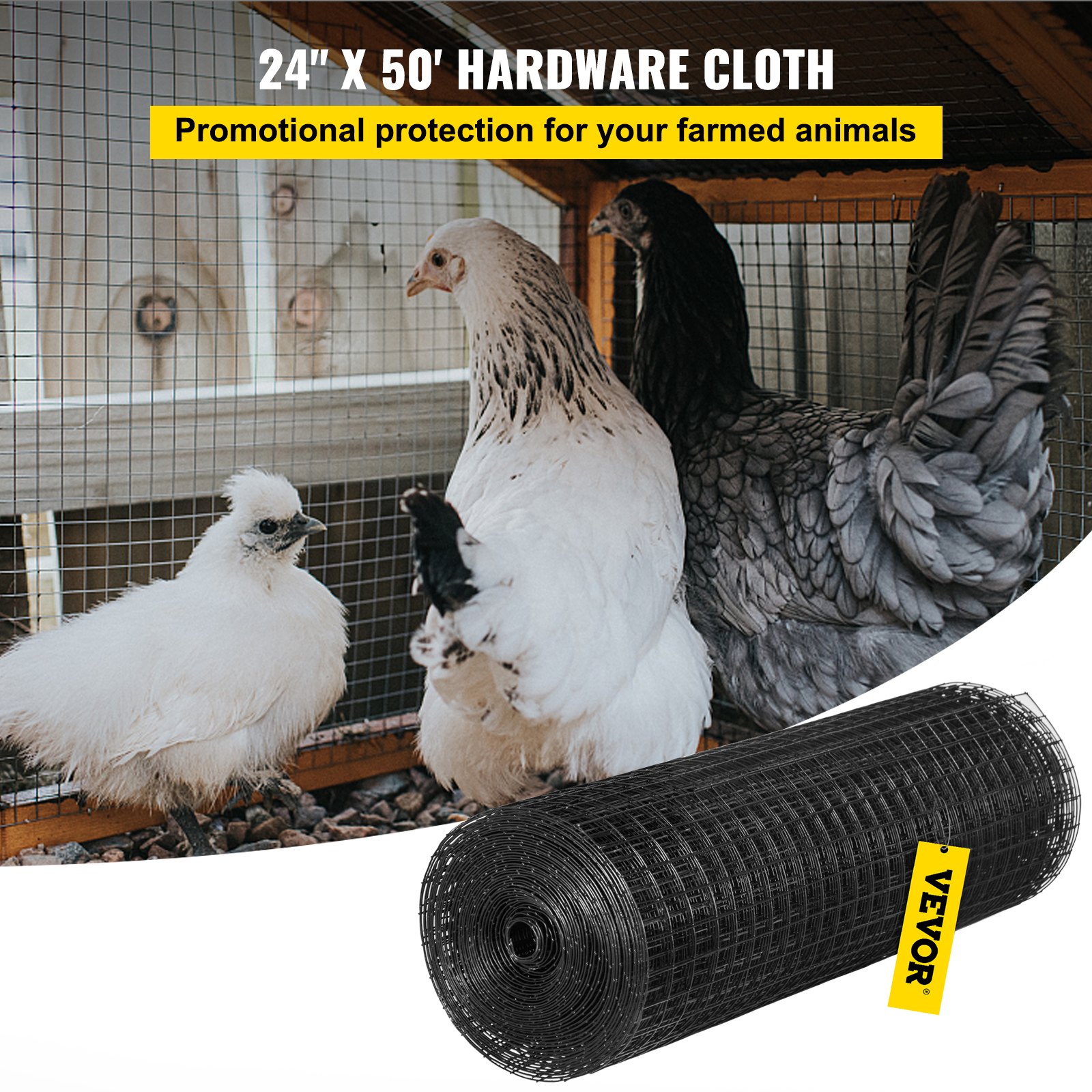 Welded Wire Fence Vinyl Coated Chicken Rabbit Mesh$55.99View on Mallflare
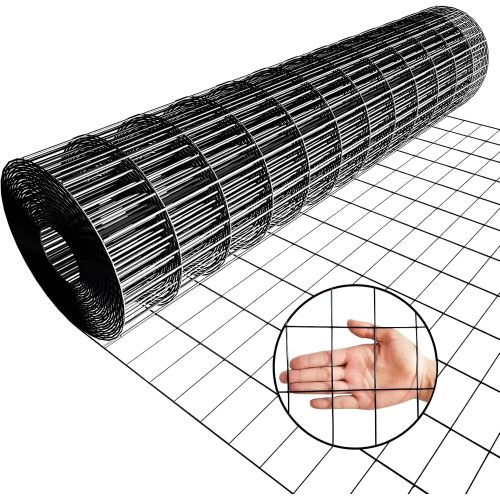 24inch X 50ft Black Vinyl Coated Hardware Cloth 2 X 3 16Ga Welded Wire Mesh Fence, PVC Chicken Fencing, Metal Garden Plant For Coop And Home Improvement$65.99View on Mallflare
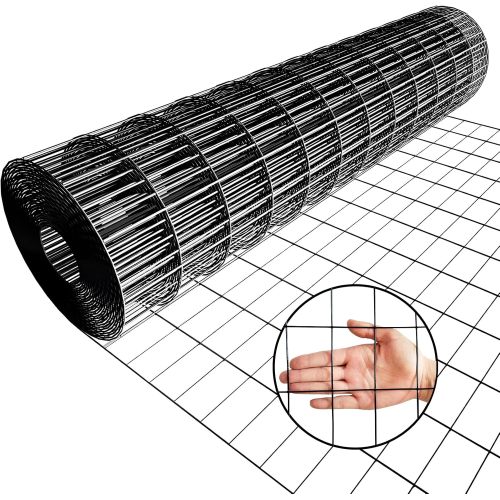 36inch X 50ft Black Vinyl Coated Hardware Cloth 2 X 3 16Ga Welded Wire Mesh Fence, PVC Chicken Fencing, Metal Garden Plant For Coop And Home Improvement$68.99View on Mallflare
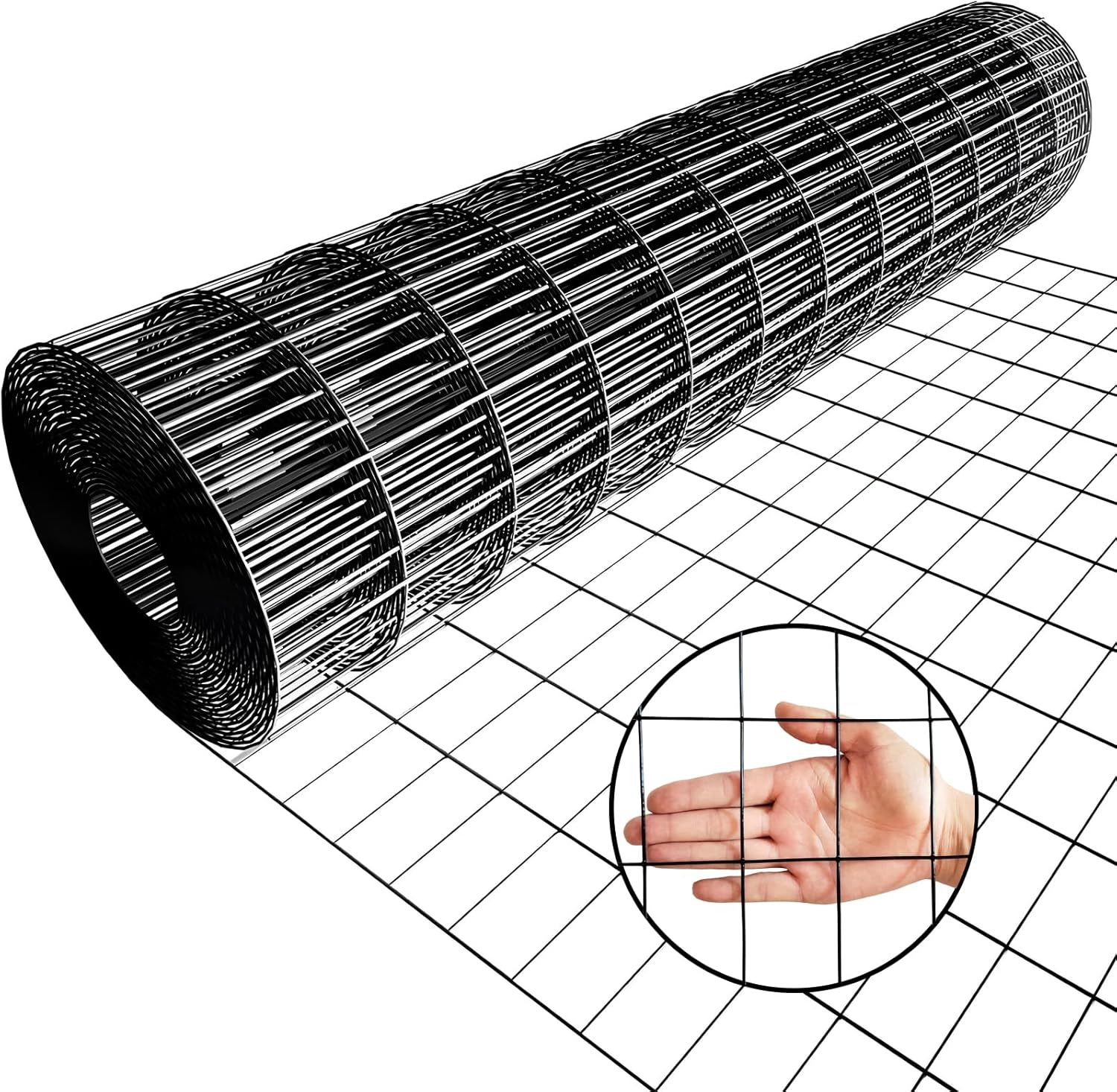 24inch x 50ft Black Vinyl Coated Hardware Cloth 2" X 3" 16Ga Welded Wire Mesh fence, PVC Chicken Fencing, Metal Garden Plant for Coop and Home Improvement$98.99View on Mallflare
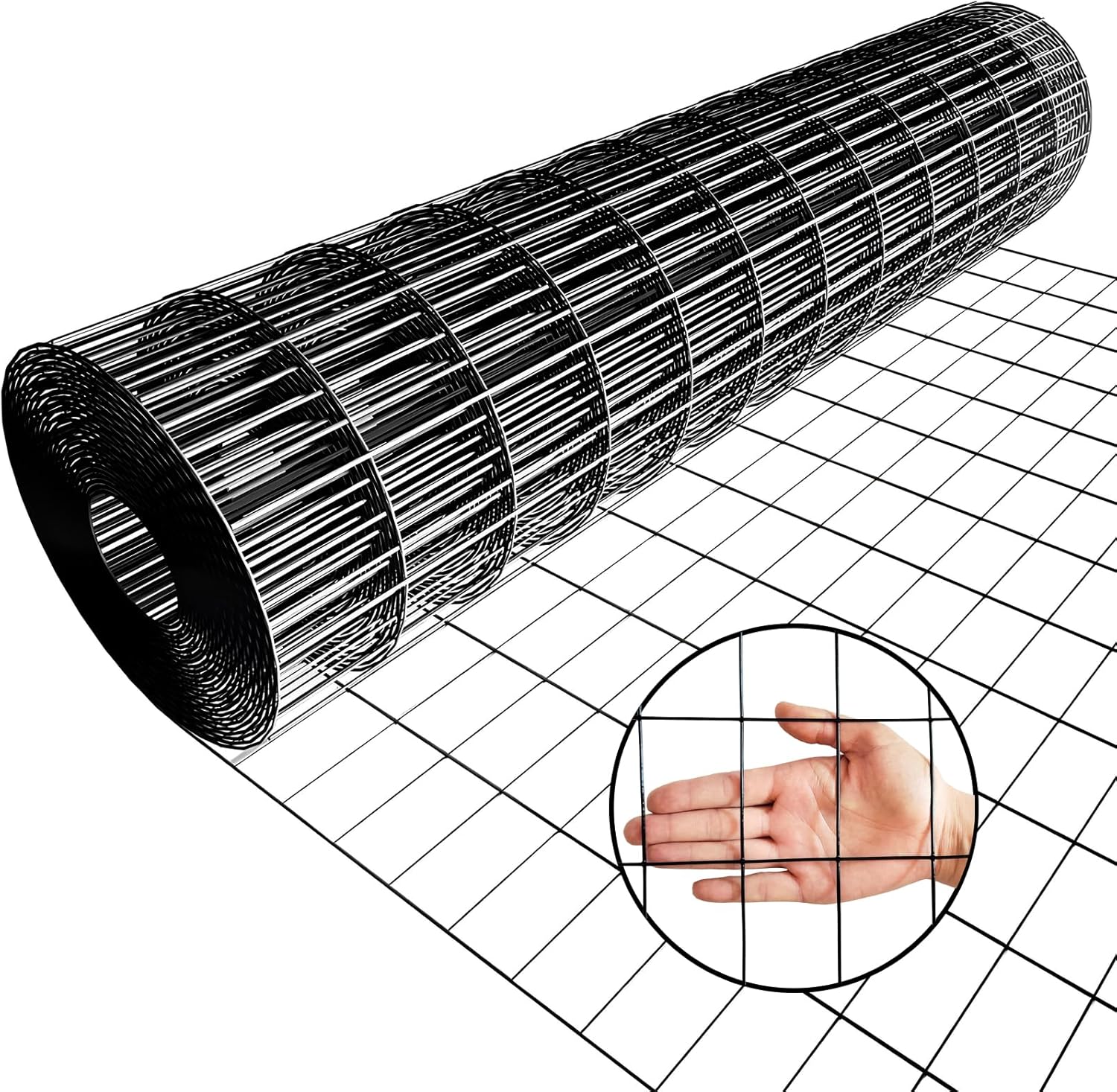 36inch x 50ft Black Vinyl Coated Hardware Cloth 2" X 3" 16Ga Welded Wire Mesh fence, PVC Chicken Fencing, Metal Garden Plant for Coop and Home Improvement$104.99View on Mallflare
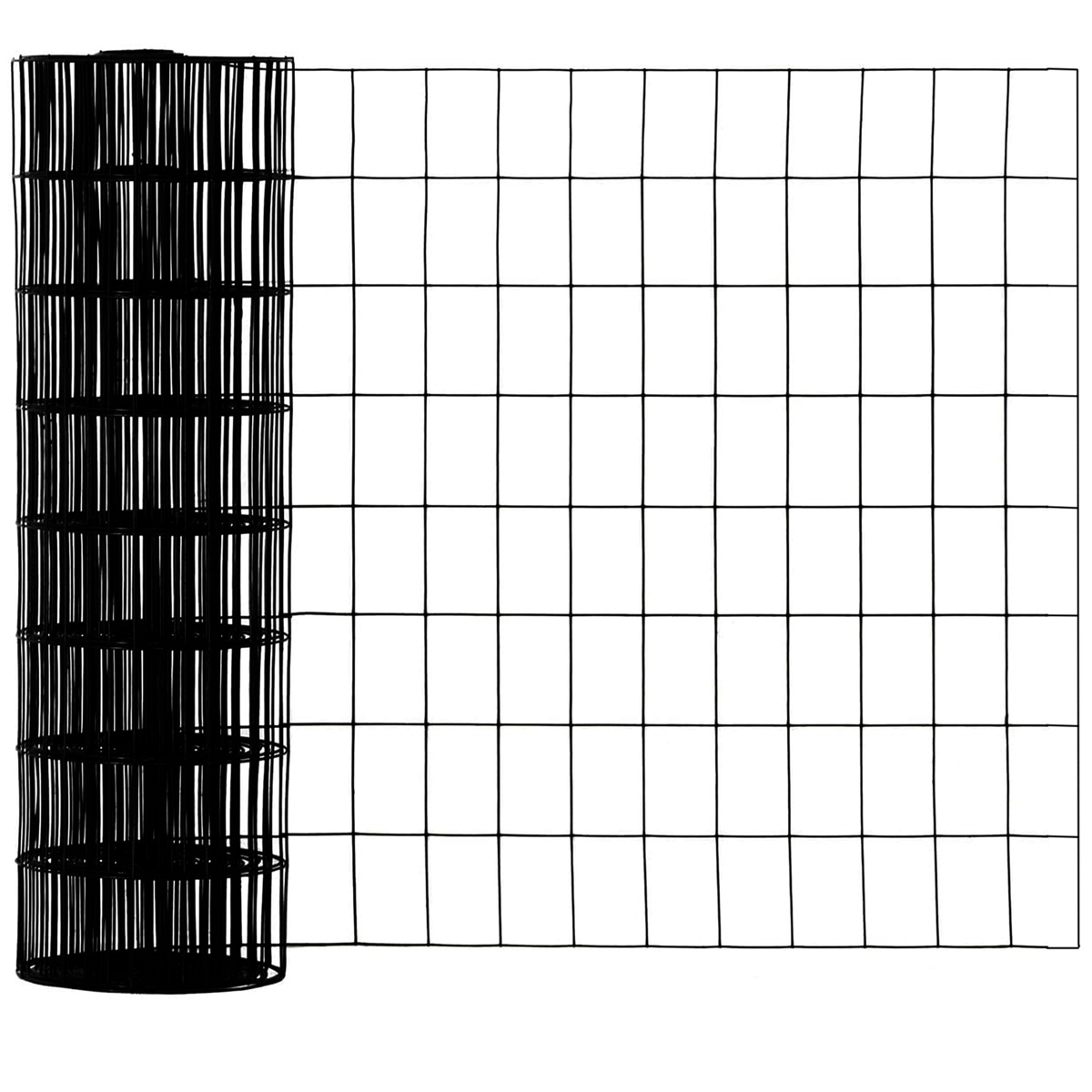 60inch X 50ft Black Vinyl Coated Hardware Cloth 2 X 4 16Ga Welded Wire Mesh Fence, PVC Chicken Fencing, Metal Garden Plant For Coop And Home Improvement$115.99View on Mallflare
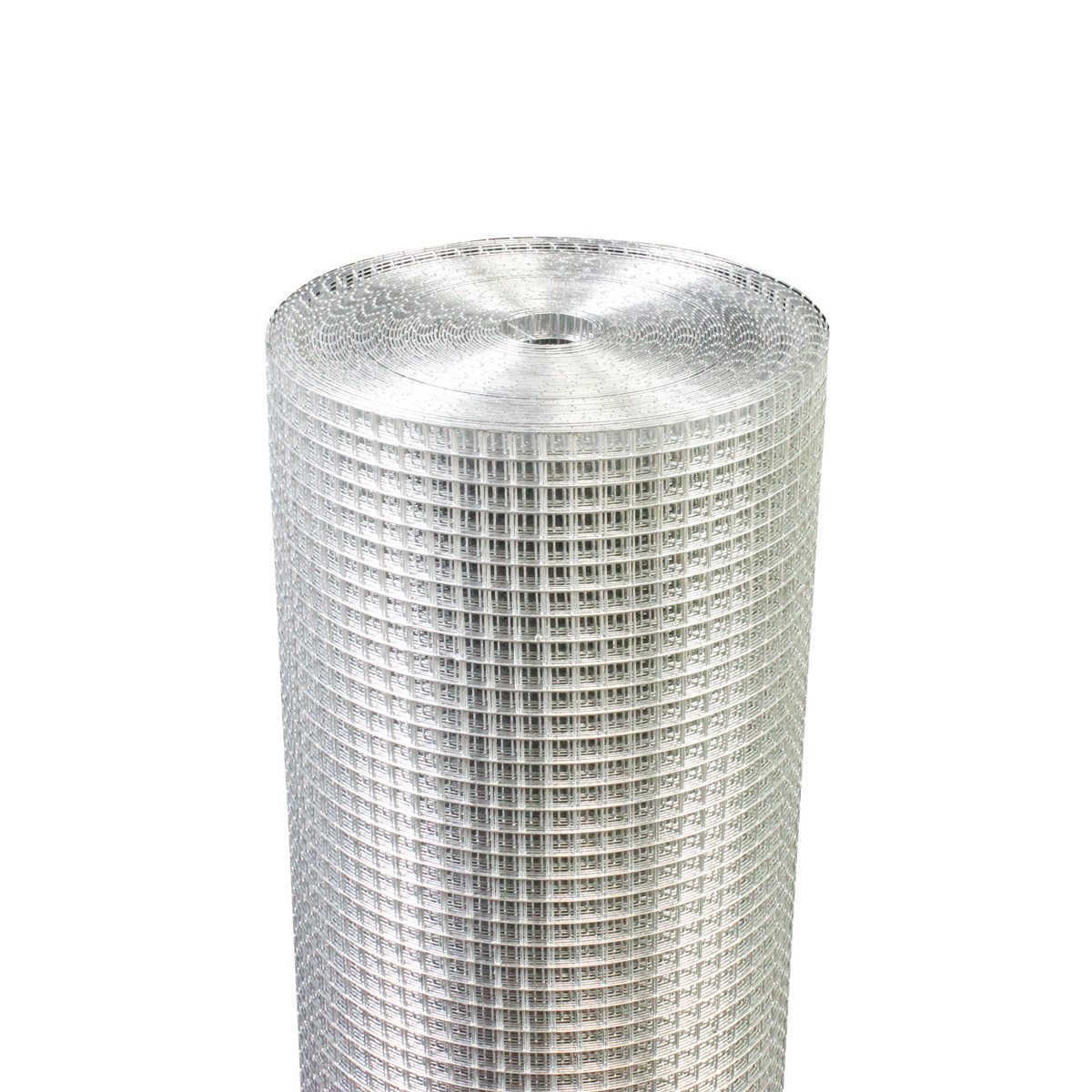 Chicken Wire Mesh Fence Roll After Metal Welding$164.99View on Mallflare
Highlights
- Welded hardware cloth in 1/2 in mesh blocks snakes, rats, and weasels; 1 in mesh stops raccoons and foxes but admits small rodents; 2 x 3 in mesh only contains adult birds.
- 16 gauge wire (approx. 1.6 mm) resists bending and gnawing; 19 gauge (approx. 1.0 mm) is lighter and deforms under predator pressure, so use 16 gauge on ground-contact and lower 24 in of any run.
- Hot-dip galvanized-after-welding mesh carries a zinc coating at every weld point and outlasts galvanized-before-welding by years outdoors; vinyl/PVC coating adds abrasion and rust protection but hides weld corrosion.
- Standard roll format is 24, 36, or 48 in width by 50 ft length; a 48 in x 50 ft roll yields 200 sq ft, enough to wrap a 4 x 8 ft coop skirt and apron at 24 in depth.
Best use cases
- Predator-proof permanent coop and run: choose 1/2 in aperture, 16 gauge, hot-dip galvanized hardware cloth in 36 or 48 in width; skip hexagonal poultry netting entirely.
- Temporary pasture rotation or garden bed containment: choose lightweight hexagonal chicken wire in 24-36 in height with step-in posts; skip heavy hardware cloth where portability matters.
- Buried predator apron around a coop perimeter: choose 1/2 in 19 gauge galvanized hardware cloth cut in 24 in widths and bent into an L; skip vinyl-coated mesh underground because coating hides rust.
- Rabbit hutch or snake exclusion: choose 1/2 in or smaller aperture at 19-16 gauge; skip 2 x 3 in mesh, which admits snakes and small rodents.
Buying tips
- Size the roll by perimeter math: total fence length times height, plus 24 in of apron width for buried skirts; 50 ft rolls cover 50 linear ft of 48 in fence or 100 linear ft of 24 in fence.
- Match aperture to the smallest predator: 1/2 in stops snakes and rats, 1 in stops raccoons, 2 x 3 in stops only birds; never use 2 x 3 in below 24 in height.
- Pick 16 gauge for ground contact, gates, and lower panels; 19 gauge is acceptable for upper panels and trellis where bending loads are low.
- Specify hot-dip galvanized after welding for outdoor use; electro-galvanized or pre-galvanized mesh rusts at cut ends and welds within a few seasons.
Specs
| Mesh Type | Welded hardware cloth vs woven hex netting |
|---|---|
| Aperture | 1/2 in, 1 in, 2 x 3 in |
| Wire Gauge | 16 ga heavy-duty / 19 ga standard |
| Roll Format | 24-48 in W x 50 ft L |
Related searches
What to check before buying
- Measure coop perimeter and height, then add 24 in apron width per buried edge before ordering roll length; confirm roll width matches your tallest panel.
- Confirm ground conditions: buried apron requires soil or gravel soft enough to trench 6-12 in; rocky ground needs surface-mounted apron weighted with pavers.
- Check fastener compatibility: wire mesh needs J-clips, hog rings, or stainless staples; wooden frames take 9-14 gauge staples, metal frames need self-drilling screws with washers.
- Confirm mesh gauge versus local predators: coyote and dog pressure demands 16 gauge and reinforced bottom; snake and rodent pressure demands 1/2 in or smaller aperture.
FAQ
Data sources: eBay / Amazon listings and product attribute feeds. Updated Nov 27, 2026.
Some links on this page are affiliate links. If you buy after clicking one, we may earn a commission at no extra cost to you. This does not change which products appear here or their order. Affiliate disclosure.