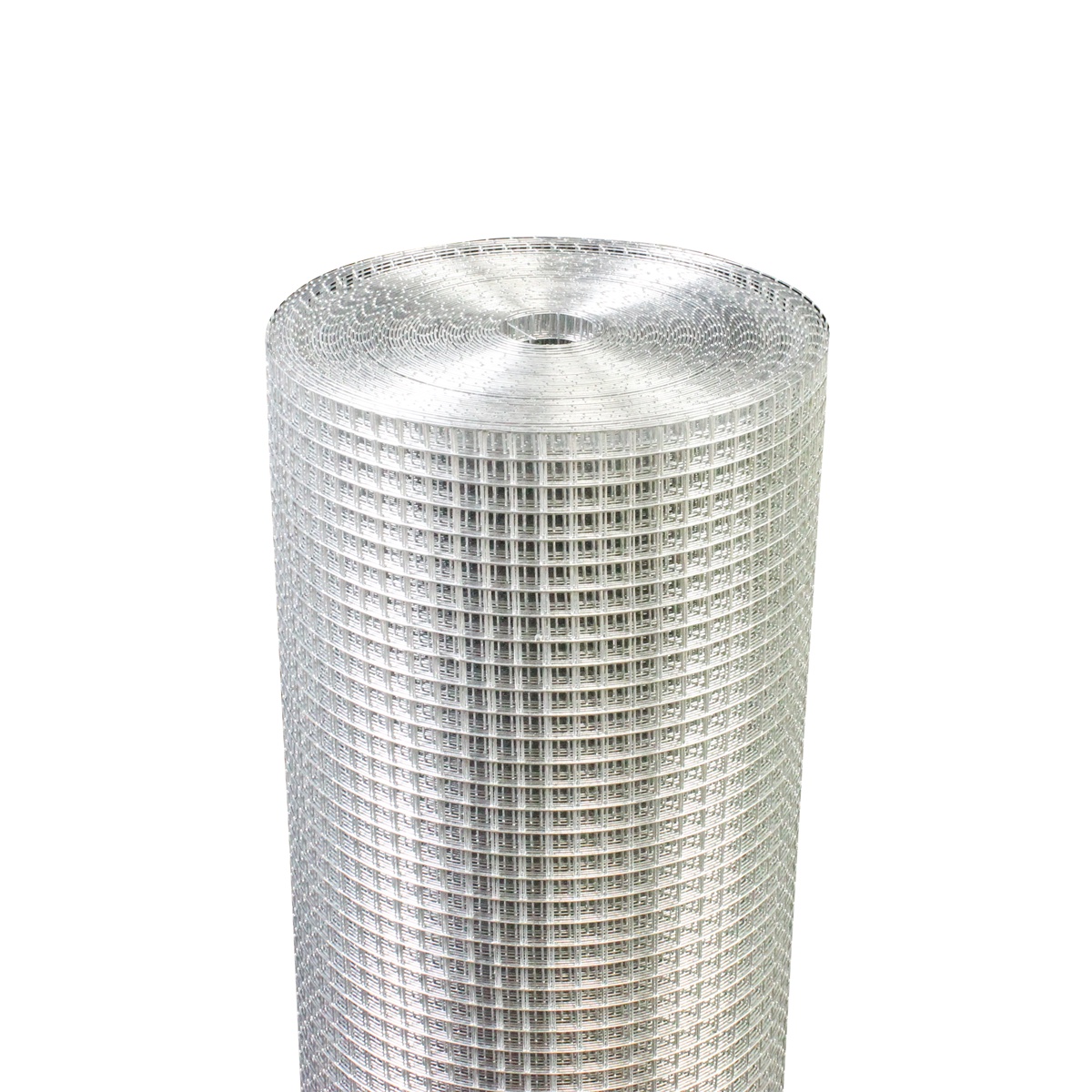

Photos from current listings. Actual item, color, and included accessories may vary.
Chicken Wire Garden Fence Buying Guide
Chicken wire garden fence is the welded-wire mesh barrier used to enclose coops, runs, and garden beds, and its durability hinges on wire gauge, mesh opening, and galvanization method rather than roll length. The core trade-off is predator resistance vs. cost and weight: thinner 23–27 gauge hexagonal netting stops chickens but not raccoons, while 16–19 gauge welded hardware cloth with hot-dip galvanizing resists both claws and corrosion. The decision rule: if the fence touches soil, predators, or coastal weather, buy hot-dip galvanized-after-welding welded cloth at 19 gauge or thicker with a mesh opening of 1/2 inch or smaller.
Key takeaways
- Welded hardware cloth (square mesh) is rigid and claw-resistant; traditional hexagonal chicken wire is flexible and only suits poultry containment, not predator exclusion.
- Hot-dip galvanized-after-welding (GAW) coats cut wire ends and weld joints, while electro-galvanized or pre-galvanized mesh rusts first at every weld intersection.
- Gauge controls strength: 16-gauge welded wire (approx. 1.6 mm) resists bending, 19-gauge (approx. 1.0 mm) is the predator-proof minimum, and 23-gauge (approx. 0.6 mm) is light garden netting only.
At a glance
- Category
- Chicken Fencing & Egg Handling
- Last updated
- Nov 28, 2026
Current offers
Highlights
- Welded hardware cloth (square mesh) is rigid and claw-resistant; traditional hexagonal chicken wire is flexible and only suits poultry containment, not predator exclusion.
- Hot-dip galvanized-after-welding (GAW) coats cut wire ends and weld joints, while electro-galvanized or pre-galvanized mesh rusts first at every weld intersection.
- Gauge controls strength: 16-gauge welded wire (approx. 1.6 mm) resists bending, 19-gauge (approx. 1.0 mm) is the predator-proof minimum, and 23-gauge (approx. 0.6 mm) is light garden netting only.
- Mesh opening sets what passes through: 1/2 inch and 1/4 inch block rats, snakes, and weasels; 2x3 inch and 1x2 inch mesh only contain adult chickens.
Best use cases
- Predator-proof coop and run perimeter: choose 19-gauge or thicker hot-dip galvanized welded cloth with 1/2 inch or smaller openings, buried 12 inches or framed with an apron.
- Garden bed and seedling protection: 1/2 inch 19-gauge cloth on 24–36 inch rolls supports climbing plants and blocks rabbits; skip flimsy hexagonal netting that rabbits push through.
- Temporary poultry paddock or trellis: lightweight 2x3 inch 16-gauge vinyl-coated mesh on 24–72 inch rolls is fast to deploy, but wrong for ground-level predator defense.
- Snake, rat, or rabbit exclusion: use 1/4 inch 23-gauge cloth only where strength demand is low; step up to 1/2 inch 19-gauge where gnawing or clawing animals press against the fence.
Buying tips
- Match opening to threat: 1/2 inch or smaller for rats, snakes, and weasels; 1x2 inch or 2x3 inch only for adult chicken containment where predators are absent.
- Pick hot-dip galvanized-after-welding for outdoor ground contact; vinyl (PVC) coating adds corrosion and cut protection but hides rust, so inspect the weld before coating.
- Reinforce with a bottom apron: bend 12–18 inches of mesh outward at ground level or bury it to stop digging predators, since no gauge stops a determined digger alone.
- Roll height should exceed the tallest bird's reach plus 12 inches; 24–36 inch rolls suit garden beds, 48–72 inch rolls suit walk-in runs and deer-height beds.
Specs
| Mesh Type | Welded hardware cloth vs hex netting |
|---|---|
| Wire Gauge | 23–27 ga netting / 16–19 ga welded |
| Mesh Opening | 1/4 in to 2x3 in square |
| Coating | Hot-dip GAW vs vinyl-coated |
Related searches
What to check before buying
- Measure the full perimeter and add 10–15% for overlaps, corners, and gate framing before choosing roll length.
- Confirm ground conditions: soil contact and coastal or humid climates demand GAW or vinyl-coated welded cloth, not electro-galvanized.
- Plan posts and framing: welded cloth needs support every 4–6 feet with tension wire or staples, while lightweight hex netting needs closer tie-offs.
- Check local fence-height rules and gate clearance; 48–72 inch rolls require framed openings and hinges sized for the mesh weight.
FAQ
Data sources: eBay / Amazon listings and product attribute feeds. Updated Nov 28, 2026.
Some links on this page are affiliate links. If you buy after clicking one, we may earn a commission at no extra cost to you. This does not change which products appear here or their order. Affiliate disclosure.